

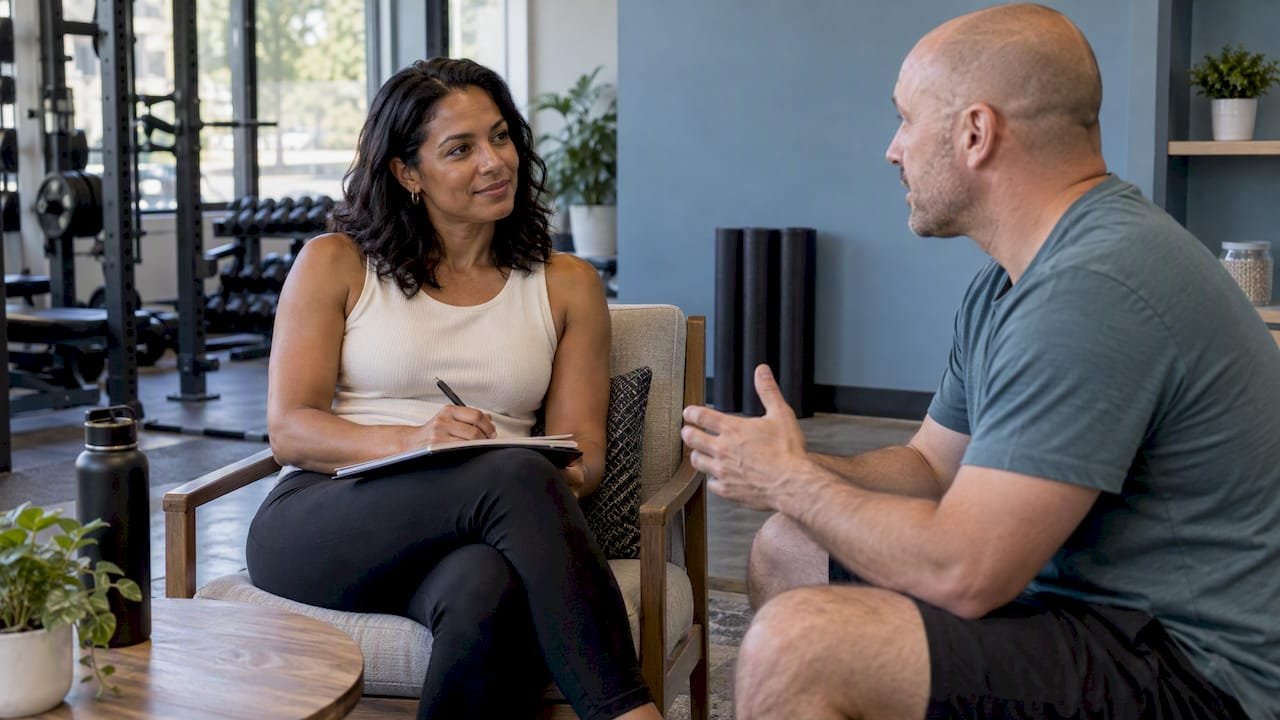
Metabolism coaching is ongoing, one-to-one guidance on the daily habits that shape your metabolic health: how you eat, move, sleep and handle stress. A good coach does not “fix” your metabolism with a trick. They help you set realistic goals, track what is happening, and adjust the plan until the habits hold. The evidence behind this approach is real but modest, and it is strongest when coaching runs for months, not weeks.
This guide covers what metabolic health coaching includes, what research says it can and cannot do, how to judge a coach, and where medical care comes first.
TL;DR
- Metabolism coaching, also called metabolic health coaching, is behavior-change support built around food, movement, sleep and stress, not a supplement or a quick reset.
- Research on behavioral counseling shows small but real improvements in diet, activity, blood pressure, LDL cholesterol and body fat, with little risk of harm.
- Published coaching programs typically run about 12 to 15 sessions over 7 to 9 months, so judge progress over months.
- Coaching sits beside medical care. If you have a diagnosis, symptoms or medication, your doctor leads.
- Vet any coach on credentials, experience, method and whether you trust them.
Table of Contents
- What metabolism coaching actually means
- How metabolic health coaching works
- What coaching can help you change
- What the evidence says, and where it stops
- Who it suits, and when to see a doctor first
- How to choose a metabolism coach
- Our perspective
- How we approach it at humn.
- Work with a coach in Gaithersburg
- FAQ
- Sources
What metabolism coaching actually means
The phrase is used loosely online. Some companies attach it to meal plans, some to apps, some to weight loss programs. Strip away the branding and you are left with health coaching applied to metabolic goals such as steadier energy, healthier body composition, better sleep and lower cardiometabolic risk.
The American College of Lifestyle Medicine describes health coaching as a collaborative, judgment-free process that helps people set realistic goals and build personalized action plans. That is the useful definition. The coach is not a drill sergeant or a diagnostician. They are a guide who helps you do what you already know you should do, consistently, in the life you actually have.
What it is not:
- Medical treatment. A coach does not diagnose or treat diabetes, thyroid disease or any other condition.
- A promise to “speed up” your metabolism. Metabolic health is the product of many habits and your biology, not a dial.
- A one-size meal plan handed over once and forgotten.
How metabolic health coaching works
Most programs follow the same loop: assess, set a small goal, practice, review, adjust. The tools are not exotic. The counseling techniques most often used in behavioral interventions include goal setting, self-monitoring, motivational interviewing and problem-solving to get around barriers.
In practice that looks like this:
- Baseline. Your coach learns your schedule, health history, food preferences, sleep, stress and training background.
- One or two target habits. For example, a protein-forward breakfast on workdays, or a fixed wind-down time. Small enough to be done on your worst day.
- Tracking. Food notes, step counts, sleep times, workouts, and often a few numbers from your doctor.
- Regular check-ins. You review what worked, what did not, and why.
- Adjustment. The plan changes with your life: travel, a deadline, a new baby, an injury.
How long it takes
A 2022 synthesis of 88 studies found that coaching programs averaged 12 to 15 sessions of 35 to 40 minutes over 7 to 9 months. Programs aimed at obesity averaged about 15 sessions over 7 to 8 months, and diabetes programs about 12 sessions over 9 to 10 months. Those figures describe research programs, not any particular company, but they are a useful yardstick. If someone promises a metabolic overhaul in two weeks, the research does not back them.

Where metabolic testing fits
Some coaches add testing, such as resting metabolic rate or respiratory quotient. Researchers note that this kind of metabolic testing may help personalize calorie goals and diet composition in behavioral weight-control plans. The same authors say they found no existing behavioral program that actually uses such measures this way, so treat testing as an optional input to a plan, not a requirement and not magic.
That paper also points out that pairing a human coach with digital tracking or AI tools may improve outcomes compared with automated systems alone. An app can log your meals. It cannot notice that you skip lunch every time a certain meeting runs long.
Weight-management research is also moving fast on the pharmacology side, and readers will run into compounds such as retatrutide. This retatrutide research compound explainer walks through how that compound is being studied. Any medication decision belongs with your physician, and coaching works alongside it, not instead of it.

What coaching can help you change
The American College of Lifestyle Medicine lists the areas coaching commonly addresses: whole-food, plant-predominant eating, physical activity, restorative sleep, stress management, avoiding risky substances and positive social connections.
The same source stresses that behavior change works better when plans account for culture, values, family dynamics and living environment, rather than treating habits as pure willpower. That matches what most busy adults notice: the problem is rarely knowledge. It is a 6 a.m. alarm, a commute, a family dinner and an inbox.
Nutrition and physical activity are well established levers. A review in the academic literature notes they can promote metabolic health and help prevent or delay chronic disease. Coaching is the delivery system that helps those levers get pulled week after week.
A realistic example of a first month for a desk-based professional:
- Week 1: log meals for five days without changing anything, and set a consistent wake time.
- Week 2: add a protein source to breakfast and a 10-minute walk after lunch.
- Week 3: two strength sessions a week, kept short enough to survive a busy calendar.
- Week 4: review sleep and stress data, then choose the next single habit.
None of that is dramatic. That is the point.
What the evidence says, and where it stops
Here is the honest summary from the strongest sources.
The U.S. Preventive Services Task Force reviewed behavioral counseling in 2022. It found small benefits in diet, physical activity and intermediate outcomes such as blood pressure, LDL cholesterol and adiposity, with harms no greater than small. It found inadequate direct evidence on cardiovascular events or mortality. Across the reviewed trials, serious adverse events did not differ significantly between counseling and control groups.
An earlier analysis of adults with cardiovascular risk factors found behavioral counseling was associated with small, statistically significant reductions in blood pressure, LDL cholesterol, fasting glucose and adiposity at 12 to 24 months.
A compendium of health and wellness coaching research reports that coaching can support outcomes such as chronic-care management, medication adherence, self-efficacy and quality of life, and can improve some biomarkers, while noting variability across studies and the need for further research.
What that means for you: expect steady, modest, durable gains in habits and markers, and a low-risk process. Do not expect a transformation overnight. The value is in the long game, which is exactly where most self-directed efforts fall apart.
| What coaching targets | What the research reports |
|---|---|
| Diet and physical activity | Small improvements |
| Blood pressure, LDL, body fat | Small improvements at 12 to 24 months in adults with risk factors |
| Confidence and adherence | Reported gains in self-efficacy and medication adherence |
| Heart attacks, mortality | Not enough direct evidence yet |
Who it suits, and when to see a doctor first
Coaching tends to suit adults who want sustainable habit change, including people whose doctor already monitors their numbers. The USPSTF framing is that clinicians offer counseling selectively, based on professional judgment and patient preferences, tailored to health status and circumstances. Your doctor leads your medical care, and a coach supports the daily work.
See a physician before or alongside coaching if you:
- have been diagnosed with diabetes, prediabetes, high blood pressure, high cholesterol or thyroid disease
- take medication that affects blood sugar, blood pressure or weight
- have unexplained fatigue, rapid weight change, or symptoms you cannot explain
- are pregnant, have a history of disordered eating, or have a cardiac concern before starting hard training
If your doctor has flagged prediabetes, ask about structured programs too. The CDC’s National Diabetes Prevention Program is a yearlong lifestyle-change program, and its stated first-six-month goals include losing 5 to 7% of starting weight and reaching at least 150 minutes of moderate physical activity weekly. Ask your doctor whether you qualify and whether it fits alongside private coaching.
How to choose a metabolism coach
The coaching field is largely unregulated, so the burden of vetting falls on you. The International Coaching Federation suggests asking about education, credentials, experience, specialty, philosophy, assessments, success examples and references, and interviewing three coaches to see where trust and collaboration feel strongest.
A practical checklist:
- Scope. Do they say plainly what they do not do, such as diagnose or prescribe?
- Method. Can they explain how they build habits, not just what they tell you to eat?
- Tracking. Is there a way to see progress beyond the scale?
- Coordination. Are they comfortable working with your doctor?
- Time horizon. Do they talk in months, as the research does, or in a 30-day blitz?
- Fit. Do you feel heard in the first conversation?
For more on how to think about coaching versus training, see our guide to a fitness coach versus a personal trainer, and for the wider picture, lifestyle coaching explained.
Our perspective
We built humn. on a simple belief: metabolic health is the result of a system, not a single workout or a single diet. That is why our approach rests on four pillars: Resist, Recover, Renew and Rhythm. Strength training builds the engine. Recovery lets it adapt. Nutrition and lifestyle coaching make it sustainable. Rhythm ties sleep, stress and daily routine together.
Most people we meet do not lack information. They lack a partner who looks at the whole person and stays with them past week six. So our coaches work habits first, one behavior at a time, with structured progress tracking and long-term support instead of short-term transformations or generic classes.
We would rather you improve slowly and keep it than sprint and rebound. If you are a busy professional in Gaithersburg who wants strength, resilience and a better quality of life, that is the work we are designed to do with you.
Josh
How we approach it at humn.
Our coaching is designed to fit the way research says change happens: individualized, habit-driven and long-term. If you want to see how we think about the science of changing behavior, read what 468 studies say about habits-first coaching, or look at examples of behavior-based programs.
For nutrition specifically, our 1:1 nutrition coaching is built around your food preferences, schedule and stress, and for sustainable weight goals, our page on evidence-backed coaching for sustainable weight loss explains the process. Our habit guide on sustainable fat loss habits is a good starting point if you want ideas before you commit.
Work with a coach in Gaithersburg
humn. is a boutique coaching facility in Gaithersburg, MD, where strength training, recovery and lifestyle coaching sit under one roof. Members work with dedicated coaches through small-group personal training, 1-on-1 coaching and recovery access that includes sauna, compression, red light therapy and acupuncture.
If you want a long-term partner rather than a membership you forget to use, explore our membership, see the recovery options, or start at livehumn.com. Pricing is not published online, so ask us directly about what fits your goals.
FAQ
Is metabolism coaching the same as metabolic health coaching?
In everyday use, yes. Both describe coaching that helps you improve the habits behind your metabolic health: eating, activity, sleep and stress. Neither term is a regulated title, so look at what a coach actually does and how they are trained.
Can a coach speed up my metabolism?
A coach cannot rewrite your biology. What they can do is help you build habits, such as strength training, adequate protein, consistent sleep and stress management, that support healthy metabolic function over time. Research on behavioral counseling shows small, real gains in diet, activity and some health markers.
How long should I work with a coach?
Plan on months. Published coaching programs averaged 12 to 15 sessions over 7 to 9 months. Early habit wins can show up in weeks, but lasting change takes longer, so judge a program by its trend over a season, not a single week.
Do I need metabolic testing first?
No. Testing such as resting metabolic rate may help set calorie goals, but researchers have not identified behavioral programs that use it routinely. Many people start with habits and tracking, and add testing only if a coach or doctor has a reason to.
Should I talk to my doctor before starting?
If you have a diagnosis, take medication, or have symptoms you cannot explain, yes. Your doctor leads your medical care. Coaching supports the daily habits, and a good coach will gladly work alongside your physician.
Sources
- Health coaching: The science and art of behavior change
- Behavioral Counseling Interventions to Promote a Healthy Diet and Physical Activity (USPSTF, 2022)
- Behavioral Counseling to Promote a Healthy Diet and Physical Activity for adults with cardiovascular risk factors (2020)
- Dosing of Health and Wellness Coaching for Obesity and Type 2 Diabetes
- Using Metabolic Testing to Personalize Behavioral Obesity Treatment
- Beyond calories: an integrated approach to promote health
- Compendium of Health and Wellness Coaching: 2023 Addendum
- CDC Lifestyle Coach Training Guide: Program Overview
- Finding the Right Coach for You (International Coaching Federation)
No Comments.