


Lifestyle coaching is a client-centered behavioral process where a trained coach helps you build sustainable habits across physical health, nutrition, sleep, stress, and mental wellness. It is not therapy, and it is not a personal trainer telling you what to eat. According to a systematic review of over 200 peer-reviewed studies, 86% of coaching literature describes the process as patient-centered, with 71% specifically noting that goals are self-identified rather than prescribed by the coach. The American College of Lifestyle Medicine has helped formalize this field, positioning coaching as a legitimate behavioral intervention for chronic disease prevention and long-term wellbeing.
Here is what lifestyle coaching typically covers:
- Physical health and movement habits — building consistent activity patterns that fit your actual life
- Nutrition behaviors — not meal plans, but your relationship with food and eating patterns
- Sleep and recovery — identifying what disrupts rest and building routines around it
- Stress management — practical tools for reducing the load, not just coping with it
- Mental and emotional wellness — self-awareness, mindset, and motivation
- Accountability structures — regular check-ins, self-monitoring, and progress tracking
Table of Contents
- What is lifestyle coaching and how does it actually work?
- Signs you might need a lifestyle coach
- How lifestyle coaching differs from life coaching, health coaching, and therapy
- Certifications and courses for becoming a lifestyle coach
- How humn’s four-pillar framework puts lifestyle coaching into practice
- What lifestyle coaching outcomes look like in practice
- Key challenges and ethical considerations in lifestyle coaching
- humn is built for people who want more than a gym membership
- Key Takeaways
What is lifestyle coaching and how does it actually work?
The process starts with an assessment, not a prescription. A coach works with you to surface your values, identify what is getting in the way, and build a plan you actually designed yourself. That distinction matters more than it sounds. When goals come from you rather than a provider, you are far more likely to follow through.
Typical coaching relationships usually span multiple months, with sessions delivered by phone, video, or in person. The arc moves from initial assessment to value identification to a systems-based action plan. Sessions are not lectures. A good coach uses motivational interviewing, a technique that draws out your own reasons for change rather than arguing you into it. The American College of Lifestyle Medicine describes success as depending on client readiness to run small, self-determined habit experiments between sessions.
Statistic callout: 86% of coaching studies document specific accountability mechanisms, including self-monitoring and reporting behaviors back to the coach, as core components of the process.
Common tools and methods coaches use include:
- Motivational interviewing — open-ended questions that help you articulate your own motivation
- Stages of Change model — a framework that maps where you are in the behavior change process (precontemplation through maintenance)
- Self-monitoring logs — tracking sleep, food, movement, or mood to surface patterns
- Values clarification exercises — identifying what actually matters to you before setting goals
- Accountability check-ins — structured follow-ups between sessions to keep momentum
- Behavior experiments — small, low-stakes habit changes tested between sessions
Pro Tip: The most effective coaching conversations happen when you come prepared with one specific thing that did not go as planned since your last session. That single honest observation gives your coach more to work with than a general update ever will.
Signs you might need a lifestyle coach
Lifestyle coaching fits a specific kind of person: someone who already knows what they should be doing but keeps not doing it. That gap between knowledge and action is exactly where coaching lives.
Common signs that coaching could help include feeling stuck without a clear reason, setting goals that never develop into actual plans, and struggling with consistency during major life transitions like a new job, a move, or a health diagnosis. You do not need to be in crisis. You need to be ready to change and honest about the fact that you have not been able to do it alone.

Coaching is not the right fit if you are dealing with active mental health conditions, trauma, or clinical diagnoses. Those situations call for a licensed therapist or psychologist. The distinction is straightforward: therapy heals the past; coaching builds the future.
Ask yourself these questions to gauge whether coaching fits your situation:
- Do you have goals but no clear plan to reach them?
- Have you tried to build a habit more than twice and stopped each time?
- Are you going through a life transition that has disrupted your routines?
- Do you feel accountable to no one but yourself, and is that not working?
- Are you physically and mentally stable but stuck in a pattern you want to break?
If most of those land, coaching is worth a serious look.
How lifestyle coaching differs from life coaching, health coaching, and therapy
These terms get used interchangeably, and they should not. Each serves a different purpose, and choosing the wrong one wastes time and money.
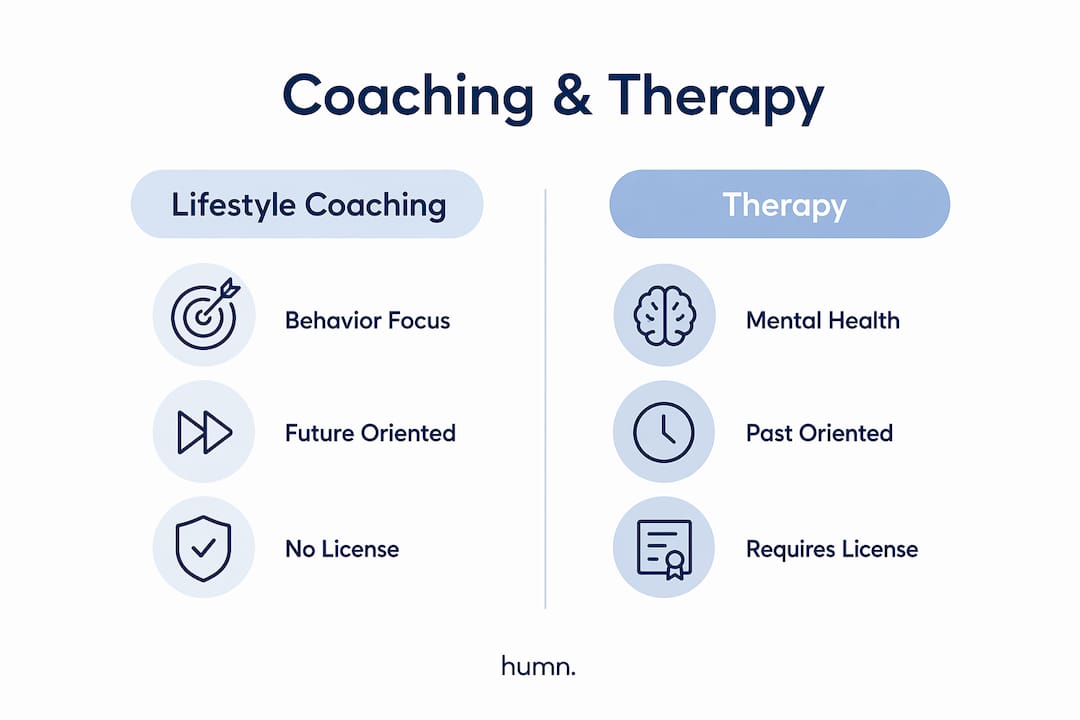
Life coaching focuses on broad personal and professional goals: career direction, relationships, purpose. It rarely goes deep on physical health behaviors. Health coaching overlaps significantly with lifestyle coaching but often stays closer to clinical metrics like blood pressure, weight, or disease management. Lifestyle coaching sits at the intersection, addressing the full behavioral picture: how you move, eat, sleep, manage stress, and build identity around your habits. Therapy is categorically different. It is a licensed clinical service focused on diagnosing and treating mental health conditions, processing trauma, and resolving psychological dysfunction.
| Coaching type | Primary focus | Future or past oriented | Clinical license required |
|---|---|---|---|
| Lifestyle coaching | Habits, health behaviors, whole-person wellness | Future | No |
| Life coaching | Goals, purpose, career, relationships | Future | No |
| Health coaching | Clinical health metrics, disease management | Future | No |
| Therapy | Mental health diagnosis, trauma, psychological healing | Past and present | Yes |
The overlap between lifestyle and health coaching is real, but lifestyle coaching tends to take a wider view, treating sleep, stress, and social environment as equally important as physical activity or nutrition. A wellness coach functions as a thinking partner, helping clients close the gap between knowing what to do and actually doing it, across professional, social, and financial dimensions as well as physical ones.
Certifications and courses for becoming a lifestyle coach
The lifestyle coaching field does not have a single governing body, which means program quality varies widely. These programs represent some of the most recognized pathways in the United States.
| Certification / Course | Provider | Focus areas | Duration | Cost | Delivery |
|---|---|---|---|---|---|
| Wellness Coach Training | Mayo Clinic | Behavior change, motivational interviewing, clinical wellness | Several months | Not publicly listed | In-person and online |
| Health Coach Certification | Institute for Integrative Nutrition | Nutrition, lifestyle, integrative health | Several months | Not publicly listed | Online |
| Precision Nutrition Level 1 | Precision Nutrition | Nutrition coaching, behavior change, habit-based methods | Several months | Not publicly listed | Online |
| Health Coach Certification | Health Coach Institute | Lifestyle habits, mindset, behavior coaching | Several months | Not publicly listed | Online |
| Lifestyle Medicine Certification | American College of Lifestyle Medicine | Evidence-based lifestyle medicine, behavior change science | Varies | Not publicly listed | Online and in-person |
Accreditation matters more than program length. Look for programs aligned with the National Board for Health and Wellness Coaching (NBHWC), which sets the standard for board-certified coaches in the United States. The IDEA Health and Fitness Association notes that programs vary widely in duration, cost, focus, and delivery format, from short intensives to extended multi-month curricula.
The Mayo Clinic Wellness Coach Training is particularly respected for its grounding in clinical behavior change science. The Institute for Integrative Nutrition takes a broader view, covering over 100 dietary theories alongside lifestyle factors. Precision Nutrition built its reputation on habit-based nutrition coaching with a strong evidence base. The Health Coach Institute emphasizes practical coaching skills and client communication. The American College of Lifestyle Medicine connects coaching directly to the six pillars of lifestyle medicine: nutrition, physical activity, sleep, stress management, avoidance of risky substances, and positive social connection.
Pro Tip: Before enrolling in any program, confirm whether it qualifies you to sit for the NBHWC board exam. That credential is what most clinical and corporate wellness employers recognize.
How humn’s four-pillar framework puts lifestyle coaching into practice
humn, based in Gaithersburg, MD, operates on a systems-based approach to lifestyle coaching that goes well beyond what most gyms or standalone coaching programs offer. The framework is built around four pillars: Resist, Recover, Renew, and Rhythm. Each one addresses a different dimension of sustainable performance.
Resist covers strength training and physical conditioning. Recover addresses sleep, tissue repair, and the physiological systems that let you train hard without breaking down. Renew focuses on nutrition, stress management, and the mental reset that keeps you consistent over months and years. Rhythm is about building the daily and weekly routines that make all of it automatic rather than effortful.

What makes this model different from a standard personal training setup is the habits-first philosophy. Coaches at humn work with clients on the behaviors that surround training, not just the training itself. That means conversations about sleep quality, work stress, and eating patterns are built into the coaching relationship, not treated as extras.
Practical coaching components at humn include:
- 1-on-1 coaching sessions that address lifestyle behaviors alongside physical programming
- Small-group personal training that builds accountability through community
- Recovery access integrated into membership, not sold separately
- Behavior-based programming that adapts to your schedule, stress load, and life stage
- Ongoing coach-client relationship that tracks progress across all four pillars, not just gym metrics
What lifestyle coaching outcomes look like in practice
The research on lifestyle coaching outcomes points consistently in one direction: people who work with coaches make more durable changes than those who try to self-direct. The mechanism is not mystery. Sustainable change requires understanding a client’s unique context, culture, and environment, not just handing them a plan.
A client managing a demanding job and poor sleep might spend the first six weeks of coaching doing nothing except building a consistent wind-down routine. That sounds underwhelming until you realize that sleep quality directly affects food choices, exercise recovery, and stress tolerance. Fix the sleep, and the other habits become easier to stack. That sequencing is something a coach can see; most people trying to change everything at once cannot.
Clients working on fitness goal setting with a lifestyle coach tend to report better follow-through than those setting goals without structured support, largely because the coach helps translate a vague intention into a specific, time-bound behavior experiment. The goal is not “eat better.” It is “cook dinner at home four nights this week and notice how you feel by Friday.”
Key challenges and ethical considerations in lifestyle coaching
The biggest challenge in lifestyle coaching is scope of practice. Coaches are not clinicians. They cannot diagnose, treat, or prescribe, and the line between coaching and therapy can blur when clients bring up anxiety, depression, or unresolved trauma. A well-trained coach recognizes that boundary and refers out when the situation calls for it. Ignoring that line is not just an ethical failure; it can cause real harm.
Credentialing is a related problem. The coaching industry remains largely unregulated in the United States, which means anyone can call themselves a lifestyle coach without training or certification. For clients, that creates real risk. Vetting a coach’s credentials, specifically looking for NBHWC board certification or graduation from an accredited program, is the most practical protection.
Confidentiality and informed consent are also non-negotiable. Clients share sensitive information about their health, relationships, and behaviors. A coach has an obligation to handle that information carefully and to be transparent about what coaching is and is not before the relationship begins. The coaching versus therapy distinction should be made explicit in any intake process, not assumed.
Finally, dependency is a subtle risk. Good coaching builds client self-efficacy, meaning the goal is for you to need the coach less over time, not more. A coach who keeps clients dependent rather than building their capacity to self-direct is working against the core purpose of the profession.
humn is built for people who want more than a gym membership
If you have read this far, you are probably not looking for a treadmill and a locker room. You want someone who will actually help you change how you live, not just how you train.
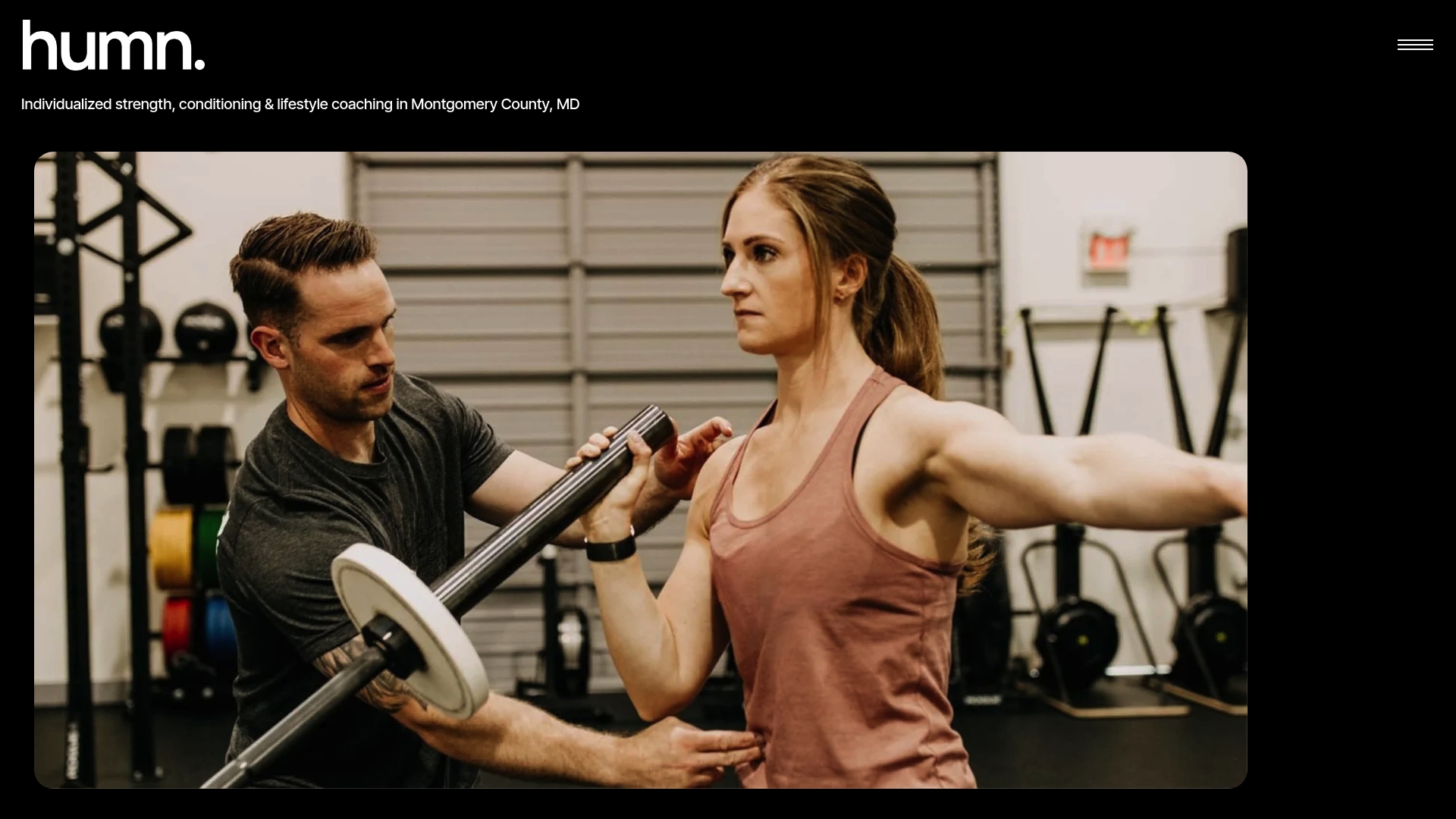
humn offers exactly that, in Gaithersburg, MD. The four-pillar framework means your coach is looking at your whole picture: how you sleep, how you recover, what your stress load looks like, and how your daily habits either support or undermine your goals. The 1-on-1 coaching at humn is built around behavior-based programming that adapts as your life does, not a fixed plan you abandon after six weeks. Recovery is built into the membership, not an upsell. The boutique setting keeps the coach-to-client ratio low enough that you are never just a face in a crowd.
If you are ready to work with coaches who treat lifestyle change as a system rather than a series of isolated fixes, explore humn’s membership options and find out what a whole-person approach actually looks like in practice.
Key Takeaways
Lifestyle coaching works because it combines client-driven goals, accountability structures, and behavior change science into a process that builds habits durable enough to outlast motivation.
| Point | Details |
|---|---|
| Client-centered by design | 71% of coaching literature shows goals are self-identified, not prescribed by the coach. |
| Accountability drives results | 86% of coaching studies document self-monitoring and coach reporting as core mechanisms. |
| Coaching is not therapy | Coaching is future-focused and performance-oriented; therapy addresses mental health diagnosis and past trauma. |
| Certification quality varies | Look for NBHWC-aligned programs from providers like the American College of Lifestyle Medicine or Mayo Clinic. |
| humn’s four-pillar model | humn integrates Resist, Recover, Renew, and Rhythm to address habits, sleep, stress, and strength in one program. |
No Comments.