


Sustainable fat loss habits are the daily and weekly behavior patterns that create a modest energy deficit, preserve muscle, and stay repeatable long enough to produce lasting body-composition change. The three highest-impact actions to start today: set a weekly loss target of 1–2 lb, add a protein source to every meal, and schedule two full-body resistance sessions this week. Everything else builds on those three.
The core habit categories this guide covers:
- Mindset and goals: realistic targets, identity-based motivation
- Nutrition: moderate deficit, protein priority, whole foods
- Movement: resistance training, cardio, and daily NEAT
- Sleep and recovery: hormonal support and adherence protection
- Behavior change: habit stacking, environment design, implementation intentions
- Tracking and adjustment: metrics beyond the scale, plateau troubleshooting
Key Takeaways
Building sustainable fat loss habits means combining a moderate calorie deficit, consistent resistance training, adequate protein, and at least 7 hours of sleep into repeatable weekly routines that you can maintain for months, not days.
| Point | Details |
|---|---|
| Safe rate of loss | Target 1–2 lb per week; faster loss accelerates muscle loss and metabolic adaptation. |
| Protein at every meal | Distribute 0.7–1g of protein per pound of bodyweight across meals to preserve muscle and control hunger. |
| Resistance training minimum | Two full-body sessions per week is the minimum effective dose for preserving lean mass during a deficit. |
| Sleep as a non-negotiable | Fewer than 7 hours per night alters hunger hormones and reduces motivation to exercise or prepare meals. |
| humn coaching | humn’s four-pillar program (Resist, Recover, Renew, Rhythm) packages these habits into a supported, personalized system in Gaithersburg, MD. |
Table of Contents
- Why habit-based approaches outperform short-term diets
- How do you set realistic fat-loss goals and timelines?
- What nutrition habits actually support sustainable fat loss?
- How should you train to lose fat and keep muscle?
- How do sleep and stress affect your fat-loss progress?
- How do you turn new behaviors into automatic habits?
- How do you track progress and know when to adjust?
- What mistakes derail sustainable fat loss most often?
- How humn puts these habits into a real coaching program
- What actually drives long-term success with fat loss
- Ready for guided support? humn builds these habits with you
- Sources
Why habit-based approaches outperform short-term diets
The research case is straightforward: gradual, habit-focused lifestyle change produces better long-term maintenance than short-term diets. The mechanism behind that finding matters more than the finding itself.
Short-term diets work by imposing external rules. The moment the rules lift, the behaviors that created the deficit disappear with them. Habits work differently. A habit is a behavior that has been repeated in a consistent context until it runs with minimal deliberate effort. That reduced cognitive load is the real advantage: you are not deciding whether to eat protein at breakfast every morning, you just do it.
There is also a metabolic argument. Extreme calorie restriction accelerates muscle loss, which slows basal metabolic rate and makes subsequent fat loss harder. Harvard Health’s guidance on diet and weight loss consistently emphasizes moderate, whole-food-focused approaches over highly restrictive plans for exactly this reason.
Identity-based habit formation adds another layer. When you start thinking of yourself as someone who trains twice a week and prioritizes sleep, the behaviors feel consistent with who you are rather than like a sacrifice. That shift in self-concept is one of the most durable drivers of long-term adherence.
What separates people who maintain fat loss from those who regain:
- They built habits that fit their actual schedule, not an idealized one
- They kept a moderate deficit rather than the steepest one possible
- They preserved muscle through resistance training
- They treated lapses as data, not failures
How do you set realistic fat-loss goals and timelines?
Aim for roughly 1–2 lb per week. That rate is CDC-backed and associated with better long-term maintenance compared to faster loss. For most adults, it translates to a daily deficit of 500–750 calories through a combination of diet and movement.
The scale alone is a poor progress metric. Body weight fluctuates by 2–4 lb daily based on hydration, sodium, and hormonal cycles. A more useful metric set:
- Waist circumference: measured weekly at the same time of day
- Strength and performance: are you lifting more, moving better?
- Clothes fit: a practical, zero-cost indicator
- Weekly average weight: trend over 2–4 weeks, not single-day readings
- Energy and sleep quality: indirect but meaningful signals
A realistic timeline framework:
Weeks 1–4 focus on habit setup: lock in your training schedule, establish your protein target, and fix your sleep window. Measurable body-composition change typically appears by the 8–12 week mark. Major shifts, the kind that show up clearly in photos and measurements, usually take 6–12 months of consistent work.
Framing success as a percentage of bodyweight is more useful than a fixed pound target.
Effort tiers to match your situation:
What nutrition habits actually support sustainable fat loss?
Prioritize a moderate calorie deficit built around higher protein and whole foods rather than extreme restriction. That single sentence covers the majority of what the evidence supports.
Protein is the most important dietary lever. It preserves muscle during a deficit, increases satiety, and has a higher thermic effect than carbohydrates or fat, meaning your body burns more calories digesting it. A practical daily target is 0.7–1 gram of protein per pound of bodyweight, distributed across meals.
Core nutrition habits:
- Include a protein source at every meal (eggs, Greek yogurt, cottage cheese, chicken, canned fish, legumes)
- Fill half your plate with vegetables and whole foods before adding calorie-dense items
- Reduce liquid calories: sodas, juices, and alcohol add up fast with minimal satiety payoff
- Use smaller plates and bowls to shift portion sizes without tracking every gram
- Plan two to three meals in advance each week to reduce last-minute, high-calorie decisions
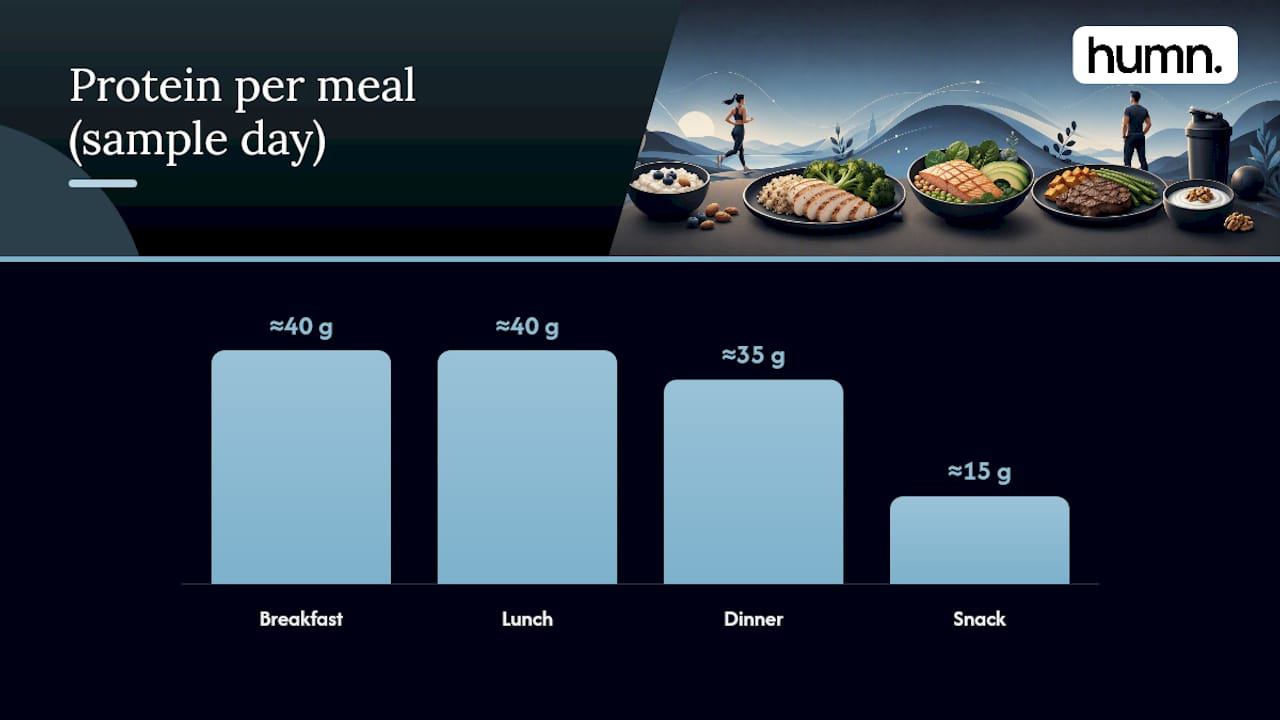
Sample daily template:
- Breakfast: 3 eggs + 1 cup Greek yogurt + fruit (approx. 40g protein)
- Lunch: Large salad + 5 oz canned salmon or grilled chicken + olive oil dressing (approx. 40g protein)
- Dinner: 5 oz lean protein + roasted vegetables + ½ cup rice or legumes (approx. 35g protein)
- Snack: Cottage cheese or a handful of almonds + apple (approx. 15g protein)
For practical calorie tracking, a simple range works better than a precise daily target. Aim for a 200–500 calorie daily deficit from your estimated maintenance level. Apps like MyFitnessPal or Cronometer make this straightforward without requiring obsessive logging.
Pro Tip: Batch-cook a large portion of lean protein on Sundays: a sheet pan of chicken thighs, a pot of lentils, or a few cans of salmon portioned into containers. Having protein ready removes the biggest friction point in healthy eating during a busy week.
Whole-food-focused approaches consistently outperform restrictive diets in adherence studies. If you have a medical condition, significant weight-loss needs above 50 lb, or a history of disordered eating, consult a registered dietitian before setting your deficit.
How should you train to lose fat and keep muscle?
Resistance training combined with daily movement and some cardio produces the best long-term body-composition results. That combination is not arbitrary. Research on resistance training and body composition shows it preserves and builds lean mass during a calorie deficit, which defends against the metabolic slowdown that derails so many fat-loss efforts.
A beginner weekly structure:
- Monday: Full-body resistance session (squat, hinge, push, pull pattern, 3 sets each)
- Wednesday: Full-body resistance session (same pattern, slightly higher load or reps)
- Friday: Full-body resistance session or 30-minute moderate cardio
- Daily: 7,000–10,000 steps, broken up however fits your schedule
Progressive overload is non-negotiable. As your body adapts, the same workout burns fewer calories and builds less muscle. Add weight, reps, or sets every 1–2 weeks. A beginner’s guide to progressive strength training walks through exactly how to structure that progression without risking injury.
For busy days, a 15–20 minute circuit of bodyweight or dumbbell movements beats skipping entirely. Squats, push-ups, rows, and hip hinges cover the major movement patterns in under 20 minutes.
NEAT tactics that add up fast:
- Take walking meetings or phone calls on foot
- Stand for 10 minutes every hour if you work at a desk
- Park farther away, take stairs, walk to a colleague instead of emailing
- Set a phone reminder every 90 minutes to move for 5 minutes
NEAT, the energy you burn through all movement outside structured exercise, can exceed your gym sessions in total daily calorie expenditure. It is also the easiest lever to pull when your schedule gets compressed. Learning to combine cardio and strength training effectively helps you get the most from limited training time.
How do sleep and stress affect your fat-loss progress?
Sleep is not a passive recovery tool. Adults who get fewer than 7 hours per night experience measurable changes in ghrelin (the hunger hormone) and leptin (the satiety hormone), which drives increased appetite and reduced motivation to exercise or prepare meals. Cutting sleep to create more time for healthy habits is counterproductive.
Target at least 7 hours nightly. The practical habits that make that achievable:
- Set a consistent sleep and wake time, including weekends
- Reduce screen exposure for 30–60 minutes before bed
- Avoid caffeine after 2 PM and limit alcohol, which fragments sleep architecture even in moderate amounts
- Keep your bedroom cool (65–68°F is the commonly cited comfort range)
- Schedule at least one active recovery day per week: walking, stretching, or light mobility work
Stress compounds the problem. Elevated cortisol increases appetite, particularly for calorie-dense foods, and promotes fat storage around the abdomen. Simple stress-management practices, including mindfulness integrated into your fitness routine, reduce cortisol’s impact on eating behavior without requiring a major time investment.
If you find that poor sleep or chronic stress is consistently derailing your habits despite these adjustments, that is a signal to work with a coach or clinician rather than push harder on the diet and training side.
How do you turn new behaviors into automatic habits?
Use implementation intentions, habit stacking, and environment design. These three tactics, used together, move a behavior from effortful decision to automatic routine faster than motivation alone ever will.
A step-by-step habit formation plan:
- Choose a specific cue. Tie the new behavior to something that already happens reliably. “After I pour my morning coffee” is a cue. “When I feel like it” is not.
- Define the smallest possible version of the behavior. Not “eat healthy,” but “add one protein source to breakfast.” Tiny behaviors build the neural pathway; you can scale up once the cue-behavior link is established.
- Set an immediate reward. It does not need to be food. Checking a box on a tracker, a short walk outside, or two minutes of a podcast you enjoy are all effective.
- Track consistency, not perfection. A simple paper habit tracker or a notes app works fine. The goal is to see a chain of completed days and protect it.
Habit stacking examples:
- “After I sit down at my desk, I drink a full glass of water.”
- “After my last work call, I change into workout clothes.”
- “After dinner, I prep tomorrow’s lunch protein.”
Pro Tip: Design your environment before you need willpower. Put your gym bag by the door the night before. Keep a bowl of fruit on the counter and move ultra-processed snacks to a high shelf or out of the house entirely. Environment design reduces the number of decisions you have to make under stress, which is when most habits break down.
When a habit stalls, the fix is almost always to make the behavior smaller or the cue more reliable, not to try harder. Consistency beats perfection in every long-term habit study, and a smaller habit done daily beats a perfect habit done occasionally.
How do you track progress and know when to adjust?
Track a small set of metrics and judge change over 2–4 week blocks, not day to day. Daily weight fluctuations are noise. A two-week trend is signal.
What to track and why:
- Weekly average weight: add up seven daily weigh-ins and divide by seven; compare week over week
- Waist circumference: measured monthly, same time of day, same location
- Strength markers: are your lifts progressing? Stalled strength during a deficit often means protein is too low
- Steps or daily movement: a 7-day average tells you more than any single day
- Weekly protein intake: are you hitting your target most days?
When to change course: if weight has not trended down over 4–6 weeks despite consistent effort, check protein first (most people underestimate intake), then consider a modest increase in daily steps before cutting more calories. Strength loss combined with fatigue usually signals the deficit is too aggressive. Combining diet with increased activity consistently outperforms cutting calories alone, so adding movement is often the smarter first adjustment.
Seek professional support when: you have plateaued despite genuine adherence for more than 6–8 weeks, you have a medical condition affecting metabolism, or your weight-loss goal exceeds 50 lb. A coach or registered dietitian can identify what a self-directed approach misses.
What mistakes derail sustainable fat loss most often?
The most common errors are the all-or-nothing mindset, losing weight too fast, neglecting protein and resistance training, and undervaluing sleep. Each one has a straightforward fix.
- All-or-nothing thinking: one missed workout or one off-plan meal becomes a reason to abandon the week. Fix: treat every lapse as a data point. What triggered it? Adjust the plan, not your self-assessment.
- Losing too fast: cutting calories aggressively speeds up muscle loss and metabolic adaptation, making the plateau arrive sooner. Fix: stay within the 1–2 lb/week range and use activity increases before deeper cuts.
- Skipping resistance training: cardio alone during a deficit accelerates muscle loss. Fix: two full-body sessions per week is the minimum effective dose.
- Ignoring protein: low protein means more hunger, more muscle loss, and slower recovery. Fix: hit your protein target before worrying about any other macronutrient.
- Treating sleep as optional: short sleep raises hunger hormones and lowers exercise motivation. Fix: protect your sleep window the same way you protect your training schedule.
- Chasing the scale daily: normal fluctuations create false panic and false confidence. Fix: use weekly averages and non-scale metrics.
Pro Tip: After a setback, review the week’s data before making any changes. Did protein drop? Did sleep suffer? Did a schedule disruption cascade into skipped workouts? The answer is almost always in the data, not in a character flaw. Adjust one variable, run it for two weeks, and measure again.
How humn puts these habits into a real coaching program
A habits-first coaching program packages the principles in this guide into a structured, supported system that raises adherence well beyond what most people achieve on their own. humn, based in Gaithersburg, MD, is built around exactly that model.
humn’s four-pillar framework maps directly to the habits covered here:
- Resist: progressive resistance training to preserve muscle and drive body-composition change
- Recover: structured recovery modalities including sauna, compression, red light therapy, and acupuncture to support sleep, reduce stress, and protect adherence
- Renew: nutrition and lifestyle habit coaching that addresses the behavioral side of eating, not just macros
- Rhythm: the daily and weekly habit patterns that make the other three pillars sustainable over months and years
The onboarding process starts with a thorough assessment: movement quality, lifestyle habits, sleep, stress, and goals. From there, coaches build a personalized habit plan and a progressive training program, with regular check-ins to adjust based on real data. Services include small-group personal training, 1:1 coaching, and full recovery access, all in one facility.
humn serves busy adults who want a long-term partner, not a 30-day program. The systems-based approach is designed for people whose schedules and lives are complicated, and who need a program that adapts rather than one that demands perfection.
Medical clearance is recommended before beginning any new exercise program, particularly for individuals with cardiovascular, metabolic, or orthopedic conditions.
What actually drives long-term success with fat loss
Most people who struggle with fat loss are not lacking information. They know protein matters. They know they should sleep more. The gap is almost always between knowing and doing, and that gap is a systems problem, not a willpower problem.
The clients who make the most durable progress share one trait: they stopped trying to be perfect and started building systems that made the right choice the easy choice. One anonymized example: a client who had tried and abandoned four different diets in two years made one structural change, prepping protein on Sundays and setting a consistent 10:30 PM sleep time, and lost 18 lb over six months without ever tracking a calorie. The habits did the work.
humn exists for exactly that kind of person. The coaching is not about motivation speeches. It is about designing a week that works, then making it slightly better the next week.
Ready for guided support? humn builds these habits with you
If you want to stop piecing together a plan from articles and start working with coaches who build the system around your actual life, humn is the answer. Unlike a traditional gym membership where you are handed a key and left to figure it out, humn provides 1:1 coaching that integrates training, recovery, nutrition habits, and lifestyle coaching into one program.

The difference is accountability and personalization. Your coach tracks your progress, adjusts your plan when the data calls for it, and addresses the sleep, stress, and nutrition factors that a workout-only program ignores. Recovery services including sauna, compression, and red light therapy are built into the membership, not sold as extras.
humn is located in Gaithersburg, MD and serves members across the Montgomery County area. To get started, book an assessment at Livehumn or explore membership options to find the right fit. The first step is a conversation about where you are and where you want to go.
Sources
- Steps for Losing Weight | Healthy Weight and Growth | CDC
- Diet & Weight Loss | Harvard Health
- 5 steps to sustainable weight loss - BHF
This article is general information, not a substitute for advice from a qualified doctor. Consult a qualified healthcare professional about your own circumstances before acting on anything here.
No Comments.