

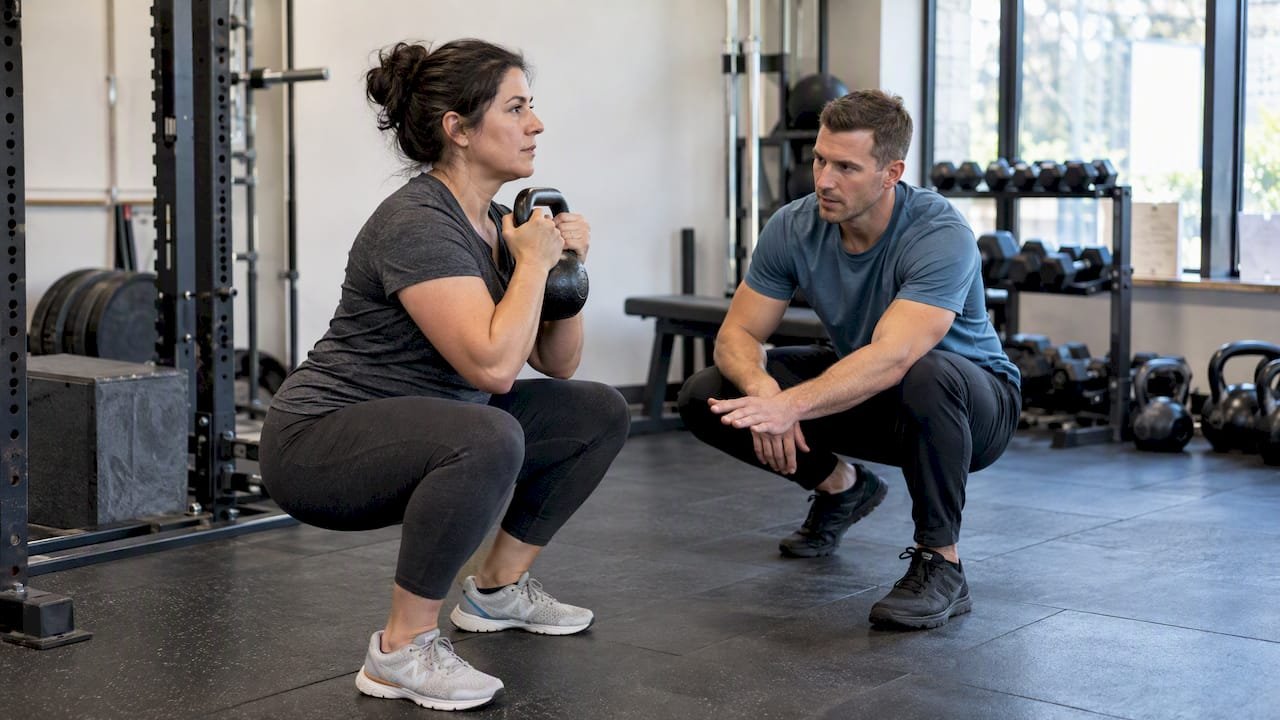
Choose a fitness coach if you need long-term behavior change, meaning habits, lifestyle and accountability outside the gym. Choose a personal trainer if you need hands-on exercise programming and technique supervision during sessions. If you want strength and lasting habits, the strongest results usually come from combining both roles, ideally under one roof.
TL;DR:
- Coaches typically use written habit plans, remote contact, and periodic reviews; they cannot diagnose conditions, prescribe medical diets, or replace licensed clinicians.
- Beginners and people returning after a long break benefit most when a trainer supervises technique in person, especially during strength training.
- Before hiring, verify the professional’s certification with its issuing organization, ask about insurance and CPR training, and confirm which needs they refer to clinicians.
- Compare the full monthly cost and included support: trainers often charge per session, while coaches commonly use retainers or program packages; request a trial.
Table of Contents
- What separates these two roles at a glance?
- What does a fitness coach actually do?
- What does a personal trainer actually do?
- How do you check credentials and scope of practice?
- What do fitness coaching and personal training cost?
- How do you decide between a coach and a trainer?
- Can you combine coaching and training?
- What do the outcomes look like in practice?
- Why do we favor a habits-first, four-pillar model?
- How can you get started with us?
- FAQ
- Sources
What separates these two roles at a glance?
Both roles help you get fitter, but they solve different problems. Here is the short version before we go deeper:
- Goal fit: A fitness coach suits goals that hinge on consistency, such as sleep, stress, eating habits and sticking with a routine. A personal trainer suits goals that hinge on skill and supervision, such as learning to squat, rebuilding strength after a layoff or training safely with heavy loads.
- Session format: Trainers work in scheduled, in-person sessions built around the workout itself. Coaches work across the week through check-ins, planning calls, messages and periodic reviews, with fewer minutes of direct gym time.
- Accountability style: A trainer holds you accountable by being there when you show up. A coach holds you accountable for what happens between sessions: the grocery run, the bedtime, the walk on a day you did not feel like training.
- Measurement: Trainers track what you can lift, how well you move and how your technique is progressing. Coaches track habit consistency, energy, recovery and whether the changes are holding over months.
- Price model: Trainers commonly charge by the session or in packs of sessions. Coaches more often use monthly retainers or program packages, and many facilities now blend the two in a membership.
None of this makes one role better. It makes them different tools. A person who already exercises three times a week but cannot fix their sleep needs a different hire than someone who has never touched a barbell.
What does a fitness coach actually do?
A fitness coach works on the part of fitness that happens when no one is watching. The American Council on Exercise (ACE) describes health coaching as centered on behavior change, lifestyle modification and nutrition habits, while personal training centers on designing and delivering safe, effective exercise programs. That split is the cleanest way to understand the difference.
The need is real. Adults aged 18 and over met the federal guidelines for both aerobic and muscle-strengthening activity in the CDC’s National Center for Health Statistics data. Those guidelines call for at least 150–300 minutes of moderate aerobic activity or 75–150 minutes of vigorous activity per week, plus muscle-strengthening work on 2 or more days. Most people know they should move more. The gap is rarely information. It is behavior.

The techniques coaches use
Good coaching borrows from behavior science rather than motivational speeches. Common tools include:
- Goal-setting with a process focus: “Walk after dinner four nights a week” is a process goal you control. “Lose 15 pounds” is an outcome goal you do not fully control. Coaches build the first kind and let the second follow.
- Motivational interviewing: Instead of telling you what to do, a coach asks questions that help you find your own reasons to change. ACE notes that practice is shifting from directive, prescriptive styles toward facilitation, because progress lasts when clients connect daily actions to their own values.
- Habit design and tracking: Anchoring a new behavior to an existing routine, shrinking it until it is easy, then scaling it up. We go deeper on the research in our guide to habits-first behavior change for fitness coaches.
- Periodic assessments: Regular check-ins on energy, sleep, stress and consistency, so the plan adjusts to your real life rather than an ideal one.
What a coaching engagement looks like
Coaching tends to run as a retainer or program-style engagement rather than a stack of single sessions. Expect a structured intake, a written habit plan, scheduled check-ins (often remote), and a review every few weeks. Typical deliverables include a prioritized habit plan, accountability check-ins and a plan for fixing the lifestyle habits that keep derailing you, such as late-night eating or skipped sleep.
Because coaching is built around a longer time horizon, it fits people who have started and stopped programs before. If you have a pattern of strong first months followed by a collapse, the problem is probably not your workout. It is the system around it.
Where coaching stops
Scope matters. ACE is clear that non-licensed health coaches cannot prescribe meal plans, diagnose medical conditions or prescribe exercise regimens that require professional licensing, and should refer out for those tasks. A coach who says they can treat your thyroid or write a medical diet is stepping outside their lane. A good one will say “that is a question for your physician or a registered dietitian” and mean it.
What does a personal trainer actually do?
A personal trainer owns the workout. Where a coach asks “why isn’t this sticking?”, a trainer asks “how do we do this movement well, and what should you do next week?” One career comparison puts it simply: trainers handle the “how” of physical performance, including technique, progressive overload and spotting, while coaches handle the “why” of behavior change.
How a training session flows
A well-run session follows a predictable shape:
- Assessment: Before the first heavy set, a trainer looks at how you move, any pain or past injuries, and your goals. We break down the most common tests in our guide to fitness assessments trainers use with clients.
- Plan: The trainer chooses exercises, sets, reps and loads that match your current ability, not an internet template.
- Warm-up: Targeted prep for the joints and muscles you are about to load.
- Focused workout: The main work, with the trainer cueing technique, adjusting weights and watching for form breakdown.
- Cooldown: Easing down, plus a quick note on what to repeat or change next time.
- Technique coaching throughout: Small corrections in real time, which is hard to replicate on your own.
The outcomes trainers deliver best
Trainers shine when the near-term goal is skill, safety or supervised strength. You learn to hinge, squat, press and carry properly. You progress loads in a sensible order rather than guessing. You get someone to spot you when you push toward a heavy set. For beginners and for people returning from a long break, that supervision shortens the learning curve and reduces the odds of a setback. Our explainer on what personal training is and why it works covers the logic in more depth.
How trainers are paid
Trainers typically charge by the session, by the hour or through a pack of sessions. That model is simple and transparent: you pay for the time the trainer spends with you. It also means your results depend heavily on what you do in the hours between sessions, which a trainer does not usually manage.
Limits a good trainer respects
Trainers design exercise programs. They are not licensed to diagnose injuries, prescribe medical treatment or write specific nutrition prescriptions. A responsible trainer refers you to a physician, physical therapist or registered dietitian when your needs move into those areas. If someone promises to “fix” a medical condition through training alone, treat that as a signal to look elsewhere.
How do you check credentials and scope of practice?
Titles like “coach” and “trainer” are loosely used, so the credential behind the name matters more than the label. In the U.S., well-known certifying bodies include ACE, NASM and ACSM. None of them is a medical license, and each certifies a defined set of skills.
The idea that ties it together is the “Qualified Exercise Professional” framework, which the American College of Sports Medicine (ACSM) supports in its issue brief. The principle: the right professional depends on the services you need and the complexity of your medical history. A healthy adult learning to lift is well served by a certified trainer. Someone with significant clinical risk may need a practitioner with academic preparation in exercise science or one who works within a medical setting.
Who does what
- Fitness coach or health coach: Behavior change, habits, accountability and general lifestyle guidance. Refers out for diagnosis, clinical counseling and specific nutrition prescriptions.
- Personal trainer: Exercise assessment, programming and technique supervision. Refers out for medical, injury and nutrition-prescription needs.
- Licensed clinicians and registered dietitians: Diagnosis, treatment and individualized medical nutrition therapy.
Behavior is the bottleneck: Only 24.2% of U.S. adults meet both the aerobic and muscle-strengthening guidelines, which is why habit-focused support matters even for people who already know how to work out.
Five steps to verify a practitioner
- Ask which certification they hold and which organization issued it, then confirm it with that organization’s directory.
- Ask whether they carry liability insurance and are current on CPR and first-aid training.
- Ask how they keep learning, including through continuing education courses.
- Ask for two or three client references or examples of people with goals like yours.
- Ask what they would refer out, and to whom, when a client’s needs go beyond their scope.
A practitioner who answers these quickly and without defensiveness is usually someone worth a trial.
What do fitness coaching and personal training cost?
Prices vary widely by market, experience and format, so use shapes rather than numbers when you compare.
- By-session or hourly pricing is the traditional trainer model. You pay per visit or buy a pack. It is flexible and easy to compare, but costs scale with how often you train.
- Monthly retainer or program pricing is more common with coaching. One career comparison notes that comprehensive coaching is often structured as a monthly retainer or long-term program package. You pay for the system, not the minutes.
- Membership hybrids bundle training, coaching and sometimes recovery into one recurring fee. They suit people who want both roles without negotiating two contracts.
Our breakdown of what personal training costs gives more context on what to weigh. For humn., current prices are on our website.
What your first session and first month look like
A first training session usually centers on movement screening, a goal conversation and a lighter workout so the trainer can see how you move. A first coaching session centers on conversation: your schedule, stress, sleep, eating patterns and what has failed before. As the work progresses, a trainer should have you following a progressive plan with improving technique. A coach should help you establish small habits and gain a clear view of what to tackle next.
How to judge value
- Write down two or three specific goals before you start, so progress is measurable.
- Ask about a trial period or a short initial commitment.
- Schedule a checkpoint at about 30 and 90 days to review what has changed.
We cover a structured way to do this in our test for whether personal training pays off.
How do you decide between a coach and a trainer?
Start with the problem, not the title. Four questions sort most cases.
- How specific is your goal? A concrete skill goal (a first pull-up, a pain-free squat) points to a trainer. A broad goal (“get healthier and stay that way”) points to a coach.
- How much accountability do you need? If you reliably show up for appointments but drift the rest of the week, you need a coach. If you struggle to show up at all, a standing training appointment can be the anchor you need.
- How much supervision do you need? New to lifting, returning from injury or training with heavy loads: choose hands-on supervision.
- What is your budget and time horizon? Short, intense learning blocks suit session packs. Slow, sustainable change suits a retainer or membership.
Habit tracking technology can also support coaching between sessions. A partner blog on habit-tracking features explains how studios use apps to keep members engaged between visits.
Seven questions to ask any candidate
- What certifications do you hold, and who issued them?
- What kind of client do you work with most, and what results do they typically see?
- How do you measure progress, and how often do we review it?
- What does a typical week of working together look like?
- What do you refer out, and to whom?
- What are your cancellation, hold and make-up policies?
- Can I do a trial session or a short initial period?
Red flags worth taking seriously
- Promising a fixed result regardless of your starting point.
- Prescribing supplements, medical diets or treatment for a condition.
- Skipping an assessment and handing you a generic template.
- Pressuring you into a long contract before you have met or tried anything.
- Having no answer to “what would you refer out?”
None of these means a person is dishonest, but each is a reason to ask more questions before signing.
Can you combine coaching and training?
Yes, and for many people it is the most sustainable setup. ACE’s content leadership frames scope of practice as a framework for collaboration, where trainers and coaches work as a team to support the whole person instead of forcing clients to navigate siloed services. The ACE and Academy of Nutrition and Dietetics joint position points the same way: qualified practitioners working within scope and in collaboration can improve activity and diet behaviors, and integrated interventions often produce better outcomes. ACE practitioners also note that sustainable progress rarely comes from instruction alone, and that coaching principles improve long-term adherence compared with directive training alone.
Three ways to integrate
- Single-provider integrated packages: One facility or team handles training, coaching and recovery, so the plan stays coherent.
- Separate coach and trainer: Two professionals who agree to share goals and updates. It works, but only if they actually communicate.
- Small-group training with coach oversight: Group sessions for the workout, with a coach managing habits, check-ins and progress.
A sample integrated week
- Monday: In-person strength session focused on lower body and technique.
- Tuesday: Short coaching check-in on sleep, stress and the week’s habit targets.
- Wednesday: Recovery session, such as sauna or mobility work.
- Thursday: In-person strength session focused on upper body.
- Saturday: Optional movement day you choose, such as a long walk or a hike.
- Sunday: Brief habit review and plan for the week ahead.
The trainer’s work shows up in the quality of the sessions. The coach’s work shows up in everything between them.
What do the outcomes look like in practice?
We keep client stories out of general comparison articles, because a single person’s result tells you little about whether a model will fit you. What tends to separate outcomes in practice is the match between the problem and the role.
A person learning to lift for the first time usually sees the fastest early gains from a trainer: better technique, safer progression and confidence under the bar. A person who has restarted a program several times usually sees the biggest change from coaching: fewer all-or-nothing weeks, steadier sleep and routines that survive a busy month.
We believe combining coaching and training can help address different needs. The trainer’s client keeps training but struggles with what happens between sessions. The coach’s client has the habits but wants someone to teach them to lift well. That is usually the moment integration becomes worth it.

Why do we favor a habits-first, four-pillar model?
Here is our honest view: most people do not fail because they picked the wrong exercise. They fail because the program ignored the rest of their life. A workout cannot fix four hours of sleep, a stressful job and a pantry full of convenience food. That is why we built humn. around a set of pillars: Resist (strength training), Recover, Renew and Rhythm, which covers the habits and routines that hold everything else together. You can read more about the idea in our guide to the fitness pillar framework.
The conventional pitch says fitness is about intensity: harder workouts, faster transformations. We think that gets it backward. Intensity is cheap to buy and easy to burn out on. Consistency is the scarce resource, and it comes from making the next right action small, obvious and supported. A trainer without a coach hands you a plan you may not follow. A coach without training leaves you with habits and no physical skill to apply them to. Neither is wrong, but each is half a system.
Recovery is the piece people most often undervalue. Treating sleep, stress and downtime as part of training rather than a reward for it changes how long people stay with a program, and how they feel while they do. We write about this in more detail in why recovery is a fitness pillar.
— Josh
How can you get started with us?
If you want both roles in one place, we built our membership for that. Here is how our services match common needs:
- Hands-on sessions with technique supervision: Our membership with small-group personal training and coaching puts you in a coached training setting with a dedicated coach.
- Long-term behavior change: Our 1-on-1 coaching and personalized nutrition coaching focus on habits, accountability and eating patterns that fit your life. Read about the benefits of 1-on-1 coaching for professionals if that is your situation.
- Integrated wellness: Our recovery services, including sauna, compression and red light therapy, round out the plan.
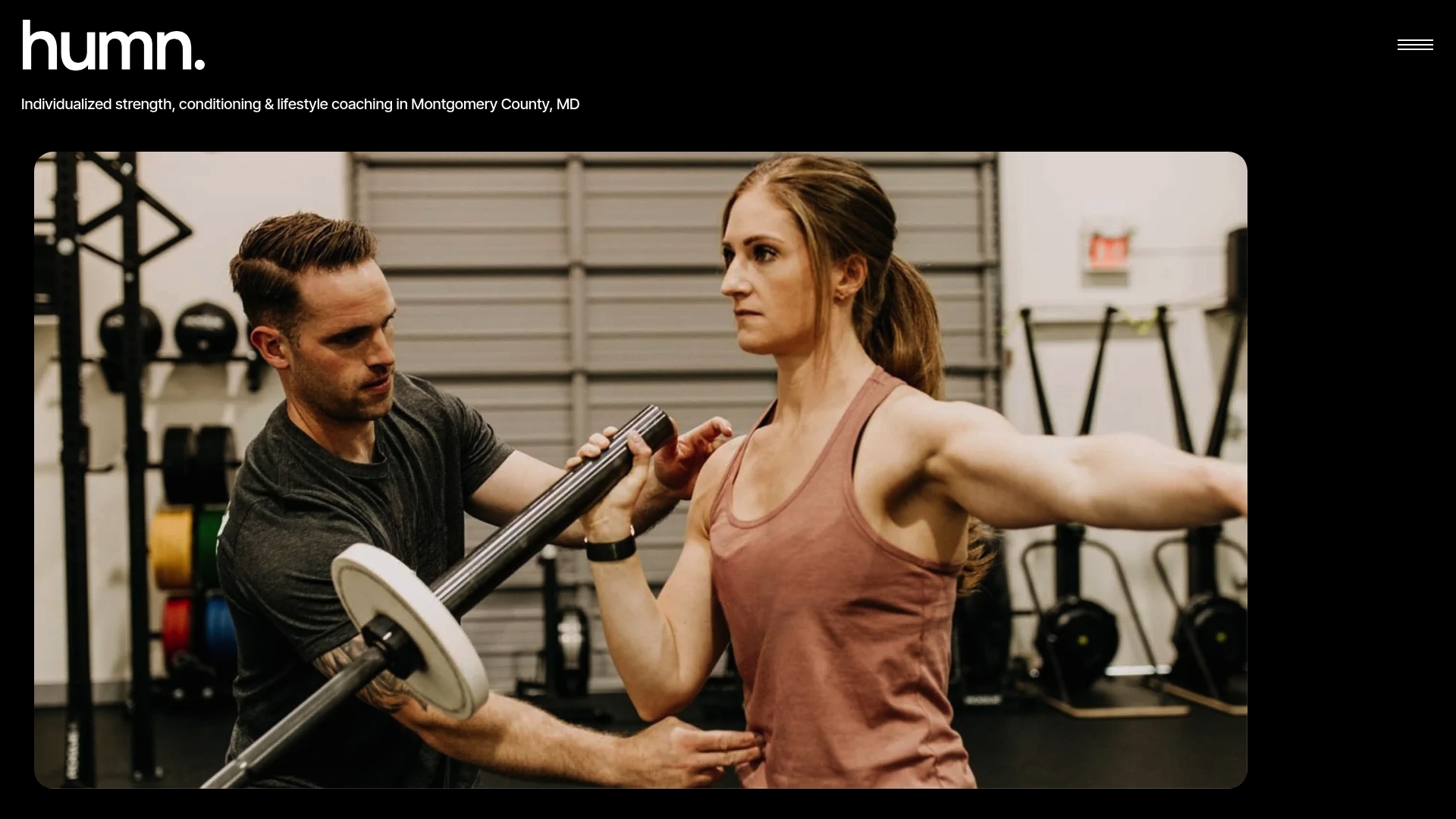
When you reach out, we start with a conversation about your goals, schedule and history. From there we map your program, explain how sessions and check-ins fit together and help you schedule your first visit. Current prices are on our website. To begin, visit our membership page and tell us what you want to change.
FAQ
Is a fitness coach worth it?
A fitness coach is worth it if your main challenge is consistency rather than knowledge. Coaching targets habits, sleep, stress and accountability, which is where most programs break down. Adults meet both federal activity guidelines, which suggests that knowing what to do is not enough on its own.
Is a fitness instructor the same as a personal trainer?
Not usually. A fitness instructor typically leads a group class with a set format, while a personal trainer assesses you individually and designs a program around your goals. Trainers also supervise technique one-on-one and adjust the plan as you progress.
How much does a personal trainer cost per month?
It depends on how often you train, your location and the pricing model. Trainers commonly charge by the session or hour, and coaches more often use monthly retainers or program packages. Compare the total monthly cost against what is included, not just the hourly rate.
Can I hire both a coach and a trainer?
Yes. Many people do, either through one integrated facility or with two professionals who coordinate. The ACE and Academy of Nutrition and Dietetics position supports collaboration between qualified practitioners working within scope.
No Comments.