


Small group training improves long-term adherence, builds social support that keeps you showing up, delivers personalized coaching at a lower cost than private sessions, and produces measurable gains in strength and cardiovascular health. These aren’t marketing claims. Peer-reviewed research and national physical activity guidance both point to the same conclusion: training with a small group, under a coach’s eye, changes behavior in ways solo workouts rarely do.
TL;DR:
- Small group training increases exercise adherence by fostering a sense of belonging and integrating activity into participants’ identities.
- Effective programs build social support through companionship, emotional validation, and informative feedback, which reinforce motivation and habit formation.
- Groups of four to eight provide a balance of personalized coaching and dynamic social interaction, aligning with most adults’ activity guidelines.
- Supervision, form correction, and progression are essential for safety, with ideal coaches actively observing during every set and tailoring exercises.
- Consistent attendance over six to eight weeks, with two to three sessions per week, is typically necessary to see meaningful physical and psychological benefits.
Table of Contents
- Top benefits of small group training
- How small group training produces results: psychological and program mechanisms
- Who benefits most and common small group formats
- Safety, supervision, and program design best practices
- Psychological benefits beyond motivation and support
- Where small group training falls short
- Small group training versus one-on-one and large classes
- Building stronger group cohesion in your sessions
- How often and how long you need to train to see results
- What to look for in program quality and coaching credentials
- Humn.'s perspective on pairing coaching with community
- If you want a structured small group program: humn.'s membership and trial options
- Sources
- FAQ
Top benefits of small group training
The appeal of small group training comes down to a handful of specific, evidence-backed advantages that show up again and again in the research.
- Better adherence and consistency: belonging to an exercise group is tied to stronger exercise identity and more weekly physical activity, likely because showing up becomes part of who you are, not just something on your calendar.
- Real social support: group members report companionship, emotional support, validation, and useful information from peers, all of which reinforce the habit.
- Accountability that works: a scheduled session with people expecting you tends to beat willpower alone.
- Coaching that’s still personal: most programs run coach-to-client ratios between 1:3 and 1:8, tight enough for a trainer to correct form and adjust motivation strategies for each person.
- Lower cost per session: splitting a coach’s attention across a small group cuts the price well below private training while keeping most of the individualized benefit.
- Measurable health outcomes: group-based programs have produced small but real reductions in blood pressure among adults with hypertension, alongside typical strength and cardiovascular gains.
Less than half of adults meet recommended activity levels, according to surveillance data cited in group exercise research, which is part of why structured group formats matter as a public health tool, not just a fitness trend.
How small group training produces results: psychological and program mechanisms
The benefits above don’t happen automatically. They come from specific mechanisms that link group dynamics to actual behavior change.
Social support in group settings tends to break down into distinct types, each doing different work. Emotional support helps you push through a bad week. Companionship support makes the session itself enjoyable rather than a chore. Informational support means someone corrects your squat depth before it becomes a habit. Validation support confirms you’re making progress even when the scale hasn’t moved.
Coaching mechanisms matter just as much. A trainer working with three to eight people can still watch each person’s movement pattern, track individual progress, and scale an exercise up or down on the spot. That combination, individualized cueing inside a social structure, is what research on shared personal training links to higher autonomous motivation and stronger exercise self-efficacy.
Put together, these mechanisms build what researchers call exercise identity: you start to see yourself as someone who trains, not someone who’s trying to. That shift is what separates a habit from a resolution.
- Belonging has to be built into the program design, not left to chance.
- Feedback loops (progress tracking, form cues, small wins) keep motivation internal rather than dependent on willpower.
Pro Tip: Ask a program how it creates connection between members, like partner drills or shared goal check-ins, rather than assuming people will bond on their own.
Who benefits most and common small group formats
Group size shapes the experience more than most people expect. Groups of three to eight are the most common because they’re large enough for real social dynamics but small enough for a coach to give individual attention.
- Very small groups (two to three people) offer the most individualized coaching but the least social variety and can feel awkward if personalities clash.
- Mid-size groups (four to eight people) tend to balance coaching attention with a livelier group dynamic and more scheduling flexibility.
- Larger formats (nine to twelve people) feel more like a class than a coached session, with less individual correction.
- Session frequency should follow the Physical Activity Guidelines for Americans, which call for 150 to 300 minutes of weekly aerobic activity plus strength training on two or more days.
- Format should match your goal: strength-focused small groups suit people chasing measurable lifts, while beginner-friendly formats prioritize movement literacy before intensity.
- Before joining, check the coach’s credentials, ask to see how they modify a exercise for different skill levels, and confirm the scheduling and makeup policy so a missed session doesn’t derail your routine.
Busy professionals in particular tend to do better with sustainable, realistic weekly schedules built around a job’s actual demands rather than an idealized routine they can’t keep.
Safety, supervision, and program design best practices
Supervision is not a luxury in group training, it’s the mechanism that makes progression safe. The Physical Activity Guidelines and related exercise science evidence both emphasize gradual progression and coached feedback as ways to reduce injury risk while improving adherence.
- A qualified coach should walk the room during every set, not just demonstrate once and step back.
- Warm-ups, cool-downs, and clear regressions for each exercise should be standard, not optional.
- Recovery guidance, like rest day spacing or mobility work, should be part of the program, not an afterthought.
Watch for a few red flags: no form checks during sessions, one-size-fits-all intensity regardless of experience level, or class sizes so large the coach can’t reasonably see everyone. Programs that build in progression and coaching cues, versus those that don’t, show measurably different adherence outcomes in ACSM’s exercise evidence statements, which tie supervised, progressive training to both better results and lower injury risk. Readers newer to structured exercise often find it easier to start with a beginner-focused program that builds these habits from day one.
Psychological benefits beyond motivation and support
Motivation and social support get most of the attention, but small group training tends to produce a quieter set of psychological shifts that matter just as much over time.
Exercise anxiety, the dread of being watched or judged while working out, tends to fade faster in a small group than in a crowded class or a solo gym floor. Part of that comes from familiarity: seeing the same five or six people every week turns strangers into training partners, and the self-consciousness that keeps a lot of adults from starting an exercise routine loses its grip.
Self-efficacy, your belief that you can actually do the thing, builds through repeated small wins that a coach notices and names out loud. Research on shared personal training links satisfaction with a small-group format to higher self-efficacy and more autonomous motivation, meaning people start exercising because they want to, not because they feel obligated.
There’s also a mastery effect that’s easy to overlook. Watching a peer struggle with the same movement you’re struggling with, then watching them improve, normalizes the process of getting better slowly. It replaces the all-or-nothing mindset that derails a lot of new exercisers with a more patient, incremental one. That shift alone can be the difference between quitting after a rough week and sticking around long enough to see real change.

Where small group training falls short
No format is perfect, and small group training has real tradeoffs worth knowing before you commit.
The most obvious limitation is individual attention. Even at a 1:3 ratio, a coach splits focus three ways, so subtle form issues can go uncorrected longer than they would in a private session. If you’re recovering from an injury or need close biomechanical attention, that gap matters more.
Scheduling is another common friction point. A private session bends to your calendar, but a group class runs on a fixed schedule, and missing a session often means waiting for the next one or hunting for a makeup slot. Programs with a clear hold and makeup policy reduce this friction, but it’s worth checking before you sign anything.
Group dynamics can cut both ways too. A supportive group accelerates motivation, but a mismatched group, wildly different fitness levels, personality clashes, or inconsistent attendance from other members, can quietly undercut the experience. And because pacing has to work for the group, highly advanced or highly deconditioned individuals sometimes find neither end of a mixed-level class challenges them correctly.
None of this cancels out the benefits, but it does mean small group training fits some situations better than others.
Small group training versus one-on-one and large classes
Private training offers the most individual attention: a coach’s full focus, exact pacing, and no compromise on programming. It costs more per session, and it strips out the peer accountability and social reinforcement that group formats provide. For someone rehabbing an injury or training for a specific competitive goal, that tradeoff often makes sense. For adults building a sustainable 1-on-1 coaching relationship around a busy schedule, the individualized attention can be worth the premium.
Large group classes sit at the other end. They’re typically the cheapest option and offer plenty of energy and social atmosphere, but coaching becomes generic. A class of twenty or thirty people can’t get individual form corrections, and pacing is set for the room, not the person.
Small group training lands in the middle, and that middle ground is exactly where the evidence points to the strongest combination of adherence and outcomes. You get a coach who still knows your name and your limitations, plus the social reinforcement that a private session simply can’t offer. It costs more than a large class but less than private coaching, and for most adults trying to build a lasting habit rather than train for a single event, it’s the format most likely to still have them showing up in six months.

Building stronger group cohesion in your sessions
Cohesion doesn’t happen just because people show up in the same room at the same time. It has to be built.
Start with consistency: attending the same time slot each week means seeing the same faces, and familiarity is what turns acquaintances into a support system. Programs that assign or rotate partner drills also speed this up, since working directly with someone creates a connection a shared room alone doesn’t.
Simple rituals help too. A coach who checks in on individual goals at the start of a session, or a group that acknowledges milestones like a first pull-up or a new personal best, reinforces the sense that people are noticed, not just counted. Research on supportive strategies in physical activity settings groups these tactics into functions like fostering connections, providing encouragement, and mastery feedback, all of which coaches can build into a session on purpose rather than hoping they happen.
On your end, showing up early enough to talk before the clock starts, or sticking around a few minutes after, does more for cohesion than most people expect. The relationships that form around the workout are often what keep people coming back long after the initial motivation fades.
How often and how long you need to train to see results
Most of the measurable benefits tied to small group training follow the same timeline as exercise generally: consistency over weeks, not days. The Physical Activity Guidelines for Americans recommend 150 to 300 minutes of moderate aerobic activity per week alongside strength training on two or more days, and that combination is where most of the cardiovascular and strength gains tied to group programs come from.
Behavior change itself tends to take longer to stabilize than the physical adaptations. A structured case study of a high-intensity functional training group that intentionally built community and gave individualized feedback recorded a 96.7% adherence rate over eleven weeks, suggesting that roughly two to three months of consistent group attendance is enough for the habit itself to take hold, even before every physical goal is met.
For most adults, that means committing to two to three sessions a week for at least six to eight weeks before judging whether a program is working, both for the physical changes and for whether the group itself feels like a fit worth keeping.
What to look for in program quality and coaching credentials
Not every small group program is built the same way, and the coaching behind it matters more than the workout itself.
Start with credentials: a coach should hold a recognized certification from an established body, and the program should be able to explain how coaches are trained to handle a room of mixed fitness levels, not just lead a single workout. Ask how the program handles someone new to exercise versus someone advanced in the same session. A program worth trusting can describe specific modifications on the spot, not a vague “we adjust as needed.”
Watch how a coach actually moves during a session. If they’re walking the room, naming cues, and correcting form in real time, that’s a sign the group ratio is genuinely being used for individual attention, not just marketing language. A progressive approach to strength training that builds week over week, rather than repeating the same workout indefinitely, is another marker of a program designed with real coaching behind it.
Finally, ask how progress gets tracked. A program that logs your lifts, checks in on goals, and adjusts programming based on that data is applying the same evidence-based supervision principles behind ACSM’s exercise recommendations, rather than running the same class on repeat regardless of who’s in the room.
Humn.'s perspective on pairing coaching with community
At humn., small group training is one piece of a four-pillar framework: Resist, Recover, Renew, and Rhythm. Resist covers the strength and conditioning work itself, delivered through small-group personal training built around habit-based coaching rather than one-size-fits-all workouts. Recover, Renew, and Rhythm extend that support into sleep, stress, and recovery services, because the evidence on adherence points to more than just the workout mattering.
Members train alongside a small group while still getting individualized coaching on form, pacing, and goals, paired with lifestyle coaching that addresses habits outside the gym. That combination reflects the same mechanism the research keeps pointing to: supervision plus belonging.
— Josh
If you want a structured small group program: humn.'s membership and trial options
If the research above has you convinced that small group training is worth trying, the next question is finding a program built around real coaching, not just a crowded room.
humn.'s Membership includes small group personal training paired with habit-based coaching, so you get the social reinforcement and accountability the research points to, plus individualized attention on form and progression.
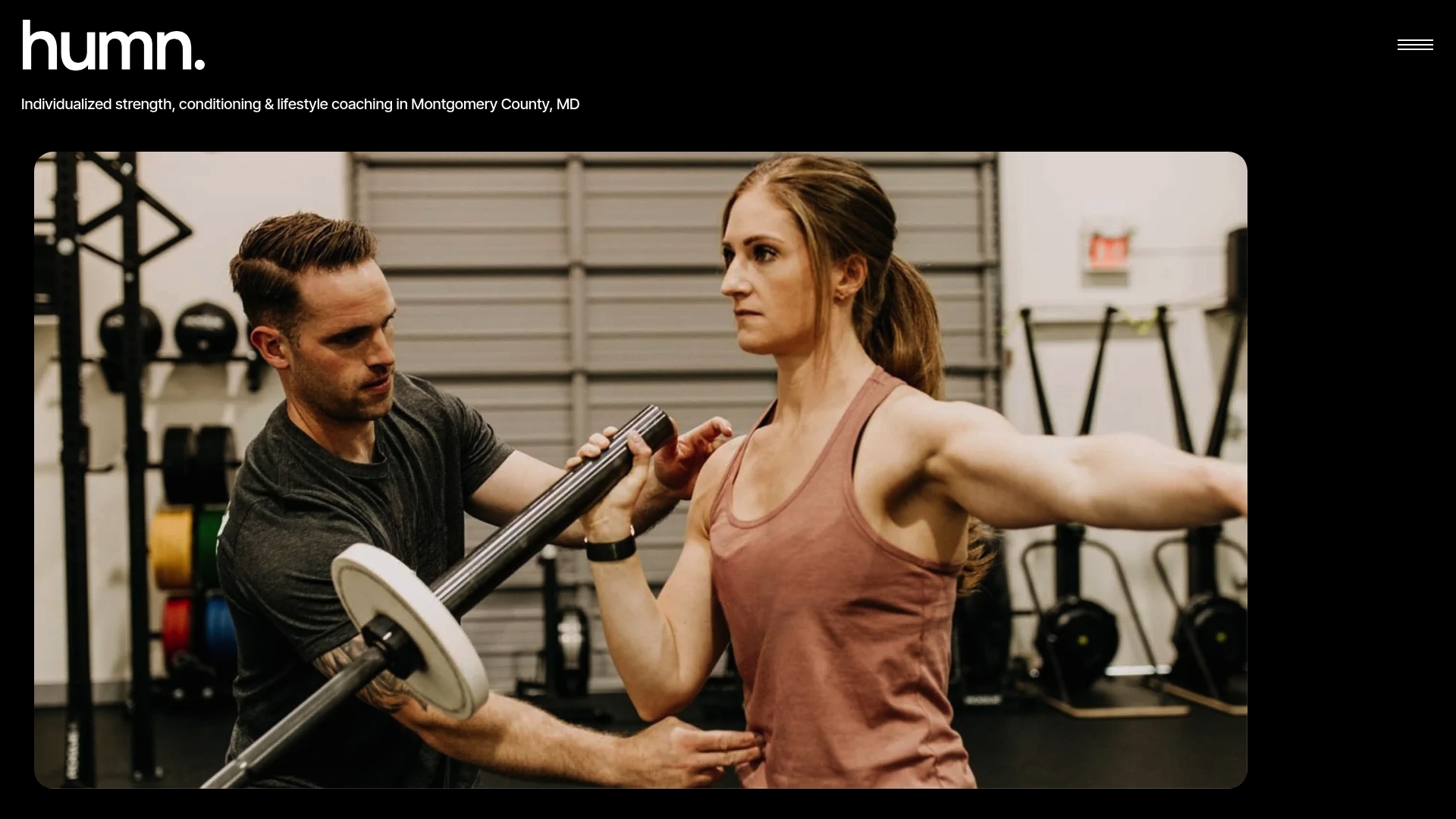
Members also have access to recovery services, including sauna, compression, and red light therapy, and 1:1 nutrition coaching for readers who want their training supported by better sleep, stress management, and eating habits. Busy professionals in particular tend to find that a program built around habits, not just workouts, is what actually sticks. If that sounds like the structure you’ve been missing, check membership details and get started.
Sources
- Sharing a personal trainer: personal and social benefits of individualized, small-group training
- Group exercise membership is associated with forms of social support, exercise identity, and amount of physical activity
- Physical Activity Guidelines for Americans, 2nd edition
- Group-delivered interventions for lowering blood pressure — systematic review and meta-analysis
FAQ
What are the benefits of taking small group classes?
Small group classes tend to improve adherence, provide social support that keeps you motivated, and give you individualized coaching at a lower cost than private training. Research on shared personal training links this format to higher self-efficacy and stronger autonomous motivation compared to training alone.
What is the 5 5 5 30 rule?
This isn’t a rule that appears in the exercise science or public health guidance referenced in this article. If you’ve seen it elsewhere, it’s likely a fitness influencer’s personal framework rather than an established, evidence-backed standard.
Is becoming a CPT worth it?
Whether a Certified Personal Trainer credential is worth pursuing depends on your career goals and isn’t something this article’s research covers. What the evidence does support is that clients benefit when their coach holds a recognized certification and demonstrates individualized cueing and progression.
Which of the following is a benefit of small group training in ISSA?
This article doesn’t cover ISSA’s specific curriculum or exam content, so a direct answer isn’t available here. Broadly, though, small group training’s documented benefits include stronger adherence, social support, and coaching at a lower per-person cost than private sessions.
No Comments.