

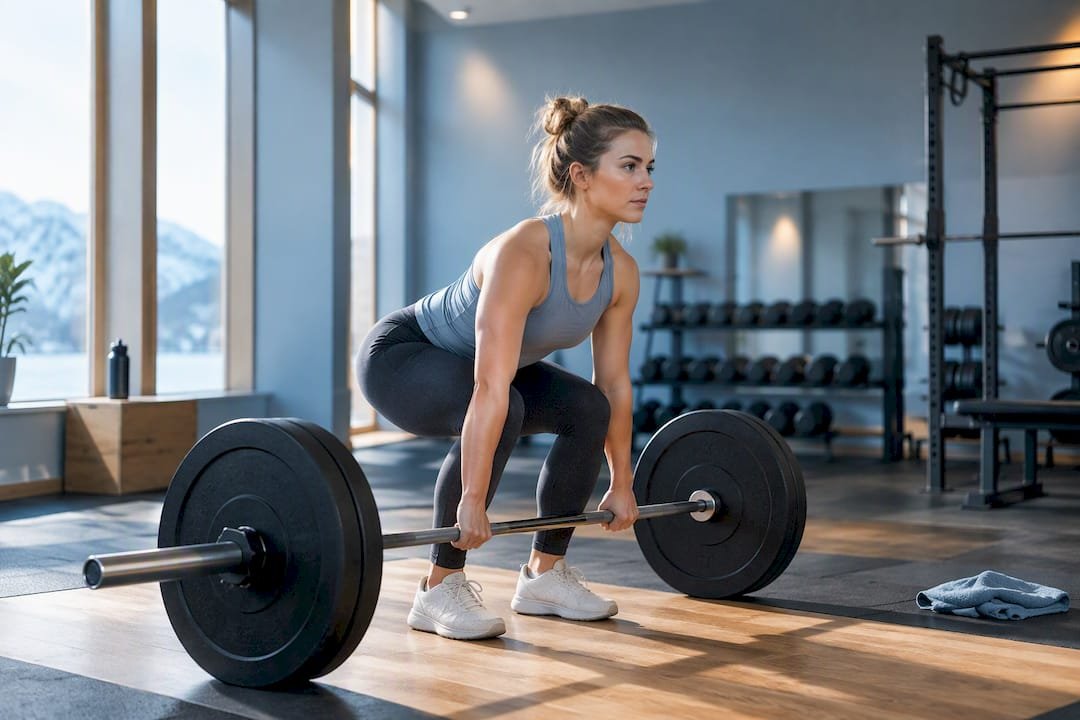
Start with a squat pattern, a hinge, a horizontal push, a vertical push, a pull, and a loaded carry. Pick three to five of those movements, practice them with bodyweight or light dumbbells twice a week, and let your technique catch up before you chase heavier plates. That order matters more than any specific exercise: compound lifts for beginners work best when you treat the first month as a skill-learning phase, not a strength test.
TL;DR:
- The first month should prioritize learning proper technique through bodyweight and light dumbbell variations before progressing to heavier weights.
- Compound movements like squats, deadlifts, push-ups, overhead presses, rows, pull-ups, lunges, and carries effectively target multiple muscle groups for efficient strength building.
- Technique mastery involves gradual progression from bodyweight drills to loaded versions, with attention to key cues like spine neutrality and proper joint tracking to minimize injury risk.
- Warm-ups should include light cardio and movement-specific rehearsals, lasting under ten minutes, to prepare joints and muscles and prevent strains.
- Consistent training, correct form, adequate recovery, and proper nutrition—especially protein, carbs, and hydration—are essential for optimal progress and injury prevention.
Table of Contents
- What Are the Best Compound Lifts for Beginners?
- How to Learn Compound Lifting Technique Without Getting Hurt
- Beginner Workout Templates You Can Start This Week
- Programming Basics: Sets, Reps, and Frequency That Actually Work
- Common Beginner Mistakes That Slow Down Progress
- Compound Exercises vs. Isolation Exercises: What’s the Real Difference?
- Warming Up Before Compound Lifts: What Actually Prepares Your Body
- Why Mobility and Flexibility Work Support Every Compound Lift
- Nutrition Basics That Support Strength Gains and Recovery
- How humn. Teaches These Same Lifts
- Want Someone Watching Your Form? Here’s What Coaching Adds
- Sources
- FAQ
What Are the Best Compound Lifts for Beginners?
A compound exercise moves more than one joint at once and recruits several muscle groups in a single rep. A squat bends your ankles, knees, and hips together. A bicep curl, by contrast, only moves your elbow, which makes it an isolation exercise. NASM notes that compound movements mimic real-world patterns like standing up from a chair or carrying groceries, which is exactly why they deliver more return per set than isolation work. For someone with limited gym time, that efficiency is the whole game.
Here are the eight movements worth learning first, organized by what they train and how to start light.
- Goblet squat. Trains your quads, glutes, and core while teaching hip and knee control. Hold a dumbbell or kettlebell at chest height and sit back into the squat as if lowering into a chair. Cue: knees track your toes, chest stays tall.
- Romanian or trap-bar deadlift. Builds the hip hinge that protects your lower back in daily life. Beginners often do better starting with a trap-bar or dumbbell version rather than a barbell pulled from the floor, since it reduces strain on the lumbar spine and starts from a higher position, according to reporting from Iowa Public Radio. Cue: push your hips back, keep the weight close to your shins.
- Push-up or bench press. Trains chest, shoulders, and triceps through a horizontal push. Start on your knees or with an incline if a full push-up is too much. Cue: elbows at roughly 45 degrees, not flared to 90.
- Overhead press. A vertical push using dumbbells or a light barbell that strengthens shoulders and core stability. Cue: brace your abs so your lower back doesn’t arch as the weight goes up.
- Bent-over or one-arm dumbbell row. Builds the back and biceps and balances out all that pushing. An inverted row (using a bar or straps) is a solid regression if a loaded row feels advanced. Cue: pull your elbow toward your hip, not your ear.
- Assisted pull-up or lat pulldown. Trains vertical pulling strength, which most beginners lack entirely. A resistance-band-assisted pull-up or a pulldown machine both work. Cue: lead with your chest, not your chin.
- Split squat or reverse lunge. A single-leg pattern that exposes and fixes balance issues a two-legged squat can hide. Cue: front shin stays close to vertical.
- Farmer’s carry. Simply walk while holding heavy dumbbells or kettlebells at your sides. It trains grip, core, and posture without any technical learning curve.
You don’t need a fully loaded rack to do any of this. Resistance bands and bodyweight variations are legitimate, evidence-backed options for beginners, not just placeholders until you can “afford real weights.”
How to Learn Compound Lifting Technique Without Getting Hurt
Technique comes before load, every time. The safest path follows a simple sequence: master the bodyweight pattern, then hold that position longer, then add reps and sets, and only then start adding weight.
Here’s what that looks like across movement patterns:
- Push: knee push-up → incline push-up → full push-up → dumbbell floor press → bench press.
- Squat: bodyweight squat → goblet squat → dumbbell front squat → barbell back squat.
- Hinge: hip hinge drill (no weight) → Romanian deadlift with light dumbbells → trap-bar deadlift → conventional barbell deadlift (if you want it).
- Pull: band row → inverted row → dumbbell row → weighted pull-up.
- Carry: light farmer’s carry → heavier carry → single-arm carry for added core demand.
Key cues to repeat in your head on every rep: keep your spine neutral, hinge from the hips rather than rounding your back, let your knees track over your toes, and brace your core with a breath before you load up. A systematic review of gym injuries found that most are multifactorial, tied to poor technique, overuse, and loading too aggressively too soon, with shoulders, elbows, spine, and knees taking the brunt of it.
Stop progressing and get in-person coaching if you feel sharp joint pain, one side of your body consistently working harder than the other, or your form breaks down no matter how light you go.
Pro Tip: Film yourself from the side during your first few weeks of squats and deadlifts. You’ll catch rounding backs and caving knees on video that you can’t feel in the moment.
Beginner Workout Templates You Can Start This Week
Two simple templates cover every major pattern without requiring a program you need a spreadsheet to follow.
Template A: goblet squat, dumbbell row, push-up, farmer’s carry.
Template B: Romanian deadlift, overhead press, split squat, inverted row.
- Alternate A and B, training two or three times a week with a rest day between sessions.
- 2 to 3 sets of 8 to 12 reps per exercise, resting 60 to 90 seconds between sets.
- Warm up with five minutes of light cardio and a few bodyweight reps of the day’s main lifts before adding load.
- Cool down with light walking and a few minutes of stretching for the muscles you just trained.
A basic 8 to 12 week arc looks like this:
| Weeks | Focus | Adjustment |
|---|---|---|
| 1–2 | Learn the patterns | Bodyweight or very light dumbbells, hit the full rep range with good form |
| 3–5 | Add reps | Stay at the same weight, push toward the top of your rep range (12) |
| 6–8 | Add sets | Once reps feel easy, add a third set before adding weight |
| 8 to 12 | Add load | Increase weight in small jumps once all sets hit 12 clean reps |
Two full-body sessions a week is enough to build real strength if you’re consistent; three sessions works if your schedule allows it and recovery keeps pace. Sleep and eating enough protein matter as much as the workout itself, something we’ll get into shortly.
Programming Basics: Sets, Reps, and Frequency That Actually Work
You don’t need a complicated periodization scheme to get stronger as a beginner. You need to show up, hit reasonable numbers, and repeat.
- Strength focus: 2 to 3 sets of 4 to 6 reps at a heavier load, once you’ve mastered the movement.
- General fitness/hypertrophy focus: 2 to 4 sets of 8 to 12 reps, which is friendlier for learning technique and builds muscle just as effectively for most beginners.
- Frequency: train each major muscle group at least twice a week, a baseline the ACSM’s updated resistance-training guidance backs directly.
Pick your starting weight by feel rather than a formula. If you can comfortably do more than 12 reps with clean form, add weight next session. If you can’t hit 8 reps, drop the weight. Small jumps (5 to 10%) beat big jumps that wreck your form. A reasonable rule: add reps first, then sets, then load, which mirrors the reps-first progression favored in beginner resistance-training guidance.
Keep a simple log, even if it’s just notes on your phone. Consistency beats any clever program you could design instead, and ACSM’s 2026 update makes that point directly: individualized, sustainable programming outperforms complexity for most people.
Common Beginner Mistakes That Slow Down Progress
Most setbacks come from a handful of repeatable errors, not bad luck.
- Loading a barbell before you’ve earned it with the bodyweight version.
- Skipping the warm-up because the workout “already feels short.”
- Chasing soreness by training the same muscles daily instead of resting.
- Ignoring mobility work until a joint starts complaining.
- Comparing your week-two numbers to someone else’s year-two numbers.
Most gym injuries trace back to technique breakdowns and loading too fast, not to compound lifts being inherently risky, according to the PubMed review on exercise selection and injuries. Auto-regulate by rating how hard each set feels rather than forcing a number on the bar. If pain is sharp, one side keeps outperforming the other, or your form isn’t improving even after weeks of regressions, that’s the signal to bring in a coach rather than push through alone.
Compound Exercises vs. Isolation Exercises: What’s the Real Difference?
A compound exercise moves two or more joints at once. A squat bends the ankle, knee, and hip together; a deadlift bends the hip, knee, and spine stabilizes throughout; a row bends the elbow and shoulder blade together. An isolation exercise, like a bicep curl or a leg extension, moves exactly one joint and targets one muscle group in relative isolation.
For a beginner, that distinction decides where your training time should go. Compound movements train multiple muscle groups per set, so a squat alone hits your quads, glutes, hamstrings, and core in the time it would take to do three separate isolation exercises to achieve a similar effect. NASM’s explanation of functional training ties this directly to daily movement: the coordination a squat demands transfers to getting up from a low chair or lifting a suitcase into an overhead bin in ways a leg extension never will.
Isolation work still has a place. It’s useful for fixing a lagging muscle or working around an injury that keeps you from loading a joint fully. But it shouldn’t be the foundation of a beginner program. Building your first few months around six to eight compound movements, the way most practical beginner guides recommend, gets you stronger faster and teaches your body to move as a coordinated unit rather than a collection of parts trained separately.
Warming Up Before Compound Lifts: What Actually Prepares Your Body
A warm-up for compound lifts needs to do two things: raise your heart rate slightly and rehearse the exact movement pattern you’re about to load. Five minutes of walking, cycling, or jumping rope handles the first part.
The second part matters more and gets skipped constantly. Before squatting with weight, do two sets of bodyweight squats. Before a deadlift, do a few hip hinges with no load, just to feel the pattern. Before pressing overhead, do some arm circles and a light band pull-apart to wake up your shoulders. This “movement rehearsal” warm-up primes the exact joints and muscles about to work, rather than generic stretching that doesn’t transfer to the lift itself.
A practical warm-up sequence for a squat-and-push session might run: five minutes of light cardio, ten bodyweight squats, ten arm circles each direction, then one very light set of the day’s first exercise before your working sets. That last step, often called a “ramp-up set,” is where a lot of beginners get hurt by skipping straight to their working weight. Going from zero to your heaviest set of the day with cold joints is one of the more avoidable ways to strain a shoulder or lower back.

Keep the whole warm-up under ten minutes. Beginners often either skip it entirely or over-invest in a 20-minute routine that leaves them tired before the real work starts. Neither extreme serves you. The goal is simply arriving at your first working set warm, not winded.
Why Mobility and Flexibility Work Support Every Compound Lift
Tight hips limit how deep you can squat. Stiff shoulders limit how far overhead you can press without your lower back arching to compensate. Mobility work isn’t a separate fitness goal from strength training. It’s the thing that lets you perform the lift correctly in the first place.
A beginner with limited ankle mobility, for instance, often rounds their back during a squat because their heels want to lift off the floor. No amount of coaching cues fixes that until the ankle mobility improves. The same logic applies to hip mobility and the Romanian deadlift, or shoulder mobility and the overhead press. Spending five minutes on targeted mobility drills before your lift addresses the actual constraint instead of masking it with a cue.
You don’t need a dedicated mobility day to get this benefit. Building two or three mobility drills into your warm-up, matched to whatever pattern you’re training that day, covers most of what a beginner needs. Hip circles and 90/90 stretches support squats and hinges. Shoulder dislocates with a band or a doorway pec stretch support pressing work. Ankle rocks support squat depth.

Flexibility and mobility aren’t identical, though they get used interchangeably. Flexibility is how far a muscle can stretch; mobility is how well a joint moves through its full range under control. Compound lifts demand mobility specifically, since you need active control through that range, not just a passive stretch. That’s why dynamic drills done as part of your warm-up tend to help more than static stretching held for 30 seconds before you lift.
Nutrition Basics That Support Strength Gains and Recovery
Your muscles rebuild between sessions, not during them, and that rebuilding needs raw material. Protein is the most direct lever a beginner has: aim for a serving of protein, roughly the size of your palm, at each meal, whether that’s eggs, chicken, fish, tofu, or Greek yogurt.
Carbohydrates matter more than beginners tend to assume. They refill the glycogen your muscles burn through during a lifting session, and running consistently low on carbs makes every workout feel harder than it should. You don’t need to obsess over exact grams. Eating a reasonably balanced plate, with protein, a carbohydrate source, vegetables, and some fat, covers most of what a new lifter needs.

Hydration affects performance more than most people realize during a first month of training. Even mild dehydration can make a set that should feel manageable feel much harder, and it slows recovery afterward.
Timing matters less than total daily intake. Eating a balanced meal within a couple of hours before or after training is plenty precise for a beginner. Save the detailed macro tracking for later, once training itself has become a habit rather than a chore. If you want a more personalized read on what your body needs, a structured 1:1 nutrition coaching conversation can shortcut a lot of the guesswork that trips up new lifters in their first few months.
How humn. Teaches These Same Lifts
Josh works with humn.'s coaching team, where the four pillar framework, Resist, Recover, Renew, Rhythm, shapes how new clients learn these exact movements. Movement screens and gradual progressions catch the same technique errors this article flags, while recovery tools help clients absorb the training instead of just accumulating fatigue.
— Josh
Want Someone Watching Your Form? Here’s What Coaching Adds
Reading about hip hinges and knee tracking gets you only so far. A coach in the room catches the compensation patterns you can’t see or feel yourself, in real time, before they turn into a nagging shoulder or knee issue.
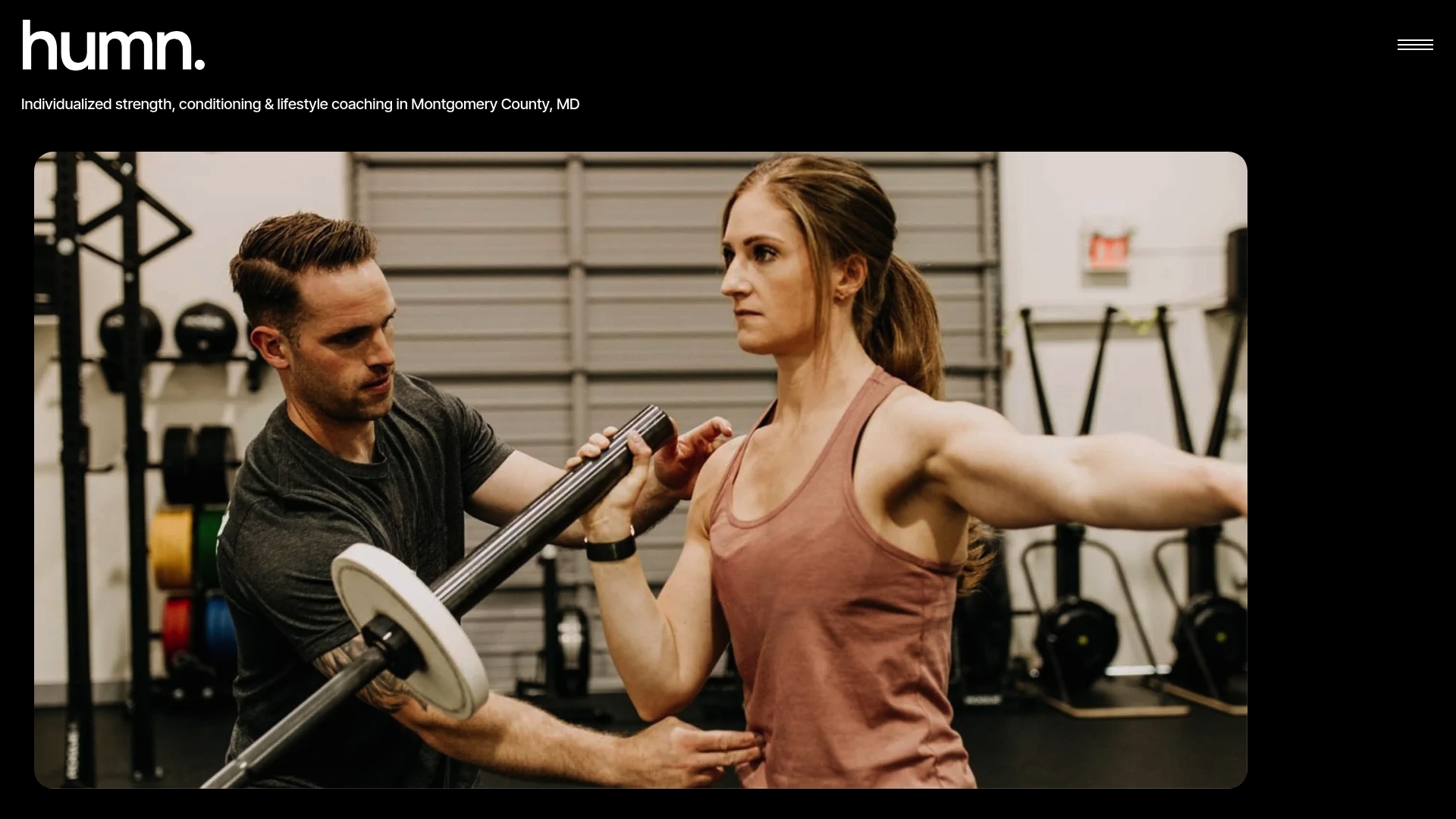
Coaching facilities often build beginner programs around a movement-first approach, including small-group personal training and coaching guidance, so you are supported in developing proper form. Recovery tools such as sauna, compression, and red light therapy may complement the training process to aid recovery. A first session typically starts with a movement screen and a conversation about your goals and schedule, then turns into a plan built around the patterns you personally need to work on, not a generic template.
If you’d rather learn these lifts with feedback than trial and error, check out humn.'s membership options or start with a program built specifically for beginners starting safely.
Sources
- ACSM resistance-training guidelines update 2026
- Exercise selection and common injuries in fitness centers: a systematic integrative review and practical recommendations | PubMed
- How personal trainers use functional training to improve real-world movement | NASM
- The 12 Best Compound Exercises for Beginners | Nerd Fitness
- Want to get stronger? Start with these 6 muscle-building exercises | Iowa Public Radio (NPR)
FAQ
What Is the 3-3-3 Rule in the Gym?
The 3-3-3 rule is a beginner-friendly framework that suggests a simple routine involving a few compound exercises and moderate volume, helping new lifters avoid overcomplicating their first few months. It’s less an official standard than a simple mnemonic some coaches use to keep new lifters from overcomplicating their first few months.
What Are the 5 Main Compound Lifts?
Most lists generally highlight the squat, deadlift, bench press, overhead press, and row as key foundational compound lifts. Between them, these five patterns cover pushing, pulling, hinging, and squatting, which is why practical beginner guides build entire programs around variations of just these movements.
Can You Build Muscle Just Doing Compound Lifts?
Yes. Compound lifts recruit multiple muscle groups per set, so a program built entirely around squats, deadlifts, presses, and rows delivers enough stimulus for most beginners to build real muscle and strength. Isolation exercises can help later for targeting a specific lagging muscle, but they aren’t necessary to see meaningful early progress.
What Are the Six Basic Compound Lifts?
A common six-lift list adds a pull-up or pulldown and a lunge or split squat to the standard five: squat, deadlift, bench press, overhead press, row, and pull-up. This six-move set covers every major movement pattern, which is why outlets like Iowa Public Radio frame it as a complete blueprint for a beginner’s first months of training.
How Much Does Coaching at humn. Cost?
Pricing for humn.'s membership and coaching options is available directly on the membership page, since it depends on which services you choose to combine.
No Comments.