

You build grip strength by training three things: crushing (fingers to palm), pinching (fingers to thumb) and supporting (holding a load for time). Do two sets of one or two grip exercises at the end of your strength sessions, two to four times a week. Keep your heaviest deadlifts and rows on a plan that uses straps or a hook grip when your hands give out first. The rest of this guide shows how.
TL;DR
- Grip comes in three forms: crushing, pinching and supporting. Train all three, not just hand grippers.
- Put grip work after your main lifts, about two sets per exercise, so tired forearms never cut your priority sets short.
- Two to four grip sessions a week is a sensible range. Tendons adapt more slowly than muscle, so build volume over months.
- On deadlifts, use a double overhand grip for warm-ups and as many working sets as you can. Then switch to a hook or mixed grip, or straps, for your top sets.
- A hand dynamometer is the standard way to measure grip. Track your own number over time rather than chasing someone else’s.
Table of Contents
- What grip strength is and why it matters
- The three types of grip
- Forearm strength exercises that work
- A weekly grip schedule that does not wreck your lifting
- Grip strength for the deadlift
- Lifting straps or hooks: which one fits
- How to measure your grip strength
- Grip training for everyday strength and balance
- Our take on grip training
- Train your grip with a coach in Gaithersburg
- Common grip training mistakes
- FAQ
- Sources
What grip strength is and why it matters
Grip strength is the force your hand and forearm muscles produce together when you grab, press, crush, rotate or pinch. It decides how heavy an object you can hold, pull or lift. You use it to open a jar, carry groceries or hang from a chin-up bar, and in the gym it often decides how long you can hold a barbell.
It also says something about the rest of your body. UCLA Health reports that grip strength is a reliable predictor of muscle strength, muscle mass, bone mineral density and nutritional status in adults. In older adults it points to vitality and predicts decline in physical and mental function. A Cleveland Clinic physician explains that grip is an easy-to-measure sign of how strong the rest of your body is.
A fair reading of the evidence matters here. Harvard Health notes that a weak grip is associated with lower total strength, reduced bone density, falls and fractures. It also says there is no evidence that building forearm muscle on its own improves longevity or overall health. What grip training reliably does is make gripping and grasping tasks easier, and that supports independence. For lifters, it removes a common bottleneck.
If you want the wider picture of how lifting supports long-term health, our guide to strength training for longevity covers the weekly dose that matters.
The three types of grip
The National Strength and Conditioning Association (NSCA) describes three main grip holds. Each one trains a different job for your hands.
| Grip type | What it is | Where you feel it | Example exercises |
|---|---|---|---|
| Crushing | Fingers squeezing into the palm | Finger flexors, forearm | Towel-wrapped implements, towel hangs, towel rows, hand grippers |
| Pinching | Fingers squeezing against the thumb | Thumb side of the hand and forearm | Plate pinches (two equal plates held together) |
| Supporting | Holding a load for time or distance | Whole hand and forearm, fatigue builds with time | Farmer’s carries, dead hangs, heavy barbell holds |
Most people over-train crushing grip, usually with a hand gripper, and neglect the other two. Supporting grip is the one a deadlift or a loaded carry tests, so it deserves the most attention if you lift.
Forearm strength exercises that work
You do not need a rack of gadgets. These movements cover all three grip types and fit into a normal session.
Supporting grip
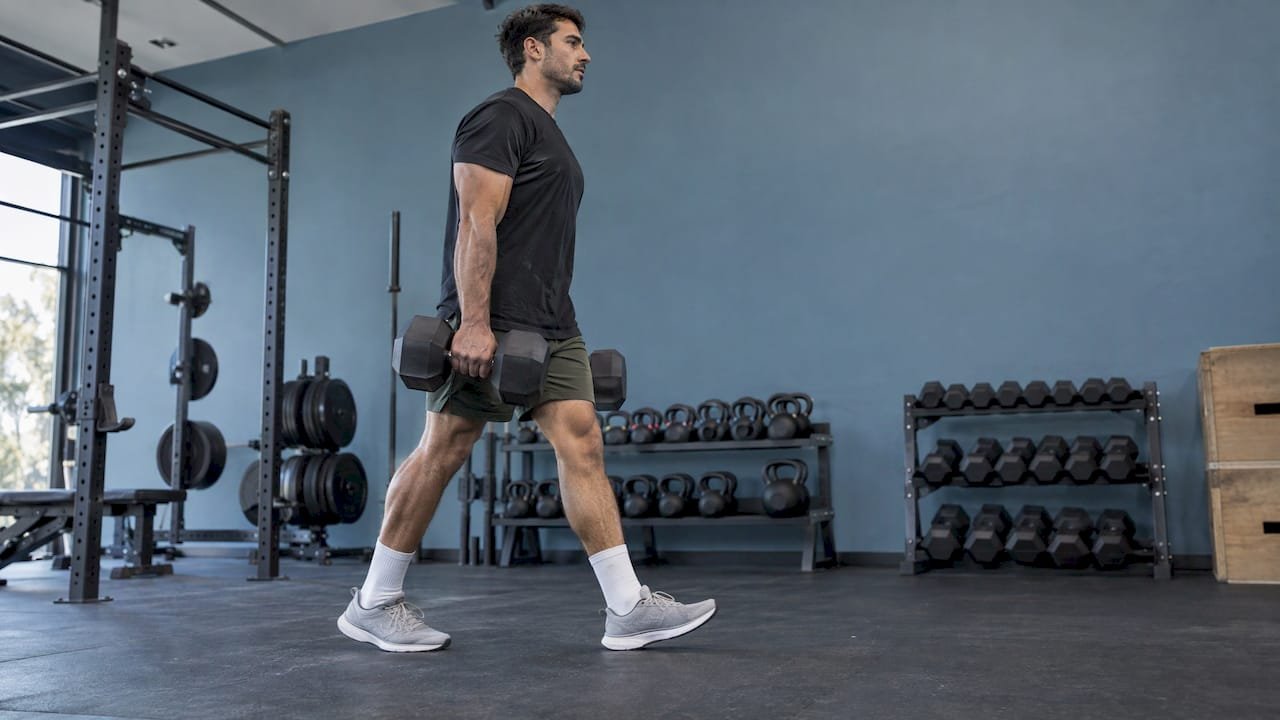
- Farmer’s carries. Hold a heavy dumbbell or kettlebell in each hand and walk. Add weight or distance as you progress. Wrapping a towel around the handle makes it thicker and harder.
- Dead hangs. Hang from a pull-up bar for time. Stop a few seconds before your hands open completely.
- Barbell holds. After your last deadlift set, hold the bar at lockout for as long as you can keep a double overhand grip.
Crushing grip
- Towel hangs and towel rows. Drape a towel over the bar and hold both ends. The thick, soft material forces your fingers to squeeze harder.
- Towel-wrapped dumbbell carries and kettlebell swings. The NSCA lists towel farmer’s walks, towel dumbbell carries and towel kettlebell swings as practical options that add grip demand to movements you already know.
- Hand grippers. Useful, but treat them as one tool among several, with sensible tension and recovery (more on this below).
Pinching grip
- Plate pinches. Hold two equal-weight plates together, smooth sides out, using only your fingers and thumb. Start with two light plates and hold for time.
Wrist and forearm work
Wrist curls, reverse wrist curls and thick-bar training all load the forearm muscles directly. They are fine accessories. Still, if you only have room for a few exercises, carries, hangs and pinches transfer most directly to lifting and daily life.
A weekly grip schedule that does not wreck your lifting
The NSCA advice is simple. Add grip-specific movements after most of your strength training is done, and use about two sets of a grip exercise to keep volume manageable. Plate pinches, towel farmer’s walks and towel carries belong late in the session, because working your hands and forearms early can fatigue them and hurt your priority lifts.
Here is a template you can adapt:
- Day A (lower body or pull day): finish with 2 sets of farmer’s carries, then a 2-set barbell hold or dead hang.
- Day B (upper body): finish with 2 sets of plate pinches or towel hangs.
- Day C (optional): 2 sets of one crushing exercise, such as a towel row or gripper work at moderate tension.
That is two to three short additions, about ten minutes each. If you already follow a progressive strength training plan, slot grip work in as the last exercise and apply the same rule: add a little weight, time or distance when the last session felt solid.
How often is too often?
One of the most common questions is whether it is fine to use hand grippers every day. ScienceInsights suggests two to four sessions per week is a reasonable range. It also points out that tendons in the hands and forearms adapt more slowly than muscles, so you may feel ready for daily training within weeks while your connective tissue needs months to catch up. A strength-and-wellness brand’s guide adds that 48 to 72 hours of recovery after intense sessions is a useful rule, while light movement such as wrist circles or soft ball squeezes can be done daily for blood flow.

In practice: keep high-tension work to every other day at most, and let easy mobility fill the gaps. If you feel pain at the elbow or along the inside of the forearm that lingers, ease off and see a physical therapist or sports medicine clinician. For help structuring rest around training, a daily routine for injury recovery shows how to organize rest and movement through the week.
Grip strength for the deadlift
The deadlift is where weak grip shows up first. Your back and legs can pull more than your hands can hold, and the set ends early. The fix is a progression, not a single trick.
Use the grip ladder
A common approach is to use a double overhand grip for all warm-ups and as many working sets as possible. That keeps the forearms working hard. Once the double overhand grip fails, move to a hook grip or a mixed (one palm over, one under) grip for your top sets, so you can keep loading the back and hips without your hands deciding the outcome.
- Double overhand: both palms facing you. Best for grip development.
- Mixed grip: one palm each way. Stops the bar rolling out of your fingers, though many lifters alternate hands between sets so one side does not always carry the load.
- Hook grip: your thumb sits under your fingers on the bar. It is secure but uncomfortable at first, so practice it on lighter sets.
Add straps for the heaviest work
One lifting-education site advises doing warm-ups and the first one to two working sets without straps, then strapping up for the heaviest sets where grip would otherwise limit you. That way you train your grip every session while your back still gets the load it needs. The same source notes that straps are not allowed in powerlifting competition, so if you compete, train your competition grip as well.

If your goal is to choose the bar that suits your body in the first place, read our comparison of the trap bar and straight bar deadlift. The handles on a trap bar change how much grip stress you feel at a given load.
Lifting straps or hooks: which one fits
Both tools take grip out of the equation on heavy pulls. They differ in how much help you get and how fast you can use them.
| Lasso straps | Figure-8 straps | Hook straps | |
|---|---|---|---|
| How they work | Loop wraps around the bar and your wrist | Loop passes through both wrists and the bar | A fixed hook holds the bar for you |
| Support | Strong | Very strong | Lighter support |
| Speed | Moderate setup | Slower, harder to release | Fastest to set up |
| Best for | General heavy pulls and rows | Maximum assistance on very heavy sets | Quick use between sets |
These distinctions come from LiftStrong’s guide, which recommends straps for heavy deadlifts, rows or shrugs when grip fails before the target muscles do. It advises against using them for warm-ups, competition deadlifts or every set.
A simple rule: use straps or hooks on the heaviest one to three sets, and train your bare hands on everything else. Finish the session with a carry or hold, so your hands still get a real workout.
How to measure your grip strength
Grip strength is measured with a hand dynamometer, a handheld device you squeeze as hard as you can. A reading such as 70 pounds only means something when you compare it with your own age, sex and starting point, and with repeat tests on the same device.
A home protocol from a health-tracking site is a good template:
- Sit upright with your elbow bent to 90 degrees and your wrist neutral.
- Adjust the handle so the second joint of your fingers sits at about 90 degrees.
- Squeeze smoothly for 3 to 5 seconds and record the number.
- Rest 30 to 60 seconds, then repeat twice more on each hand.
- Use your highest reading as your score.
The same guide notes that grip tends to be 5 to 10 percent weaker in the morning, so test at the same time of day each time. Retest every four to six weeks rather than every session.
If you are over 60 and your numbers drop quickly, mention it to your primary care clinician. As UCLA Health explains, clinicians treat declining grip as a marker worth watching.
Grip training for everyday strength and balance
Grip work pays off outside the gym. It supports carrying, opening, lifting and hanging on, and the Mayo Clinic’s education store links lower grip strength to increased risk of falls, injury, chronic disease and disability, especially in older adults. Falls are a leading concern with age, which is why grip is often paired with leg strength and stability work. A guide to balance training for seniors covers the stability side of that pairing.
For women starting strength training in their 40s and beyond, our strength training for women over 40 guide shows how to build the base that makes grip work easier to progress.
Our take on grip training
At humn., we see grip as a habit problem more than an exercise problem. People rarely lack a good grip exercise. They skip the ten minutes at the end of the session because the day was long and the plan was vague.
That is why we build grip into the structure of training instead of treating it as an extra. Our approach rests on four pillars: Resist, Recover, Renew and Rhythm. Grip lives in Resist, where your coach places carries, hangs and holds after your main lifts. It also touches Recover, because hands and forearms need real rest between hard sessions, and Rhythm, because small, repeatable work beats an occasional big effort.
Our coaches track your progress over time, so a better farmer’s carry or a longer hold is visible, not a feeling. We also look at sleep, stress and nutrition, because a tired, under-fueled lifter grips worse than a rested one. We designed our coaching for people who want a long-term partner, not a short-term transformation.
Josh
Train your grip with a coach in Gaithersburg
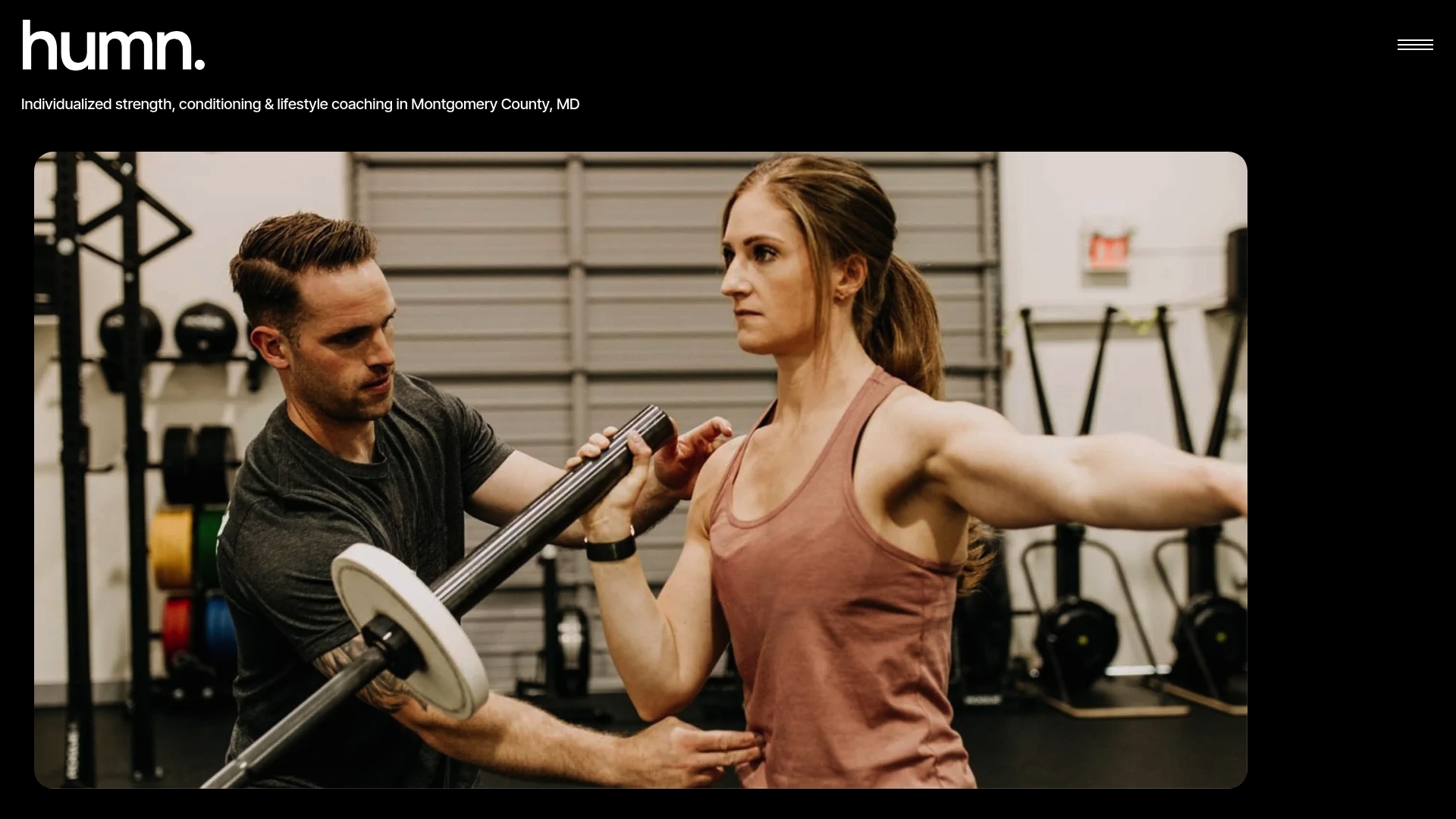
If you want grip work built into a plan that also covers strength, recovery and habits, humn. in Gaithersburg, MD offers small-group personal training and 1-on-1 coaching in a boutique, Nordic-inspired space. Your coach sets the exercises, the order and the progression, so you do not have to guess.
See how membership with small-group training and coaching works, or look at our recovery options, including sauna, compression, red light therapy and acupuncture, for the days when your hands and forearms need to recover.
Common grip training mistakes
- Training grip before your main lifts. Tired hands cut your heavy sets short. Keep grip work at the end.
- Only using hand grippers. They train crushing grip and little else. Add carries and pinches.
- Strapping every set. You lose the grip stimulus that makes your hands stronger. Save straps for the heaviest sets.
- Adding volume too fast. Muscle adapts quickly, tendons slowly. Add small amounts every week or two.
- Skipping recovery. Plan for 48 to 72 hours between hard grip days, and use light movement in between.
FAQ
Is it okay to do hand grippers every day?
High-tension grippers are best kept to a few sessions a week. Tendons adapt more slowly than muscle, and daily heavy work can lead to overuse problems. Light squeezes with a soft ball are fine for blood flow on off days.
Is grip strength training good for you?
It makes everyday tasks like carrying and opening things easier, and it helps lifters hold heavier weights. Harvard Health notes there is no evidence that grip training alone extends life, so treat it as one part of a complete strength plan.
What is the best way to improve grip strength for deadlifts?
Use a double overhand grip for warm-ups and as many working sets as you can, then switch to a hook or mixed grip, or straps, for top sets. Add farmer’s carries and barbell holds at the end of the session.
Should I use straps or hooks?
Straps give more support, and hook straps are quicker to set up but offer less. Use either one only on your heaviest sets, and train bare-handed the rest of the time.
How do I know if my grip strength is good?
Use a hand dynamometer, test at the same time of day, and track your highest reading across three attempts per hand. Compare it with your own past results first, and ask a clinician or coach how it fits your age and goals.
Sources
- Grip strength an important biomarker for assessing health, UCLA Health
- Forearm workouts: Strengthening grip for everyday function, Harvard Health
- What Grip Strength Says About Your Health, Cleveland Clinic
- Why Grip Strength is Important, Mayo Clinic Store
- Effective Methods of Grip Strength Development, NSCA
- Deadlift grip failing? How to fix weak grip, Lift5x5
- How to Use Lifting Straps, Belts, and Wraps Correctly, LiftStrong
- How to Use Hand Grippers Correctly and Safely, ScienceInsights
- Can I Do Forearm Workouts Everyday?
- Grip strength test at home, Superage
No Comments.