

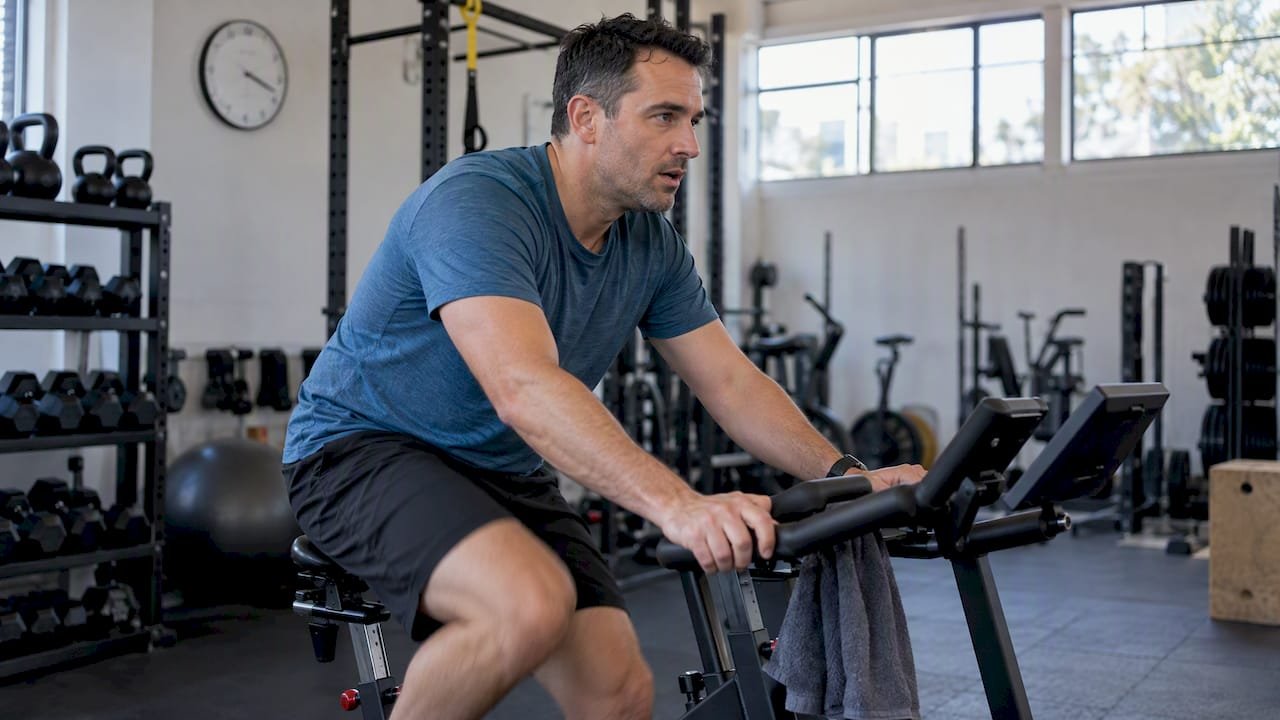
Yes, exercise can shift your circadian clock. Morning and early-afternoon exercise most often advances your internal timing, nudging your sleep and wake cues earlier, while late-evening exercise can delay it for many people. The exact hour matters less than consistency, and your own chronotype shapes how strongly you respond to either direction.
TL;DR:
- Human studies place peak clock advances near 7:00 AM and 1:00 to 4:00 PM, while delays peak around 7:00 to 10:00 PM.
- Late chronotypes advanced their clocks after either morning or evening exercise in one trial, while early chronotypes may be more sensitive to evening delays.
- Test timing systematically: log sleep for a baseline week, then compare morning or afternoon and evening workouts in separate weeks while holding intensity steady.
- For earlier sleep, try 30 to 60 minutes of moderate morning exercise with bright light after waking; late afternoon often favors strength and power.
- If evening sessions delay sleep, move intense work earlier, cool down, and dim lights and screens afterward; a walk may affect sleep differently than intervals.
Table of Contents
- What the research says: PRCs, reviews, and human trials in plain language
- How workout timing influences sleep onset and circadian phase
- When strength and endurance usually peak in the day
- Use chronotype and simple tests to pick the right timing for you
- Template schedules and rules-of-thumb for common goals
- Interaction of circadian rhythm exercise timing with nutrition and meal timing
- Age-related differences in circadian response to exercise timing
- Strategies to integrate circadian rhythm-based exercise into a comprehensive lifestyle program
- Our coaching view: prioritizing sustainable routine over perfect timing
- How personalized coaching helps you put circadian timing into practice
- FAQ
- Sources
What the research says: PRCs, reviews, and human trials in plain language
Human phase-response curve (PRC) research gives us the clearest map of when exercise shifts the clock forward or backward. The human circadian phase-response curve work found peak phase advances around 7:00 a.m. and again between 1 and 4 p.m., with peak delays showing up between roughly 7 and 10 p.m.
A controlled timed-exercise trial found morning sessions produced a small mean phase advance, compared to almost no shift from evening sessions, according to research on chronotype and phase shifts. That same study found late chronotypes advanced their clocks with either morning or evening exercise, a detail worth remembering if you stay up late by nature.
A few patterns show up across the literature:
- Single workouts rarely move melatonin timing in a reliable way, but repeated daily exercise can shift clock-gene activity in muscle tissue over days or weeks.
- Bright light paired with exercise tends to produce a stronger phase shift than either one alone.
- Study populations vary in age, fitness level, and baseline chronotype, which explains why no single timing rule fits everyone.
How workout timing influences sleep onset and circadian phase
Exercise raises core body temperature and triggers an alerting response, both of which can push back the natural drop in temperature that precedes sleep. That delay can, in turn, shift when your body releases melatonin, making it harder to fall asleep if the session sits too close to bedtime.
Morning and early-afternoon exercise generally align with phase advances and have been linked to better sleep outcomes in reviews of exercise and circadian regulation. Evening exercise doesn’t bother everyone. Survey data suggests roughly similar shares of adults report that morning or evening workouts help their sleep, so the effect is individual rather than universal.
A few adjustments help if you train later in the day:
- Add a proper cool-down instead of stopping abruptly after a hard set.
- Dim household lights and screens in the hour after an evening session.
- Pull high-intensity work earlier if you notice slower sleep onset on training nights.
Pro Tip: If you train in the evening and sleep gets worse, try shifting intensity down before you shift the clock entirely: a brisk walk affects sleep very differently than intervals.
For a deeper look at how the two windows compare, our piece on morning versus evening workouts walks through the trade-offs in more detail.
When strength and endurance usually peak in the day
Physiological readiness, including core temperature and neuromuscular output, tends to peak in the late afternoon for many people. A narrative review on circadian regulation in sport points to this window as favorable for acute strength and power output, which is part of why competitive late-afternoon performances are common.
That creates a genuine trade-off between performance timing and sleep-friendly timing:
- If performance is the priority, schedule your heaviest sessions for late afternoon and pair them with a sleep-friendly wind-down routine afterward.
- If sleep is the priority, favor morning or early-afternoon moderate sessions and extend your warm-up to offset lower body temperature at that hour.
- Consistency in training time often matters more than chasing the single best hour, especially for recreational training.
Sleep quality itself feeds back into recovery capacity, which we cover in more depth in our guide to sleep and muscle recovery.
Use chronotype and simple tests to pick the right timing for you
Chronotype describes your natural tendency toward earlier or later sleep and wake times. Early chronotypes tend to respond well to morning exercise and can be more sensitive to delays from evening sessions, while late chronotypes often advance their clocks with either morning or evening training.
A short, structured test beats guessing:
- Track a baseline week: log your usual sleep timing, sleep latency, and how rested you feel without changing anything.
- Run a morning or early-afternoon experiment the following week, keeping workout type and intensity as close to your baseline as possible.
- Run an evening experiment in week three, then compare sleep latency and morning alertness across all three weeks.
Sleep diaries and basic actigraphy are enough for most people; those using wearables can also watch heart rate variability trends for extra signal.
Pro Tip: Change one variable at a time. If you shift both your workout time and your caffeine timing in the same week, you won’t know which one moved your sleep.
Template schedules and rules-of-thumb for common goals
Three templates cover most goals:
- Phase advance (earlier sleep and wake times): 30 to 60 minutes of moderate aerobic work in the morning, paired with bright light exposure right after waking.
- Improve sleep quality without changing your schedule: 45 to 75 minutes of resistance training in the early afternoon, followed by a consistent evening wind-down.
- Performance peak: heavy lifting in the late afternoon with an extended cool-down and reduced bright light exposure in the evening hours.
A few habits strengthen any of these templates:
- Get outside or near a bright light source within an hour of waking if your goal is an earlier clock.
- Keep caffeine intake within roughly eight hours of your intended bedtime.
- Treat the recovery modality you choose, whether that’s red light exposure or a cooldown routine, as part of the same system as the workout itself; our note on red light before a workout covers how timing applies there too.
Partner guidance on warm-up routines, like this five minute warm-up audit from Recover 365, offers a useful reminder that preparation matters as much as the workout window itself.
Interaction of circadian rhythm exercise timing with nutrition and meal timing
Exercise and meal timing influence the same clock through overlapping pathways, so pairing them deliberately produces a stronger effect than treating them separately. Eating shortly before a morning workout can support the phase-advancing signal of early exercise, while a heavy meal right before a late-evening session can compound the alerting effect and push sleep onset even later.
Morning training paired with a light meal tends to support steadier energy through the session without adding to the temperature and arousal effects already at play. For afternoon or evening sessions, spacing the last substantial meal two to three hours before training gives your body time to begin digestion before the added stress of exercise.
Protein timing around training supports muscle repair regardless of the hour, but the circadian angle is really about avoiding stacking two arousing signals, food and exercise, too close to bedtime. Our guide on fueling a workout with proper nutrition breaks down timing in more detail for different training goals. Readers managing broader metabolic or weight goals alongside a timing change often benefit from pairing this with 1:1 nutrition coaching rather than adjusting meal and workout timing separately.

Age-related differences in circadian response to exercise timing
Circadian amplitude, the strength of the daily swing between your high and low points, tends to flatten somewhat with age, and sleep architecture shifts earlier for many older adults. That combination means older adults often find morning exercise easier to adapt to and may feel evening sessions disrupt sleep more noticeably than they did at a younger age.
Younger adults, particularly those with later chronotypes common in adolescence and early adulthood, often tolerate evening exercise better and may even see phase advances from it, consistent with the chronotype-dependent responses found in timed-exercise research. This is part of why a blanket “exercise in the morning” rule doesn’t fit every age group equally.
Middle-aged adults juggling work schedules often land in the early-afternoon window by necessity rather than design, which happens to overlap with one of the PRC’s advance-promoting periods. That’s a practical advantage worth recognizing if your schedule already pushes you there.
Across age groups, the same testing principle applies: track your own sleep latency and morning alertness for a few weeks before assuming your age group’s general tendency applies to you specifically.

Strategies to integrate circadian rhythm-based exercise into a comprehensive lifestyle program
Exercise timing works best as one piece of a larger system rather than an isolated fix. Pairing a consistent workout window with steady sleep and wake times, regular light exposure, and planned recovery tends to produce more durable results than adjusting exercise timing alone.
Recovery methods matter here too. Techniques like compression or sauna use can support the wind-down process after a later training session, while morning recovery routines can reinforce the alertness and light exposure that already come with an early workout. Active recovery days, covered in our guide to rest day activities, fit naturally into a rhythm-based plan without disrupting the timing you’ve settled on.
Watching for overtraining signals matters as you experiment, since fatigue and poor sleep can look similar to a timing mismatch when the real issue is total training load. Our breakdown of overtraining signs and recovery is a useful check if sleep quality drops despite a consistent schedule.
The strongest programs treat exercise timing, sleep habits, light exposure, and recovery as connected levers, adjusted together rather than one at a time.
Our coaching view: prioritizing sustainable routine over perfect timing
We built a four-pillar framework around the idea that timing only works inside a system that supports it. Rhythm is where we help turn PRC research into a schedule that fits an actual week rather than an ideal one.
We’d rather see someone train at the same imperfect hour every day than chase a theoretically perfect window twice a month. Small, testable adjustments, tracked over a few weeks, consistently beat guessing.
— Josh
How personalized coaching helps you put circadian timing into practice
Figuring out your ideal window takes more than a single article. A coach can build your training schedule around your sleep data, your chronotype signals, and your actual calendar, then adjust it as your response shows up in real sleep and performance tracking.

Our small group personal training and coaching programs include access to recovery tools like sauna and red light therapy that support whichever timing works for you. Check membership options to get started with a coach who builds your schedule around your own rhythm.
FAQ
What is the fastest way to adjust your circadian rhythm?
Combining morning bright light exposure with morning exercise produces a faster phase shift than either one alone, based on reviews of exercise and circadian regulation. Consistency across several days matters more than any single session.
What is the forbidden hour of sleep?
There is no scientifically defined “forbidden hour” of sleep. What research does support is that exercise too close to bedtime, especially high-intensity training in the late evening, can delay sleep onset for some people by keeping body temperature and alertness elevated.
How do I figure out what my circadian rhythm is?
A simple way is to track your natural sleep and wake times on days with no alarm or obligations for a week or two, which reveals your general chronotype tendency. Pairing that with a short A/B test of morning versus evening exercise, while logging sleep latency, gives you a practical read on your own response pattern.
Is a morning walk good for your circadian rhythm?
Yes, a morning walk combines light aerobic movement with outdoor light exposure, both of which support phase advances and an earlier, more consistent sleep and wake schedule. It’s a low-intensity option that most people tolerate well even on nonperforming days.
No Comments.