


Yes, caffeine can reliably improve many types of workout performance when you get the dose and timing right. A practical starting point is 2 to 3 milligrams per kilogram of body weight, taken about 45 to 60 minutes before training. Stick to measured sources like coffee, capsules, or gum, and avoid concentrated powders entirely, since they carry real overdose risk.
TL;DR:
- Consuming 2 to 3 mg of caffeine per kilogram of body weight about 45 to 60 minutes before training offers performance benefits without the jitters or stomach upset for most people.
- Caffeine’s primary effect is reducing perceived effort by blocking fatigue signals in the brain, with neuromuscular improvements also contributing, especially in power tasks.
- Endurance activities benefit most from caffeine, followed by repeated sprints and muscular endurance, while skill tasks see less consistent improvements.
- Excessive intake beyond 400 mg daily or concentrated powders can be dangerous, and late-session caffeine risks disrupting sleep, especially if taken within 4 to 6 hours of bedtime.
- Personalized testing and coaching help optimize dose, timing, and form, especially for sensitive groups like pregnant women or those with health conditions.
Table of Contents
- How much caffeine to take and when to take it
- Why caffeine changes how hard a workout feels
- What the research shows across endurance, strength, and sprint work
- Coffee, capsules, gum, or gels: choosing a delivery method
- How much is too much and what to watch for
- Build your own caffeine test to find your personal dose
- When caffeine before a workout costs you sleep
- Dosing caffeine for a race day, a heavy lift, or a late class
- How coaches put this into practice
- Does caffeine dehydrate you during exercise
- Caffeine alongside creatine, pre-workout blends, and other supplements
- Caffeine guidance for pregnant athletes, adolescents, and sensitive groups
- Where I land on caffeine as a training tool
- A more personalized way to dial in your caffeine strategy
- FAQ
- Sources
How much caffeine to take and when to take it
The most cited research range for exercise performance is 3 to 6 milligrams per kilogram of body weight, according to the International Society of Sports Nutrition position stand on caffeine and exercise. That range comes from decades of trials across endurance and strength sports, but it is a ceiling for many people, not a starting point. The same position stand notes that minimal effective doses can be as low as about 2 milligrams per kilogram, which means a smaller, better-tolerated dose often does the job without the jitters or stomach upset that come with pushing toward 6 milligrams per kilogram.
Here is what those numbers look like in practice:
- A 60 kilogram person: 120 to 180 mg at the low-to-moderate end, roughly one strong cup of coffee or a single gum piece.
- A 70 kilogram person: 140 to 210 mg, close to a standard 200 mg pre-workout capsule.
- An 80 kilogram person: 160 to 240 mg, about two cups of brewed coffee or one and a half capsules.
- A 90 kilogram person: 180 to 270 mg, which starts to approach the upper range most people should test cautiously before going higher.
One 200 milligram dose, taken about 70 minutes before intense cycling, cut perceived effort and improved a 15-minute time trial by roughly 5% in a randomized crossover trial of trained cyclists. That single data point explains why so much coaching advice centers on a 60- to 90-minute pre-workout window rather than chugging caffeine at the door.
Timing matters as much as dose. The traditional advice is to take caffeine 60 minutes before you train, giving blood caffeine levels time to peak. But the cyclist trial above found that ingestion timed to the hardest, most fatiguing part of the session mattered more than a fixed clock time measured from the start of exercise. That is useful if you are running a long event: a second dose, or a faster-acting form, timed to kick in during the hard middle or final stretch can matter more than what you took at the start line.
Different forms change how fast caffeine reaches your bloodstream. Brewed coffee and capsules take the standard 45 to 60 minutes to peak. Caffeinated gum and mouth rinses absorb partly through the cheek lining, which speeds things up considerably and makes them a useful tool when you need a late-race or late-session boost without waiting a full hour. If you are experimenting for the first time, start at the lower end of your calculated range, use a form you can measure precisely, and give yourself at least three sessions to judge how your body responds before adjusting upward.

Why caffeine changes how hard a workout feels
Caffeine’s main performance effect starts in the brain, not the muscle. It blocks adenosine receptors, and adenosine is the molecule that builds up during exercise and signals fatigue and sleepiness to your central nervous system. By occupying those receptors, caffeine blunts that fatigue signal, which is why a hard effort can feel noticeably more manageable at the same actual workload. This is also why caffeine so consistently lowers rated perceived exertion in controlled trials: you are not necessarily producing more power, you are perceiving the same power as less costly.
There are neuromuscular effects too. Caffeine appears to improve motor unit recruitment and the speed at which muscle fibers can contract, which shows up most clearly in tasks that depend on velocity and power output, like jump height, bar speed on a lift, or sprint acceleration. These effects tend to be smaller and more variable than the central nervous system effects, but they help explain why caffeine shows up in strength and power research, not just endurance studies.
On the metabolic side, caffeine stimulates the release of free fatty acids into the bloodstream, which was once thought to be the primary mechanism: more fat available for fuel theoretically spares glycogen for later in a long effort. Current evidence treats this as a real but modest contributor rather than the main driver of caffeine’s benefit. Caffeine is not a metabolic switch that turns your body into a fat-burning machine mid-workout. Its biggest, most reproducible effect is the reduction in perceived effort and the modest boost to neuromuscular output, and those two things combined are enough to produce measurable gains across a wide range of workout types.
This is also why effects vary so much by exercise type. A long steady effort, where fatigue perception accumulates gradually, gives caffeine’s central nervous system effect plenty of time to matter. A single maximal lift lasting a few seconds leaves little room for perceived exertion to shift the outcome, so the neuromuscular pathway carries more of the weight there.

What the research shows across endurance, strength, and sprint work
Caffeine’s effect size is not uniform, and knowing where it is the strongest helps you set realistic expectations rather than assuming a capsule will transform every session equally.
- Endurance exercise shows the most consistent benefit, with improvements in time-trial performance and sustained power commonly falling in a moderate range, and this is the category where the research base is deepest.
- Strength and power work shows more modest but still measurable gains, mainly in bar velocity, jump performance, and the ability to maintain output across repeated sets rather than in one-rep max strength itself.
- Repeated sprint efforts and muscular endurance tasks, the kind of stop-start intensity you see in HIIT or field sports conditioning, show reliable benefits across a range of study designs.
- Skill and precision tasks benefit less predictably, since the heightened arousal that helps a fatigued muscle push harder can sometimes work against fine motor control.
A British Journal of Sports Medicine umbrella review pooling multiple meta-analyses found that caffeine’s effect is generally larger for aerobic endurance tasks than for anaerobic ones, which lines up with the mechanism: a longer effort gives the perceived-exertion benefit more time to compound. The same review flagged an important limitation worth keeping in mind: a large share of the underlying studies were conducted in young men, so applying the same percentage gains to women, older adults, or adolescents involved in sport requires some caution rather than a direct extrapolation.
None of this means caffeine is a guaranteed unlock for every session. It means the evidence is strongest and most repeatable for sustained efforts, present but smaller for max-strength and power work, and genuinely useful for the kind of repeated, fatiguing intervals that define most conditioning programs. If your training is mostly endurance based, you have the most research-backed reason to experiment. If it is mostly heavy strength work, temper your expectations and watch for the side effects covered later, since the performance upside is smaller relative to the tradeoffs.
Coffee, capsules, gum, or gels: choosing a delivery method
The right form depends on how fast you need the effect and how your stomach handles it during exercise.
- Brewed coffee is the most accessible option and pairs caffeine with a ritual many people already have, but cup sizes and brew strength vary enough that precise dosing is difficult.
- Anhydrous caffeine capsules give you an exact, repeatable dose every time, which matters if you are tracking an N=1 experiment or calculating mg per kilogram carefully.
- Caffeinated gum and mouth rinses absorb partly through the cheek, so they tend to act faster than a capsule or coffee, useful when you need a boost mid-session rather than an hour ahead of time.
- Gels and energy drinks combine caffeine with carbohydrate, which is efficient for long endurance events but can cause gastrointestinal discomfort for people who are sensitive to concentrated sugar during exercise.
One real risk with modern pre-workout products and energy drinks is accidental stacking. A pre-workout scoop, a canned energy drink, and a coffee on the way to the gym can add up to well past what you intended, especially since labels list caffeine per serving and servings are easy to round up. Read labels on pre-workout blends specifically, since some combine caffeine with other stimulants under proprietary blend names that do not clearly state the total stimulant load.
Pro Tip: Keep one default caffeine source for training days so you always know your exact dose, and treat any additional coffee or energy drink that day as part of the same daily total, not a separate allowance.
How much is too much and what to watch for
The FDA’s consumer guidance on caffeine cites 400 milligrams a day, roughly four to five cups of coffee, as an amount not generally associated with negative effects for most healthy adults. That 400 mg figure is a daily ceiling, not a per-workout target, and it has to include everything: coffee, tea, pre-workout, energy drinks, and some over-the-counter medications. It is easy to clear that number without noticing if you have a morning coffee, a pre-workout dose, and an energy drink later in the day.
The FDA guidance is specifically blunt about one category: concentrated powdered and liquid caffeine products. A single teaspoon of pure powdered caffeine can contain an amount comparable to dozens of cups of coffee, and the margin between an effective dose and a dangerous one is extremely narrow with these products. The agency has linked them to deaths and treats many of them as a serious safety hazard. The practical takeaway is simple: use pre-measured tablets, capsules, or labeled single-serve products, and never eyeball a scoop of bulk powder.
Side effects to watch for during a workout include:
- Jitteriness or a racing heartbeat that interferes with controlling a lift or pacing a run.
- Gastrointestinal upset, including cramping or urgency, especially when caffeine is combined with a large pre-workout meal or a sugary gel.
- Noticeable anxiety or an inability to focus, which can outweigh any performance benefit for people who are sensitive to stimulants.
If you notice any of these consistently, the fix is almost always to lower the dose before abandoning caffeine altogether, since a smaller amount often still delivers most of the perceived-exertion benefit.
Build your own caffeine test to find your personal dose
Position stands and trial averages tell you what works for the people studied. Figuring out what works for you takes a short, structured experiment.
- Pick a training day you can repeat at least three times, separated by 48 hours or more, so fatigue from one test does not bleed into the next.
- Start with a low dose, around 1 to 2 milligrams per kilogram, taken 45 to 60 minutes before the session.
- Record the same three things every time: your perceived effort for a given weight or pace, your actual output (reps, load, pace, or power), and any gastrointestinal or anxiety symptoms.
- Note how you slept that night, since a dose that helps your workout but wrecks your sleep is not a net win.
- Repeat at a slightly higher dose on your next test day, up to the 3 to 6 milligram per kilogram range if the lower dose caused no issues and you want to see whether more helps.
- Compare the three sessions and keep the lowest dose that produced the performance benefit without side effects.
Pro Tip: Judge the test by whether your numbers improved, not by how energized you felt. Feeling wired is not the same as lifting more or running faster.
If you drink coffee daily, you are a habitual user, and research suggests habitual consumers still see ergogenic benefits from caffeine before a workout. You do not need to cycle off caffeine or go through a withdrawal period before running this test. Just test from your normal baseline rather than assuming you need to start from zero.
When caffeine before a workout costs you sleep
Training in the evening with caffeine in your system is a real tradeoff, not a hypothetical one. A systematic review of caffeine use before late afternoon and evening training found small reductions in objective sleep efficiency and more noticeable subjective complaints about sleep quality on nights when caffeine was used close to bedtime. The effect is not dramatic for everyone, but it is consistent enough to take seriously if you train late and value your sleep.
Caffeine has a half-life of roughly 5 hours in most adults, though this varies by genetics and by factors like hormonal contraceptive use, which can extend how long caffeine stays active in the body. That variability is why a blanket rule does not work for everyone.
Practical cut-offs to test:
- Start by avoiding caffeine within 4 to 6 hours of your planned bedtime and see how your sleep feels.
- If you are a slow metabolizer, or you notice trouble falling asleep even with a 6 hour buffer, push your cut-off earlier or skip caffeine for evening sessions entirely.
- Women using oral contraceptives may clear caffeine more slowly and could need a longer buffer than the standard 4 to 6 hour window.
- If a session is genuinely important and timed for the evening, consider a smaller dose than you would use in the morning, since even a partial performance benefit without a sleep cost often beats a bigger dose that leaves you staring at the ceiling.
If you train late regularly, the honest tradeoff is this: caffeine can help you push harder tonight, but poor sleep undermines the recovery that session was supposed to build toward. Readers who want a deeper look at how sleep quality affects recovery and adaptation can find more detail in how sleep supports muscle recovery.
Dosing caffeine for a race day, a heavy lift, or a late class
Different workouts call for different caffeine strategies, and matching the dose and timing to the actual demand matters more than following one fixed rule.
For an endurance race or long training session:
- Take 2 to 3 mg/kg about 60 minutes before the start.
- If the event runs longer than 90 minutes, consider a second, smaller dose or a piece of caffeinated gum timed to kick in during the hardest remaining stretch, since the fastest-absorbing forms work well when fatigue is already building.
- Pair this with your normal fueling plan rather than replacing carbohydrate intake with caffeine. For more on pre-workout fueling, see fueling your workout with proper nutrition.
For a heavy strength day:
- Keep the dose on the lower end, around 2 mg/kg, since the performance upside for maximal lifts is smaller and jitteriness can actually hurt control on a heavy attempt.
- Take it earlier in your warm-up window rather than right before your top set, so any initial jitters settle before you load the bar.
For a late-evening class or session:
- Use the minimum dose that still blunts perceived effort, often under 2 mg/kg.
- Time it as early as your schedule allows rather than right before the class starts.
- If sleep quality is a higher priority than squeezing out a marginal performance gain, skip caffeine for that session and rely on a proper warm-up and recovery tools instead. Readers who pair pre-session priming with recovery work might also look at red light therapy before a workout as a non-stimulant option for session prep.
How coaches put this into practice
A structured coaching environment turns the position-stand numbers and trial averages above into something personal rather than generic. Coaches working within a holistic fitness framework typically treat caffeine as one training variable among many: something to test, measure, and adjust rather than assume. A client who wants to use caffeine strategically typically runs a short trial similar to the protocol above, tracked alongside the metrics the coach already monitors for strength and conditioning progress.
Because a comprehensive coaching approach integrates recovery and nutrition with training, issues that caffeine testing often surfaces, such as poor sleep from late use or gastrointestinal discomfort from a particular form, are addressed directly rather than left for the client to solve alone. A coach might loop in 1:1 nutrition coaching to fine-tune pre-workout fueling around a caffeine dose, or suggest recovery modalities when evening training and late caffeine use start to erode sleep quality. This habits-first approach, explained further in what evidence-based fitness coaching looks like, is what separates a one-size-fits-all pre-workout recommendation from a plan built around how one person actually responds.
Does caffeine dehydrate you during exercise
Mild to moderate caffeine intake does not meaningfully dehydrate you during exercise. The old assumption that caffeine’s diuretic effect would compromise fluid balance during a workout has not held up under closer review: at the doses typically used for performance, caffeine does not cause a clinically significant loss of fluid during exercise, and hydration status is driven far more by sweat rate, heat, and how much you drink than by whether your pre-workout had caffeine in it.
This matters because some athletes still avoid caffeine before long or hot-weather sessions out of concern it will worsen dehydration. That caution is reasonable for other reasons, like avoiding extra GI stress or jitteriness in the heat, but not because caffeine itself is pulling meaningful fluid out of your system during a typical training session.
The practical guidance is straightforward: manage your fluid intake the same way you would on any training day, based on sweat loss, duration, and heat, and do not treat your pre-workout coffee or capsule as something that requires extra water to offset. Readers who want a deeper look at hydration strategy around training can find more detail in this guide to hydration for workouts. If you are prone to GI discomfort when combining caffeine with a hot, long session, the fix is usually dose and timing, not drinking more water to compensate for the caffeine itself.
Caffeine alongside creatine, pre-workout blends, and other supplements
Caffeine rarely shows up alone in a training routine. Most people are taking it as part of a pre-workout blend, alongside creatine, or on top of other supplements, and that stacking changes how you should think about dosing.
Creatine and caffeine do not conflict mechanically, but combining them does not multiply the effect of either, and some athletes report that high caffeine intake slightly blunts the subjective feel of a creatine-loading phase. This is not a reason to avoid combining them, just a reason not to expect the two to compound.
Pre-workout blends are where the real risk lies. Many combine caffeine with other stimulants, like synephrine or yohimbine, under proprietary blend names that do not clearly break out each ingredient’s dose. That makes it hard to know your actual caffeine intake, let alone your total stimulant load, and it is the most common way people unintentionally exceed what they intended to take. If you use a pre-workout product, check whether it lists caffeine content explicitly in milligrams rather than burying it in a blend, and treat that number as part of your daily 400 milligram ceiling.
Beta-alanine, citrulline, and carbohydrate-based gels do not meaningfully interact with caffeine’s mechanism, so stacking them is mostly a matter of personal GI tolerance rather than a performance interaction to worry about. The main rule across all of this: know your caffeine dose independent of whatever else is in the product, and count it toward your daily total the same way you would a plain cup of coffee.
Caffeine guidance for pregnant athletes, adolescents, and sensitive groups
The dosing and timing strategies in this guide are written for healthy adults, and several groups need different guidance entirely. Pregnant women are generally advised to limit caffeine intake well below the 400 milligram ceiling cited for the general adult population, and any caffeine use during pregnancy should be discussed with an obstetric provider rather than guided by sports-performance research, since the two bodies of evidence are not interchangeable.
Adolescent athletes are another group where general adult dosing does not simply scale down by body weight. Sports organizations and pediatric health guidance tend to recommend caution or avoidance of caffeine supplementation in younger athletes, separate from the performance literature covered here, which is drawn almost entirely from adult populations. A parent or young athlete with questions about caffeine use is better served by a pediatrician or sports medicine physician than by applying the milligram-per-kilogram math built for adults.
Anyone with a diagnosed heart arrhythmia, anxiety disorder, or a condition affected by stimulants should treat caffeine as a medical question first and a performance question second, and that conversation belongs with a physician rather than a training guide. For everyone else, the dosing framework above is a reasonable starting point, but “everyone else” specifically excludes pregnancy, adolescence, and diagnosed conditions where stimulant use carries its own separate risk calculus.
Where I land on caffeine as a training tool
Caffeine is one of the most well-studied and genuinely useful ergogenic aids available, but its value depends entirely on getting your own dose, timing, and tolerance right rather than copying someone else’s pre-workout routine. The research supports real, repeatable benefits, not hype, and that is a rarer thing in sports nutrition than most products would have you believe. Run the N=1 test outlined above before you trust any fixed number, including the ones in this article. If sleep, anxiety, or a heart condition are part of your picture, talk to a clinician before you talk to a calculator, and when in doubt on an evening session, choose the lower dose.
— Josh
A more personalized way to dial in your caffeine strategy
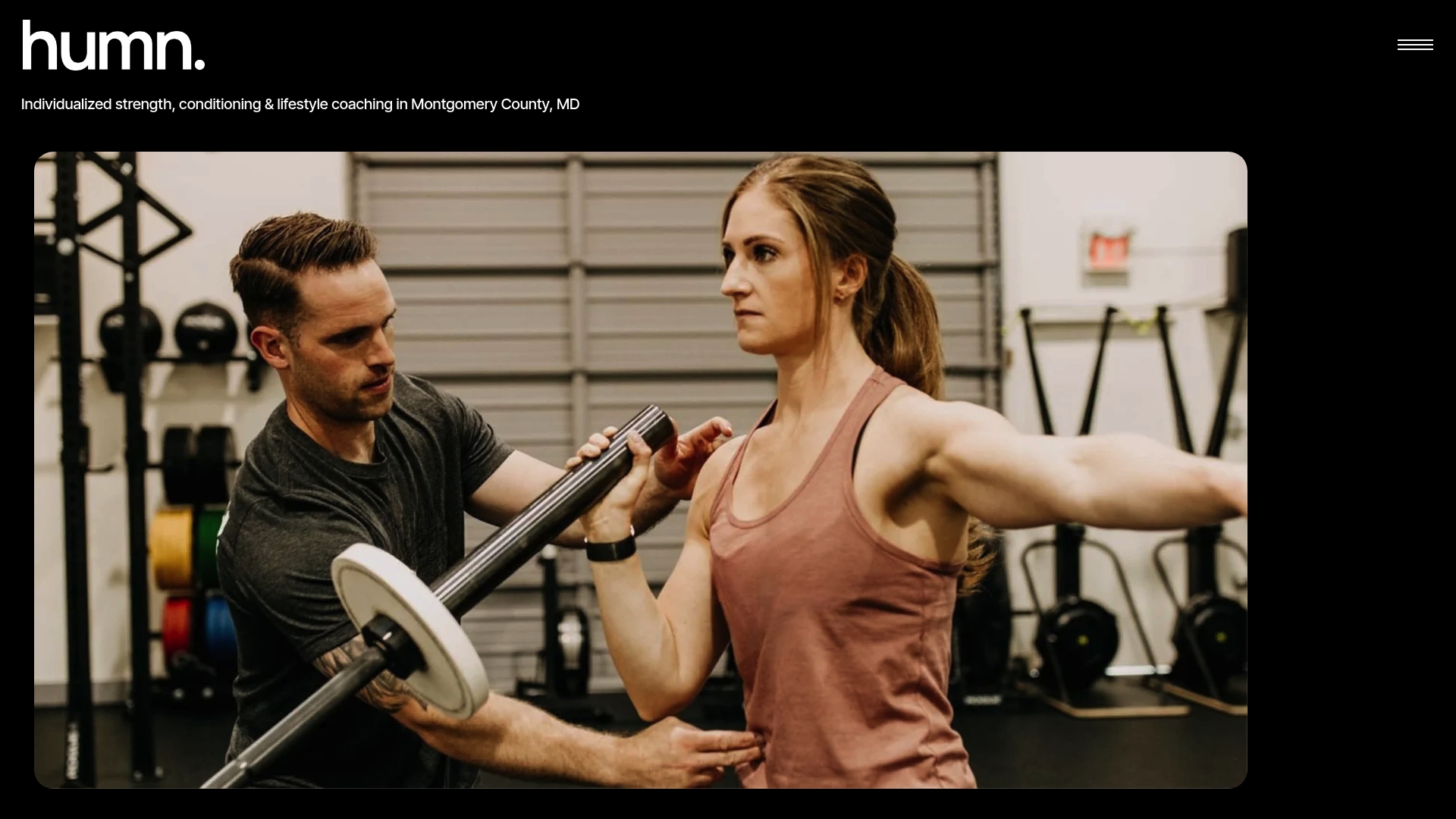
Everything above gives you a framework to test on your own, but testing alone means guessing at variables like sleep quality, nutrition timing, and recovery load without anyone checking the full picture. humn. coaches build that testing directly into individualized programming, so a caffeine trial is tracked alongside the training variables that actually determine whether it is working.
For training approaches where sleep and recovery intersect with pre-workout stimulant use, a structured coaching model covering training, recovery, lifestyle, and nutrition can help manage the tradeoffs. A coach can help you structure a caffeine trial inside your existing program, and 1:1 nutrition coaching can fine-tune timing around meals, while recovery services like sauna and red light therapy support the sleep side of the equation when late training sessions are unavoidable. None of this requires abandoning what already works for you. If you want a more structured, coached approach to the kind of self-experimentation outlined here, explore humn. membership options and see what a personalized plan looks like.
FAQ
Is it bad to drink caffeine while working out?
Caffeine is not inherently bad for most healthy adults during exercise, and research consistently shows it can improve perceived effort and performance at moderate doses. Problems arise mainly from excessive total daily intake, concentrated powder products, or combining caffeine with other stimulants without accounting for the total dose.
Does caffeine ruin gym gains?
Caffeine does not ruin training progress and can modestly improve strength and power output in some studies, particularly for bar velocity and repeated-set performance. The main way caffeine could undermine gains is indirectly, through disrupted sleep from late-day use, since sleep quality affects recovery and adaptation more than the stimulant itself.
What is the 2 hour coffee rule?
There is no single scientifically established “2 hour rule,” and caffeine guidance generally centers on a 60 to 90 minute pre-workout window based on how long caffeine takes to reach peak blood levels. For evening training, the more relevant guidance is a 4 to 6 hour buffer before bedtime to limit sleep disruption.
Why do athletes avoid caffeine?
Some athletes avoid caffeine because of individual sensitivity to side effects like jitteriness, anxiety, or gastrointestinal upset, or because they train in the evening and want to protect sleep quality. Others avoid it simply because the performance benefit is smaller for their specific sport, such as short maximal-strength efforts where caffeine’s effect is less pronounced than in endurance work.
Sources
- International society of sports nutrition position stand: caffeine and exercise performance
- Spilling the Beans: How Much Caffeine is Too Much? | FDA
No Comments.