


Yes: infrared saunas can deliver measurable benefits for circulation, pain relief, recovery, and stress and sleep when used correctly. Trials on far-infrared cardiovascular effects, WAON therapy in cardiac patients, and programs like humn.'s systems-based recovery model back this up. The caveat: evidence is strongest for cardiovascular and pain outcomes, thinner for detox and weight loss, and anyone with heart disease, pregnancy, or an implanted device should talk to a doctor first.
TL;DR:
- Infrared sauna sessions lasting 30 to 45 minutes at 110 to 140°F improve cardiovascular health, mimicking moderate exercise and benefiting blood flow and heart function.
- Evidence for pain relief and muscle recovery is preliminary, with small studies suggesting benefits for rheumatoid arthritis, fibromyalgia, and perceived soreness.
- Infrared saunas may support mood and sleep by activating the parasympathetic nervous system but are best used as an adjunct to other mental health and sleep strategies.
- Users should start with short sessions, hydrate properly, and avoid overheating risks, especially if pregnant, with heart conditions, or with implanted devices.
- Claims about detoxification, weight loss, and immune boosting are overstated; benefits mainly relate to cardiovascular conditioning, stress reduction, and recovery support.
Table of Contents
- What Is an Infrared Sauna and How Does It Heat the Body?
- What Cardiovascular and Pain Relief Benefits Does Research Support?
- Can Infrared Saunas Improve Mood and Sleep?
- How Should You Use an Infrared Sauna Safely?
- What Are the Risks and Who Should Avoid Infrared Saunas?
- Infrared vs Traditional Sauna: Which One Fits You?
- What Do the Strongest Studies Actually Show?
- Does Sweating in an Infrared Sauna Actually Detoxify You?
- Can Infrared Sauna Use Improve Skin Health?
- Does an Infrared Sauna Support Immune Function?
- Can Infrared Saunas Help With Weight Loss?
- Where Does the Science Fall Short?
- How I Fit Sauna Sessions Into a Real Recovery Program
- Ready to Add Supervised Recovery to Your Routine?
- Sources
What Is an Infrared Sauna and How Does It Heat the Body?
An infrared sauna uses electromagnetic wavelengths to warm your skin and tissue directly, instead of heating the air around you the way a traditional sauna does. That’s the entire mechanism, and it’s why the two experiences feel so different.
Cabin temperatures in infrared units typically run 110 to 140°F, compared with 175 to 200°F in traditional saunas. Because the heat penetrates tissue rather than just warming the surrounding air, sessions tend to run longer, often 30 to 45 minutes versus 15 to 20 minutes in a traditional cabin, to reach a comparable physiological response.
That response is the point. Inside a few minutes, you’ll notice:
- Increased blood flow to the skin as vessels dilate to release heat
- A heart rate climb that can resemble a brisk walk or light jog
- Sweating that ramps up as your body works to cool itself
The body is essentially responding to passive heat stress the way it responds to mild cardiovascular exercise. That overlap is the foundation for most of the benefits discussed below.
What Cardiovascular and Pain Relief Benefits Does Research Support?
The clearest evidence for infrared sauna benefits sits in cardiovascular function and chronic pain management, not in the vaguer “detox” claims that dominate marketing copy.
On the cardiovascular side, regular sessions raise heart rate and improve blood flow in a pattern that mimics moderate exercise, according to research on far-infrared saunas and cardiovascular risk factors. Controlled far-infrared protocols, known as WAON therapy, have gone further in cardiac patients: randomized trials found improvements in cardiac index and reductions in BNP, a biomarker of heart strain, among heart-failure patients using supervised sessions, per trial data on WAON therapy and cardiac outcomes. Broader systematic reviews of heat therapy report reductions in blood pressure and improved vascular function across heat modalities, with infrared-specific studies smaller in scale but directionally consistent.
Statistic Callout: Infrared sessions run 30 to 45 minutes at 110 to 140°F to reach the same cardiovascular response that a 15 to 20 minute traditional sauna session produces at 175 to 200°F.
Pain relief has a real but more preliminary evidence base. Small clinical studies suggest infrared sauna use can ease stiffness and improve range of motion in people with rheumatoid arthritis and fibromyalgia, though sample sizes tend to be modest.
For recovery after training, the picture is promising but still developing:
- Heat exposure triggers heat shock protein responses linked to muscle repair, based on research on heat shock proteins and sauna exposure, though infrared shows generally smaller effect sizes than traditional dry heat for some biomarkers
- Athletes commonly report reduced perceived soreness after infrared sessions, even where the biomarker data is still catching up
- None of this rivals the decades of longevity data behind traditional Finnish sauna use, and that gap matters when you’re weighing modalities
Can Infrared Saunas Improve Mood and Sleep?
Heat exposure activates your parasympathetic nervous system, the “rest and digest” branch that counters chronic stress activation. That shift is the likely mechanism behind reported mood and sleep improvements, though the research is still young.
The most notable recent finding comes from work combining infrared heat exposure with cognitive behavioral therapy: UCSF’s Osher Center HEATBed research found meaningful reductions in depressive symptoms in some study participants when the two were paired. That’s a specific, promising signal, not proof that a sauna alone treats depression.
Realistic expectations matter here:
- Sessions can lower perceived stress and support a wind-down ritual before bed
- Combining heat with structured movement appears to compound the mental health benefit, echoing findings on exercise and mental health
- An infrared sauna works best as an adjunct to sleep hygiene and, where needed, clinical treatment, not a replacement for either
How Should You Use an Infrared Sauna Safely?
Getting the benefits without the crash comes down to pacing, not intensity. Rushing into 45 minute sessions in week one is the most common mistake.
- Start at 15 to 20 minutes for your first week, at the lower end of the temperature range, to gauge your tolerance.
- Progress by 5 minute increments each week until you reach a comfortable 30 to 45 minute session.
- Aim for three to four sessions per week for recovery goals; some cardiac rehab protocols use near-daily supervised sessions, but that frequency belongs under clinical guidance, not self-directed use.
- Hydrate before and after, replacing electrolytes as well as water since infrared’s longer sessions push more fluid loss than a quick traditional sauna visit. humn.'s sauna hydration guidance breaks down the ratios.
- Cool down gradually afterward instead of jumping straight into a cold shower or driving off immediately.
Pro Tip: Eat a light meal an hour before your session. Going in fasted or right after a heavy meal is the fastest way to feel dizzy or nauseated halfway through.
Skip alcohol before and immediately after a session. It compounds dehydration and blunts your ability to notice early warning signs of overheating.
What Are the Risks and Who Should Avoid Infrared Saunas?
The main risks are dehydration and blood pressure swings, both manageable with basic awareness.
Watch for these warning signs during a session:
- Lightheadedness, blurred vision, or a racing heart that feels disproportionate to the heat
- Nausea or a sudden headache, both early markers of dehydration or overheating
- Fainting or near-fainting (syncope), which means you’ve pushed too far and need to exit immediately
Certain people need a clinician’s go-ahead before starting: pregnant women, anyone with unstable cardiac conditions, and people with implanted electronic devices like pacemakers. Some medications, particularly those affecting blood pressure or hydration status such as diuretics, can also interact with heat exposure in ways worth discussing with a doctor first.
If symptoms appear, the response is simple: stop the session, move to a cool space, and rehydrate with water and electrolytes. If fainting, chest pain, or confusion occurs, treat it as an emergency and seek medical care rather than waiting it out.
Infrared vs Traditional Sauna: Which One Fits You?
Neither modality wins outright. Each solves a different problem, and the “right” one is usually whichever you’ll actually use.
- Temperature and humidity: Traditional saunas run hotter and drier (or steamier, with added water), while infrared stays lower and gentler on the airway
- Session length: Infrared sessions run longer (30 to 45 minutes) to hit a comparable physiological effect that a 15 to 20 minute traditional session achieves faster
- Installation and cost: Infrared units often plug into standard outlets and need less electrical capacity, which buyer guidance on infrared versus traditional saunas notes makes them more accessible for home use
- Evidence depth: Traditional Finnish saunas carry decades of cohort data linking regular use to lower cardiovascular mortality; infrared has narrower but real trial data in cardiac rehab and heat-sensitive populations, according to National Geographic’s coverage of infrared health claims
If you run hot easily or don’t tolerate steam well, infrared’s lower cabin temperature likely means you’ll use it more consistently, and consistency is what actually drives results.
What Do the Strongest Studies Actually Show?
Strip away the marketing and a few trials carry real weight. The rest is directional evidence that needs more replication before it earns firmer claims.
The far-infrared cardiovascular trial data is solid on acute physiological response: measurable increases in heart rate and blood flow during sessions. The WAON cardiac trials go further, showing improved cardiac index and lower BNP in heart-failure patients under supervised, controlled protocols, a meaningfully stronger result than a general wellness claim.
Statistic Callout: WAON therapy trials in heart-failure patients recorded measurable improvements in cardiac biomarkers, including reductions in BNP, under controlled far-infrared protocols.
Where the evidence gets thinner:
- Mortality and longevity data remain far stronger for traditional Finnish sauna cohorts than for infrared
- Depression symptom reduction, per the HEATBed research, looks encouraging but comes from work still combining heat with therapy, not heat alone
- Detox and weight loss claims lack trial-level support entirely, discussed further below
The practical takeaway: three to four moderate sessions weekly, building tolerance gradually, is where the trial data actually points, not daily marathon sessions chasing a bigger effect.
Does Sweating in an Infrared Sauna Actually Detoxify You?
Not in the way the marketing implies. Sweat is mostly water and sodium chloride, and it isn’t a meaningful pathway for eliminating heavy metals, alcohol, or other toxins from your system. Your liver and kidneys handle that job, continuously, regardless of how much you sweat in a cabin.
Where the claim goes wrong is conflating “feels cleansing” with “is clinically detoxifying.” A hard sweat session leaves you lighter on the scale and often mentally clearer, and that’s a real, valid experience. It just isn’t your body flushing out toxins in the sense the word “detox” implies to most people. Marketing language around infrared sauna “detox” benefits is overstated, and health-conscious readers deserve the more accurate framing.
What actually happens physiologically is still worthwhile: your body loses water and electrolytes rapidly, your kidneys and liver continue their normal filtering work unchanged, and the sensation of “detoxing” is largely the relaxation response paired with fluid loss. That’s why hydration protocols matter more for infrared sessions than for a quick traditional steam. You’re not clearing toxins faster. You’re just losing fluid faster, and you need to replace it deliberately.
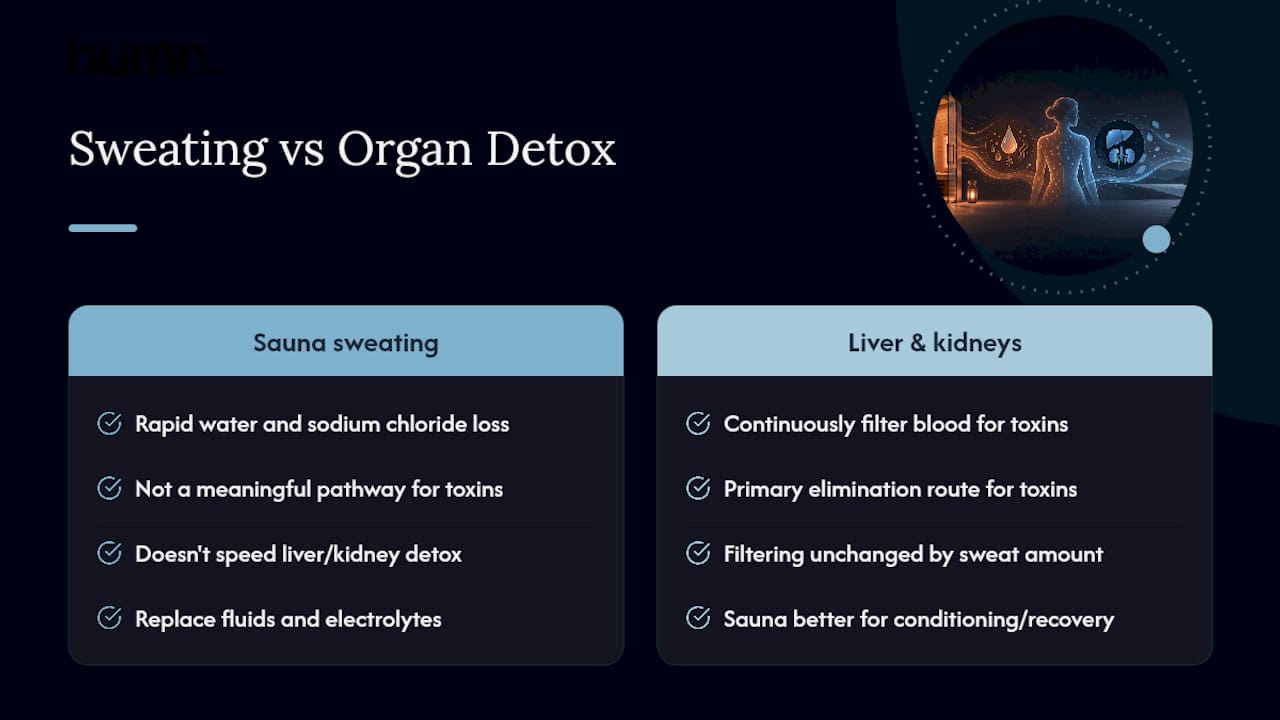
If detoxification is your primary reason for sauna use, recalibrate the expectation. Use it instead for what the data actually supports: cardiovascular conditioning, muscle recovery, and stress reduction. Those benefits are real and documented. The detox framing is the weakest part of the entire infrared sauna pitch, and it’s worth saying plainly rather than repeating the marketing line uncritically.
Can Infrared Sauna Use Improve Skin Health?
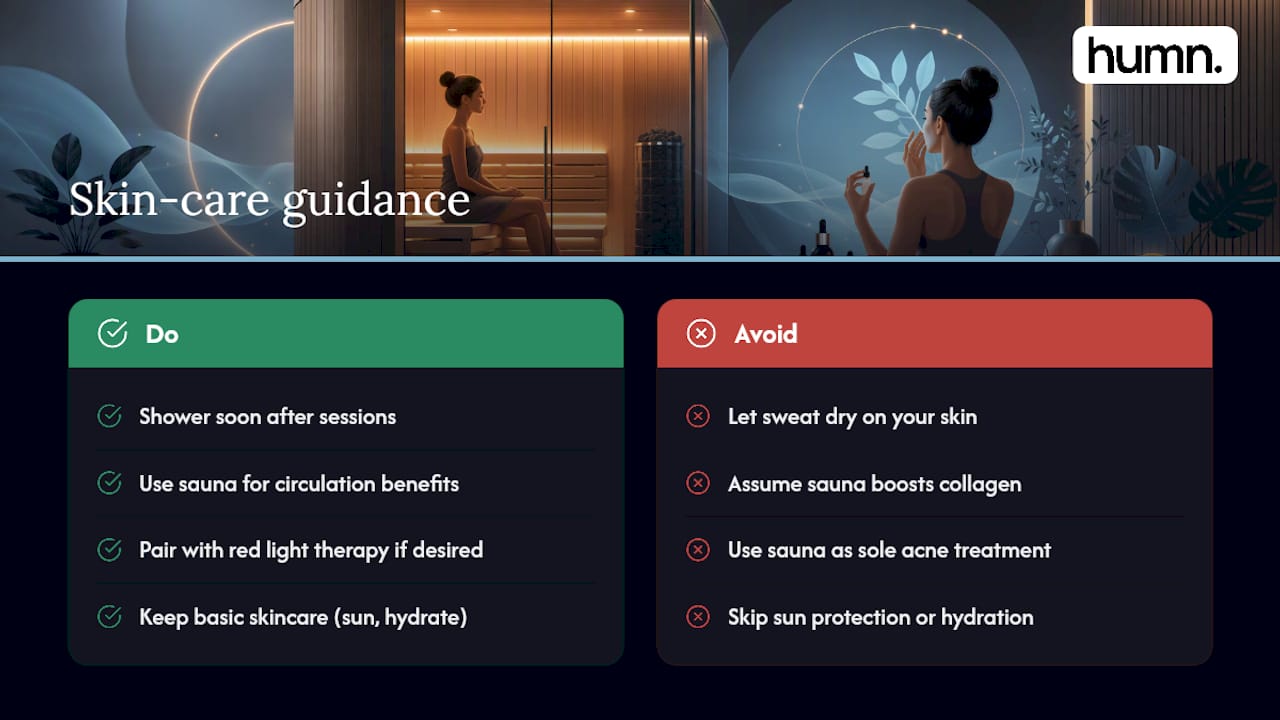
Heat exposure increases blood flow to the skin, and that circulation boost is the mechanism behind most reported skin benefits. More blood flow means more oxygen and nutrients reaching skin cells, which plausibly supports the appearance of healthier, more resilient skin over time.
Collagen production claims get thrown around often in infrared marketing, but the direct evidence connecting sauna-level heat exposure to measurable collagen synthesis in humans is thin. What’s better supported is the circulation mechanism itself: increased blood flow during and after sessions is well documented, and improved circulation is a reasonable contributor to skin tone and texture over repeated use.
Acne is a more mixed case. Sweating opens pores and can help clear surface debris, but sweat sitting on skin for extended periods can also aggravate certain acne types if not washed off promptly afterward. The practical guidance: shower soon after a session rather than letting sweat dry on your skin.
For readers specifically chasing skin outcomes, infrared sauna use pairs naturally with other recovery tools. Red light therapy, for instance, works through a different mechanism, specific light wavelengths rather than heat, and some readers use it alongside infrared sauna sessions as part of a broader recovery routine. Neither is a substitute for basic skincare fundamentals like sun protection and hydration, but both can be reasonable complements to a routine you already have in place.
Keep the claim proportionate: better circulation, plausible support for skin appearance, no strong human trial data on collagen synthesis specifically from infrared exposure.
Does an Infrared Sauna Support Immune Function?
The honest answer is that the evidence here is the thinnest of any benefit category covered so far. Heat exposure does trigger a mild, temporary stress response in the body, and some researchers have theorized that repeated, moderate heat stress could have a training effect on immune function, similar to how exercise conditions the cardiovascular system.
That theory is plausible but not established through the kind of large, controlled human trials that back the cardiovascular findings discussed earlier. Media coverage of infrared health claims tends to mention immune support as a passing benefit, but it rarely holds up to the same scrutiny as the far-infrared cardiovascular trials or the WAON cardiac data.
What’s more defensible is an indirect argument: infrared sauna use can improve sleep quality and reduce perceived stress for some people, and both sleep and stress are well established as factors that influence immune resilience. So the pathway may be real, just indirect, rather than infrared heat directly boosting immune cells or antibody production the way some marketing implies.
If immune support is a goal, treat infrared sauna use as one input among several, not a standalone solution. Sleep consistency, nutrition, and stress management carry far more established evidence for immune resilience than heat exposure alone. Use the sauna as a supporting habit within that larger picture, not the centerpiece of an immune strategy.
Can Infrared Saunas Help With Weight Loss?
Short-term weight loss from a sauna session is mostly water weight, and it comes back as soon as you rehydrate. That’s worth stating clearly before any deeper discussion, because a lot of infrared marketing leans on the number on the scale immediately after a session, which is misleading.
The more legitimate metabolic angle is the cardiovascular load itself. Because infrared sessions push heart rate up in a pattern similar to moderate exercise, as documented in far-infrared cardiovascular research, there’s a modest caloric cost to a session, roughly comparable to light physical activity rather than a structured workout. It’s a supplement to an exercise routine, not a substitute for one.
There isn’t strong trial evidence that infrared sauna use meaningfully shifts long-term metabolism or body composition on its own. The physiological load is real but modest compared to resistance training or sustained cardio, and no credible research supports sauna use as a standalone weight-loss strategy.
Where it may help indirectly: post-workout sauna sessions support recovery, and better recovery often means more consistent training weeks, which is what actually drives body composition change over months. If weight loss is the goal, an infrared sauna works best as a recovery tool sitting alongside strength training and cardio, not as the primary lever. That distinction gets lost in a lot of consumer-facing content, and it’s the single most important correction to make.
Where Does the Science Fall Short?
A few honest limitations deserve airtime before you build expectations too high. Sample sizes in infrared-specific trials tend to run smaller than the decades of Finnish sauna cohort data, which means effect sizes reported for things like pain relief and mood improvement carry wider uncertainty than the cardiovascular findings.
The mortality and longevity question is the clearest gap. Long-term studies linking regular sauna use to lower cardiovascular mortality come almost entirely from traditional Finnish sauna populations. Infrared simply hasn’t been tracked over the same multi-decade timeframes, so claims that infrared delivers equivalent longevity benefits are extrapolation, not established fact.
Publication bias is another factor worth naming. Much of the enthusiastic infrared coverage comes from industry-adjacent buyer guides and wellness media rather than independent, large-scale randomized trials. That doesn’t make the underlying physiology wrong, heat does raise heart rate and improve circulation, but it means some specific claims (immune boosting, collagen synthesis, detoxification) outpace what controlled research actually demonstrates.
The most scientifically solid ground is cardiovascular response and heat-therapy adjacent pain relief. The softest ground is detox, standalone weight loss, and immune claims. A useful mental model: trust the physiological mechanisms that are well documented (heat raises heart rate, improves blood flow, triggers a stress response) and treat anything built on top of those mechanisms as a plausible but unproven extension until better trials arrive.
How I Fit Sauna Sessions Into a Real Recovery Program
The mistake I see most often is treating infrared sauna use as an isolated wellness activity instead of one piece of a recovery system that includes sleep, nutrition, and training load. A sauna session after a heavy lower-body day makes sense: it supports circulation and perceived recovery right when your muscles need it. A session in the evening, disconnected from training, works better as a stress-management and sleep-prep tool.
Neither use case replaces the other, and trying to make one sauna habit do both jobs usually dilutes the benefit. The programming question that actually matters isn’t “how often should I use the sauna,” it’s “what is this session doing for me today: recovery support or nervous system reset?” Answer that first, and the hydration and timing decisions follow naturally. humn.'s recovery services and hydration protocols exist specifically to help members make that distinction instead of guessing.
— Josh
Ready to Add Supervised Recovery to Your Routine?
Infrared sauna access can be integrated as part of a larger recovery system, not a standalone wellness trend, complementing strength training, hydration guidance, and sleep support rather than existing in isolation.

Sauna sessions can be programmed around actual training load rather than a generic weekly schedule. If chronic soreness, poor sleep, or inconsistent recovery habits are the real problem you’re trying to solve, a sauna alone won’t fix it, but a coached recovery plan built around one might. Explore humn.'s recovery offerings and book an assessment to see how sauna access fits into a program built around your specific training and recovery needs.
Sources
- Far-infrared saunas for treatment of cardiovascular risk factors
- HEATBed 2024 (UCSF Osher Center)
- Heat therapy and cardiovascular outcomes (systematic review)
- WAON therapy and cardiac outcomes (trial summary)
No Comments.