


Yes, fiber can increase satiety, but the effect depends heavily on fiber type, dose, and food form. Viscous soluble fibers and certain dextrins show the most consistent evidence for reducing hunger and blunting subsequent food intake. For most adults, a practical target sits between 25 and 30 grams a day, with a floor of 20 to 25 grams when cutting calories for weight loss.
- Viscous soluble fibers (guar gum, β-glucan, alginate) and dextrins (polydextrose, resistant maltodextrin) have the strongest data behind them
- General target: 25 to 30 grams per day for most healthy adults
- Weight-loss floor: at least 20 to 25 grams per day even on a reduced-calorie plan
- Ramp up gradually. Jumping straight to high doses invites gas and bloating
Most Americans land closer to 15 grams a day, well under even the conservative end of these targets.
TL;DR:
- Consuming 25 to 30 grams of viscous soluble fibers or dextrins daily provides the most consistent satiety benefits, especially when spread across meals.
- To support weight loss, keep fiber intake at a minimum of 20 to 25 grams per day and avoid drastic increases overnight to prevent gastrointestinal discomfort.
- Dietary sources like berries, lentils, and bran cereal are effective for reaching fiber targets, with supplements serving as a backup when meals fall short.
- Increasing fiber gradually over two to four weeks while boosting water intake prevents bloating and promotes better adherence.
- Targeting 14 grams of fiber per thousand calories is a helpful rule, and consistency is more important than precision in reaching daily fiber goals.
Table of Contents
- How Fiber Influences Fullness: Physical and Hormonal Pathways
- Which Fiber Types Show the Strongest Evidence for Satiety?
- Concrete Daily Targets and How to Scale Fiber for Weight Management
- Food-First Strategies to Reach Your Fiber Targets
- The Editorial Take: Fiber Is a Lever, Not a Loophole
- Key Takeaways
- Sources
How Fiber Influences Fullness: Physical and Hormonal Pathways
Fiber works on your appetite through two distinct systems: mechanical and hormonal. The mechanical side happens fast. Viscous fibers thicken stomach contents, triggering gastric distention and slowing gastric emptying, so you physically feel fuller sooner and stay that way longer.
The hormonal side takes longer to kick in. When fiber reaches your colon undigested, gut bacteria ferment it into short-chain fatty acids (SCFAs), which stimulate enteroendocrine cells lining your gut to release GLP-1 and PYY, two hormones that signal fullness to your brain. This fermentation pathway lags behind the mechanical effect by hours, not minutes.
- Gastric distention and delayed emptying create immediate fullness cues
- Fermentation to SCFAs stimulates GLP-1 and PYY release, but on a delayed timeline
- Molecular size and how a fiber is prepared (whole food versus ground versus dissolved) change how strongly either pathway activates
- Hormone shifts don’t always translate into eating less at your next meal. Individual variability is common, not the exception
Pro Tip: If you want fullness that actually lasts through a meeting-packed afternoon, pair a viscous fiber source at lunch with protein. The mechanical and hormonal effects stack, and protein slows things down even further.
Which Fiber Types Show the Strongest Evidence for Satiety?
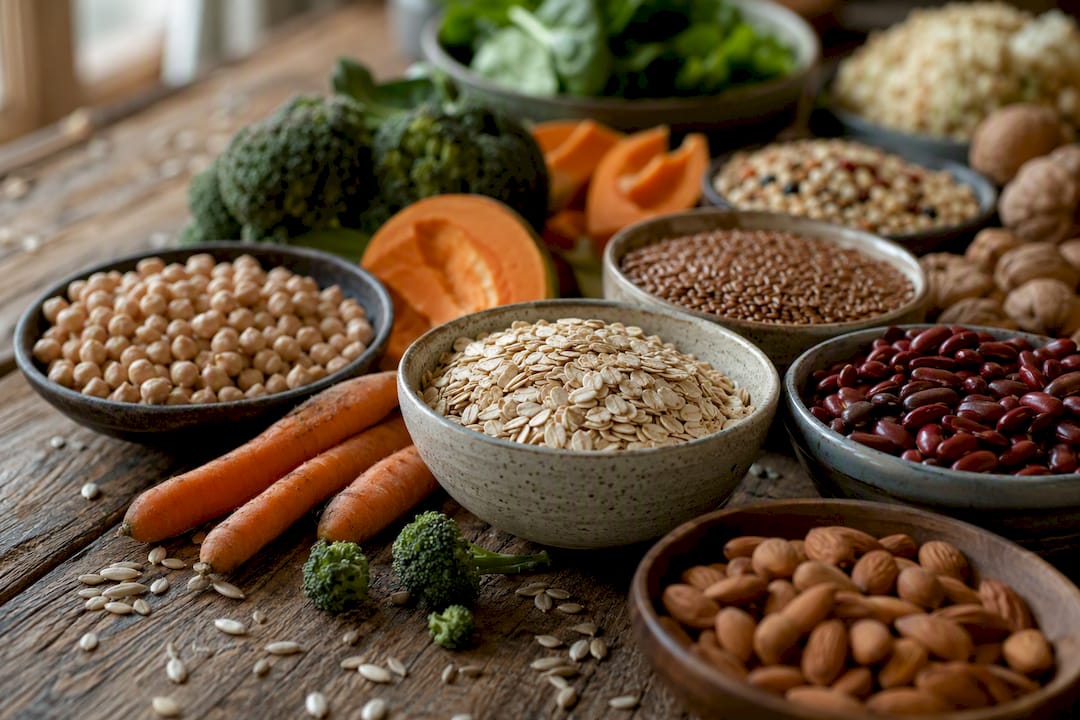
Not all fiber earns its keep the same way. Dextrins, including polydextrose and resistant maltodextrin, showed the most consistent link to both rising GLP-1 levels and reported fullness across small randomized trials in a 2026 scoping review. That review’s authors are upfront about the caveats: sample sizes are small and interventions are short, so treat these as promising leads rather than settled science.
Viscous soluble fibers have a longer track record. A systematic review and meta-analysis found that guar gum, alginate, β-glucan, and polydextrose reduced post-meal energy intake in a meaningful share of trials, with guar gum at roughly 5 grams in liquid preloads repeatedly cutting how much people ate afterward.
Resistant starch and most insoluble fibers (think wheat bran) tell a murkier story. Acute trials on these categories show mixed or weak satiety effects, likely because they don’t thicken liquids or ferment as readily.
- Dextrins (polydextrose, resistant maltodextrin): consistent GLP-1 and satiety signal, but evidence base is still young
- Viscous soluble fibers (guar gum, alginate, β-glucan): reduce subsequent intake, especially at higher viscosity
- Resistant starch and insoluble fibers: mixed, often weak acute effects
- Dose matters. Effects showed up at around 5 grams for guar gum in liquid form, while polydextrose often needed higher doses to move the needle
Concrete Daily Targets and How to Scale Fiber for Weight Management
General guidelines for healthy adults put the target between 25 and 38 grams a day, with a simpler rule that scales to your calorie needs: aim for 14 grams of fiber per 1,000 calories consumed. Eat 2,000 calories a day, and you’re looking at roughly 28 grams.
If you’re cutting calories to lose weight, don’t let fiber drop with your food volume; instead, consider using fitness and recovery strategies to support appetite regulation and nutrition. Hold a floor of 20 to 25 grams a day, since fiber is one of the few tools that keeps hunger manageable while you’re eating less overall.
- Calculate your target using 14 g per 1,000 kcal, then round up rather than down
- On a calorie deficit, treat 20 to 25 g/day as non-negotiable, not aspirational
- Spread fiber across at least three meals, including breakfast and a midafternoon snack, so you’re not fighting hunger in the same window every day
- Front-loading all your fiber into dinner does little for the 3 p.m. slump
Food-First Strategies to Reach Your Fiber Targets
Supplements are a backup plan. Whole foods should do most of the work, and the portion math adds up faster than most people expect: a cup of raspberries delivers about 8 grams, a half cup of bran cereal runs 7 to 14 grams depending on the brand, and a half cup of cooked lentils lands around 7 to 8 grams.
- Swap your cereal. Trade low-fiber flakes for a bran-based cereal or oatmeal topped with berries.
- Build lunch around legumes. A bean or lentil-based salad or soup easily clears 10 grams.
- Make vegetables half your dinner plate. Roasted broccoli, Brussels sprouts, or a mixed vegetable side adds 4 to 6 grams without much effort.
- Snack on produce with skin on. An apple or pear with the peel intact beats juice or processed snack bars.
A sample day: oatmeal with raspberries at breakfast (about 10 g), a lentil soup at lunch (about 8 g), an apple as a snack (about 4 g), and a vegetable-forward dinner (about 5 to 6 g). That totals close to 27 to 28 grams without touching a supplement. If you’re training regularly, timing these choices around workouts matters too. Our guide on fueling your workout with proper nutrition covers how fiber-rich carbs fit into pre and post-training meals.
- High-fiber staples worth stocking: raspberries, lentils, black beans, bran cereal, chia seeds, artichokes
- Quick wins: swap white rice for farro, swap chips for edamame, swap juice for whole fruit
When to Consider Fiber Supplements, Timing, and Form
Food should come first, but supplements have a place when meals fall short. Concentrated viscous preloads, like 5 grams of guar gum dissolved in a beverage before a meal, have trial-level support for reducing how much you eat afterward. That makes them a reasonable stopgap on a day when whole-food options aren’t available.
Palatability is the real barrier. Many viscous fiber powders turn gluey in liquid, so combining fiber types or blending into a smoothie improves compliance. Spreading intake across the day tends to beat one large dose for most people, though a preload before a specific high-risk meal (like a buffet dinner) is a legitimate exception.
- Liquid preloads show the strongest acute trial data, but solid meals are usually more satisfying overall
- Blend fiber powders into smoothies or oatmeal rather than water alone for better taste and consistency
- Distributed intake across meals beats one massive daily dose for most people
Pro Tip: If a fiber supplement makes you gag, you won’t stick with it long enough for it to matter. Taste-test small servings before committing to a full daily dose.
How to Ramp Up Fiber Safely
Jumping from 15 grams to 30 grams overnight is the fastest way to quit fiber altogether. Increase intake gradually over two to four weeks, and raise your water intake alongside it. Both steps cut down on gas, bloating, and constipation, the three complaints that make people abandon high-fiber diets early.
- Add one high-fiber food every few days rather than overhauling your diet at once
- Increase water intake in step with fiber, not after the fact
- Talk to a clinician first if you have IBS, recent GI surgery, or are on medications where absorption timing matters
Applying This With a Systems-Based Coaching Approach
Numbers on a nutrition label don’t change behavior. What changes behavior is a small, trackable swap you can repeat until it’s automatic. At humn, coaching starts with one or two micro-behaviors, not a full diet overhaul: add a serving of berries daily, or swap a low-fiber cereal for oatmeal twice a week.
- Behavior-based coaching tracks adherence to small swaps before adding new ones
- Progress gets reviewed and adjusted, not just assigned and forgotten
- Readers wanting a structured, personalized version of this can explore 1:1 nutrition coaching built around habit change rather than restriction
The Editorial Take: Fiber Is a Lever, Not a Loophole
The evidence supports a specific, bounded claim: certain fibers, at certain doses, in certain forms, measurably reduce hunger and next-meal intake. It does not support the version of this story that circulates online, where “eat more fiber” gets treated as a standalone weight-loss hack.
Conventional advice tends to flatten fiber into one undifferentiated category, as if oatmeal and wheat bran do the same job. They don’t. The research on dextrins and viscous soluble fibers is meaningfully stronger than the research on insoluble fiber, and most people never learn that distinction.
What should you prioritize first? Consistency over precision. Hitting 25 grams a day, every day, from real food beats chasing an optimized 32 grams three days a week and forgetting the rest. Fiber works best as one lever inside a broader system, alongside protein, sleep, and training, not as a substitute for any of them.
— Josh
Key Takeaways
Fiber increases satiety most reliably when it comes from viscous soluble sources or dextrins, consumed consistently at 25 to 30 grams daily.
| Point | Details |
|---|---|
| Prioritize fiber type | Viscous soluble fibers and dextrins show the strongest evidence for reducing hunger and intake. |
| Hit your daily floor | Target 25 to 30 g/day generally, or 20 to 25 g/day minimum when cutting calories. |
| Use the 14g rule | Scale fiber to calories consumed: 14 grams of fiber per 1,000 calories eaten. |
| Ramp up gradually | Increase fiber over two to four weeks with more water to avoid bloating and gas. |
| Food first, supplements second | Whole foods like lentils, berries, and bran cereal should cover most of your target. |
Sources
- Dietary fibers to boost endogenous GLP-1 secretion and satiety: a scoping review — Frontiers in Endocrinology (2026)
- Eatright
This article is general information, not a substitute for advice from a qualified doctor. Consult a qualified healthcare professional about your own circumstances before acting on anything here.
No Comments.