


The most effective whole-person fitness approaches treat exercise as one piece of a larger system, not the whole answer. Here are eight concrete models you can choose from right now:
- Systems-based coaching (coordinates movement, recovery, nutrition, and habits as one program)
- VA Whole Health model (team-based, purpose-driven care for veterans)
- DoD Total Force Fitness (military readiness across eight domains: physical, nutritional, psychological, social, spiritual, environmental, financial, and medical)
- Ornish Program for Reversing Heart Disease (plant-based diet, exercise, stress management, and group support combined)
- Whole Health Institute model (interprofessional, relationship-centered care aligned to personal purpose)
- Mindful-movement-first programs (yoga, Tai Chi, or Qigong as primary sessions, not warm-up extras)
- Behavior-first coaching (habit formation and sleep/stress integration before adding training volume)
- Integrative lifestyle medicine (clinical and complementary care combined: acupuncture, massage, breathwork, nutrition counseling)
What to do this week: Pick one approach from the list above. Spend 15 minutes this evening writing down your current sleep average, daily step count, and one recurring stressor. That three-item baseline is your starting point for any of these models.
Table of Contents
- What does “whole-person fitness” actually mean?
- What components belong in any whole-person fitness program?
- What do real whole-person fitness programs look like?
- A sample weekly whole-person plan you can start this week
- How to start: assessment, personalization, and realistic timelines
- What does the research say about integrated approaches?
- When should you get professional guidance before starting?
- How humn builds a whole-person program in practice
- Key Takeaways
- Why systems-based fitness is the approach worth betting on
- humn is built for people who want the whole system, not just the gym
- Useful sources and further reading
What does “whole-person fitness” actually mean?
Whole-person fitness is the practice of integrating physical training, mental wellbeing, nutrition, sleep, and stress regulation into a single, coordinated program rather than treating each as a separate concern. The body does not compartmentalize, and neither should your program.
NCCIH defines whole-person health as combining conventional testing and treatment with complementary approaches, including acupuncture, biofeedback, massage, yoga, and meditation, with the VA Whole Health System as a leading institutional example. The defining shift is away from disease-centered models toward addressing biological, behavioral, social, and environmental determinants together.
“A whole-health approach is an interprofessional, team-based strategy anchored in long-term relationships that aligns care with an individual’s mission, aspirations, and purpose — built on being people-centered, comprehensive, upstream-focused, equitable, and accountable.”
— NCBI Bookshelf, Achieving Whole Health
Five principles define whether a program qualifies as whole-person fitness:
- People-centered: the plan starts with your goals and life context, not a generic protocol.
- Comprehensive: exercise, nutrition, sleep, stress, and social connection are all addressed.
- Upstream-focused: root causes (poor sleep, chronic stress, sedentary work) are targeted, not just symptoms.
- Relationship-based: a coach, care team, or accountability partner is part of the structure.
- Equitable and accountable: progress is tracked and the program adapts when life changes.
What falls outside this definition: any single-modality program that ignores recovery, nutrition, or mental health. A six-week shred plan, a meditation app used in isolation, or a diet protocol with no movement component are not whole-person approaches, regardless of how they are marketed.
What components belong in any whole-person fitness program?
Exercise pillars
Harvard Health identifies four exercise types as the foundation of physical fitness:
- Aerobic (cardiovascular endurance): walking, cycling, swimming, rowing. Builds heart and lung capacity, regulates mood, and supports metabolic health. The public-health baseline is 150 minutes per week of moderate aerobic activity, consistent with federal guidelines.
- Strength (muscular strength and endurance): resistance training two to three times per week. Preserves lean mass, supports bone density, and improves insulin sensitivity.
- Flexibility and mobility: dynamic stretching, yoga, and foam rolling. Reduces injury risk and supports range of motion across all other training.
- Balance: single-leg work, Tai Chi, stability drills. Especially critical for adults over 50 and anyone managing neurological or orthopedic conditions.
Non-exercise domains
These are not optional extras. A systems-based fitness program coordinates all of the following alongside movement:
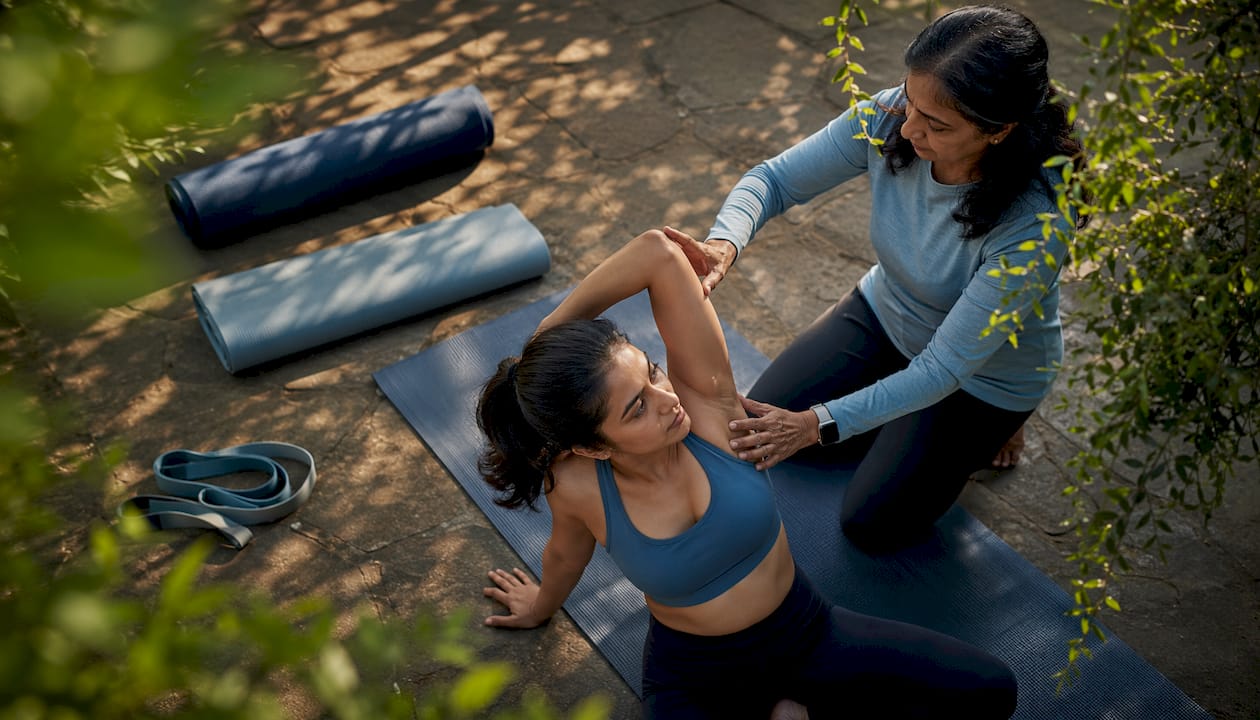
- Mindful movement and nervous-system regulation: yoga, Tai Chi, Qigong, and breathwork scheduled as primary sessions. These practices lower cortisol, improve heart-rate variability, and build the parasympathetic recovery capacity that hard training depletes.
- Sleep: seven to nine hours is the evidence-backed target. Sleep is the single largest non-elite performance lever, ahead of supplementation, training volume, and most nutrition interventions.
- Nutrition: whole-food patterns that support training demands, recovery, and long-term metabolic health. Protein timing, hydration, and anti-inflammatory food choices all interact with exercise outcomes.
- Stress management: chronic psychological stress suppresses immune function, disrupts sleep, and accelerates muscle breakdown. Stress regulation is a training variable, not a lifestyle bonus.
- Social connection: accountability partners, group training, and community involvement improve adherence and mental health outcomes. Isolation is a documented health risk.
- Behavior-change systems: behavior-based fitness programs use habit audits, implementation intentions, and coaching check-ins to make lifestyle changes stick rather than fade after six weeks.
Pro Tip: Schedule breathwork and mindful-movement sessions in your calendar consistently, treating them as essential components. If they stay as “optional extras,” they will be the first things cut when life gets busy — and they are the sessions that make everything else work better.
What do real whole-person fitness programs look like?
VA Whole Health
The Department of Veterans Affairs Whole Health System is the largest institutional implementation of whole-person care in the United States. It organizes care around a veteran’s personal health plan, built on their values, goals, and what matters most to them, rather than a diagnosis. Teams include physicians, health coaches, chaplains, and complementary health practitioners. Components span movement, nutrition, sleep, stress management, and social connection, with complementary approaches like acupuncture, yoga, and mindfulness integrated as clinical services, not afterthoughts. Primary audience: veterans with complex, often co-occurring physical and mental health conditions.

DoD Total Force Fitness
The Department of Defense Total Force Fitness framework covers eight fitness domains for active-duty service members: physical, nutritional, psychological, social, spiritual, environmental, financial, and medical. It is one of the most explicit government-endorsed examples of whole-person wellness, recognizing that a soldier’s readiness depends on factors far beyond physical conditioning. The framework is designed for unit-level implementation and individual self-assessment.
Ornish Program for Reversing Heart Disease
The Ornish Program is an intensive lifestyle medicine model combining a whole-food, plant-based diet with moderate aerobic exercise, stress management techniques (yoga, meditation, breathing), and structured group support. It has published outcomes for cardiac reversal and is covered by Medicare as a result. What makes it a distinct example is the non-negotiable integration of all four components. Remove any one of them and the program’s clinical outcomes change. Primary audience: adults with diagnosed cardiovascular disease or high cardiac risk.
Whole Health Institute
The Whole Health Institute works with health systems to implement relationship-centered, purpose-driven care models. Its framework aligns closely with the NCBI definition: interprofessional teams, long-term patient relationships, and upstream health focus. The Institute trains clinicians and coaches to deliver whole-person care at scale, making it a model for health systems rather than individual consumers.
“Whole-person health aims to restore health, promote resilience, and prevent diseases across a person’s lifespan — encompassing biological makeup, behavioral choices, social circumstances, and environmental influences.”
— NYU Langone Lerner Health Promotion Program
Systems-based coaching at humn
humn, based in Gaithersburg, MD, applies whole-person principles in a boutique coaching setting through its four-pillar framework: Resist (strength and conditioning), Recover (sleep, active recovery, and restoration), Renew (stress regulation, mindset, and nervous-system work), and Rhythm (nutrition, habits, and lifestyle consistency). Unlike a traditional gym, humn builds individualized programs that treat sleep, stress, and nutrition as training variables, not lifestyle advice tacked onto a workout plan. Services include 1-on-1 coaching, small-group personal training, and dedicated recovery access. The model is designed for working adults who want durable results, not a temporary program.
A sample weekly whole-person plan you can start this week
Template 1: Working adult (time-limited, 45–60 minutes per session)
| Day | Focus | Duration | Key elements |
|---|---|---|---|
| Monday | Strength | 50 min | Warm-up (10 min), compound lifts (30 min), breathwork cool-down (10 min) |
| Tuesday | Aerobic + mindful movement | 45 min | Zone-2 walk or cycle (30 min), yoga or stretching (15 min) |
| Wednesday | Active recovery | 30 min | Gentle movement, foam rolling, 5-minute box breathing |
| Thursday | Strength | 50 min | Warm-up (10 min), compound lifts (30 min), breathwork cool-down (10 min) |
| Friday | Aerobic | 45 min | Zone-2 run, row, or swim (40 min), 5-minute body scan |
| Saturday | Mindful movement | 45 min | Yoga, Tai Chi, or Qigong (full session, not a warm-up) |
| Sunday | Rest + planning | 20 min | Sleep audit, weekly habit check, meal prep |
Weekly time allocation by domain:
| Domain | Weekly minutes | Notes |
|---|---|---|
| Strength training | 60 min | 2 sessions |
| Aerobic work | 85 min | Progressing toward the 150-min/week baseline |
| Mindful movement | 45 min | Scheduled primary session |
| Breathwork | 30 min | Distributed across sessions |
| Active recovery | 30 min | Wednesday structured session |
| Planning and reflection | 20 min | Sunday habit review |
Template 2: Older adult or person managing a chronic condition (adapted)
- Monday: Chair-based or supported strength work (20–30 min) + 5-minute breathing practice
- Tuesday: Walking (20–30 min at comfortable pace) + gentle stretching
- Wednesday: Tai Chi or Qigong class (30–45 min) — balance and nervous-system focus
- Thursday: Light resistance bands or bodyweight strength (20 min) + rest
- Friday: Walking or water aerobics (20–30 min)
- Saturday: Restorative yoga or guided relaxation (30 min)
- Sunday: Meal planning, sleep review, social connection (call, group, or community activity)
For a personalized fitness plan that accounts for your schedule and health history, working with a coach or using a structured template helps you avoid the most common mistake: adding too much too fast.
Pro Tip: Choose your mindful-movement modality by goal, not by what sounds appealing. Qigong is best for stress regulation and accessibility (low joint load, easy to learn). Tai Chi is the evidence-backed choice for balance and fall prevention. Yoga is most effective for flexibility and nervous-system regulation. Pick the one that matches your current biggest gap.
How to start: assessment, personalization, and realistic timelines
Step 1: Run a simple baseline check
Before choosing a program model, spend 10 minutes answering four questions:
- What is your average sleep duration this week?
- How many minutes of intentional movement did you get in the last seven days?
- On a scale of 1–10, how would you rate your current stress level?
- How many whole-food meals did you eat in the last three days?
These four data points reveal your biggest gap. If sleep is under seven hours, that is your first priority, ahead of adding training volume. If stress is above seven, nervous-system work belongs in week one.
Step 2: Choose a program model that matches your situation
| Your situation | Best-fit model |
|---|---|
| Veteran or active-duty military | VA Whole Health or DoD Total Force Fitness |
| Diagnosed cardiovascular disease | Ornish Program (with physician clearance) |
| Busy working adult, no major health conditions | Systems-based coaching (humn model) |
| Older adult or chronic condition | Adapted mindful-movement-first program |
| Self-guided, limited budget | Behavior-first coaching using free resources |
Step 3: Personalize with a fitness assessment
A structured fitness assessment covers movement quality, cardiovascular baseline, flexibility, and lifestyle factors. This takes the guesswork out of where to start and prevents the common error of building a program around strengths rather than gaps.
Timeline: what to expect
- Weeks 1–4: Sleep quality, energy, and stress markers typically improve first. Training adaptations are beginning but not yet visible.
- Weeks 5–8: Strength and aerobic capacity show measurable gains. Habit consistency becomes easier as routines solidify.
- Weeks 9–12: Body composition, mood stability, and recovery speed show clear improvement for most people who maintained all four domains.
Cost ranges
- Free/self-guided: Public resources (NCCIH, VA Whole Health materials, YouTube yoga and Qigong), zero cost.
- Low-cost group or digital coaching: $30–$100 per month for app-based or community programs.
- 1-on-1 systems-based coaching: Varies by provider and location; boutique coaching facilities typically range from $200–$600 per month depending on session frequency and services included.
What does the research say about integrated approaches?
The evidence for whole-person models is strong in several areas and still developing in others.
Complementary and integrative health approaches — including acupuncture, massage, yoga, and meditation — show meaningful improvements in outcomes for chronic pain and mental health conditions. These are not fringe interventions; they are components of multidisciplinary programs at major health systems across the country.
The Ornish Program’s cardiac reversal data remains one of the most cited examples of lifestyle medicine producing measurable physiological change. The combination of diet, exercise, stress management, and social support produced outcomes that single-modality interventions did not replicate.
The 150 minutes per week of moderate aerobic activity is the public-health consensus baseline, supported by federal physical activity guidelines. Most whole-person programs use 150 minutes per week of moderate aerobic activity as a floor, not a ceiling.
Sleep sits at the center of the integration argument. Chronic sleep deprivation suppresses immune function, elevates cortisol, impairs glucose regulation, and reduces the cognitive capacity needed to make good nutrition and training decisions. Fixing sleep often produces downstream improvements in every other domain without adding a single training session.
Where the evidence is still limited: Most whole-person studies are observational or involve small samples. Long-term, randomized, multidisciplinary trials are expensive and logistically difficult. Insurance coverage for integrative components remains inconsistent, which limits access for many people. These gaps are real, and any program claiming guaranteed outcomes across all domains should be viewed with skepticism.
When should you get professional guidance before starting?
Most healthy adults can begin a whole-person fitness program without medical clearance. But several situations call for professional input first.
Get cleared by a physician before starting if you have:
- Uncontrolled hypertension (blood pressure above 140/90 consistently)
- A history of cardiac events, arrhythmia, or recent cardiac surgery
- Type 1 or insulin-dependent Type 2 diabetes with unstable blood sugar
- A recent orthopedic surgery or injury within the last six months
- Unmanaged autoimmune conditions or active inflammatory disease
- Any new, unexplained symptom that has not been evaluated
Stop and seek immediate care if you experience:
- Chest pain, pressure, or tightness during or after exercise
- Sudden shortness of breath disproportionate to effort
- New neurological symptoms: numbness, tingling, sudden weakness, or vision changes
- Abrupt, unexplained decline in functional capacity
Adaptations for older adults and people with chronic conditions:
Work with a physical therapist or certified coach experienced in your condition before progressing intensity. Graded exposure (starting at 40–50% of perceived maximum effort and building over four to six weeks) reduces injury risk significantly. Supervised sessions for the first four to eight weeks provide both safety and better technique feedback than self-guided starts. A balance, strength, and flexibility program designed specifically for your needs is worth the upfront investment.
For clinical-integrative programs, the VA Whole Health System and Ornish Program both have structured intake and clearance processes. These are appropriate starting points for anyone with complex medical histories.
How humn builds a whole-person program in practice
humn’s four-pillar framework maps directly to the whole-person principles described throughout this article:
- Resist: strength and conditioning programming built around your movement baseline, not a generic template.
- Recover: sleep coaching, active recovery sessions, and restoration practices scheduled as primary program components, not afterthoughts.
- Renew: stress regulation, mindset work, and nervous-system practices integrated into the weekly plan.
- Rhythm: nutrition habits, lifestyle consistency, and behavior-change coaching that address the patterns driving your results outside the gym.
A typical client pathway at humn starts with a comprehensive assessment covering movement quality, lifestyle factors, sleep, stress, and goals. From that baseline, a coach builds a tailored plan and works with the client through regular check-ins and progress reviews. The program adapts as life changes, which is the feature most traditional gym memberships cannot offer.
Services include 1-on-1 coaching, small-group personal training, and dedicated recovery access. Nutrition, sleep, and behavior coaching are built into the program structure, not sold as separate add-ons. The systems-based model treats every lifestyle domain as a training variable, which is what separates it from a conventional gym membership.
Key Takeaways
Whole-person fitness works because it treats sleep, stress, nutrition, and movement as one interconnected system, and programs that integrate all four domains consistently outperform single-modality approaches.
| Point | Details |
|---|---|
| Start with your biggest gap | Run a four-question baseline check (sleep, movement, stress, nutrition) before choosing a program model. |
| Schedule mindful movement as primary | Breathwork and nervous-system sessions must be calendar-blocked, not treated as optional warm-ups. |
| 150 minutes/week aerobic baseline | Public-health guidelines set this as the floor; whole-person programs build from here across all domains. |
| Expect a 4–12 week timeline | Sleep and energy improve in weeks 1–4; strength and body composition changes follow in weeks 5–12. |
| humn’s four-pillar model | Resist, Recover, Renew, and Rhythm coordinate exercise, recovery, mindset, and habits into one program for working adults. |
Why systems-based fitness is the approach worth betting on
Most people who struggle with fitness are not failing at exercise. They are failing at the system around exercise. They train hard for six weeks, sleep poorly, eat inconsistently, manage stress badly, and wonder why results stall. The program was never the problem.
What the institutional models covered here, from the VA Whole Health System to the Ornish Program, share is a refusal to treat any single domain as sufficient. The VA does not just prescribe exercise to veterans managing PTSD. The Ornish Program does not just put cardiac patients on a treadmill. They build systems, and systems compound.
The practical implication for anyone reading this: consistency beats perfection every time. A whole-person program maintained at 70% effort across all domains will outperform a perfect training plan executed in isolation. The research on integrative approaches supports this, and so does every experienced coach who has watched clients plateau despite flawless programming.
Pick one model from this article. Test it for four to eight weeks with all components in place, not just the exercise piece. Track your sleep, your stress, and your energy alongside your training metrics. The data will tell you more than any single workout ever could.
humn is built for people who want the whole system, not just the gym
If you have read this far and recognize that what you need is not more workouts but a better-designed program, humn is worth a closer look. humn is a boutique coaching facility in Gaithersburg, MD, built specifically for working adults who want sustainable, whole-person results. The four-pillar framework, Resist, Recover, Renew, and Rhythm, means your coach addresses sleep, stress, nutrition, and habits alongside your training, from day one.
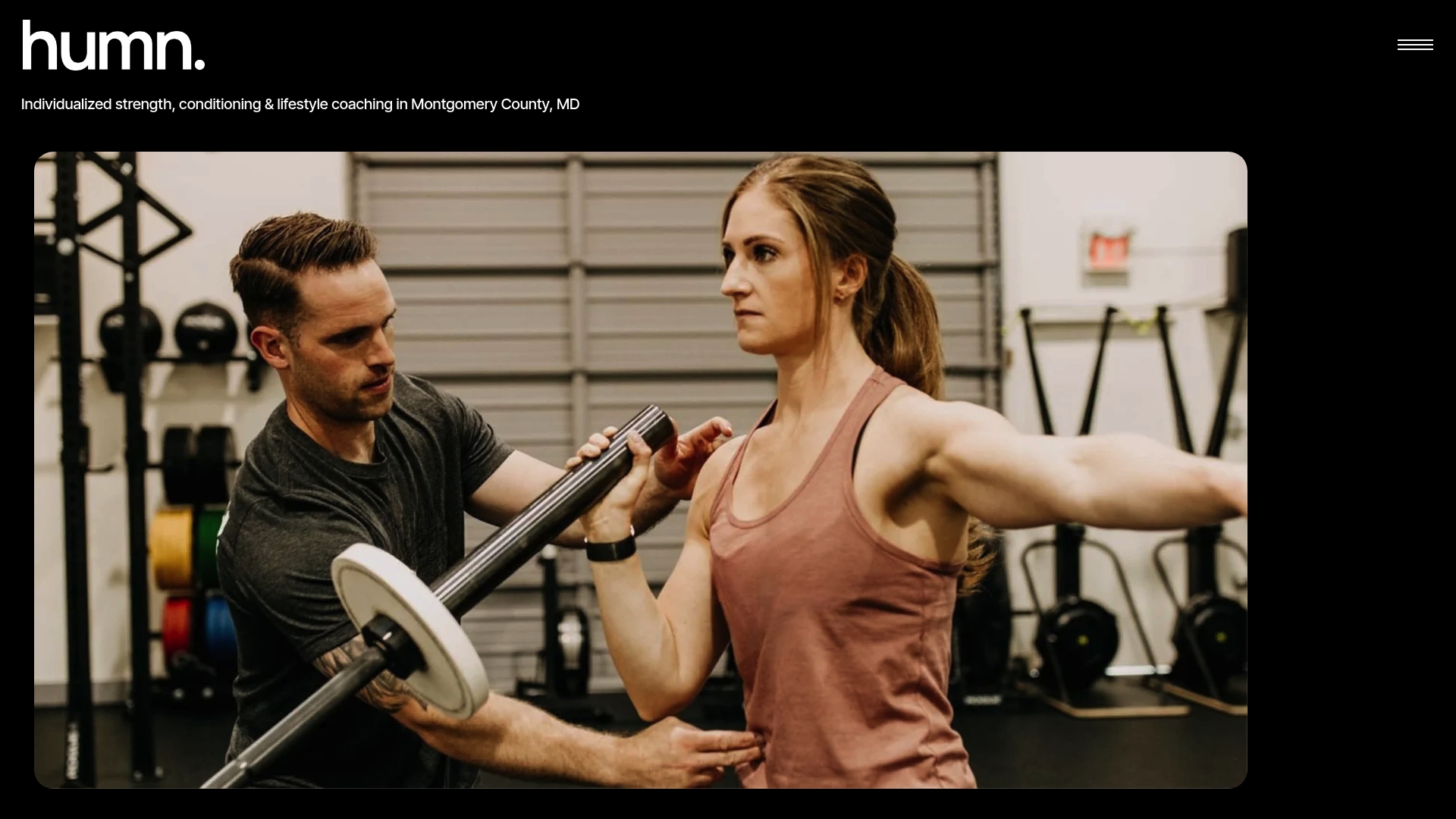
This is not a membership where you show up, do your workout, and leave. It is a structured coaching relationship with regular assessments, program adjustments, and accountability built in. If you want to understand what 1-on-1 fitness coaching looks like in practice, humn’s coaching page lays out exactly what to expect. You can also explore lifestyle coaching if behavior change and habit integration are your primary focus. The first step is a discovery conversation to see whether the program fits your goals and schedule.
Useful sources and further reading
These sources informed the article and are worth bookmarking for deeper reading on whole-person fitness and integrative health.
- NCBI Bookshelf: Achieving Whole Health — The institutional definition of whole-health care, including the interprofessional, people-centered framework used by the VA and Whole Health Institute.
- NCCIH: Whole Person Health — The National Center for Complementary and Integrative Health’s overview of whole-person models, including the Ornish Program and VA Whole Health System.
- NCBI: Evidence Supporting Whole Health’s Foundational Elements — Research summary on complementary and integrative approaches for chronic pain and mental health within multidisciplinary programs.
- Harvard Health: The 4 Most Important Types of Exercise — Clear breakdown of aerobic, strength, flexibility, and balance training and why each matters.
- NYU Langone Lerner Health Promotion Program — Institutional example of whole-person health in a major academic medical center, covering physical, mental, social, and environmental dimensions.
- humn: What Is a Systems-Based Fitness Program? — Explains how a commercial coaching provider maps whole-person principles into a practical, four-pillar program structure.
- humn: Examples of Behavior-Based Fitness Programs — Practical examples of habit-first, behavior-based programming that integrates sleep, stress, and nutrition alongside training.
No Comments.