

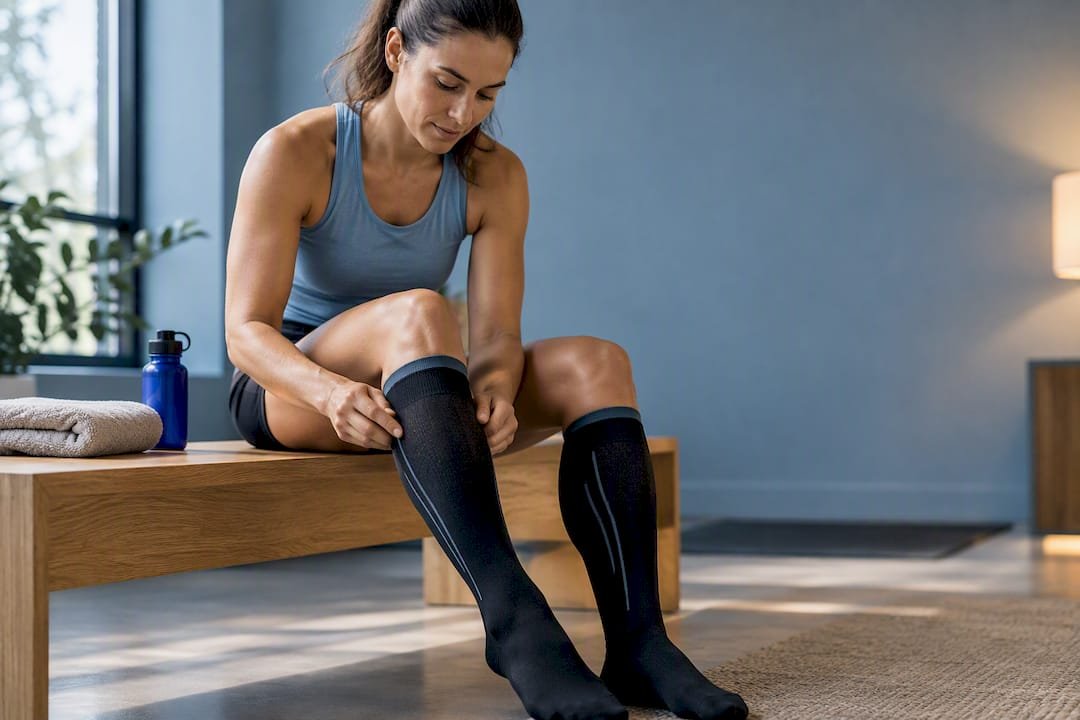
Compression therapy after running usually reduces soreness and speeds up how recovered you feel, but it rarely changes your running economy or race times. That distinction should drive how you use it. Reach for compression garments or boots after long runs, hard efforts, or during multi-day races to stay comfortable and keep training, but treat it as a supplement to sleep, fueling, and active recovery, not a substitute for any of them.
TL;DR:
- Compression garments in the 15 to 30 mmHg range are suitable for daily use and managing swelling, while IPC boots are designed for focused recovery sessions of 20 to 30 minutes.
- Compression helps improve venous return, reduce fluid buildup, and support lymphatic drainage, primarily easing soreness and perceived fatigue rather than enhancing race times.
- Most studies show runners report less soreness and lower exertion after compression, but there is little to no measurable impact on actual performance metrics like race times or running economy.
- Avoid deep vein thrombosis, uncontrolled vascular issues, or open wounds before using compression, and start with shorter sessions if new to it to prevent circulation problems.
- Combining compression with proper sleep, fueling, and active recovery enhances overall soreness relief but does not replace these fundamental recovery practices.
Table of Contents
- How Compression Therapy Works on Tired Legs
- Compression Socks, Sleeves, or Boots: Which One Fits Your Situation
- Does Compression Actually Help Runners Recover Faster?
- When and How to Use Compression After a Run
- Who Should Skip Compression (and Common Mistakes to Avoid)
- How We Use Compression at humn.
- The Bottom Line on Compression for Runners
- An Editorial Take on Realistic Expectations
- Recover Smarter With Supervised Compression at humn.
- Sources
- FAQ
How Compression Therapy Works on Tired Legs
Graduated compression garments squeeze tightest at the ankle and loosen going up the leg, which helps push blood back toward the heart instead of letting it pool in your calves and feet. That improved venous return is the main mechanism behind the “fresher legs” feeling many runners report after a long session in socks or tights.
Intermittent pneumatic compression, or IPC, works differently. The boots inflate and deflate in sequence, moving from foot to thigh, which creates a milking action along the leg. That sequential squeeze helps clear metabolic byproducts and reduce localized swelling faster than static compression alone.
Both approaches target the same downstream effects:
- Reduced fluid buildup in the lower legs after prolonged pounding on pavement
- Less soft-tissue vibration during the run itself, which may lower muscle micro-trauma
- Improved subjective sense of “flushed” legs within hours of a hard effort
- Support for lymphatic drainage, helping clear inflammatory byproducts from damaged tissue
None of these mechanisms touch your cardiovascular fitness or stride efficiency. That’s why the benefits show up in how your legs feel, not necessarily in your splits.
Compression Socks, Sleeves, or Boots: Which One Fits Your Situation
Compression garments (socks, tights, and calf sleeves) apply constant, graduated pressure and work for daily wear, travel days, or right after a run. IPC boots deliver a stronger, rhythmic pressure and are built for a dedicated recovery session rather than all day wear.
- Pick garments for portability. Socks and sleeves in the 15 to 30 mmHg range suit runners dealing with everyday swelling or long days on their feet, and they slide on under normal clothes.
- Pick boots for a focused recovery window. IPC sessions work best as a standalone 20 to 30 minute block, ideally on bare legs so the chambers contour properly against skin.
- Skip the layering mistake. Wearing thick joggers or tight compression tights underneath IPC boots creates uneven pressure and discomfort, so strip down to bare skin or a thin base layer before a session.
Does Compression Actually Help Runners Recover Faster?
The subjective evidence is consistent. A systematic review of compression garments found heterogeneous study designs but a repeated pattern: runners report less soreness and lower perceived exertion after wearing compression, even when the numbers underneath don’t move much.
Statistic to know: in a small marathon trial of 18 runners, those wearing upper-leg compression garments reported significantly lower pain ratings immediately after finishing and up to 48 hours later, with no measurable change in race time or thigh circumference. That’s the pattern across most of the literature on running and compression.
Here’s what tends to hold true study after study:
- DOMS and RPE scores improve with compression use in the 24 to 48 hours following a hard effort
- Objective measures like running economy, VO2 use, and finish times show negligible or inconsistent change
- Benefits appear strongest after unusually damaging efforts like marathons or long downhill runs, not routine easy miles
Outside’s review of the running and compression sock research reaches the same conclusion: compression is a soreness and comfort tool, not a performance enhancer. That’s still useful. Runners who feel less trashed the day after a long run tend to hit their next scheduled session instead of skipping it, and consistency is what actually drives fitness gains over months.
When and How to Use Compression After a Run
A workable sequence looks like this:
- Cool down first. Walk or jog easy for five to ten minutes before you sit down for compression, hydration, or fuel.
- Refuel within the hour. Get in carbohydrates and protein before or alongside your compression session, not after.
- Run an IPC session for 20 to 30 minutes. Nike’s own guidance on compression boots recommends staying in that window and avoiding anything past 30 to 40 minutes for most athletes.
- After a race, start gentle. Marathon-recovery protocols commonly suggest 20 to 30 minutes of IPC around 60 to 70 mmHg in the first 48 hours, easing pressure back to normal as soreness fades.
- Wear socks or tights for daily maintenance. A 15 to 30 mmHg range works for swelling and long days on your feet; save it for daytime rather than sleeping in tight compression overnight.
- Pair it with movement. Short walks, light active recovery, and foam rolling on the same day tend to compound the benefit rather than compete with it.
Pro Tip: Log how your legs feel the morning after a compression session versus a normal recovery day for two weeks straight. That side-by-side comparison tells you more about whether compression works for your body than any study will.
Who Should Skip Compression (and Common Mistakes to Avoid)
Compression isn’t risk-free for everyone. Skip it, or check with a doctor first, if you have any signs of deep vein thrombosis, uncontrolled peripheral vascular disease, or open wounds on your legs. Clinical guidance on IPC devices lists suspected DVT as a hard contraindication, not a “use with caution” situation.
Beyond medical red flags, most problems come from misuse:
- Cranking pressure too high or running sessions well past 30 to 40 minutes
- Wearing boots over thick sweatpants or tight compression layers, which distorts the pressure pattern
- Jumping straight into daily use without checking how your skin and circulation respond to a shorter first session
If you’re new to compression, start with one shorter session and pay attention to numbness, discoloration, or unusual pain. None of those are normal.
How We Use Compression at humn.
At humn., compression is one piece of a bigger recovery picture, not a stand-alone fix. Members pair compression sessions with sauna access, mobility work, and coaching around sleep and nutrition, because soreness rarely has a single cause.
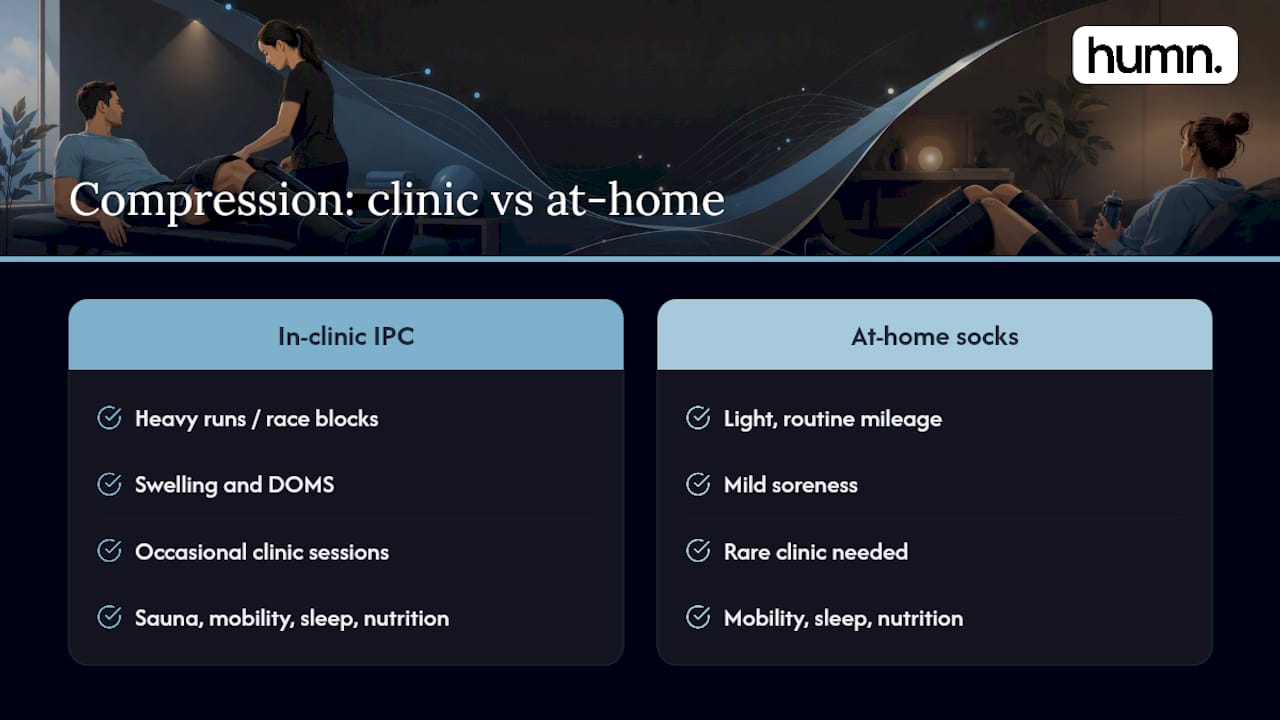
In-clinic IPC sessions tend to suit those coming off long runs, race weekends, or heavy training blocks where swelling and DOMS are the main complaint. Runners managing lighter, routine mileage usually do fine with at-home socks and don’t need frequent clinic sessions.
The Bottom Line on Compression for Runners
Try compression if soreness is limiting your training or you need to hold up through a multi-day race. Get sleep, fueling, and easy mileage right first. Compression is a solid add-on once those fundamentals are already in place.
An Editorial Take on Realistic Expectations
Most runners overestimate what compression will do and underestimate how much the timing matters. It won’t turn a bad training block around, and it won’t shave minutes off your marathon. What it reliably does is make the days after a hard effort more tolerable, which quietly protects your training consistency better than any single “recovery hack” gets credit for.
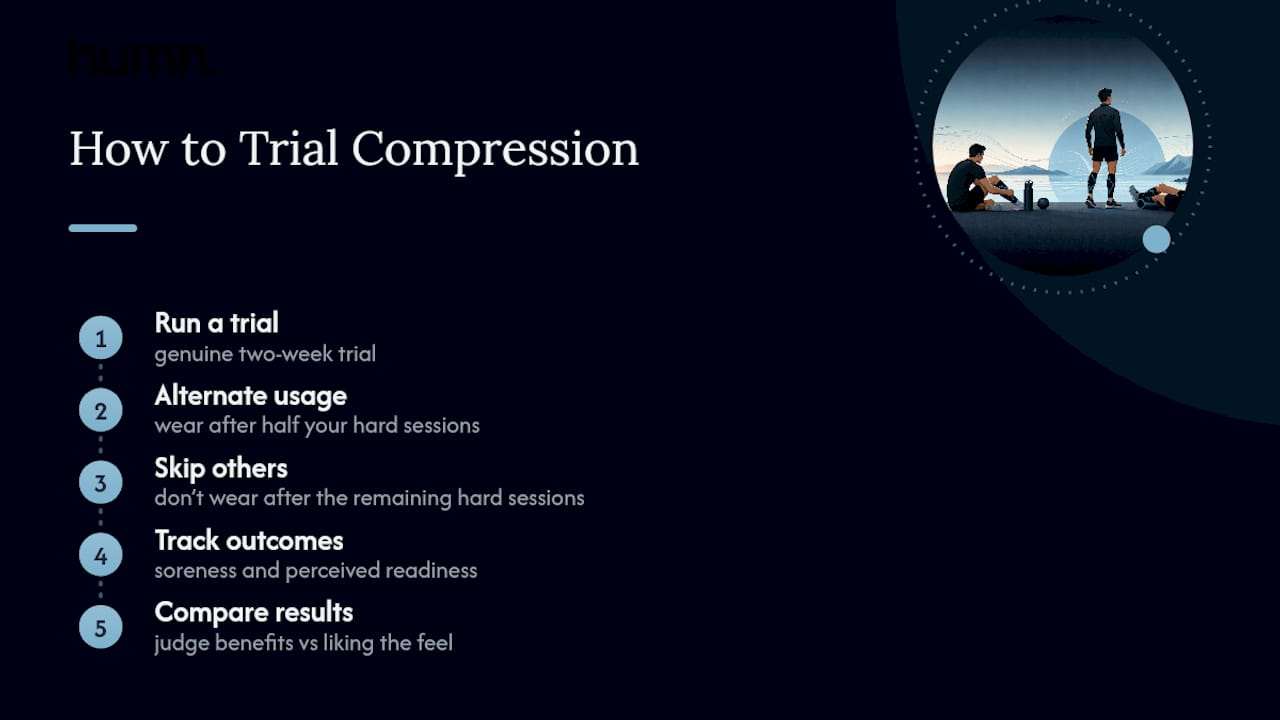
Run a genuine two-week trial before deciding it works or doesn’t. Wear compression after half your hard sessions, skip it after the others, and track soreness and perceived readiness both ways. That’s the same signal humn. coaches look for when judging whether a member actually benefits from compression versus just liking how it feels.
— Josh
Recover Smarter With Supervised Compression at humn.
Buying a pair of compression boots online means guessing at pressure, timing, and whether you’re even using them right. humn. is the alternative: a recovery setup where compression sessions run alongside sauna, coaching, and a program built around your actual training load, not a generic setting on a home device.
Members get compression built into a broader plan that also covers sleep habits, nutrition coaching, and mobility work, so the soreness relief compression offers actually sticks instead of getting undone by poor sleep or bad fueling the next day. That’s the gap most solo compression users never close.
If you’re training hard enough that soreness is starting to cut into your next session, book a look at humn. membership and ask about adding recovery access to your plan.
Sources
- Are Compression Socks Good for Running? - RUN | Powered by Outside
- Effect of upper-leg compression garments on performance and muscle damage in marathon runners
- What Are Compression Boots — And How Do They Work? - Nike
- Systematic review: compression garments and athletic recovery
- Intermittent pneumatic compression (IPC) device - Cleveland Clinic
FAQ
When Should You Not Use Compression Therapy?
Skip compression if you have signs of deep vein thrombosis, uncontrolled peripheral vascular disease, or open wounds on your legs, and check with a doctor first. Clinical guidance treats suspected DVT as a firm contraindication rather than a caution.
What Is the Best Way to Recover My Legs After Running?
There’s no single best method. Combine a proper cool down, hydration and fueling, quality sleep, and compression or active recovery as add-ons rather than relying on any one tactic alone.
What Compression Should a Runner Wear?
Most runners do well with 15 to 30 mmHg socks or tights for daily wear and swelling control. For focused post-run or post-race recovery, IPC boots typically run at higher pressures for shorter sessions, often 20 to 30 minutes at a time.
Does Compression Therapy Actually Work?
It works well for reducing perceived soreness and RPE, which is well documented across multiple trials. It does not reliably improve race times or running economy, so treat it as a comfort and consistency tool rather than a performance upgrade.
No Comments.