


Yes. Accountability coaching reliably raises consistency compared with self-directed plans by combining measurable goals, regular check-ins, and a coach-built ownership structure. It works by pairing a specific target with a recurring conversation about progress and evidence, not just a workout plan. If you want proof it fits your life, pick one measurable goal today and schedule your first check-in this week.
TL;DR:
- Combining measurable goals with regular check-ins and personalized feedback significantly improves accountability and habit formation over self-directed plans alone.
- Human interaction, such as coaching or counseling, adds moderate benefits to self-monitoring apps, especially when used together to track progress and troubleshoot barriers.
- Weekly check-in protocols focused on a single primary metric and consistent daily logging help maintain motivation and build sustainable habits.
- Clear communication about check-in frequency, evidence of progress, response times, and cancellation policies are essential for selecting an effective accountability coach or program.
- Structured memberships like humn. provide ongoing coaching, habit tracking, and recovery services, creating a ready-made accountability system that reduces setup effort for clients.
Table of Contents
- What accountability coaching is and how it differs from personal training
- What the research says about coaching and self-monitoring
- Daily and weekly accountability systems you can copy
- How to choose an accountability coach or program
- Building ownership so accountability actually lasts
- What progress with a coach tends to look like
- Common barriers and how coaches work around them
- Accountability coaching versus group classes and online communities
- Publisher perspective: how humn. integrates accountability into its coaching model
- How humn. builds accountability into membership
- Sources
- FAQ
What accountability coaching is and how it differs from personal training
Accountability coaching centers on co-created goals, agreed evidence of progress, and a regular cadence of check-ins where a coach helps you own the outcome rather than hand you a plan to follow blindly. The coach’s job is not to perform the workout for you. It is to make sure you show up, report honestly, and adjust when life gets in the way.
This is a different job than personal training, which focuses on skill instruction and program delivery: sets, reps, form cues, and progression. A personal trainer can absolutely build accountability into sessions, but the core deliverable is the workout itself. An accountability partner, meanwhile, offers peer support with no professional structure behind it: helpful for motivation, but without the measurement, cadence, or troubleshooting a trained coach brings.
Formats vary. In-person coaching gives you face-to-face check-ins and immediate feedback but costs more and ties you to a location. Remote coaching, often through phone or video, trades some of that immediacy for flexibility and lower cost. Hybrid models combine both, using in-person sessions for skill work and remote check-ins for the accountability layer in between. Programs that build behavior-change techniques into the structure tend to hold up better over months than plans that rely on willpower alone.
What the research says about coaching and self-monitoring
Self-monitoring, the habit of tracking weight, steps, or workouts, is the foundation most accountability systems are built on. A systematic review and meta-analysis of mHealth self-monitoring found that eCoaching systems and mobile self-monitoring produce moderate short-term improvements in weight and activity, with higher adherence than control methods, and smartphones were the most effective delivery device for this.
Self-monitoring alone has limits, though. Adding human interaction on top of it measurably improves results.
Complex physical activity interventions that combine self-monitoring with other components added a moderate increase in daily steps after the intervention compared with self-monitoring alone, according to research on physical activity interventions, and phone or video counseling produced one of the largest effects among the added components. That single detail matters for anyone comparing an app-only approach with a coached one: the human layer is where the extra steps come from.
A separate eCoaching methods review identified personalization, interaction and co-creation, goal setting, automated prompts, and evaluation as the core methods that make coaching effective, reinforcing that technology tends to work best paired with human feedback rather than replacing it.

The practical takeaway: expect meaningful but moderate gains in the first weeks, with the biggest jumps coming from the combination of tracking plus a real person checking in, not from either alone. A systematic review of adherence interventions found that goal setting, monitoring, and feedback may increase adherence to physical activity recommendations, though the certainty of that evidence varies by population, so treat early wins as a starting point rather than a guarantee.
Daily and weekly accountability systems you can copy
Good coaching runs on structure, not motivation. A few repeatable rituals do most of the work.
On a weekly basis, coaches typically negotiate a single primary metric with the client, whether that is workouts completed, average daily steps, or a weekly weigh-in, and build a scheduled check-in around it. If the number moves the wrong way, the check-in becomes a planning session, not a scolding.
Daily systems are lighter. A short morning intention (what you’ll do and when), simple logging of the workout or meal, and a brief end-of-day note on how the day went keep the loop tight without becoming a chore.
- Pick one primary metric to track each week instead of five that dilute attention.
- Log the same way every day, whether that’s a notes app, spreadsheet, or wearable, so the data is comparable.
- Schedule the check-in like an appointment, not something that happens if there’s time.
- Share progress photos or numbers on a fixed cadence so drift gets caught early.
Wearable step trackers and smartphone apps handle the daily logging; a shared log or scheduled message thread handles the human side. Hybrid programs often use in-person sessions for the coaching relationship and remote check-ins to keep the loop running between visits, which matches how 1-on-1 coaching is typically structured for busy schedules.
Pro Tip: Track one number for three weeks before adding a second metric. Too many targets at once usually means none of them get real attention.
How to choose an accountability coach or program
Before signing up for anything, ask a few direct questions. A coach who can answer clearly is more likely to deliver a real accountability structure rather than a vague promise of support.
- How often will we check in, and through what channel (call, message, in person)?
- What counts as evidence of progress: a number, a photo, a log, or something else?
- What’s the expected response window if you message between sessions?
- What’s the cancellation or hold policy if travel or illness interrupts your schedule?
- What does success look like in the first 30, 60, and 90 days?
Pricing shapes vary by program: some run on a membership or subscription model, others charge per session, and others sell packaged blocks of sessions. Price tends to track coach credentials, how intensive the measurement is, and what’s bundled in, like recovery services or nutrition coaching.
Watch for red flags: vague check-in protocols with no set cadence, no shared metric you’re both watching, inconsistent follow-up that fades after the first month, or a refund and hold policy that’s never written down anywhere.
Building ownership so accountability actually lasts
The best coaching moves accountability from something enforced by the coach to something the client owns. Coaching literature on ownership and co-created accountability points to negotiated agreements, rather than rules handed down, as more durable because the client had a hand in setting them.
In practice, coaches use graded autonomy, giving clients more control over the plan as consistency builds, data-driven reflection instead of guilt when a week goes sideways, and tapered oversight that steps back once habits stick.
A simple agreement you can adapt: one primary metric, a fixed check-in day, a clear definition of evidence (three workouts logged, a weekly photo, or a five-day step average), and a plan for what happens if you miss a week. Writing it down once removes most of the ambiguity that causes drop-off.

What progress with a coach tends to look like
The pattern that shows up most often isn’t a dramatic transformation story. It’s someone who kept a habit going past the point where they usually would have quit. A person training around a demanding job schedule, for instance, often stalls out around week three or four without structure. With a fixed weekly check-in and a single tracked metric, that same person tends to keep the habit through the harder middle stretch, when motivation naturally dips and life gets in the way.
The common thread across coached clients isn’t the workout itself. It’s that someone else is watching the number and asking about it on a schedule, which turns “I’ll get to it” into “I have a check-in on Thursday.” That shift from vague intention to a fixed commitment is what separates people who maintain a plan for months from people who restart it every few weeks. Programs built around sustainable habits tend to describe this same pattern: small, consistent wins compound, while occasional heroic efforts don’t.
Common barriers and how coaches work around them
Three obstacles come up constantly: inconsistent schedules, loss of motivation once early results plateau, and life disruptions like travel, illness, or work crunches that knock the routine off track.
Coaches address the scheduling problem by building flexibility into the check-in structure itself, offering a short call or async message on a fixed day rather than requiring a rigid in-person slot every time. When motivation dips after the initial results flatten out, shifting the conversation from outcome (the number on the scale) to process (did the habit happen this week) keeps the check-in useful even during a plateau.
Disruptions get handled through a hold or pause policy agreed on ahead of time, so a business trip doesn’t turn into a dropped program. Knowing the policy exists before you need it removes a lot of the guilt that causes people to quit rather than pause.
The underlying fix for all three is the same: the coach adjusts the plan and keeps the check-in happening, rather than letting a missed week become a missed month.
Accountability coaching versus group classes and online communities
Group fitness classes and online accountability groups both offer motivation, but they work differently than one-on-one coaching. A class gives you a fixed schedule and social energy, which helps some people show up, but the instructor isn’t tracking your individual metric or adjusting your plan when you personally fall behind.
Online communities and accountability groups offer peer encouragement and shared goals, which can be genuinely useful for people who thrive on public commitment. What they typically lack is the professional scaffolding: no one is measuring your specific evidence of progress or troubleshooting your particular barriers on a private, recurring basis.
One-on-one accountability coaching sits in a different category because the check-in is personal and the metric is yours alone. That doesn’t make group formats worthless. It makes them a different tool for a different job: broad motivation and social support versus individualized measurement and course correction.
Publisher perspective: how humn. integrates accountability into its coaching model
At humn., accountability runs through a four-pillar framework: Resist, Recover, Renew, and Rhythm. Members work with a dedicated coach on habits-first programming that tracks progress across training, recovery, and daily routines rather than workouts alone. That structure reflects the same principle covered above: a shared metric, a regular check-in, and a coach who adjusts the plan instead of just delivering it.
— Josh
How humn. builds accountability into membership
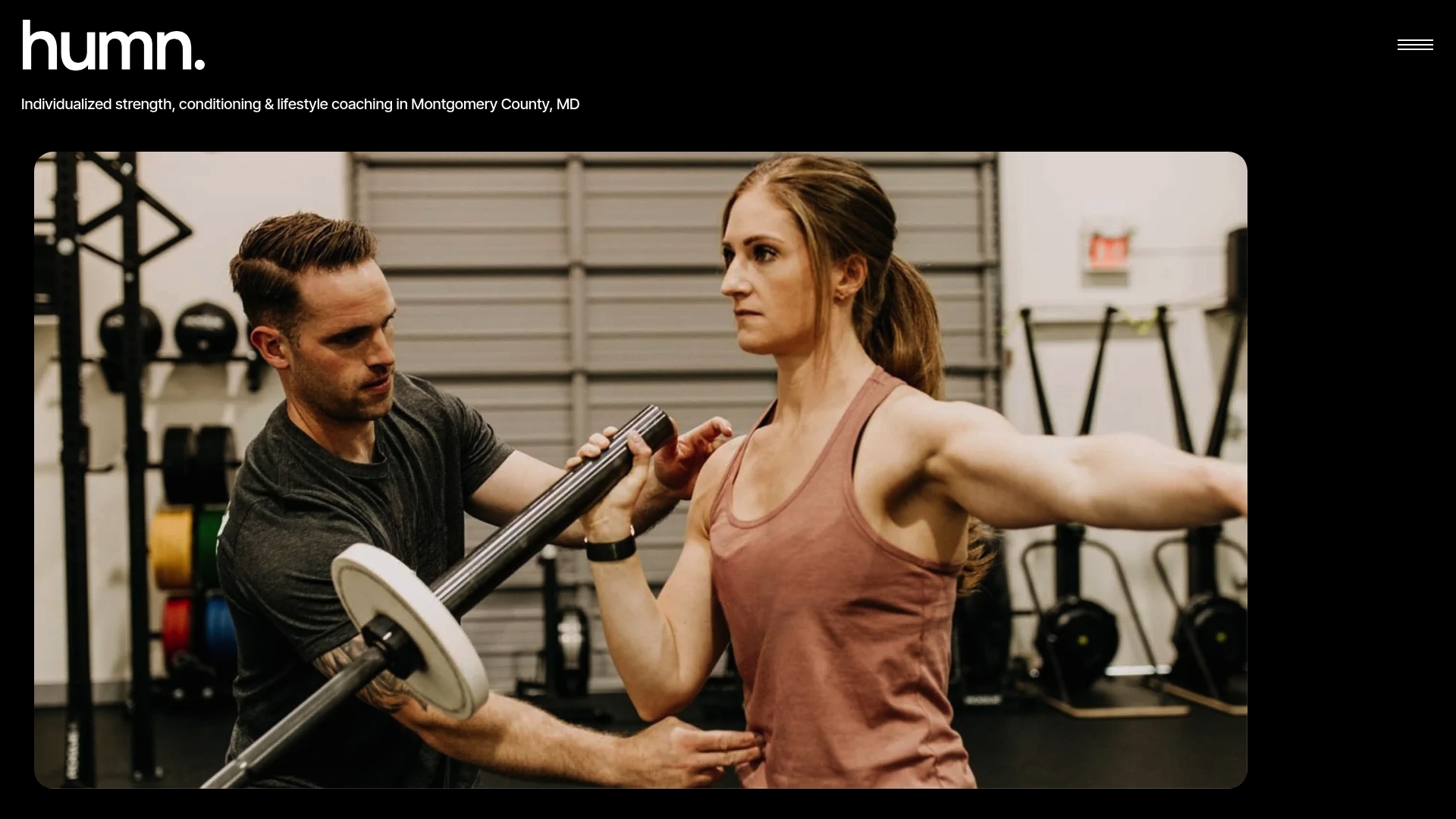
If the checklist above sounds like a lot to set up on your own, that’s the gap a structured coaching membership is built to close. humn. pairs members with a dedicated coach for ongoing check-ins, habit-based programming, and a shared view of progress, so the accountability structure exists before you have to invent it yourself.
Here’s what that looks like in practice:
- 1:1 coaching and small-group personal training for a dedicated check-in cadence and coach-adjusted programming.
- Habit-first coaching that tracks sleep, stress, and nutrition alongside training, not workouts in isolation.
- Recovery access, including services such as sauna, compression, and red light therapy, built into the same membership.
- 1:1 nutrition coaching for readers whose barriers show up more around food than training.
The fastest way to judge fit is to run through the checklist from earlier in this article, cadence, measurement, response window, and hold policy, on a quick consult call. If the answers are specific rather than vague, that’s a good sign. Visit the membership page to see current program details and get started.
FAQ
How much do accountability coaches charge?
Pricing varies by format: some coaches charge a subscription or membership fee, others bill per session or by session block, and cost often tracks coach credentials and how much measurement and follow-up is included. humn.'s membership pricing, including 1:1 coaching and small-group training, is available directly on its membership page.
What does an accountability coach do?
An accountability coach helps you set a measurable goal, agree on what evidence of progress looks like, and holds a regular check-in schedule to track it. Rather than just prescribing a workout, the coach adjusts the plan based on what the check-ins reveal and helps you take ownership of the outcome.
How much does a wellness coach cost?
Wellness coaching costs vary widely depending on whether it’s delivered remotely, in person, or as part of a larger membership that includes training or recovery services, and providers price it differently. Ask any prospective coach for their specific rate structure, since no single published figure applies across the field.
No Comments.