


Do short, targeted active mobility drills aimed at the joint limiting your lift, then immediately retest that lift. Ten to fifteen minutes of focused work beats a long, unfocused stretching ritual. Pair this with strength training through a full range of motion and you solve mobility and performance at the same time instead of treating them as separate problems.
TL;DR:
- Most mobility restrictions in lifters are caused by habitual positioning rather than structural limitations, making targeted drills effective for retraining range of motion.
- Performing a quick test before and after a mobility drill helps determine if the restriction is solved or if the issue is strength or stability-based.
- Ankle dorsiflexion and thoracic extension are the most common limiting factors in squats and overhead lifts, so prioritize drills that improve these areas first.
- Short, focused mobility sessions integrated into warm-up or cool-down routines can be highly effective, especially when performed with controlled progressions and proper load management.
- Persistent restrictions or asymmetries should prompt a professional assessment rather than ongoing self-directed drills, to avoid injury and ensure proper correction.
Table of Contents
- Why mobility matters for lifters: movement quality over passive stretching
- Test-retest workflow: identify the restriction, apply one targeted drill, retest the lift
- Five targeted mobility drills for lifters, with progressions and cues
- How to fit a 10 to 15 minute mobility session into your lifting routine
- Programming: frequency and priority through the training cycle
- Evidence summary and practical takeaways
- Common mobility limitations and their causes in lifters
- Injury prevention and mobility work
- Tools and equipment to assist mobility training
- How to safely progress mobility drills to avoid overextension or injury
- Differences in mobility needs based on lifting discipline
- Impact of age and individual variability on mobility strategies
- Coach viewpoint from humn.: when to DIY and when to get assessed
- How humn. helps lifters: assessment, short mobility plans, and coached transfer
- Sources
- FAQ
Why mobility matters for lifters: movement quality over passive stretching
Flexibility is the passive ability of a joint to move through a range. Mobility is the active ability to control and produce force in that same range, and lifting rewards the second one almost exclusively. A squat does not care how far your hip flexor stretches on a mat, it cares whether you can hold a braced position at depth under load.
Most lifts have one or two joints that actually gate the movement:
- Front squats and overhead lifts are usually limited by thoracic extension and shoulder position.
- Back squats are usually limited by ankle dorsiflexion or hip mobility at depth.
- Front rack and overhead holds are usually limited by wrist, shoulder, and upper back mobility together.
A systematic review and meta-analysis found that resistance training with external loads improves joint range of motion, with higher-intensity protocols producing larger effects, and that training through range can match or substitute for stretching as a way to build flexibility. That means your squats and presses are already doing some of this work, if you take them through a full range instead of cutting them short.
Test-retest workflow: identify the restriction, apply one targeted drill, retest the lift
Most lifters waste time stretching muscles that were never the problem. A quick test-retest loop fixes that by checking whether a drill actually changes how you move before you spend more time on it.
- Perform the lift at a light load, or film it, and note exactly where it breaks down: heels rising, chest collapsing, elbows dropping.
- Pick one drill that targets that specific joint and work it for three to five minutes, focusing on control rather than just a deeper stretch.
- Load the same lift again immediately and compare depth, bar path, and position against the first attempt.
If the position improves right away, the drill was addressing a real mobility gap and belongs in your warm-up. If nothing changes after a couple of honest attempts, the limit is probably strength or stability rather than range, and more stretching will not fix it.
Pro Tip: Keep a phone propped at the same angle every session so your “before” and “after” footage is actually comparable.
Five targeted mobility drills for lifters, with progressions and cues
These five drills cover the joints that most often gate a lift, drawn from the common fixes recommended for weightlifters working on movement quality.
- Ankle dorsiflexion: Half-kneeling, drive your knee over your toes while keeping your heel down, 30 to 60 seconds per side, then progress to a loaded goblet squat and retest depth.
- Thoracic extension and rotation: Foam-roll extensions over the roller followed by PVC pass-throughs, 45 to 90 seconds total, then move to an unloaded overhead squat practice.
- Hip mobility: 90/90 switches and a half-kneeling hip flexor stretch, 60 seconds per side, then practice a full-depth bodyweight squat.
- Shoulder and front rack: Banded pull-aparts and wall slides, 30 to 60 seconds each, then hold an empty bar in the front rack for 20 to 30 seconds before testing a loaded front squat.
- Spine control: Cat-cow for 45 seconds followed by a slow plank-to-pike, prioritizing control over how far you can fold.
Ankle dorsiflexion and thoracic extension are the two most common gatekeepers, for squat depth and overhead positions respectively, so start there when either lift feels stuck.
Pro Tip: Practice every new drill unloaded first. Add weight only once the pattern holds under the retest.
How to fit a 10 to 15 minute mobility session into your lifting routine
Mobility work earns its place in a session only when it is placed where it can actually change the lift that follows.
- Warm-up: Three to five minutes of general dynamic movement, then six to eight minutes of targeted drills for the day’s main lift, then into skill work or light sets.
- Cool-down: Five to ten minutes of targeted drills on the joints that felt tight during the session, using soft-tissue work for general soreness and active control drills for anything that limited a position.
- Micro-sessions: On busy days, a 90-second posture microbreak between desk work and training can loosen the thoracic spine and hips before you even get to the gym, similar to the microbreak routines built for desk workers.
- Skip rule: If a joint felt fine in yesterday’s heaviest set, you can skip targeted work on it today and stick to general warm-up.
Programming: frequency and priority through the training cycle
How much mobility work you need changes with the phase you are in. Early in a training cycle, when you are still building skill in a lift, daily short mobility and movement practice pays off because you are laying down a new pattern.
As you move into a heavy or peaking phase, drop to three to five sessions a week and shift the emphasis toward maintaining range you already have rather than chasing new range, since fatigue management matters more at this point. Strength work through a full range of motion, like deep squats and full-depth presses, can often replace extra mobility volume once a joint is no longer the limiting factor.
If a restriction persists for weeks despite consistent targeted work, or shows up as a clear side-to-side asymmetry, that is a signal to get an outside assessment rather than adding more drills on your own, using something like a structured fitness assessment to find what a mirror cannot show you.
Evidence summary and practical takeaways
A systematic review of resistance training and joint flexibility found that external-load training significantly improves range of motion, with high-intensity protocols showing larger gains. That supports pairing short targeted mobility work with strength training through full range as a time-efficient approach rather than a long stretching routine on its own.
Separately, the Cleveland Clinic’s comparison of stretching styles notes that dynamic stretching gives small acute improvements in power, sprinting, jumping, and balance, which fits a dynamic warm-up better than a static one. A 2024 review of mobility training in sport found that modalities like dynamic stretching, yoga, and Pilates offer some performance benefit, though the effect depends heavily on the athlete and the modality used. Evidence that mobility work directly prevents injury is mixed, so treat it as a performance and movement-quality tool first.
Common mobility limitations and their causes in lifters
A few restrictions show up again and again across lifters, and most trace back to habit rather than anatomy. Limited ankle dorsiflexion is often the result of sitting most of the day combined with lifting in shoes with a built-up heel, which hides the restriction until you try a barefoot or flat-shoe squat. Tight thoracic extension frequently comes from the same desk posture: hours of rounded shoulders train the upper back to stay flexed, and overhead lifts expose that immediately.
Hip restrictions at depth are commonly a mix of hip flexor tightness from long sitting and simple unfamiliarity with sitting into a deep squat, since that range of motion is rarely used outside the gym. Shoulder restrictions in the front rack or overhead position often stem from limited wrist extension or thoracic mobility rather than the shoulder joint itself, which is why loosening the upper back sometimes fixes a front rack problem faster than working the shoulder directly.
The common thread is that these are not injuries. They are the predictable result of spending most hours in a narrow range of positions and then asking the body to move through a much wider one under load. Targeted drills work because they retrain a range the body already technically has, rather than creating new range from nothing.

Injury prevention and mobility work
Mobility work supports injury prevention mainly by letting you reach a position with control instead of forcing your way into it with momentum or compensation. A lifter who lacks ankle dorsiflexion often rounds the lower back to reach squat depth, and that compensation, repeated across hundreds of reps, is a more likely source of trouble than the original ankle restriction itself.
Direct evidence that mobility drills reduce injury rates on their own is mixed, so the more honest framing is that mobility work reduces the compensations that tend to precede injury, rather than acting as a guarantee against it. If a drill ever produces sharp or lasting pain rather than a stretch sensation, stop and treat it as a load or pain issue instead of a flexibility one, following a guide like the 0 to 3 pain rule for training around joint discomfort.
Strength through a full range of motion still does the heaviest lifting here. A joint that is both mobile and strong in that range is far more resilient than one that is simply flexible, which is why pairing mobility drills with functional strength training through full depth matters more than either piece alone.
Tools and equipment to assist mobility training
You do not need much equipment to run an effective mobility session, but a few tools make targeted work faster and more precise. A light resistance band is useful for banded ankle dorsiflexion drills, pull-aparts, and assisted hip openers, and it lets you add gentle, controlled tension that bodyweight alone cannot provide.
A foam roller is good for general soft-tissue work on the upper back and quads before a session, though it should be treated as a warm-up tool rather than a replacement for active control drills. A lacrosse ball or similar small ball can target tighter spots around the hips and shoulders that a larger roller misses.

A PVC pipe or empty barbell is enough for thoracic pass-throughs and overhead squat practice, and a low box or bench works for hip flexor stretches and thoracic extensions. None of these tools fix a restriction by themselves. They simply make it easier to apply the targeted drill correctly and consistently.
How to safely progress mobility drills to avoid overextension or injury
Progress a mobility drill the same way you progress a lift: in small steps, with control as the gatekeeper rather than how far you can stretch. Start every new drill unloaded and focus on holding the end range with tension rather than collapsing into it, since a passive deep stretch with no control rarely transfers to a loaded lift.
Add load or range only after you can hold the current step cleanly for the full set, and increase one variable at a time, either the range, the load, or the hold time, never all three at once. Watch for sharp pain, pinching, or numbness, which are signs to back off immediately, as opposed to a dull stretch sensation, which is normal.
If a drill stops producing any change in your test-retest check after a few honest sessions, that is usually a sign you have gained the range available to you for now and further pushing adds risk without adding benefit. At that point shift the emphasis to strength through the range you already have rather than chasing more.
Differences in mobility needs based on lifting discipline
Powerlifters generally need less sport-specific range of motion and more control at the exact depths and positions their three lifts require, since a competition squat only needs to reach a fixed depth, not an extreme one. Ankle and hip mobility still matter, but the priority is holding a stable, strong position at that specific depth under heavy load.
Olympic lifters need considerably more range through the ankles, hips, thoracic spine, and shoulders, since the catch positions in the snatch and clean and jerk demand full overhead and front rack mobility combined with speed. Mobility limitations show up faster and more visibly in Olympic lifting because the technical positions leave no room to compensate.
Bodybuilders training primarily for muscle growth often have more flexibility in how a rep looks, since the goal is tension and range on a given muscle rather than a specific bar path. Mobility work for bodybuilders tends to focus on joint health and achieving a full stretch position on exercises like lunges, dips, and Romanian deadlifts, where range of motion is tied directly to training effect.
Impact of age and individual variability on mobility strategies
Mobility needs shift with training age and life age, not just chronological age alone. A newer lifter often lacks mobility simply because the nervous system has never been asked to control certain positions, and that tends to improve quickly with consistent practice. A longtime lifter with years of heavy training may have excellent strength through a narrow range but genuine stiffness outside it, which calls for more deliberate targeted work.
Older lifters often need a bit more frequency on mobility work and a bit more patience with progression, since joint tissues typically respond more slowly to new ranges than they did a decade earlier. That does not mean avoiding full range of motion. It means building toward it more gradually and tracking the test-retest result instead of assuming last year’s mobility routine still applies.
Individual variability matters more than most generic routines admit. Two lifters with the same restriction on paper can need different drills depending on old injuries, joint structure, and daily habits, which is exactly why the test-retest approach works better than a fixed, one-size-fits-all mobility template.
Coach viewpoint from humn.: when to DIY and when to get assessed
DIY mobility work is fine for a minor, recent tightness that responds to a drill in the test-retest check. It stops being a DIY problem when a restriction is one-sided, painful, or unchanged after several honest attempts. At that point, book an assessment instead of guessing. A simple habit of two 10 to 15 minute targeted sessions a week, alongside strength training through full range, covers most lifters.
— Josh
How humn. helps lifters: assessment, short mobility plans, and coached transfer
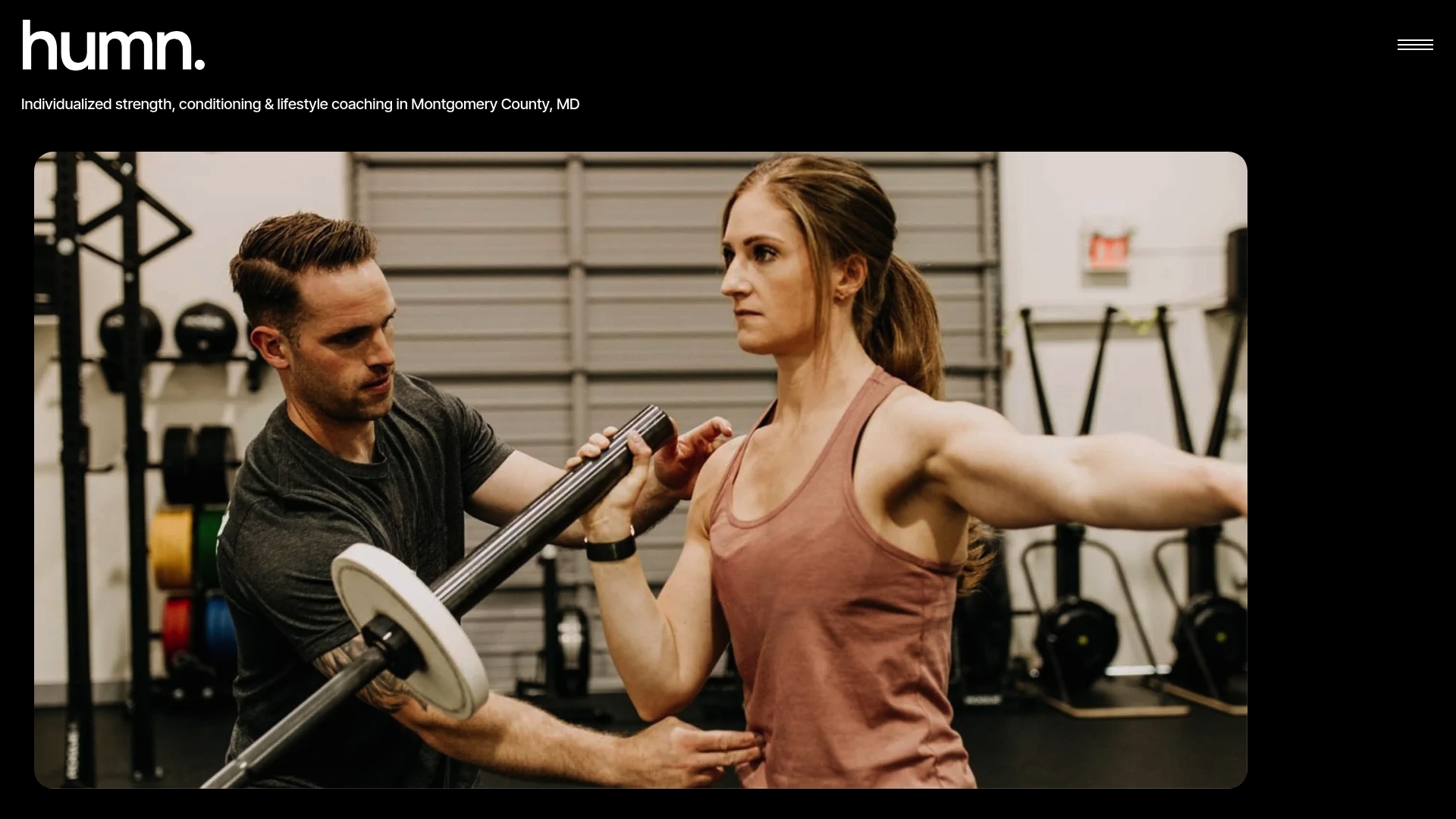
A test-retest check tells you what to fix. A coach helps you fix it faster and confirms the carryover actually holds under load. Coaching can pair an individualized mobility and strength plan with recovery tools such as sauna, compression, and red light therapy for the soreness that comes with building new range, providing guidance on which drills matter and avoiding unnecessary stretching. If you want a plan built around your own lifts rather than a generic routine, start with a humn. membership and get matched with a coach who can run the assessment with you.
Sources
- The influence of resistance training on joint flexibility in healthy adults: A systematic review, meta-analysis, and meta-regression
- Application of mobility training methods in sporting populations: A systematic review of performance
- Dynamic stretching vs. static stretching (Cleveland Clinic)
- Want to Move Better? Try These 5 Mobility Drills for Weightlifting | BarBend
FAQ
What is the 3-3-3 rule for weightlifting?
Definitions of the 3-3-3 rule vary across fitness content and it is not tied to a single clinical or research source. A common informal version suggests three minutes of warm-up movement, three mobility drills, and three sets of practice before loading a lift, but treat it as a rough guideline rather than a fixed standard.
Is it better to do mobility before or after lifting?
Targeted mobility drills for the joint gating your lift work best before lifting, as part of your warm-up, because they prepare the exact position you are about to load. General soft-tissue work and longer static stretching fit better after lifting, during the cool-down, when you are not asking a joint to immediately produce force.
What is the 2-2-2 rule in weightlifting?
Like the 3-3-3 rule, the 2-2-2 rule is an informal fitness term with no single agreed definition, and it does not appear in the clinical or research sources behind this article. Rather than relying on it, use the test-retest approach: apply a targeted drill, then immediately recheck the lift to see if the position actually improved.
What are examples of mobility work?
Practical examples include half-kneeling ankle dorsiflexion drills, thoracic extensions over a foam roller followed by PVC pass-throughs, 90/90 hip switches, banded shoulder pull-aparts, and cat-cow for spine control. These are drawn from commonly recommended drills for lifters and target the joints that most often limit squats, presses, and overhead positions.
No Comments.