


Progressive strength training, especially work targeting the posterior chain and spine-sparing core muscles, is one of the most effective tools for reducing chronic lower back pain when it’s staged correctly and built up over weeks, not days. Start today with three things: a 20-minute walk, the McGill Big Three once daily, and a plan for two weekly strength sessions built around your glutes and hips.
- Walk daily, even just 20 minutes, to keep tissue moving without loading the spine.
- Do the McGill Big Three (curl-up, side plank, bird dog) once a day.
- Schedule two strength sessions weekly focused on hip-hinge and glute work.
Red flags that mean stop and see a clinician now: progressive leg weakness, numbness in the saddle region, loss of bowel or bladder control, or severe pain that wakes you at night and doesn’t ease with position changes. None of those are “push through it” situations.
Key Takeaways
Progressive posterior-chain strength training, staged over 12 to 16 weeks with proper technique coaching, reduces both pain and recurrence more reliably than rest or general exercise alone.
| Point | Details |
|---|---|
| Evidence favors PCRT | Posterior-chain resistance training outperforms general exercise, with the biggest gains at 12 to 16 weeks. |
| Recurrence drops significantly | Structured programs showed about 8.3% recurrence versus 33.3% in standard care over 8 to 16 weeks. |
| Prioritize hip-hinge and core stability | McGill Big Three, glute bridges, and Romanian deadlifts build the strength that protects the spine. |
| Modify, don’t stop, when it flares | Swap floor deadlifts for trap-bar pulls or reduce load rather than pausing training entirely. |
| Coached programs reduce setback risk | humn’s Resist, Recover, Renew, and Rhythm framework pairs technique coaching with recovery and habit support for safer progression. |
Table of Contents
- Does Strength Training Actually Help Lower Back Pain?
- Which Exercises Should You Start With?
- How Should You Structure a 12 to 16 Week Program?
- What Are the Real Red Flags, and How Do You Modify Safely?
- Two Ready-to-Use Routines You Can Start This Week
- Why a Coached Program Helps More Than Solo Trial and Error
- What a Good Warm-Up and Cool-Down Look Like
- How Do You Know If the Program Is Working?
- What Mistakes Cause Setbacks During Training?
- Do You Still Need Stretching and Mobility Work?
- Where Conventional Advice Gets This Wrong
- Get Coached Support for Your Lower Back Pain Program
- Frequently Asked Questions
- Sources
Does Strength Training Actually Help Lower Back Pain?
The research on this is more specific than most people realize. A systematic review and meta-analysis comparing posterior-chain resistance training to general exercise and walking programs found that PCRT produced larger reductions in both pain and disability than general exercise routines, and the gap widened the longer people stuck with it. Programs lasting 12 to 16 weeks outperformed shorter 6 to 8 week versions by a clear margin.
The pattern in the trial data is consistent: people who build strength in the glutes, hamstrings, and spinal extensors over three to four months report less pain and better function than people who just “stay active” with general exercise. Time under load, applied gradually, seems to be doing real work here.
One pooled analysis of progressive strength training outcomes found recurrence rates near 8.3% in structured intervention groups over 8 to 16 weeks, compared to 33.3% in standard care groups. That’s a meaningful difference in how often the pain comes back, not just whether it improves short term. Supervised resistance programs in these trials also didn’t show higher rates of injury or adverse events than lighter exercise approaches, which undercuts the old assumption that lifting is inherently risky for a bad back.
Which Exercises Should You Start With?
Not every exercise labeled “core” or “back” belongs in a program for lower back pain, and some popular ones actively work against you. Here’s what to prioritize and why each one earns its spot.
- The McGill Big Three. Developed by spine researcher Stuart McGill, this trio (curl-up, side plank, bird dog) trains your trunk to resist unwanted motion instead of creating it. That anti-extension, anti-rotation stability is what protects the spine during heavier lifts later.
- Glute bridges and hip thrusts. These build hip extension strength without asking the lumbar spine to do the work. Start with bodyweight, then add a barbell or band once form is solid.
- Romanian deadlifts, light to start. This is the classic hip-hinge pattern, and it’s often mislabeled as dangerous when the real issue is technique. Keep the bar close to your shins, hinge at the hips, and stop the range of motion where your lower back would otherwise round.
- Trap-bar pulls. The neutral grip and centered load make this a gentler entry point into heavier posterior-chain training than a conventional barbell deadlift.
- Pallof press and dead bugs. Both train anti-rotation and anti-extension control from positions that don’t compress the spine, which makes them safer additions than repeated crunches or sit-ups for anyone with disc-related pain.
The technique cues that matter most across all of these: brace your core before you move, breathe through the lift instead of holding your breath the whole set, and keep your range of motion short until your body proves it can handle more.
Pro Tip: If a movement causes sharp, localized pain rather than general muscle fatigue, cut the range of motion in half before you cut the exercise entirely. Often the joint angle, not the movement itself, is the problem.
How Should You Structure a 12 to 16 Week Program?
Two focused strength sessions per week, paired with daily low-intensity movement like a 20 to 30 minute walk, is enough stimulus for most people, according to a feasibility study on periodized resistance training for persistent low back pain. More isn’t automatically better here. Consistency and supervision matter more than volume.
A simple three-phase structure works well:
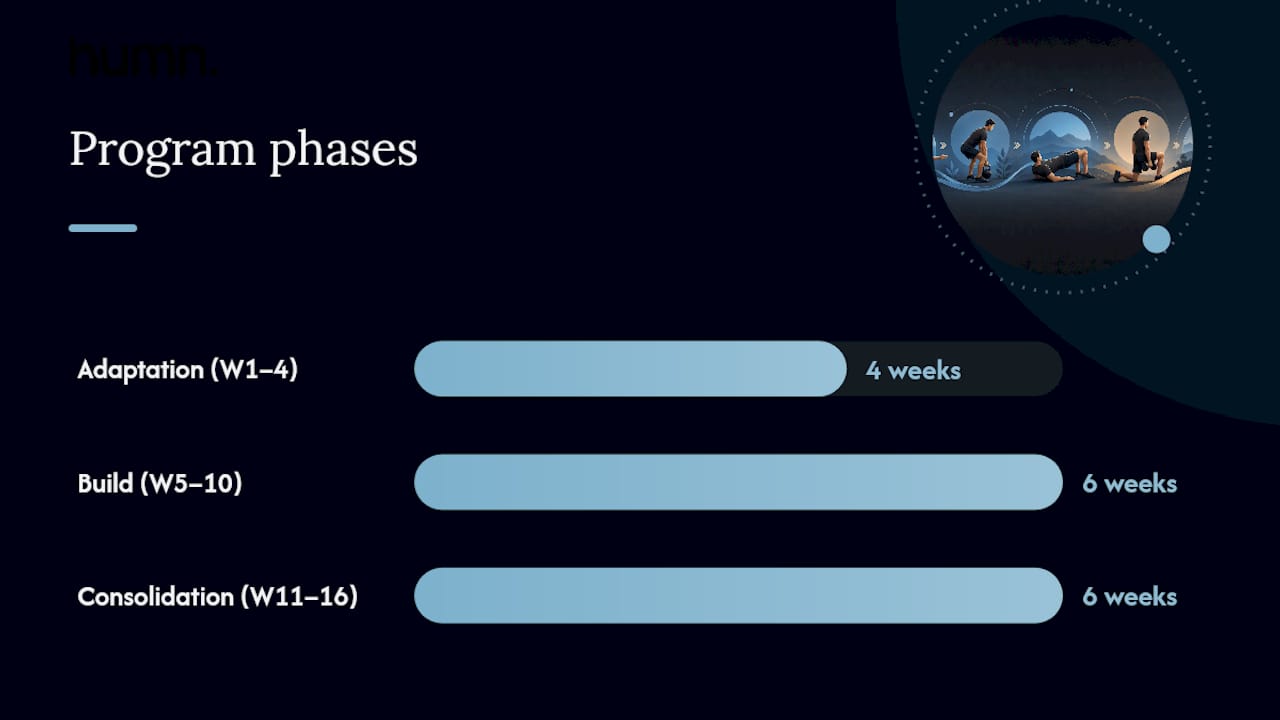
- Weeks 1 to 4 (adaptation): Light loads, short ranges of motion, and a heavy focus on technique. This is where familiarization with movement patterns pays off later.
- Weeks 5 to 10 (build): Progressive overload, adding weight or reps gradually once form holds under fatigue.
- Weeks 11 to 16 (consolidation): A slight deload followed by testing your new baseline strength and adjusting the next block.
| Phase | Duration | Focus |
|---|---|---|
| Adaptation | Weeks 1 to 4 | Technique, light load, short range of motion |
| Build | Weeks 5 to 10 | Progressive overload, added weight or reps |
| Consolidation | Weeks 11 to 16 | Deload, retest, plan next block |
Track a pain scale (0 to 10) and your rate of perceived exertion each session. If pain climbs above your baseline for more than a day after training, regress the load rather than pushing through. A coach or physical therapist during the adaptation phase reduces the odds you re-aggravate something before you’ve even built the strength meant to protect you, as progressive strength training programming guidance lays out in more detail.
What Are the Real Red Flags, and How Do You Modify Safely?
Most lower back pain is mechanical and responds well to loaded movement. A small percentage of cases need urgent medical attention, and it’s worth knowing the difference before you load a barbell.
- Progressive leg weakness that’s getting worse week to week, not just soreness after a hard session.
- Saddle anesthesia, or numbness in the groin and inner thighs.
- Loss of bowel or bladder control.
- Severe, unrelenting night pain that doesn’t change with position and isn’t explained by a recent hard workout.
Any of those warrants an immediate clinical visit, not a modified training plan.
For everyone else, load-shift substitutions let you keep training instead of stopping cold. Swap floor deadlifts for trap-bar or block pulls, which shorten the range of motion and reduce spinal flexion. Replace heavy back squats with goblet or belt squats. Trade bent-over rows for chest-supported rows, which take the lumbar spine out of the stabilization equation entirely. A spine surgeon’s guidance on lifting with back pain makes the mechanics clear: bending with straight legs while holding weight spikes disc pressure, while keeping the load close to your body and hinging at the hips cuts that stress significantly.
Pro Tip: When a session flares your pain, don’t cancel it. Stopping training entirely tends to prolong recovery more than a modified session does.
Two Ready-to-Use Routines You Can Start This Week
You don’t need a gym membership to begin. Here’s a minimal-equipment daily routine and a gym-based session for when you’re ready to add load.
At-home daily routine:
- McGill Big Three: curl-up, side plank, bird dog, one set each side, held 10 seconds, repeated 5 times.
- Glute bridges: 2 to 3 sets of 12 to 15 reps.
- A 20-minute walk at a conversational pace.
Gym session (twice weekly):
- Trap-bar or block Romanian deadlift: 3 sets of 6 to 8 reps, starting light.
- Hip thrusts or cable pull-throughs: 3 sets of 10 to 12 reps.
- Pallof press: 2 sets of 10 per side.
- Cooldown: 5 minutes of walking plus gentle hip flexor and hamstring stretching.
The key distinction to learn early is pain versus soreness. Muscle soreness the next day is normal and expected. Sharp pain during the movement itself, or pain that lingers and worsens over the following 48 hours, means the load or range of motion needs to come down before your next session, not up.
Why a Coached Program Helps More Than Solo Trial and Error
Technique coaching and periodized progression are the two variables that separate people who get lasting relief from people who plateau or flare repeatedly. That’s the gap a structured, habits-first model is built to close. humn’s four-pillar framework maps directly onto what the research supports:
- Resist: progressive strength training, coached for technique and safe loading.
- Recover: sauna, compression, and red light therapy to support tissue recovery between sessions.
- Renew: nutrition and sleep coaching, since poor recovery habits slow tissue adaptation regardless of how well you train.
- Rhythm: consistency and habit formation, because a 12 to 16 week program only works if you actually complete it.
Familiarization with a movement pattern under a coach’s eye, before you add real load, is what separates a strength program that builds resilience from one that causes a setback.
1-on-1 coaching sessions and small-group personal training give you the kind of real-time correction that a study protocol or a YouTube video can’t. Learn more about 1-on-1 fitness coaching or explore humn’s approach to strength and recovery.
What a Good Warm-Up and Cool-Down Look Like
A rushed warm-up is one of the most common ways people set themselves up for a bad session before they even pick up a weight. Five to eight minutes is usually enough if you spend it right.

Start with general movement: a brisk walk or a few minutes on a bike to raise tissue temperature. Follow with two or three mobility drills that match what you’re about to train. Cat-cow and hip circles work well before a hip-hinge day. Glute bridges done as a warm-up set (bodyweight, 10 to 12 reps) prime the muscles you’re about to load, which matters more for lower back pain than static stretching does before lifting.
Save static stretching for after your session, when muscles are warm and the goal shifts from activation to length. A few minutes of hip flexor, hamstring, and piriformis stretching post-workout helps offset the sitting most adults do the rest of the day. Finish with two minutes of slow diaphragmatic breathing. It sounds minor, but resetting your breathing pattern after a heavy set helps your nervous system down-regulate, which matters if bracing patterns tend to carry over into how you hold tension the rest of the day.
The cool-down doesn’t need to be elaborate. Consistency in doing it at all, session after session, matters more than any single stretch you choose.
How Do You Know If the Program Is Working?
Progress with lower back pain rarely looks like a straight line, which trips people up if they’re expecting week-over-week improvement on a chart. Track three things instead of just one.
Pain scale trends over two-week windows, not day to day. A single bad day doesn’t mean the program failed; a two-week average that’s climbing does mean something needs to change.
Functional markers matter as much as pain scores. Can you pick up a laundry basket without bracing for pain? Can you sit through a meeting without shifting every five minutes? Those changes often show up before the pain number moves much.
Load and rep progression in the gym itself. If you’re adding weight or reps to your Romanian deadlift or hip thrust every couple of weeks without a pain flare, the program is doing its job even if you still notice occasional discomfort.
If pain plateaus or worsens for more than two weeks despite consistent training, that’s the signal to regress load, swap an exercise for a gentler variation, or bring in a coach or physical therapist to reassess your movement pattern. Don’t wait for a full setback to make an adjustment. Small course corrections every few weeks, based on how your body actually responds rather than how the program is written on paper, are what keep a 12 to 16 week plan on track.
What Mistakes Cause Setbacks During Training?
The most common mistake isn’t lifting too heavy. It’s progressing load faster than technique can handle, especially in the hip hinge, which is exactly the pattern most people learned incorrectly before they ever set foot in a gym.
Rounding the lower back during a deadlift or Romanian deadlift is the single most frequent technical error, and it usually comes from trying to move too much weight before the hinge pattern is grooved. Fix it by cutting the range of motion and the load, then rebuilding from there.
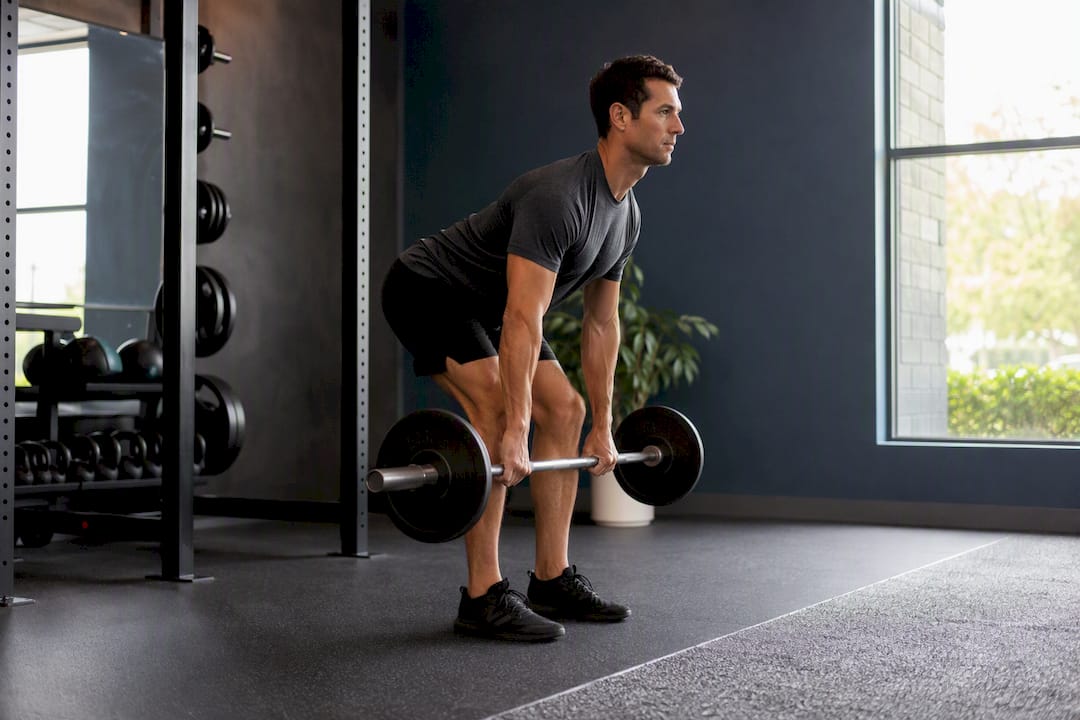
Skipping the warm-up is the second big one. Jumping straight into working sets with cold tissue and no activation work raises the odds of a flare, particularly on hip-hinge or squat days.
Doing too much, too soon, ranks third. Enthusiasm after a good week tends to push people into adding weight or volume faster than the 12 to 16 week timeline the research supports. That impatience is often what turns a manageable flare into a two-week setback.
Finally, avoiding movement entirely after a flare tends to backfire. A clinical resource on lifting through low back pain points out that load-shift strategies, meaning modified exercise, work better for long-term outcomes than total rest. Fear of movement after a flare, more than the flare itself, is often what delays recovery.
Do You Still Need Stretching and Mobility Work?
Strength training is the primary driver of lasting improvement, but flexibility and mobility work still earn a place in the plan. Harvard Health’s guidance on back pain recommends stretching the muscles you’re strengthening as part of a complete approach, not as a replacement for loaded work.
Tight hip flexors, hamstrings, and thoracic spine mobility can all limit how well you execute a hip hinge or squat, which means poor mobility upstream can create compensation patterns that load the lower back unfairly. A few minutes of hip flexor stretching and thoracic rotation drills before a strength session often improves the quality of the lift itself, not just how you feel afterward.
The mistake is treating mobility work as the whole solution instead of a support act. Stretching alone rarely resolves chronic lower back pain, because it doesn’t build the tissue capacity needed to handle daily loads like lifting groceries or sitting for long stretches. Pair five to ten minutes of targeted mobility work with your strength sessions, rather than substituting one for the other, and you get the durability benefits of both.
Where Conventional Advice Gets This Wrong
Most people with lower back pain are told to rest, stretch, and avoid lifting until it feels better. That advice is backward for the majority of non-specific cases, and the trial data on posterior-chain resistance training makes that clear. Rest without strength work tends to produce deconditioning, which sets up the next flare rather than preventing it.
What gets underestimated is how much technique coaching matters in the first few weeks. A perfectly good exercise like a Romanian deadlift becomes a liability with poor hip-hinge mechanics, and most people don’t get that feedback until something already hurts. That’s not an argument against lifting. It’s an argument for supervised familiarization before load gets heavy.
The other overlooked piece is patience with timelines. The strongest results in the research show up at 12 to 16 weeks, not two. People quit programs at week three because they don’t feel dramatically different yet, right when the adaptation phase is supposed to feel unremarkable. If you take one thing from the evidence, take this: pick a program you can sustain for four months, get real feedback on your form early, and expect the biggest changes to show up in the back half, not the front.
Get Coached Support for Your Lower Back Pain Program
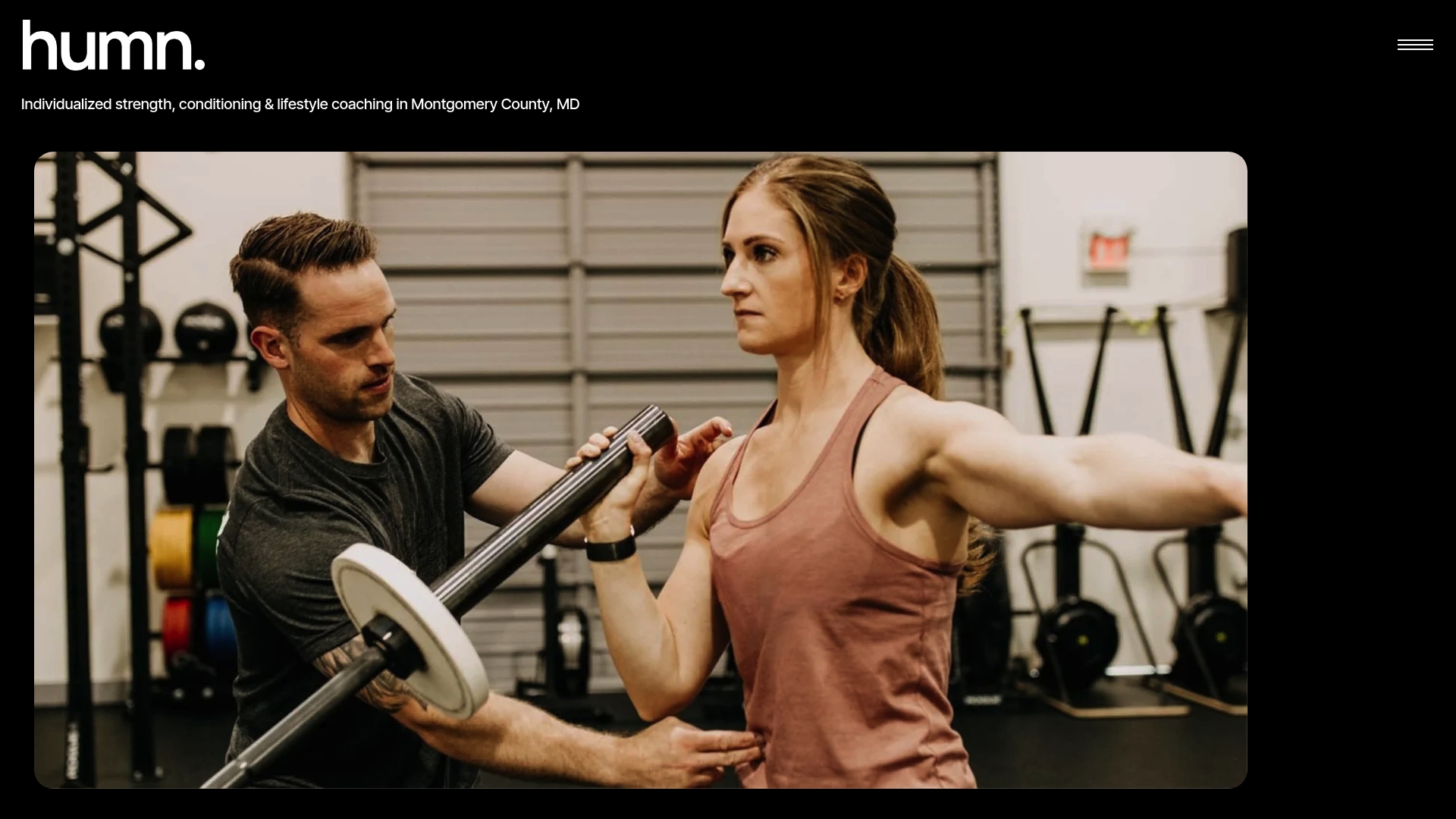
Reading the research is one thing. Executing a 12 to 16 week hip-hinge progression with the right technique, under real fatigue, without a coach watching your form, is where most people quietly go wrong. humn built its Resist pillar around exactly that gap: small-group and 1-on-1 strength coaching where a coach corrects your bar path and hinge pattern before bad mechanics become a habit, not after a flare-up forces a reset.
What makes humn different from figuring this out solo isn’t just the coaching. It’s the Recover, Renew, and Rhythm pillars working alongside your strength sessions, so sleep, nutrition, and recovery modalities like sauna and compression support the tissue adaptation your training is asking for. That’s the piece most DIY programs skip entirely. If you’re in Gaithersburg, MD and ready for a program built around your actual pain history rather than a generic template, start with a look at how humn’s coaching model works and book a first session.
Frequently Asked Questions
Can strength training help back pain even if it’s chronic?
Yes. The evidence specifically favors posterior-chain resistance training for chronic, non-specific lower back pain, with the strongest results appearing after 12 to 16 weeks of consistent progression.
Is it safe to start lifting with lower back pain right now?
For most non-specific pain without red flags like leg weakness or bowel changes, starting with light, technique-focused strength work is safe and often more helpful than rest. Check with a clinician first if you’re unsure which category you fall into.
How often should I do strength exercises for lower back pain?
Two focused sessions per week, combined with daily low-intensity movement like walking, is enough stimulus for most people and matches what the feasibility research on periodized training supports.
What’s the fastest way to reduce lower back pain through exercise?
There’s no real shortcut. The data consistently shows the largest improvements at 12 to 16 weeks, not in the first two weeks, so consistency matters more than intensity early on.
This article is general information, not a substitute for advice from a qualified doctor. Consult a qualified healthcare professional about your own circumstances before acting on anything here.
Sources
- Posterior-Chain Resistance Training Compared to General Exercise and Walking Programmes for the Treatment of Chronic Low Back Pain
- PubMed reference for progressive strength training outcomes
- Is It Safe to Lift With Back Pain? A Spine Surgeon Weighs In | The Well by Northwell
- Stretching and strengthening exercises to relieve and prevent lower back pain | Harvard Health
No Comments.