


A fitness pillar framework is an evidence-informed model that organizes the key, interrelated components of physical fitness and behavioral wellness into distinct but connected pillars. Its purpose is to guide sustainable, balanced programming for long-term health rather than chasing short-term results. The American College of Sports Medicine scientific roundtable identified five core health-related fitness components that form the physiological foundation of any serious framework:
- Cardiorespiratory fitness: the ability of the heart and lungs to sustain aerobic effort
- Muscular fitness: encompassing strength, endurance, and power
- Body composition: the ratio of lean mass to fat mass
- Neuromotor fitness: balance, coordination, and agility
- Flexibility: joint range of motion and tissue extensibility
Each component meets a strict standard: it is changeable through exercise, affects the ability to participate in physical activity, contributes to health, and can be assessed in professional practice. In holistic coaching, the framework expands further to include nutrition, recovery, mindset, and lifestyle behaviors, because physical fitness alone does not produce lasting wellness.
Table of Contents
- What are the core fitness pillar framework components?
- How does holistic coaching extend the fitness pillars?
- How do you apply a fitness pillar framework to your own goals?
- How humn’s four-pillar framework puts this into practice
- What long-term wellness looks like across the pillars
- How does the framework adapt for different populations and goals?
- humn is built for clients who want more than a workout
- Key Takeaways
What are the core fitness pillar framework components?
The five components identified by the ACSM roundtable are not a checklist to work through in order. They are interconnected, meaning progress in one tends to support progress in others, and a gap in one can limit the rest.
- Cardiorespiratory fitness is built through sustained aerobic work: running, cycling, rowing, or any activity that keeps the heart rate elevated for extended periods. It underpins energy availability for every other pillar.
- Muscular fitness covers three subcomponents. Strength is the force a muscle can produce in a single effort. Endurance is how long it can sustain repeated contractions. Power combines force with speed, which is critical for functional daily movement and athletic performance.
- Body composition is more than a scale reading. Skeletal muscle mass, fat mass, and bone density each carry independent health implications, particularly for metabolic function and fall prevention as people age.
- Neuromotor fitness is the pillar most often skipped in standard gym programming. Balance drills, agility ladders, and coordination-based movements train the nervous system’s ability to control the body, which directly reduces injury risk and preserves independence later in life.
- Flexibility supports joint health and posture. Static stretching, dynamic warm-ups, and mobility work all contribute, though the IDEA Health & Fitness Association notes that functional movement also depends on how these components integrate during real-world tasks like squatting, pushing, pulling, and rotating.
The synergy among these components is what makes the framework useful. A client who trains cardiorespiratory fitness and muscular fitness but ignores neuromotor fitness will eventually hit a ceiling, or worse, get hurt.
How does holistic coaching extend the fitness pillars?
Physical fitness components describe what the body can do. Holistic fitness pillar frameworks address why people sustain or abandon their progress. The four pillars most commonly recognized in evidence-based coaching are exercise, nutrition, recovery, and mindset, and deficits in any one of them directly impair the others.
- Exercise remains the anchor, but its quality depends on what surrounds it.
- Nutrition fuels training, repairs tissue, and regulates hormones. Poor nutrition blunts strength gains and slows recovery regardless of how well the workout was designed.
- Recovery includes sleep quality, rest days, and stress management. Chronic sleep deprivation raises cortisol, suppresses muscle protein synthesis, and increases injury risk.
- Mindset shapes consistency. Clients who build fitness habits gradually and without perfectionism sustain their programs far longer than those chasing rapid transformation.
Integrating nutrition and psychological factors as formal pillars is not a soft add-on. It is what separates a program that works for six weeks from one that works for six years.
How do you apply a fitness pillar framework to your own goals?
The framework is only useful when it is individualized. The ACSM’s consensus statement is explicit on this point: fitness components should be treated as dynamic variables, not a fixed prescription. An older adult prioritizing fall prevention will emphasize neuromotor fitness and muscular fitness. A younger adult returning from a sedentary period may need to build cardiorespiratory fitness first. The framework stays the same; the emphasis shifts.
Assessing your starting point across all pillars matters more than picking the most appealing one. A simple self-audit covers five questions: How is my cardiovascular endurance? How is my strength relative to my body weight? How is my flexibility and balance? How is my sleep and recovery quality? How consistent are my nutrition habits? Honest answers reveal where the real gaps are, which is rarely where people assume.
Tracking progress across pillars over time requires more than a scale. Useful markers include resting heart rate trends, strength benchmarks, sleep duration, energy levels, and mood stability. Adaptive programming adjusts the emphasis among pillars as these markers change.
Pro Tip: If you are training hard for strength or endurance and not seeing results, the missing variable is almost always recovery. Neglecting sleep and rest days while increasing training volume raises injury risk, accelerates burnout, and stalls progress faster than any programming error.
The CDC confirms that even small increases across fitness pillars produce meaningful reductions in chronic disease risk. The goal is not to max out every pillar simultaneously. It is to keep all of them moving forward together, which is exactly what systems-based programming is designed to do.
How humn’s four-pillar framework puts this into practice
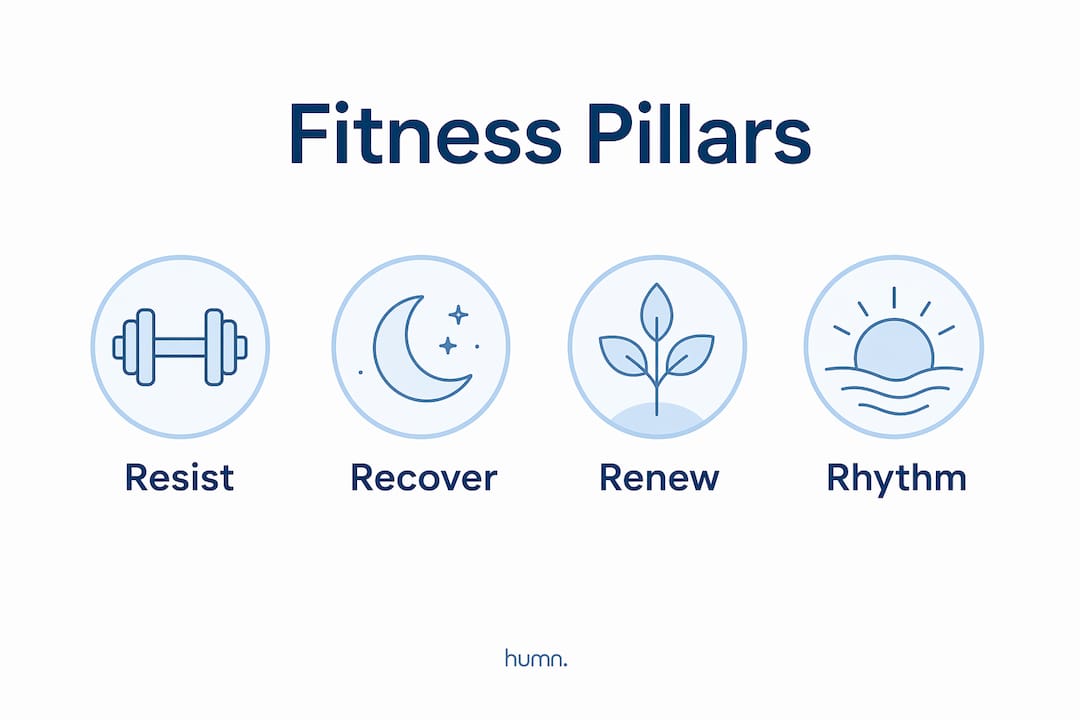
humn translates the research into a fitness lifestyle transformation through four named pillars that map directly onto the science while adding the behavioral layer most frameworks leave out.
| Pillar | Focus area | Coaching application | Client outcome |
|---|---|---|---|
| Resist | Strength and conditioning | Progressive resistance training, movement quality | Increased muscle mass, metabolic health, functional strength |
| Recover | Rest and repair | Sleep protocols, active recovery, stress reduction | Reduced injury risk, improved adaptation, sustained energy |
| Renew | Nutrition and mindset | Habit-based nutrition, psychological resilience | Better body composition, motivation, long-term adherence |
| Rhythm | Habit formation and lifestyle | Consistent daily routines, behavior change coaching | Sustainable wellness, reduced chronic disease risk |
Each pillar is coached, not just programmed. humn’s coaches assess where a client sits across all four areas at intake, then adjust emphasis as the client’s circumstances change. A client managing high work stress may need more focus on Recover and Rhythm before Resist becomes the priority. That flexibility is what makes the model durable.

What long-term wellness looks like across the pillars
Consider two common scenarios. A client in their mid-40s with a desk job and early-stage hypertension needs cardiorespiratory work, stress reduction, and sleep improvement before adding heavy strength training. Starting with Recover and Rhythm, then layering in Resist, produces steady blood pressure improvement and builds the physical capacity to train harder later. Jumping straight to intense conditioning would likely increase cortisol and worsen the underlying issue.
A second scenario: a client in their late 30s who has trained consistently for years but keeps getting injured. Their muscular fitness is strong, but neuromotor fitness and flexibility have been ignored. Rebalancing the framework, adding balance work, mobility sessions, and structured recovery, often resolves the injury cycle within a few months without reducing training intensity.
Both scenarios illustrate the same principle. The pillars are interdependent, and the framework’s value is in revealing which one is the limiting factor at any given time.
How does the framework adapt for different populations and goals?
The IDEA Health & Fitness Association describes a human-specific movement model where the same fundamental pillars apply across populations, with intensity, duration, and emphasis adjusted for the individual. A 65-year-old and a 25-year-old athlete train the same pillars. The load, speed, and recovery window differ.
For older adults, neuromotor fitness and flexibility take priority because fall prevention and joint health directly affect independence. For athletes, power output within muscular fitness and cardiorespiratory capacity at high intensity become the lead pillars. For people managing chronic conditions, the recovery and mindset pillars often need the most attention first, since stress and poor sleep can undermine every physical gain.
The functional fitness principles behind pillar frameworks also support population-specific programming by grounding exercise selection in real-world movement patterns rather than isolated muscle work. This makes the framework relevant whether the goal is athletic performance, healthy aging, chronic disease management, or simply feeling better day to day.
humn is built for clients who want more than a workout
Most gyms give you access. humn gives you a program built around your specific pillar gaps, coached by people who track how those gaps change over time.
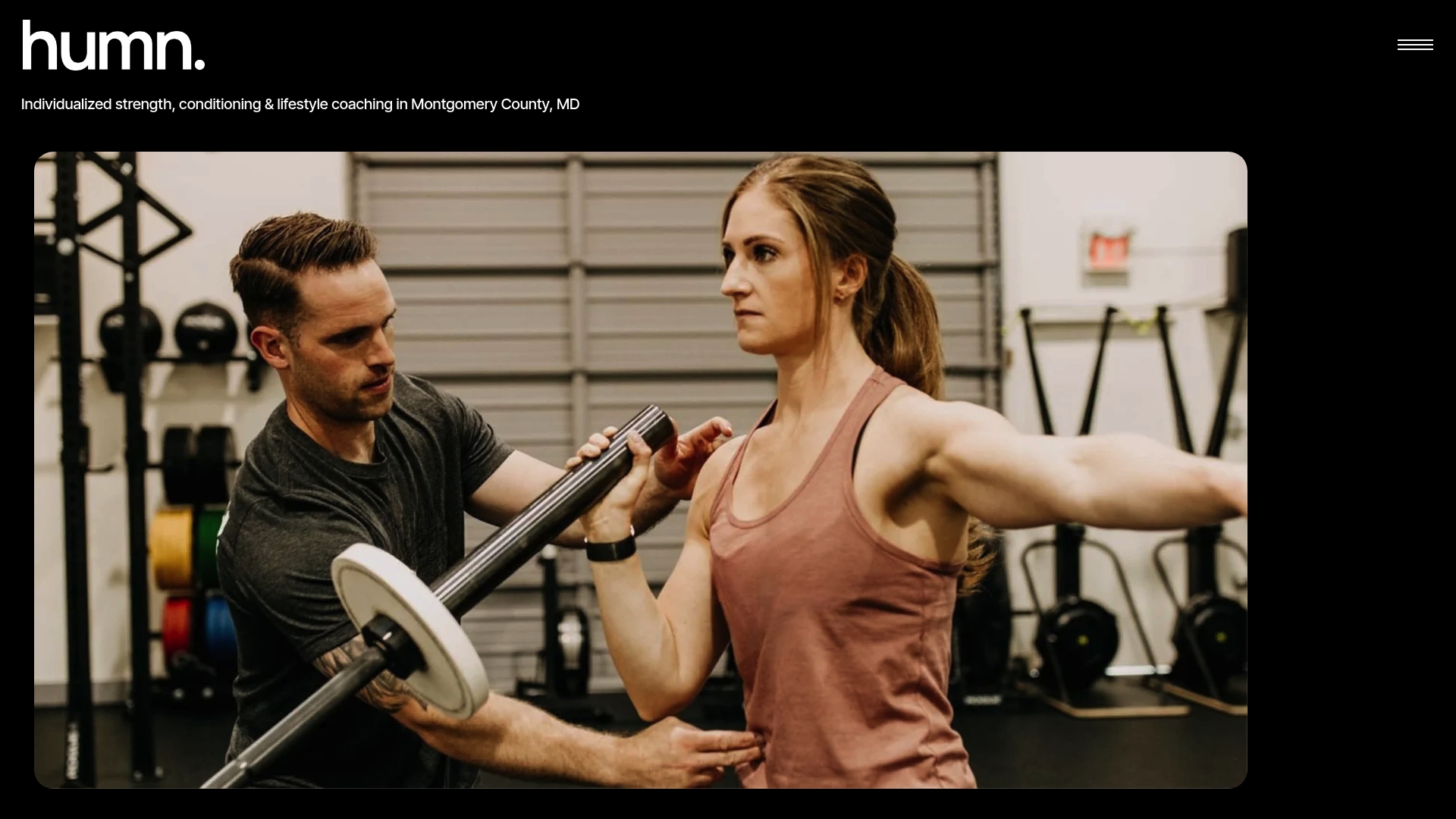
humn’s four-pillar model, Resist, Recover, Renew, and Rhythm, is the practical version of everything this article covers. It is not a generic template. Coaches at humn assess your starting point across all four areas, build a program around your actual priorities, and adjust it as your life and goals evolve. The boutique setting in Gaithersburg, MD keeps the coaching personal and the environment focused. If you are ready to work with a coach who treats recovery, nutrition, and mindset as seriously as your training, 1-on-1 coaching at humn is the place to start.
Key Takeaways
A fitness pillar framework works because it treats physical fitness and behavioral wellness as one interconnected system, not separate goals.
| Point | Details |
|---|---|
| Five ACSM-defined components | Cardiorespiratory fitness, muscular fitness, body composition, neuromotor fitness, and flexibility form the physiological core. |
| Holistic pillars extend the model | Nutrition, recovery, and mindset are formal pillars, not optional add-ons, because deficits in each directly impair physical progress. |
| Dynamic individualization is required | Pillar emphasis shifts with health status, age, and goals; the framework is a tool, not a fixed prescription. |
| Chronic disease risk decreases | Even small increases across fitness pillars produce meaningful health benefits, per CDC evidence. |
| humn’s four-pillar model | Resist, Recover, Renew, and Rhythm operationalize the full framework through behavior-based, coach-led programming. |
No Comments.