

A single clinic session typically costs a moderate amount within a common price range for 20 to 30 minutes, and packages typically reduce the per-visit price substantially. At-home boots and pneumatic devices span roughly $100 to $2,000 depending on the brand, and compression stockings cost $38 to $250 off the shelf, or upward of $900 custom-made. Insurance and Medicare sometimes cover medical-grade garments with a prescription, but the sessions and over-the-counter socks are almost always out-of-pocket.
TL;DR:
- Purchasing at-home compression devices is cost-effective only if used more than twice weekly, and features like zone count and warranty influence long-term value.
- Clinics typically charge a moderate median price for sessions, with discounts available through bulk packages or memberships that lower per-visit costs.
- Insurance and Medicare coverage for compression therapy is limited to prescribed garments for specific conditions, with self-pay options often being cheaper for standalone sessions.
- Long-term savings are possible when initial expenses are balanced against reduced healthcare costs, as compression therapy lowers recurrence of conditions like cellulitis.
- Bundling compression access into memberships with other recovery services can significantly lower overall costs compared to pay-per-session pricing.
Table of Contents
- How Much Does Compression Therapy Cost Per Session?
- What Do At-Home Compression Devices and Garments Cost?
- Does Insurance or Medicare Cover Compression Therapy?
- Is Compression Therapy Worth the Cost Long Term?
- How Can You Lower Your Compression Therapy Costs?
- How humn. Thinks About Recovery Pricing
- Where to Get Compression Therapy Without Guessing at Price
- Sources
How Much Does Compression Therapy Cost Per Session?
Clinics price compression therapy in various ways including a la carte sessions, prepaid packages, and monthly memberships. Published cash-price data for the billing code clinics use (CPT 97016) indicates a median cash price in the moderate range, but prices vary widely depending on provider and region.
Buying in bulk changes the math fast. Buying in bulk often reduces the per-session cost substantially, and some studios bundle it into membership tiers that include one or more monthly sessions for a flat fee. One sample clinic pricing model lists monthly membership offers around $29 that include a session, with single visits priced higher for non-members.
A few things push the price up or down:
- Session length. A 15-minute add-on costs less than a full 30 to 45 minute standalone appointment.
- Equipment brand. Studios running well-known pneumatic systems tend to charge more than those using generic units.
- Staff involvement. A supervised session with a trained recovery coach costs more than a self-serve boot rental.
- Bundling. Compression folded into a broader recovery membership (sauna, red light therapy, coaching) often costs less per session than paying for compression alone.
The higher end of that range usually buys you trained oversight and a system built for repeated daily use, not just the machine itself.
What Do At-Home Compression Devices and Garments Cost?
Buying your own equipment shifts the cost structure entirely, and it only pays off if you’ll use it often enough to beat the price of repeat clinic visits.
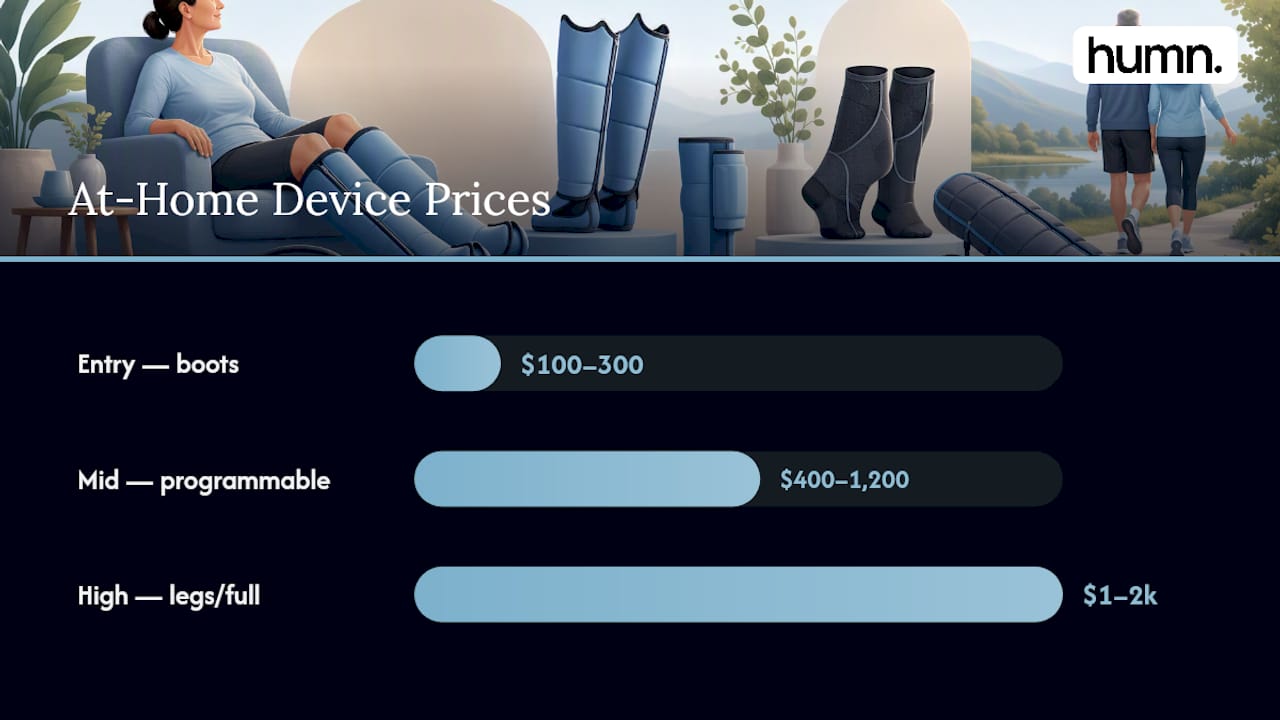
Devices: Entry-level consumer pneumatic boots start around $100 to $300. Mid-range systems with more programmable zones run $400 to $1,200. High-end, legs-only or full-body systems can reach $1,000 to $2,000, and Healthline’s device roundup puts the historical Normatec-style legs-only unit near the $1,000 mark.
Garments: The Medicare durable equipment fee schedule lists ready-to-wear, below-knee gradient compression stockings priced from about $38.04 to $77.62 depending on mmHg strength, while custom waist-length garments built for lymphedema can exceed $988.
Pro Tip: Do the breakeven math before buying: divide the device price by your typical clinic session cost. If you’d use it more than twice a week, owning usually wins within a year.
- Check zone count, max mmHg, and remote design; device testing from Forbes notes these features drive both comfort and price.
- Factor in warranty length. A $1,000 unit with a 2-year warranty often costs less over time than a $400 unit with none.
- Consider red light therapy pricing as a comparison point when weighing device purchases against clinic-based recovery access.
Does Insurance or Medicare Cover Compression Therapy?
Coverage depends almost entirely on medical necessity. Wellness sessions at a recovery studio are treated as elective and paid out-of-pocket, but prescription compression garments for lymphedema or chronic wound care fall under different rules.
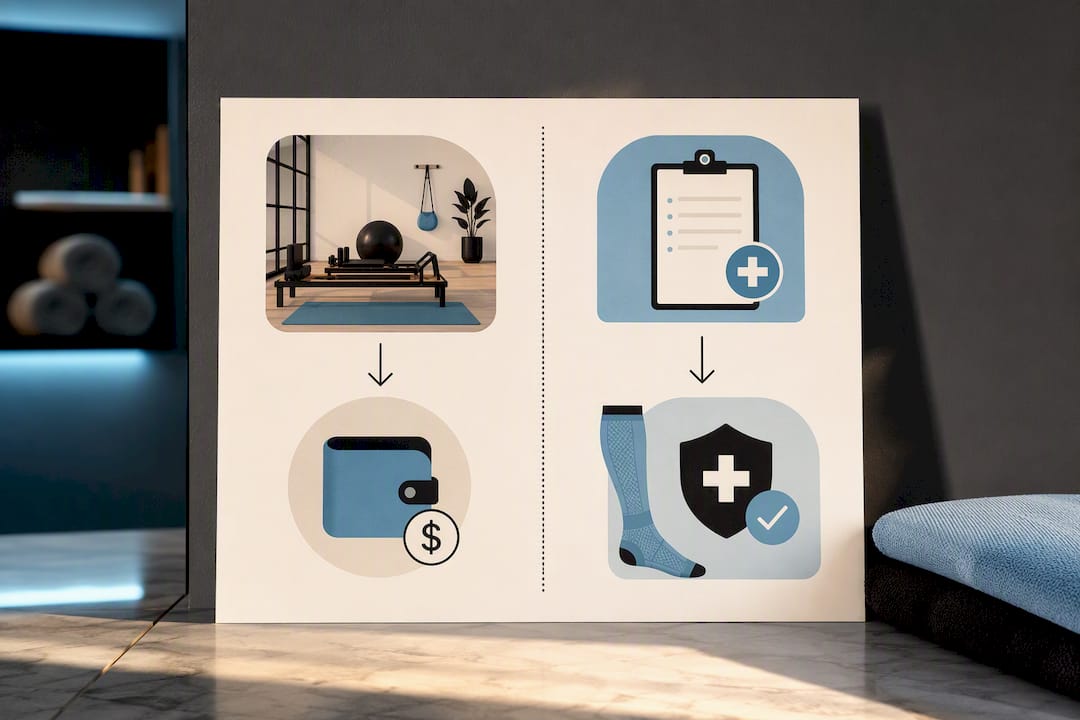
Original Medicare Part B can cover prescribed compression garments once you’ve met your deductible, though Medicare Advantage plans vary in whether they extend that to over-the-counter items. Coverage typically caps at three daytime garments per affected limb every six months, and a physician must document the diagnosis before Medicare or most private insurers will reimburse anything.
Before assuming you’re covered, or that you aren’t:
- Ask your doctor whether your condition (lymphedema, venous insufficiency, post-surgical swelling) qualifies for a written prescription.
- Call your insurer and ask specifically about durable medical equipment benefits, not general wellness coverage.
- Ask what documentation the supplier needs to bill Medicare directly versus requiring you to pay and file for reimbursement.
- If you don’t qualify, ask clinics about self-pay compression sessions instead of prescription garments. It’s often cheaper in the near term.
Is Compression Therapy Worth the Cost Long Term?
The strongest evidence on long-term value comes from a randomized trial on recurrent leg cellulitis, and it tells an unglamorous but useful story: you pay more up front, then a lot less late.
Patients using compression therapy for leg swelling had significantly lower total costs over 18 months due to reduced cellulitis flare-ups and hospital visits compared to patients who did not use compression therapy, despite higher upfront costs.
The full study found that costs are higher during the initial treatment phase involving fittings and bandaging, then drop substantially after about six months when maintenance begins. The trial was run outside the US, so the exact dollar figures don’t transfer directly to American billing, but the pattern holds: front-load the investment, and the ongoing cost of managing a chronic condition falls.
How Can You Lower Your Compression Therapy Costs?
You don’t have to choose between skipping care and overpaying for it. A few moves make a real dent in your total spend.
- Ask about packages before booking single sessions. Most studios will quote you a per-visit price that’s 25 to 40% lower once you commit to a 5 or 10 pack.
- Get medical necessity documented. If your swelling relates to a diagnosed condition, ask your doctor to write a prescription. It’s the only path to insurance reimbursement.
- Run the breakeven math before buying a device. Compare the device price against your realistic weekly session count over 12 months.
- Look for manufacturer coupons or pharmacy discount programs on compression stockings before paying full retail.
Pro Tip: Ask new clinics for a “first visit” rate. Many recovery studios discount the intro session to get you in the door, and that’s the cheapest way to test a system before committing to a package.
How humn. Thinks About Recovery Pricing
At humn., compression sits inside our Recover pillar alongside sauna, red light therapy, and acupuncture, bundled into membership rather than billed per visit; for an external overview of recovery devices, see Recovery tools for competitive athletes. That changes the comparison: instead of pricing a single boot session, you’re pricing a whole recovery system against your training goals. When you evaluate any studio’s rates, run the per-session math, not just the headline number.
— Josh
Where to Get Compression Therapy Without Guessing at Price
Recovery services shouldn’t require a spreadsheet to figure out if they’re worth it. At humn., compression access comes bundled into your membership alongside coaching, sauna, and red light therapy, so you’re not paying a la carte rate every time you want to reduce soreness after a hard training week.
That matters because the math in this article only works if you actually use the equipment consistently, and most people who buy a $1,000 boot system end up using it a handful of times before it collects dust in a closet. A membership built around behavior change, not just equipment access, solves that problem differently: your coach factors recovery into your weekly plan the same way they factor in your lifts. If you’re weighing a standalone device purchase against a program that includes recovery as part of the price of admission, see what personal training costs at humn. and how recovery access fits into that number. Book a visit to walk through the Recover pillar in person and get a straight answer on what fits your budget and your training schedule.
This article is general information, not a substitute for advice from a qualified doctor. Consult a qualified healthcare professional about your own circumstances before acting on anything here.
Sources
- Durable Medical Equipment fee schedule — lymphedema/compression items (CMS)
- Compression therapy is cost‑saving in prevention of lower limb recurrent cellulitis (PMC)
No Comments.