

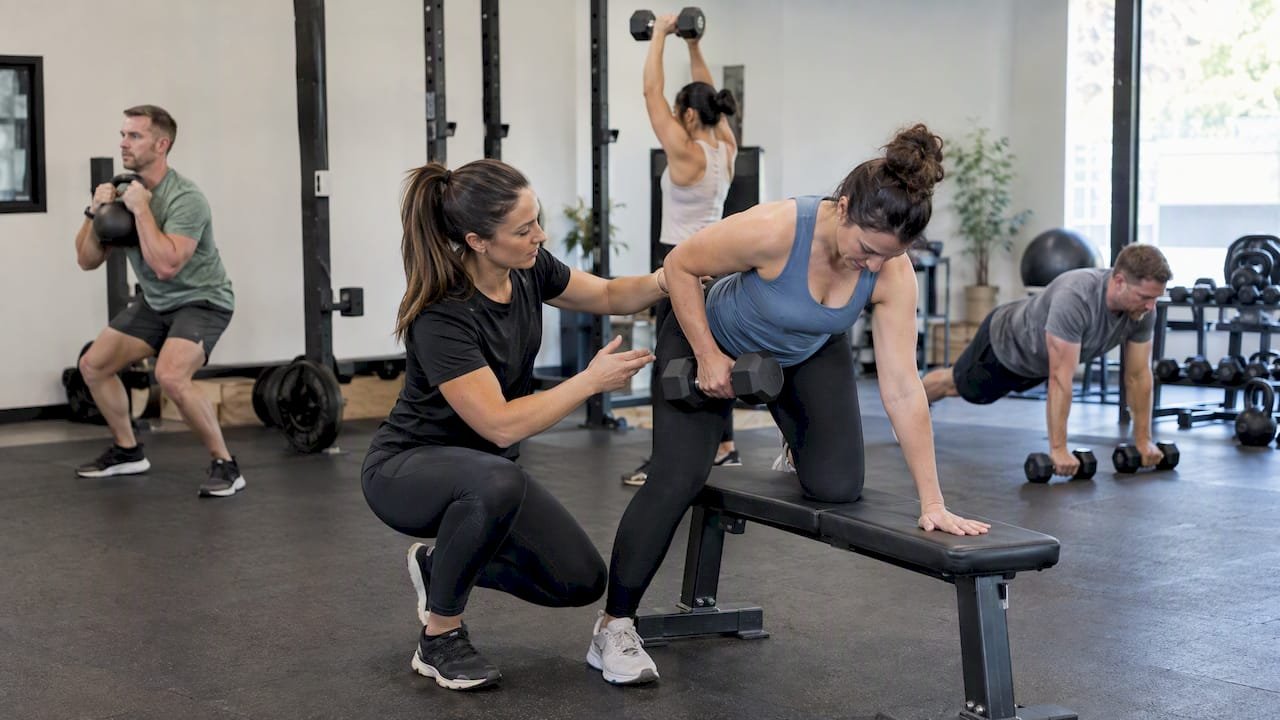
Boutique gyms deliver real, measurable benefits when you value coached instruction, a tight-knit community, and efficient, programmed sessions over open-floor access. The trade-off is cost: you pay more per visit than a big-box membership, and you get the full return only if you attend consistently rather than letting the membership sit unused.
TL;DR:
- A study found boutique members were nearly 10 years younger and trained 1 to 1.2 more sessions per week than members of other gym types.
- Boutique memberships cost $110 to $360 monthly, versus $10 to $65 at big box gyms; calculate cost per class from realistic attendance.
- Test the studio for four to eight weeks, checking coaching, class size, schedule fit, and whether pause or cancellation terms suit your routine.
- Popular classes can fill quickly, and booking 24 to 48 hours ahead or late cancellation fees may penalize people with unpredictable schedules.
Table of Contents
- A quick snapshot of the core benefits
- Why community keeps people coming back
- How coaching raises the quality of every session
- Why a 45-minute class can outperform an hour on your own
- How programming turns single classes into real progress
- What a boutique membership actually costs
- How to choose a studio before you commit
- How humn. puts this model into practice
- What counts as a boutique gym
- Scheduling, class size, and booking trade-offs
- Why recovery services and training now live in the same membership
- Training is only part of the picture
- Design and atmosphere shape how training feels
- Why boutique habits tend to stick
- Boutique gyms versus traditional gyms, side by side
- When boutique coaching is the right call
- Ready to see the boutique model in person
- FAQ
- Sources
A quick snapshot of the core benefits
Before digging into the research, here’s what a boutique studio typically offers that a traditional gym floor does not.
- Community and social support: smaller rosters mean you recognize faces and build real relationships with coaches and classmates.
- Personalized coaching: instructors watch your form, correct it in real time, and adjust load or pace for your body.
- Higher training efficiency: every minute is programmed, so you spend less time wandering between machines and more time working.
- Accountability: booked classes and known coaches make it harder to skip a session than an open-ended gym visit.
- Specialized programming: formats build on themselves week to week instead of repeating the same random circuit.
- Recovery and amenity access: many studios now pair training with sauna, compression, or other recovery tools.
- Flexible purchase options: class packs, intro periods, and tiered memberships let you match spend to actual attendance.
Why community keeps people coming back
The social piece isn’t a marketing add-on, it shows up in the data. A cross-sectional study of fitness club members found that boutique members report higher autonomous motivation and greater perceived social support than members of multipurpose or fitness-only clubs, and they attend more frequently.
The mechanism is straightforward: smaller classes create repeated contact with the same coaches and peers, which builds a sense of belonging and makes peer modeling visible. When you watch someone with similar limitations hit a new milestone, it changes what feels possible for you. That relatedness is also what separates a boutique class from an anonymous gym floor, where you can go months without anyone noticing you’re there or not.
The cross-sectional study found boutique fitness members were nearly 10 years younger on average and trained 1 to 1.2 more sessions per week than members of other club types, a gap tied directly to higher intrinsic motivation and social support scores, according to the same research.
How coaching raises the quality of every session
Supervision changes what happens inside a workout, not just how it feels, as explored in this informative blog on studio operations and member engagement. Research comparing personal trainer guidance to unsupervised exercise found that coached sessions produce higher voluntary training intensity, greater strength gains, and in some trials, fat reduction that unsupervised groups did not achieve. A coach watching your set pushes you closer to an appropriate effort level than you tend to push yourself alone, and catches form breakdowns before they become injuries.
The behavior-change techniques that make this work are well documented. A synthesis of systematic reviews on exercise adherence identifies five techniques tied to better long-term attendance: social support, goal setting, instruction, demonstration, and practice or rehearsal. Boutique formats tend to build all five into a single class by default, rather than leaving you to assemble them yourself.
Pro Tip: During a trial class, count how many times the coach gives you an individual correction, not just a group cue. That ratio tells you more about coaching density than anything on the studio’s website.
Why a 45-minute class can outperform an hour on your own
Efficiency in a boutique setting comes from removing the dead time that fills a typical gym visit: deciding what to do, waiting for equipment, second-guessing your form. A programmed class controls intensity and sequencing for you, so the minutes you spend are closer to the minutes you need.
That advantage shows up in the supervision research cited above, where coached groups sustained higher training intensity than people exercising on their own, and in reviews of adherence techniques in exercise therapy, which point to supervision and graded progression as techniques with moderate evidence for improving outcomes.
A simple way to frame it: say a 45-minute coached class delivers 35 minutes of genuinely productive work because warmup, transitions, and cooldown are built in and timed. An hour of unsupervised gym time, split between scrolling a phone between sets and figuring out the next exercise, might deliver 30 to 35 minutes of real output in 60 minutes. The shorter, coached session gets you a similar training dose in less total time.

How programming turns single classes into real progress
Boutique schedules are rarely random. Most studios run weekly themes that build on each other, so a strength-focused week sets up the loads you’ll use the following week, and a conditioning block progresses intensity or volume over four to six weeks rather than resetting daily.
That structure matters because it removes a decision you’d otherwise have to make yourself every time you train.
- Strength goal: weeks 1 to 2 build base technique and moderate loads, weeks 3 to 4 add weight or density.
- Conditioning goal: weeks 1 to 2 establish pacing, weeks 3 to 4 raise intensity intervals while holding volume steady.
Periodized formats like these reduce decision fatigue and compound week over week, which is a large part of why members report better consistency than with self-directed training.
What a boutique membership actually costs
Boutique memberships typically run $110 to $360 per month compared with $10 to $65 per month for big-box gyms, according to aggregated 2026 pricing data. The gap reflects staffed coaching, capped class sizes, and smaller square footage per member rather than nicer equipment.
To judge whether that’s worth it, run the simple math before you commit:
- Divide the monthly price by the number of classes you’ll realistically attend, not the number available.
- Compare that per-class figure against a drop-in rate or a single PT session at a traditional gym.
- Reassess after your first month using actual attendance, not your intended schedule.
If the math doesn’t pencil out yet, class packs, introductory packages, or periodic one-on-one sessions can deliver the same coached benefit without a full recurring membership.
How to choose a studio before you commit
A short trial period tells you more than any sales pitch. Walk in looking for five things.
- Format fit: does the class style match what you actually want to train (strength, conditioning, mobility)?
- Coach quality: do instructors give individual cues, or only group instructions?
- Class size: is the roster small enough for the coach to actually see you?
- Schedule fit: do class times align with your real weekly routine, not your ideal one?
- Contract terms: can you pause, cancel, or downgrade without a penalty that outweighs the benefit?
Ask directly how coaches track your progress over time and what happens if you need to pause for a few weeks. Then test attendance for four to eight weeks before deciding on a longer commitment. That window is usually enough to tell whether the schedule and coaching style actually fit your life.
How humn. puts this model into practice
Our studio in Gaithersburg, MD organizes everything around four pillars: Resist, Recover, Renew, and Rhythm, covering strength training, recovery access, habit coaching, and day-to-day lifestyle support under one membership. Rather than selling open gym access, we build small-group and one-on-one coaching around habits first: sleep, stress, and nutrition sit alongside the workouts themselves.
That structure is a direct answer to the research above. Coaches work in small groups so correction stays individualized, and recovery tools like sauna and compression are part of the same membership rather than a separate add-on. The goal isn’t a short burst of transformation, it’s a sustainable system you can stay inside for years.
What counts as a boutique gym
A boutique gym is a small-format fitness studio built around a narrow set of class styles, capped attendance, and dedicated coaching rather than open-floor equipment access. Common formats include cycling, strength circuits, small-group personal training, Pilates, and hybrid strength-conditioning studios, usually capping classes at 8 to 20 people so coaches can give individual attention.
The defining feature isn’t the workout style, it’s the ratio of coach attention to member and the deliberate limit on class size. A spin studio, a small-group strength facility, and a Pilates reformer studio all qualify as boutique if they share that structure, even though the workouts look nothing alike.
This differs from a traditional gym in both scale and intent. A big-box gym sells square footage and equipment variety to as many members as the facility can hold, with group classes as one feature among many. A boutique studio sells the class itself, and the coaching inside it, as the core product. That’s also why boutique pricing tracks closer to a service fee than a facility-access fee: you’re paying for staffed attention and a capped roster, not unlimited machine time.
Some boutique studios specialize entirely in one modality, like indoor cycling, while others run several formats throughout the week under one roof. Either way, the common thread is a programmed class you book in advance rather than a membership that just unlocks a door.
Scheduling, class size, and booking trade-offs
Capped class sizes are the mechanism behind most boutique benefits, but they come with real scheduling friction you should plan around. Popular time slots fill fast, and a studio that caps classes at 10 to 15 people will sell out morning and evening sessions well before midday ones.
That means your realistic attendance depends on how well the schedule matches your routine, not just how much you want to go. A studio with three morning classes a week might work perfectly for an early riser and be useless for someone who can only train after 7 p.m.
Booking systems also shape behavior in ways worth understanding before you commit. Studios that require advance booking, often 24 to 48 hours ahead, create accountability because a missed class usually has a cancellation window and sometimes a fee. That friction is part of what drives the higher consistency seen in the research above. The same system can frustrate members with unpredictable schedules, since a late cancellation policy can mean losing a credit you didn’t use.
Waitlists are the other variable to check before joining. A studio where popular classes routinely waitlist means you’ll need backup time slots or a more flexible membership tier, and it’s worth asking how often waitlisted members actually get into the class they wanted. If your schedule is irregular, a studio offering both fixed classes and open coaching windows gives you more room to actually use what you’re paying for.
Why recovery services and training now live in the same membership
Training and recovery used to be sold separately: a gym membership here, a massage or sauna session somewhere else. Boutique studios increasingly fold both into a single membership, which matters because recovery access directly affects how much training you can sustain.
Sauna sessions, compression therapy, and similar recovery tools support the muscle repair and nervous-system recovery that let you show up ready for your next coached session, rather than skipping it because you’re still sore or fatigued from the last one. When recovery is part of the same membership instead of a separate purchase, you’re more likely to actually use it consistently.

This integration also changes the coaching relationship. A coach who can see your training load and your recovery habits in one place can adjust your programming instead of guessing why your performance dipped in a given week. That’s a meaningfully different experience than a traditional gym, where strength training and recovery amenities, if they exist at all, operate as unrelated services with no coach connecting the two.
For members managing a demanding work schedule alongside training, having sauna or compression access on-site after a session removes a logistical barrier that would otherwise mean a separate trip, and a separate decision, to prioritize recovery at all.
Training is only part of the picture
The boutique model’s biggest departure from a traditional gym is scope: many studios now coach nutrition and stress habits alongside the workouts themselves, rather than treating the gym floor as the entire service.
One-on-one nutrition coaching addresses a gap that strength or conditioning classes alone can’t close. You can train hard three times a week and still stall on a goal if eating habits work against the training, and a coach who understands both sides can adjust one when the other isn’t working.
Stress and sleep follow the same logic. A habit-based coaching relationship that checks in on sleep quality or stress load treats those as training variables, not separate life issues, because recovery and adherence both depend on them. This is where the behavior-change research connects directly to studio design: the techniques shown to improve adherence, goal setting, social support, instruction, work better when they’re applied to a person’s whole routine rather than isolated to 45 minutes of class time.
That’s a different premise than a typical gym membership, which sells access to equipment and leaves lifestyle coaching entirely up to the member.
Design and atmosphere shape how training feels
Walk into a boutique studio and the physical space itself is often doing work that a traditional gym’s layout doesn’t attempt. Smaller square footage, deliberate lighting, and a consistent aesthetic create a setting that feels more like a dedicated practice space than a warehouse of equipment.

This matters beyond comfort. A calmer, less cluttered environment lowers the sensory friction that keeps some people from training consistently, and a space built around a small number of coached activities, rather than rows of machines, reinforces the idea that you’re there for a specific, guided purpose. Elevated, intentional design choices, whether that’s natural materials, muted color palettes, or quiet zones for recovery work, signal that the studio sees the full visit as part of the service, not just the workout itself.
Atmosphere also reinforces the community effect. A smaller, well-designed space makes it harder to be anonymous, and that visibility is part of what sustains the social accountability the research above ties to higher attendance. The environment and the coaching model work together rather than as separate features.
Why boutique habits tend to stick
The behavior-change techniques built into boutique formats, social support, goal setting, structured instruction, aren’t just useful for a single good workout. Longitudinal research on novice gym members found that enjoyment, self-efficacy, and social support predicted regular attendance across a full year of membership, which is a much longer horizon than most fitness marketing addresses.
That matters because most fitness failures aren’t a single bad workout, they’re a slow drop-off over months. A format that removes programming decisions, keeps the same coach and classmates session to session, and builds in recovery and lifestyle coaching gives you fewer points where the habit can quietly collapse.
Small-group training built around habit formation tends to work because it treats consistency as the actual goal, with fitness outcomes following from it, rather than treating a single intense program as the end point. A six to eight week stretch of consistent attendance tends to be the point where a new routine starts to feel automatic rather than effortful, which is a realistic marker to watch for instead of a specific number on a scale.
Boutique gyms versus traditional gyms, side by side
The honest comparison isn’t about which model is objectively better, it’s about which trade-offs match your actual habits and goals.
Traditional gyms win on raw access: lower monthly cost, more equipment variety, and hours that often run 24/7 without a booking requirement. If your main barrier to training is cost or you already have strong self-directed habits, that flexibility is genuinely valuable and a boutique studio’s structure can feel unnecessary.
Boutique studios win on the variables tied most closely to long-term adherence: coached supervision, capped class sizes, built-in programming, and the social support shown in the research above to predict both attendance frequency and motivation. The trade-off is cost and schedule flexibility, since you’re often booking specific time slots rather than walking in whenever.
The practical question isn’t which model is better in the abstract, it’s whether you’re more likely to actually show up in a structure that gives you fewer decisions and more accountability, or one that gives you more freedom and lower cost. People who’ve struggled to stay consistent on their own tend to see the clearest benefit from the boutique format specifically because it replaces self-direction with a system.
When boutique coaching is the right call
Boutique studios make the most sense for people who’ve tried self-directed training and stalled, not because they lacked effort but because they lacked structure and accountability. If that’s you, the coaching and community described above solve a real problem.
Expect results on a scale of months, not weeks, and know that the benefit depends on showing up consistently, not on the membership itself doing the work.
— Josh
Ready to see the boutique model in person
If coached sessions, a tight community, and recovery support sound like what’s missing from your training, that’s exactly what we offer. Our small-group personal training, one-on-one coaching, and recovery services, including sauna, compression, red light therapy, and acupuncture, run under one roof instead of as scattered add-ons.
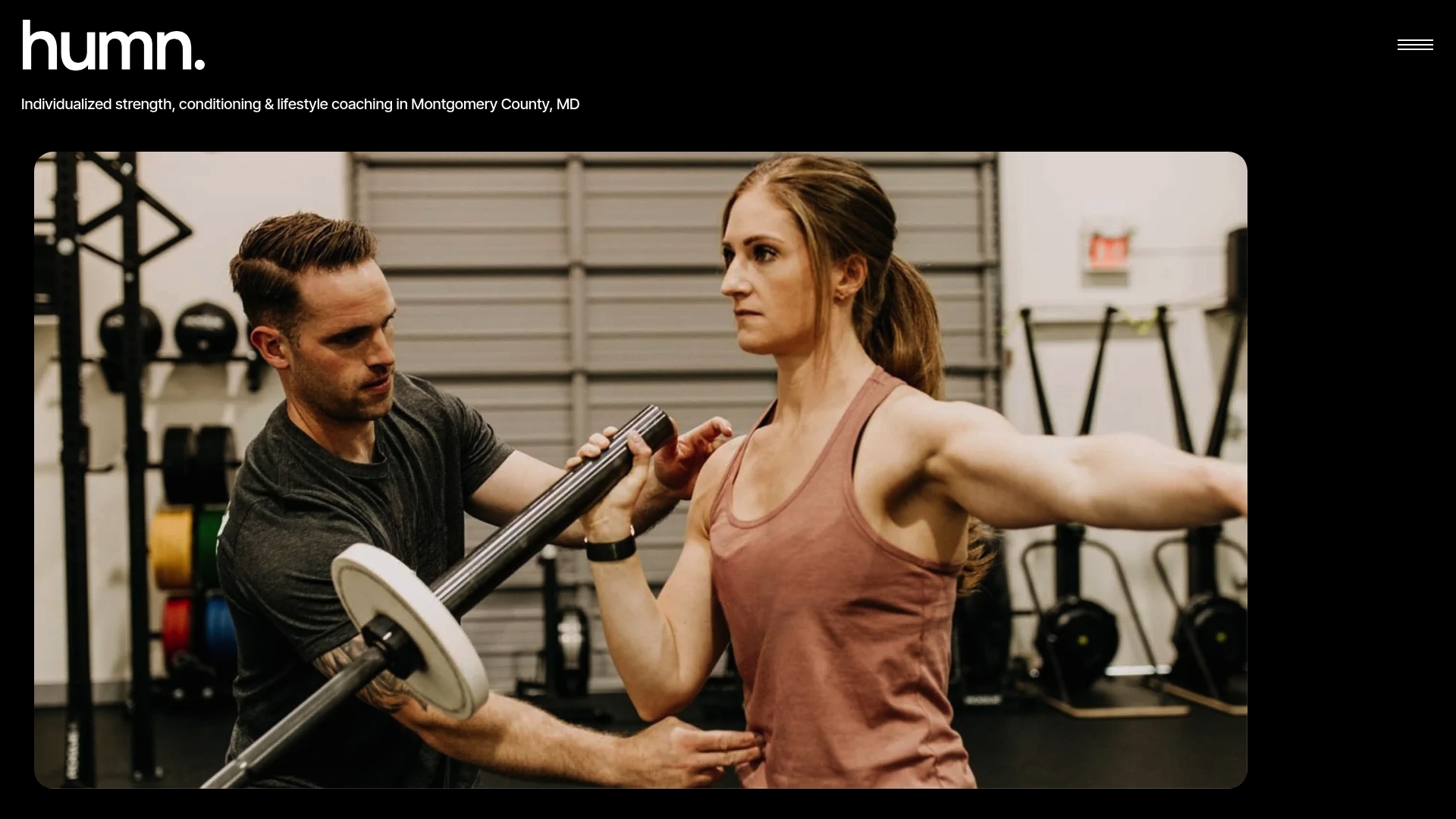
We also fold in 1:1 nutrition coaching so the habits around your training get the same attention as the workouts themselves. If you’re in the Gaithersburg, MD area and want to see how this works firsthand, view our membership options and book a trial session.
FAQ
Are boutique gyms more expensive than traditional gyms?
Yes, boutique memberships typically run $110 to $360 per month compared with $10 to $65 per month at big-box gyms, according to aggregated 2026 pricing data. The difference reflects staffed coaching and capped class sizes rather than premium equipment.
What is a boutique gym membership?
A boutique gym membership gives you access to a small-format studio with capped class sizes and dedicated coaching, rather than open-floor equipment access. Pricing and class structure vary by studio, and some, like humn.'s membership, build recovery and lifestyle coaching into the same plan.
What is the 3-3-3 rule for gyms?
There’s no single standardized definition of a “3-3-3 rule” in the fitness research reviewed here, and claims about it vary widely across fitness content. Rather than rely on an unverified rule, focus on the attendance pattern shown to matter in research: consistent weekly sessions over a sustained period, tracked against your own realistic schedule.
Do boutique gyms make money?
Boutique studios generally operate on higher per-member revenue than big-box gyms because of their higher price points, but profitability depends on attendance, retention, and overhead like staffing and class caps, factors specific to each studio rather than the format as a whole. Public financial data on individual boutique studios’ profitability isn’t widely available.
Sources
- How Do Fitness Club Members Differentiate in Background Characteristics, Exercise Motivation, and Social Support? A Cross-Sectional Study
- Comparing the impact of personal trainer guidance to exercising with others: Determining the optimal approach
No Comments.