

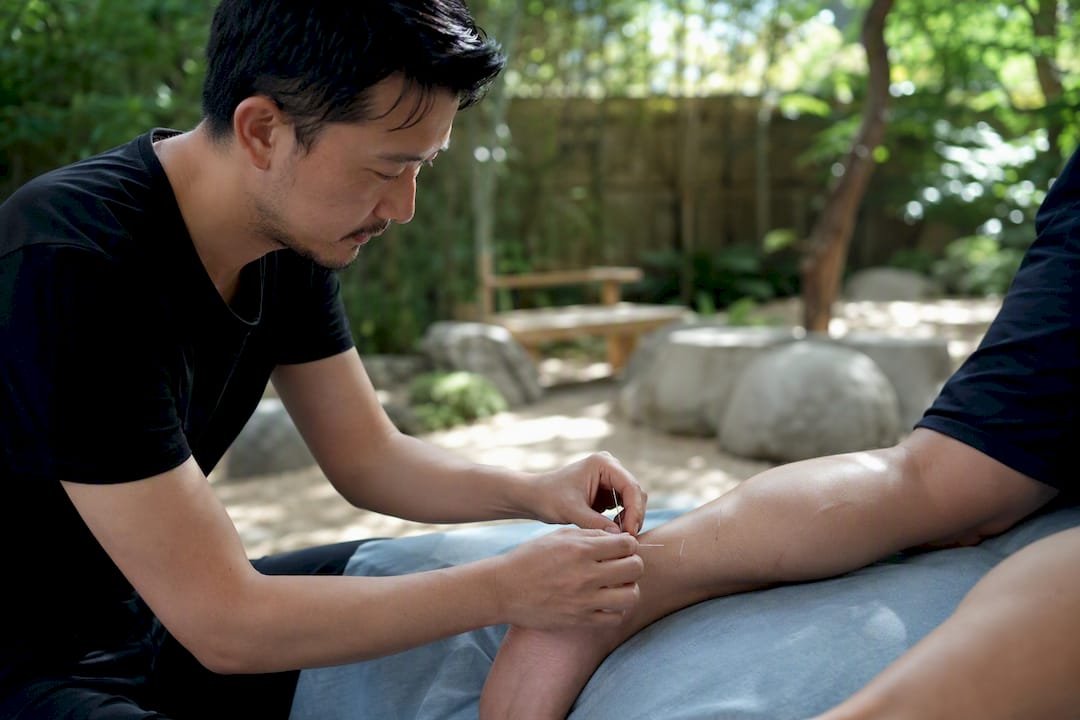
Short answer: acupuncture can reduce exercise-related muscle soreness and speed up several measurable markers of recovery, with the strongest effects showing up around 72 hours after intense exercise. A 2020 systematic review and meta-analysis found it lowered soreness ratings, reduced serum creatine kinase (a marker of muscle damage), and improved maximal isometric force. A pilot randomized controlled trial using two sessions during the acute soreness window backed that up with lower pain scores, higher pressure pain thresholds, and faster strength recovery.
None of this makes acupuncture a cure. It works best as an add-on to smart training and rehab, not a replacement for either. At humn, acupuncture sits inside a broader recovery framework alongside guided movement and coaching, which lines up with how the evidence actually plays out in practice.
What the research supports so far:
- Reduced delayed-onset muscle soreness (DOMS) and acute muscle soreness after exercise
- Lower creatine kinase levels, suggesting less muscle membrane damage
- Faster return of strength (measured via maximal voluntary contraction)
- Peak benefit typically observed around the 72-hour mark post-exercise
Key Takeaways
Acupuncture reduces post-exercise muscle soreness and speeds several recovery markers, with benefits peaking around 72 hours after intense exercise, when combined with active rehab.
| Point | Details |
|---|---|
| Evidence is strongest for DOMS | Trials consistently show reduced soreness, lower creatine kinase, and faster strength return after hard exercise. |
| Timing follows a pattern | Sessions at 24 and 48 hours post-exercise show the clearest benefit by the 72-hour mark. |
| Manual needling has the deepest evidence | Laser acupuncture shows weaker, inconsistent results for prevention compared to manual techniques. |
| Pair it with active recovery | Reviews favor acupuncture combined with guided exercise and physiotherapy over needling alone. |
| humn integrates acupuncture with coaching | humn’s recovery services coordinate acupuncture timing with your training load rather than treating it in isolation. |
Table of Contents
- How Does Acupuncture Aid Recovery, According to the Evidence?
- Why Would Needles Affect Muscle Soreness at All?
- Which Muscle Problems Respond Best to Acupuncture?
- When Should You Schedule Acupuncture After a Workout?
- Manual Needling, Electroacupuncture, or Laser: Does the Method Matter?
- Is Acupuncture Safe for Muscle Recovery?
- How Do You Fit Acupuncture Into a Rehab Plan?
- What Are the Biggest Gaps in the Acupuncture Research?
- Should You Try Acupuncture for Muscle Recovery?
- A Practitioner’s Take on Where Acupuncture Actually Fits
- Acupuncture and Recovery at humn
- Frequently Asked Questions
- Sources
How Does Acupuncture Aid Recovery, According to the Evidence?
The clearest signal comes from a 2020 meta-analysis published in Frontiers in Physiology, which pooled multiple randomized trials on delayed-onset muscle soreness. It found consistent reductions in muscle soreness ratings and serum creatine kinase, plus measurable gains in maximal isometric force. The effects weren’t uniform across time. They built over the first three days after exercise and were most pronounced at 72 hours, which is also when DOMS typically peaks on its own. That overlap matters: acupuncture appears to blunt the worst part of the soreness curve rather than eliminate it entirely.
A separate randomized controlled trial comparing verum (real) acupuncture against sham and control groups found verum treatment cut acute muscle soreness by about half and delayed-onset soreness by roughly a third. The sham group still showed some improvement, which tells you part of the effect is nonspecific (expectation, touch, relaxation) and part is tied to actual needle placement. That’s not a knock against the treatment. Most physical therapies, from massage to stretching, carry a nonspecific component. What matters is that the specific effect remains large enough to separate from placebo.
A 2026 systematic review looked specifically at Western medical acupuncture techniques used alongside exercise or physiotherapy in athletic populations and found a statistically significant drop in mean pain scores. The pattern across these reviews is consistent: acupuncture performs better as a complement to active care than as a standalone fix.
Where the evidence gets shaky: sample sizes in most trials run small, often a few dozen participants per arm. Sham-control design varies a lot, some studies use superficial needling at non-acupoints, others use retractable placebo needles, and that inconsistency makes cross-study comparison harder. Heterogeneity in exercise protocols (eccentric bicep curls versus squats versus running) also means results don’t always generalize cleanly.
Here’s the honest synthesis:
- Evidence is strongest for DOMS following unfamiliar or high-intensity eccentric exercise
- Outcome measures most reliably affected: VAS pain scores, pressure pain threshold, creatine kinase, and maximal voluntary contraction
- Weakest evidence: chronic overuse injuries and acute structural damage, where trials are sparse
A pooled analysis found acupuncture’s effect on soreness and strength recovery peaks around 72 hours post-exercise, the same window where DOMS is typically at its worst, according to the Frontiers meta-analysis.
Why Would Needles Affect Muscle Soreness at All?
The mechanisms aren’t fully settled, but a few explanations show up repeatedly in the literature.
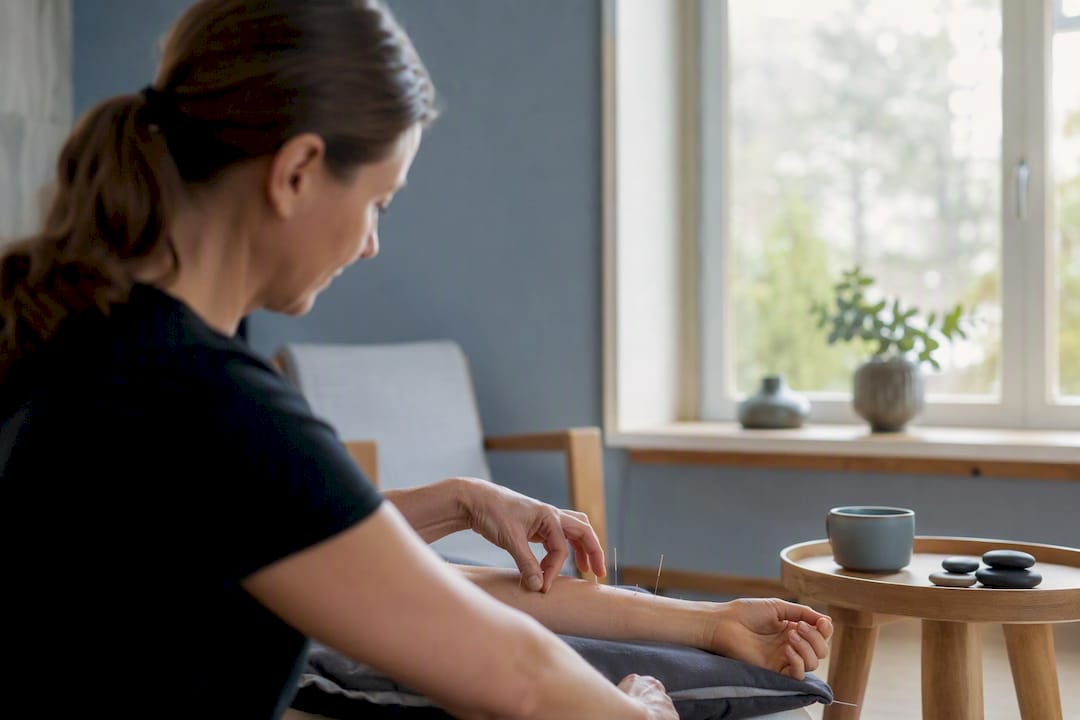
Central nervous system effects. Needling activates descending pain-inhibitory pathways and triggers endorphin release, the body’s own opioid-like painkillers. This helps explain why VAS pain scores drop even when the underlying muscle damage hasn’t changed much.
Local and peripheral effects. Needling at or near the affected muscle appears to influence microcirculation, potentially helping clear metabolic byproducts and reduce localized swelling. Some researchers propose acupuncture modulates inflammatory signaling molecules like IL-6 and IL-8, though this line of evidence is thinner and less consistent than the central pain-modulation findings.
Connecting mechanism to outcome. If circulation and inflammatory modulation are real effects, they’d plausibly explain the lower creatine kinase readings and faster strength return seen in trials. Reduced pain perception alone explains the VAS improvements but wouldn’t fully account for the CK and MVC changes, so something biological beyond simple pain gating seems to be happening.
- Endorphin release and descending inhibition explain reduced pain perception
- Improved local circulation may help clear metabolic waste products
- Inflammatory mediator changes remain an active but preliminary research area
- Multiple mechanisms likely act together rather than in isolation
Pro Tip: Don’t expect a single mechanism to explain everything. Muscle recovery involves overlapping systems, nervous, circulatory, and inflammatory, and acupuncture likely nudges more than one at once. That’s actually consistent with why it shows up across several different outcome measures instead of just one.
Which Muscle Problems Respond Best to Acupuncture?
Acupuncture’s evidence base is built almost entirely around delayed-onset muscle soreness, the tight, achy feeling that shows up a day or two after unfamiliar or intense exercise. That’s a very different problem than a torn hamstring or a grade 2 ankle sprain, and the research doesn’t support treating them the same way.
- DOMS after hard training is where the evidence is strongest. If you just added a new lift, ran your first long run in months, or pushed through an unusually tough class, this is squarely the profile the trials studied.
- Mild, non-structural tightness or chronic tension from repetitive training load is a reasonable candidate, though direct trial evidence here is thinner than for DOMS specifically.
- Acute strains, tears, or joint injuries fall outside what these studies examined. Sharp, localized pain, swelling that appears within minutes, or a pop or tear sensation at the time of injury calls for a medical evaluation, not a needling session.
The people who tend to benefit most are competitive athletes managing training loads, weekend warriors coming back from a layoff, and anyone dealing with recurring post-exercise soreness that keeps disrupting their training schedule. If you notice numbness, significant swelling, an inability to bear weight, or pain that worsens rather than plateaus over 48 to 72 hours, see a physician or sports medicine specialist before booking any recovery treatment.
When Should You Schedule Acupuncture After a Workout?
Trial protocols give a fairly consistent answer here, and it’s more specific than “get treated whenever it hurts.”
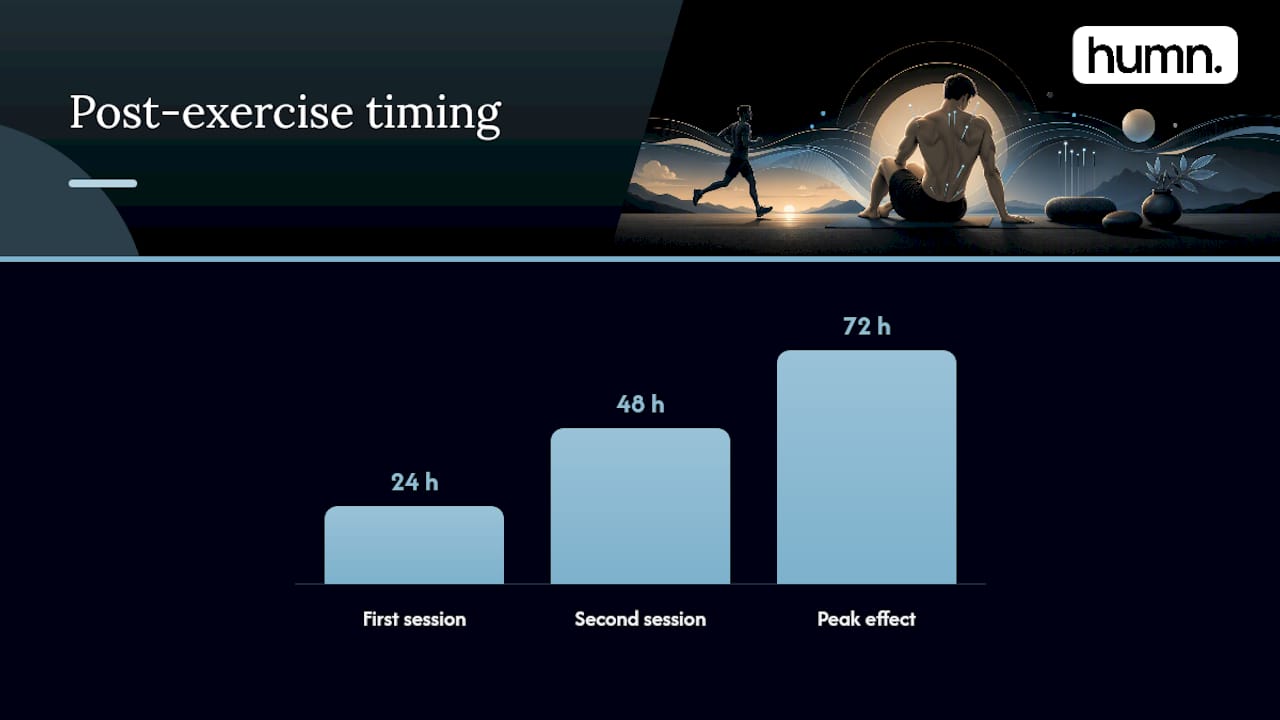
- Start within the first 24 hours. The pilot RCT that produced some of the strongest outcome data applied its first session at 24 hours post-exercise, catching soreness as it was building rather than after it peaked.
- Add a second session at 48 hours. That same pilot trial used a two-session protocol, one at 24 hours and one at 48 hours, with needle retention times of roughly 20 to 30 minutes per session, combining local points near the affected muscle with distal points elsewhere on the body.
- Expect the biggest measured difference at 72 hours. That’s when the treatment groups in both the pilot RCT and the larger meta-analysis showed the clearest separation from control groups on pain, pressure pain threshold, strength, and creatine kinase.
- Plan around competition, not just soreness. Athletes with a meet or match within a few days of hard training should aim to complete sessions during that 24 to 48 hour window rather than waiting until the day before competing.
The pooled effect across trials peaks at 72 hours post-exercise, according to the Frontiers meta-analysis, which is the same timepoint the pilot RCT used to measure its primary outcomes.
What should you actually expect week to week? Most trial protocols run short, often just two sessions tied to a single bout of hard exercise rather than an ongoing weekly schedule. For recreational lifters and runners dealing with recurring soreness, that suggests treatment makes the most sense clustered around unusually demanding training blocks rather than as a permanent weekly fixture, though clinical practice often extends beyond what short trials have tested.
Manual Needling, Electroacupuncture, or Laser: Does the Method Matter?
Not all acupuncture is the same treatment wearing different names, and the trials don’t treat it that way either.
- Manual (filiform) acupuncture uses thin, solid needles inserted and left in place, sometimes manipulated by hand. This is the modality behind most of the DOMS trial evidence, including the pilot RCT protocol.
- Electroacupuncture adds a mild electrical current through the needles once placed, intended to enhance the stimulation. It shows up in sports medicine literature but with less DOMS-specific trial data than manual needling.
- Laser acupuncture (photobiomodulation) skips needles entirely, using low-level light at acupoints. A randomized controlled trial on laser acupuncture for biceps brachii soreness found within-group improvements but no significant difference compared to control when applied before exercise, a notably weaker result than manual needling trials.
- Trigger-point and myofascial needling targets localized muscle knots directly rather than traditional acupoints, often used for chronic tightness rather than acute DOMS.
The practical takeaway: if pain relief and measurable recovery markers are the goal, manual acupuncture has the deepest evidence base right now. Laser acupuncture may suit people who dislike needles, but go in knowing the trial support is weaker and inconsistent for prevention specifically.
Is Acupuncture Safe for Muscle Recovery?
For most healthy adults, acupuncture carries a low risk profile when performed by a licensed practitioner using sterile, single-use needles.
- Common, minor side effects include brief soreness at needle sites, small bruises, or mild lightheadedness, usually resolving within a day.
- Serious complications are rare but can include infection or, very rarely, pneumothorax with needling near the chest wall, which is why credentialing and technique matter.
- Contraindications worth discussing upfront include bleeding disorders or blood thinner use, pacemakers (a concern specifically with electroacupuncture), pregnancy, and immunosuppression.
- Red flags that mean stop and see a doctor: fever, spreading redness or warmth at a needle site, worsening pain instead of gradual improvement, or any numbness that doesn’t resolve.
Pro Tip: Ask any prospective provider two questions before booking: are needles single-use and sterile, and are they licensed or nationally certified? A confident, specific answer to both is the baseline, not a bonus. Our guide on what to expect at your first acupuncture visit covers the intake process in more detail.
How Do You Fit Acupuncture Into a Rehab Plan?
Acupuncture works best when it’s coordinated with the rest of your recovery plan, not booked in isolation.
- Loop in your coach or physical therapist. Share your training load, any current injuries, and your acupuncture schedule so nobody’s flying blind on your recovery status.
- Tell your acupuncturist what you’re training for. A distance runner in taper week needs a different approach than a lifter mid-hypertrophy block.
- Track a few simple metrics. Perceived soreness (0 to 10 scale), grip or strength benchmarks, and range of motion give you an objective read on whether sessions are actually helping.
- Keep moving between sessions. Reviews consistently favor combining acupuncture with active rehab and guided exercise over needling alone, since the two approaches appear to reinforce each other rather than substitute for one another.
- Book your first visit with a clear goal stated. Walking in and saying “I’m sore after leg day” gets a different treatment plan than “I have a half marathon in three weeks.”
Pro Tip: Bring your training log to your first session. A practitioner who knows you deadlifted for the first time in six months treats that very differently than generic “muscle pain.”
What Are the Biggest Gaps in the Acupuncture Research?
The honest limitation is scale. Most DOMS trials involve a few dozen participants, and reviews of acupuncture in sports medicine point out that much of the supporting literature is case series and small trials rather than large, standardized RCTs. Sham-control methods vary between studies, which weakens direct comparisons, and almost none of the research tracks outcomes past a week or two.
What the field needs: larger multi-site trials, standardized sham protocols, and longer follow-up windows to see whether benefits hold up over a full training cycle rather than just after one workout.
Acupuncture’s evidence base is real but young. It’s strong enough to justify trying it as part of a recovery plan, not strong enough to call it essential. That’s the honest middle ground, and it’s exactly where humn’s clinical approach lives: acupuncture as one tool among several, applied alongside coaching, movement, and the other recovery services already backed by evidence.
A conservative reader takeaway: treat acupuncture as a reasonable, evidence-supported addition to your recovery toolkit, not a required one.
Should You Try Acupuncture for Muscle Recovery?
The evidence-backed verdict: acupuncture measurably reduces post-exercise soreness and speeds up several recovery markers, especially around the 72-hour mark after hard training.
- If your soreness is routine DOMS from tough workouts, integrated acupuncture plus solid rehab habits is a reasonable option worth trying.
- If you’re dealing with sharp pain, swelling, or a suspected structural injury, see a medical professional before booking any recovery treatment.
- For an integrated approach that pairs acupuncture with coaching and movement, humn’s recovery services are built around exactly this evidence.
A Practitioner’s Take on Where Acupuncture Actually Fits
Clients who add acupuncture to a structured training plan tend to report faster comebacks from hard training blocks than those relying on rest alone, though that’s an observation from clinical practice, not a controlled comparison… The pattern holds regardless of what’s driving the soreness, a new lifting program, a return to running, or a demanding race week.
The mistake I see most often is treating acupuncture as a magic fix instead of a component. It works best stacked with sleep, proper loading, and guided movement, not as a substitute for any of them.
Acupuncture and Recovery at humn
At humn, acupuncture isn’t offered as a stand-alone service you book and forget. It’s one piece of a four-pillar recovery framework that also includes sauna, compression, and red light therapy, coordinated with your strength coaching so the timing actually matches your training load. A first visit typically starts with a conversation about what you’re training for and what’s actually sore, then a session built around that, not a generic protocol applied to everyone who walks in.
What sets this apart from booking acupuncture as a one-off service elsewhere is coordination: your acupuncturist and your coach are working from the same picture of your training, which is exactly the integration the research points toward. If you’re managing recurring soreness from a demanding program or just came off your toughest training block of the year, explore humn’s recovery services and book a visit to see how acupuncture fits into your specific plan.
Frequently Asked Questions
Does acupuncture actually work for sore muscles, or is it placebo?
Trials comparing real acupuncture to sham needling found real acupuncture produced significantly larger reductions in soreness, suggesting a genuine effect beyond placebo, though a nonspecific component likely contributes too.
How soon after a workout should you get acupuncture for muscle recovery?
Trial protocols typically start treatment within 24 hours of exercise, add a second session around 48 hours, and measure peak benefit at the 72-hour mark.
Can acupuncture help with sports injuries beyond DOMS?
Case reports and smaller studies suggest possible benefit for various sports injuries, but the evidence is far less robust than for exercise-induced soreness, and structural injuries need medical evaluation first.
Is electroacupuncture better than manual acupuncture for muscle recovery?
Manual acupuncture has more direct DOMS-specific trial support right now; electroacupuncture is used in sports medicine but lacks the same depth of dedicated recovery research.
How does acupuncture compare to massage or cryotherapy for muscle soreness?
All three show some evidence for reducing soreness, but acupuncture’s trial data includes specific biological markers like creatine kinase and strength recovery that aren’t as consistently tracked in massage or cryotherapy research.
This article is general information, not a substitute for advice from a qualified doctor. Consult a qualified healthcare professional about your own circumstances before acting on anything here.
Sources
- PubMed entry: systematic review (2026)
- Acupuncture can be beneficial for exercise-induced muscle soreness: A randomized controlled trial
- Does Acupuncture Benefit Delayed-Onset Muscle Soreness? A Systematic Review and Meta-Analysis
- Effects of Acupuncture Intervention on Recovery from Delayed-Onset Muscle Soreness (DOMS): A Pilot Randomized Controlled Trial
No Comments.