

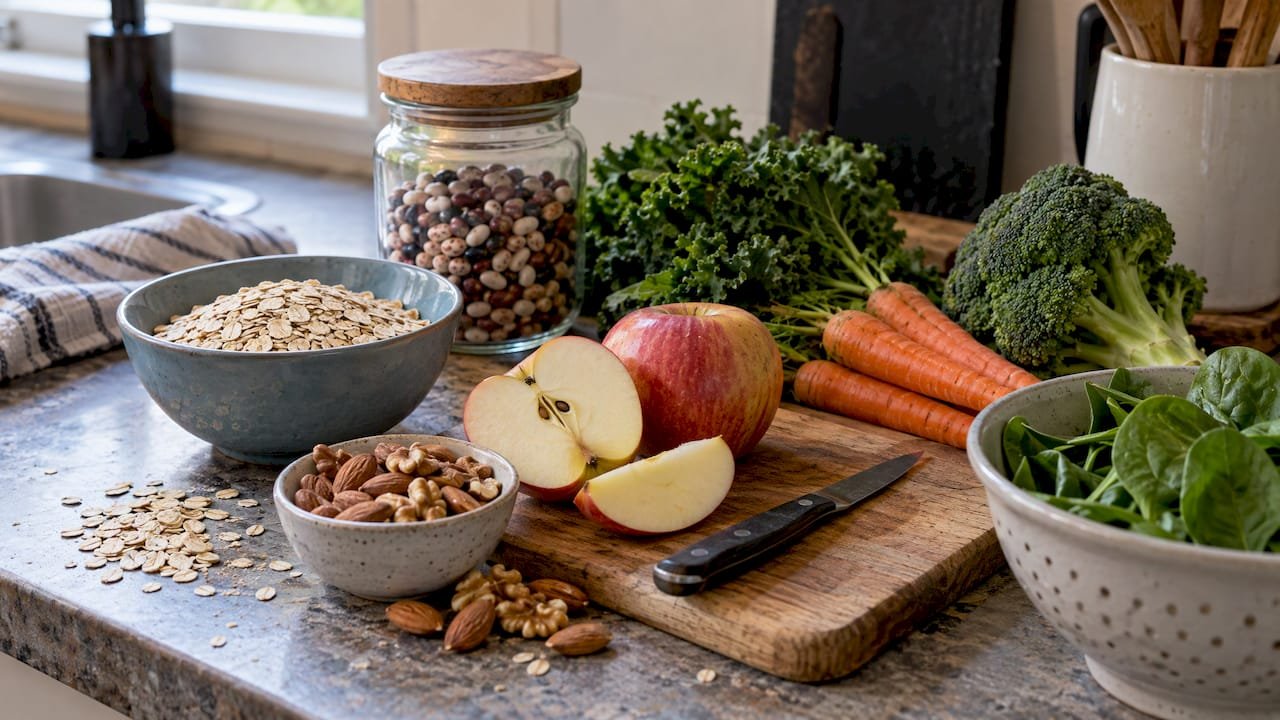
Soluble fiber dissolves in water and turns into a gel that slows digestion. Insoluble fiber does not dissolve and keeps food moving, adding bulk so your bowels stay regular. You need both, and most whole plant foods give you a mix of the two, so the practical goal is simple: eat a wide range of plants every day and build up slowly.
Below, we break down what each type does, which foods supply it, how much you need, and how to raise your intake without the gas and bloating that trip up so many people.
TL;DR
- Soluble fiber dissolves in water, forms a gel, slows digestion and helps manage blood sugar and cholesterol. Think oats, beans, apples and avocados.
- Insoluble fiber stays largely intact, adds bulk and supports regularity. Think whole wheat, bran, nuts, seeds and fruit and vegetable skins.
- Adults need roughly 21 to 38 grams a day depending on age and sex, and most Americans fall well short.
- Add fiber gradually over several weeks and drink plenty of water, or the extra roughage can backfire.
- You do not need to track the two types separately. Variety does the work.
Table of Contents
- The core difference in one minute
- Soluble fiber: the gel-forming type
- Insoluble fiber: the bulking type
- Soluble vs. insoluble fiber at a glance
- Most foods contain both
- How much fiber do you need?
- How to add fiber without the bloating
- Fiber, fullness and training
- Perspective
- Make fiber part of a plan that lasts
- FAQ
- Sources
The core difference in one minute
The names describe what happens in water. According to the CDC, soluble fiber dissolves in water and forms a gel-like substance in the stomach, which slows digestion and helps control blood sugar and cholesterol. Insoluble fiber does not dissolve and typically stays whole as it moves through the stomach. It helps keep the bowels healthy and is linked to better insulin sensitivity.

A useful mental picture: soluble fiber is the sponge that thickens and slows things down, and insoluble fiber is the broom that keeps things moving. Both are carbohydrates your body cannot fully digest, which is exactly why they are useful.
Soluble fiber: the gel-forming type
The Harvard T.H. Chan School of Public Health notes that soluble fiber can help lower glucose and cholesterol levels. Because the gel slows the movement of food through your stomach and small intestine, sugar enters your blood more gradually. That is why soluble fiber gets so much attention in conversations about blood sugar and heart health.
There is a gut benefit too. Cleveland Clinic explains that soluble fiber feeds the good bacteria in your colon, and that healthy gut bacteria are linked to protection against obesity and related conditions such as diabetes.
Where to find it
The CDC lists these soluble fiber sources:
- Apples and bananas
- Oats
- Peas, black beans and lima beans
- Brussels sprouts
- Avocados
If you want a simple starting point, a bowl of oats with sliced fruit at breakfast and a bean-based lunch covers a lot of ground.
Insoluble fiber: the bulking type
Insoluble fiber absorbs fluid and clings to other material in your digestive tract, which produces softer, bulkier and more regular stools, according to Cleveland Clinic. Harvard says it promotes regularity and helps prevent constipation.
The benefits reach beyond comfort. Mayo Clinic states that a high-fiber diet may lower the risk of hemorrhoids and diverticulitis and is linked with a lower risk of colorectal cancer. Those findings apply to a high-fiber diet overall, not to insoluble fiber alone, so think of the two types as a team.
Where to find it
According to the CDC, insoluble fiber shows up in:
- Whole wheat flour and wheat bran
- Nuts and seeds
- The skins of many fruits and vegetables
This is one reason peeling everything can quietly cut your fiber intake. Leave the skin on apples, pears, potatoes and cucumbers when you can.
Soluble vs. insoluble fiber at a glance
| Soluble fiber | Insoluble fiber | |
|---|---|---|
| In water | Dissolves, forms a gel | Does not dissolve |
| Main job | Slows digestion, helps manage blood sugar and cholesterol, feeds gut bacteria | Adds bulk, keeps stool moving, supports regularity |
| Common foods | Oats, beans, peas, apples, bananas, Brussels sprouts, avocados | Whole wheat, bran, nuts, seeds, fruit and vegetable skins |
| Digestive feel | Smooth, gradual | Bulky, speeds passage |
Sources: CDC and Harvard Nutrition Source.
Most foods contain both
The soluble versus insoluble split is tidy on paper and messy on a plate. Oats, beans, nuts and many fruits and vegetables deliver both kinds in different proportions. An apple has soluble fiber in the flesh and insoluble fiber in the skin. Avocado shows up on the CDC’s soluble list but is also a whole food with plenty of other fiber in it.
Harvard adds a finer layer: fiber can also be sorted as viscous, fermentable or nonfermentable. Viscous fibers slow digestion and delay blood sugar rises, fermentable fibers act as prebiotics for gut bacteria, and nonfermentable fibers support regularity. These categories overlap with soluble and insoluble but are not identical, which is another reason to stop counting types and start eating variety.
A day that covers both
Here is what a balanced day can look like without any tracking app:
- Breakfast: oats cooked with milk or water, topped with berries and a spoonful of seeds.
- Lunch: a grain bowl with beans or lentils, roasted vegetables with their skins and an avocado half.
- Snack: an apple with the skin on and a handful of nuts.
- Dinner: a stir-fry or sheet-pan meal with Brussels sprouts or peas and a whole grain side.
That single day pulls from every food group the CDC and Mayo Clinic point to, and it feels like normal eating, not a project.
How much fiber do you need?
The National Academy of Medicine’s recommendations, as reported by Mayo Clinic and the CDC, are:
| Group | Grams per day |
|---|---|
| Women, 50 or younger | 25 |
| Women, older than 50 | 21 |
| Men, 50 or younger | 38 |
| Men, older than 50 | 30 |
The Dietary Guidelines for Americans 2020 to 2025, cited by the CDC, frame it as 22 to 34 grams daily depending on age and sex. MedlinePlus lists the same 38 grams for men and 25 grams for women aged 19 to 50.
Most people are far from these numbers. The VA’s nutrition education guide says the typical American eats only 10 to 15 grams of fiber a day, and UCLA Health reports that only about 5% of Americans reach the recommended amount.
No major source gives separate daily targets for soluble and insoluble fiber. Hit the total with a varied diet and the split mostly takes care of itself.

How to add fiber without the bloating
The most common mistake is going from 12 grams to 35 in a weekend. Your gut bacteria need time to adapt. UCLA Health’s Dr. Goukasian compares it to building muscle: a slow, steady approach works best because your gut bacteria need to get used to more fiber.
The published pacing advice varies a little, and all of it points the same way:
- UCLA Health: add about 5 grams every few days until you reach at least 25 grams, and spread fiber across the day instead of loading it all at breakfast.
- Mayo Clinic News Network: increase by about 3 grams per week, hold for 7 to 10 days, then step up again.
- VA Nutrition: add fiber slowly and drink at least 8 cups of water a day to limit gas, bloating, diarrhea or constipation.
Mayo’s newsroom also suggests about 80 ounces of water daily to prevent abdominal discomfort, bloating and gas. If you have a digestive condition such as irritable bowel syndrome, Crohn’s disease or a history of bowel obstruction, talk with your doctor or a registered dietitian before changing your fiber intake, since the right amount and type can differ for you.
Easy swaps that add up
- Choose oats or a whole-grain cereal over a refined one.
- Add a half cup of beans or peas to soups, salads and pasta.
- Keep the skin on fruit and vegetables.
- Snack on nuts, seeds, fruit or raw vegetables.
- Add avocado to eggs, toast or bowls.
Fiber, fullness and training
Fiber matters for people who work out, too. Because soluble fiber slows digestion, many people find it keeps them satisfied longer between meals, which is why it comes up in conversations about snacking. If that is your angle, read more on how fiber affects fullness, and see our own guide to fiber intake for satiety.
Timing matters when you train. A big dose of fiber right before a hard session can sit heavy for some people, so many athletes keep pre-workout meals lighter and put the high-fiber foods at other meals. Our guide to fueling your workout with proper nutrition walks through how to plan meals around training. And since more fiber means more water needs, our article on sauna hydration is a useful companion if you use heat for recovery.
Perspective
At humn., we see the same pattern with busy professionals. They know fiber is good for them, they grab a supplement or a giant salad for a few days, and then the habit fades. The type of fiber is rarely the problem. The system around it is.
That is why our approach starts with habits, not food rules. Fiber is a small, trackable behavior that connects to everything else we coach: steady energy, better sleep, fewer cravings and recovery that holds up between sessions. We would rather help you add one fiber-rich food to breakfast and make it automatic than hand you a perfect meal plan you will abandon.
Our four pillars, Resist, Recover, Renew and Rhythm, work together. Strength training needs fuel and recovery needs nourishment, and both depend on a daily rhythm you can sustain. Fiber is a good example of how a quiet daily choice supports all four.
Josh
Make fiber part of a plan that lasts
If you would like help turning general advice into a routine that fits your schedule, our 1:1 nutrition coaching is built around your habits, your training and your lifestyle. You work with a dedicated coach on nutrition, sleep and stress alongside your strength work.

If you are in Gaithersburg, MD and want strength training, recovery and coaching under one roof, explore our membership, or read about functional nutrition coaching to see whether it suits you.
FAQ
Which is better, soluble or insoluble fiber?
Neither is better; they do different jobs. Soluble fiber helps manage blood sugar and cholesterol, while insoluble fiber supports regularity. Most whole plant foods contain both, so a varied diet gives you what you need.
What are the benefits of insoluble fiber?
Insoluble fiber adds bulk and helps stool move through your system, which promotes regularity and helps prevent constipation. The CDC also links it to better insulin sensitivity. Good sources include whole wheat, bran, nuts, seeds and fruit and vegetable skins.
Can I get enough fiber from supplements?
Whole foods are the usual starting point because they bring both fiber types along with other nutrients. Mayo Clinic covers supplements and fortified foods in its fiber guide. If you are considering one, ask your doctor or dietitian which kind suits your situation.
Why does more fiber make me bloated?
Your gut bacteria need time to adjust to a bigger load of fermentable fiber. Raise intake by a few grams every several days, spread it across meals and drink plenty of water. If symptoms persist, check in with your doctor.
How many grams of fiber should I eat per day?
The National Academy of Medicine recommends 25 grams for women 50 or younger, 21 grams for women over 50, 38 grams for men 50 or younger and 30 grams for men over 50.
Sources
- CDC: Fiber, the carb that helps you manage diabetes
- Harvard T.H. Chan School of Public Health: Fiber
- Cleveland Clinic: Difference between soluble and insoluble fiber
- Mayo Clinic: Dietary fiber
- MedlinePlus: High-fiber foods
- VA Nutrition: Tips to increase dietary fiber
- UCLA Health: Beat the bloat
- Mayo Clinic News Network: Why is fiber good for your overall health?
- Fibres et satiété
No Comments.