

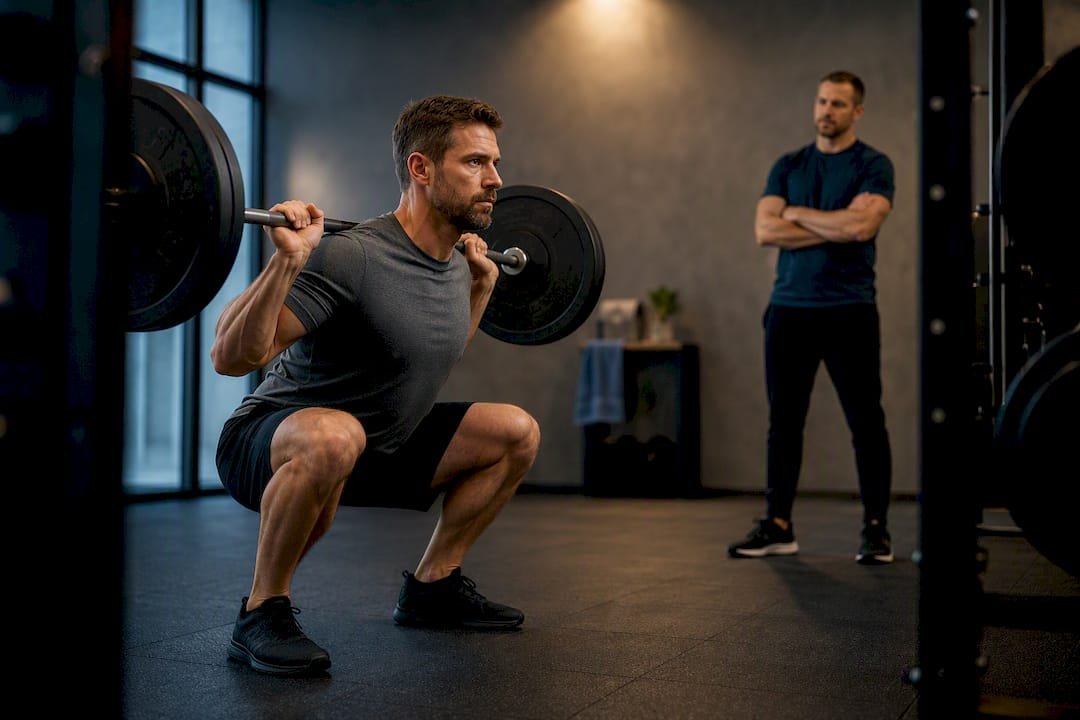
Supervised progressive resistance training combined with targeted impact and balance work is the most effective and practical approach for improving or maintaining bone density. Bone remodels slowly, so results build over months, not weeks. If you have low bone density, a recent fracture, or another complex health issue, talk to your doctor or a physical therapist before starting high-load or impact training.
TL;DR:
- Impact exercises like jumping or heel drops stimulate the hip and lower spine but require medical clearance for those with fractures or severe osteoporosis.
- Resistance training should target 70 to 85% of one-rep-max, with sessions lasting 30 to 60 minutes, gradually increasing load and impact over time.
- Proper technique, such as hinging at the hips and avoiding spinal rounding, is critical to reduce fracture risk during safe, supervised progressive loading.
- Consistent, supervised high-intensity training over several months can lead to measurable increases in lumbar spine bone density.
- Adequate calcium, vitamin D, and protein intake support bone rebuilding alongside training, with clinical guidance recommended before supplementing.
Table of Contents
- Which exercises actually stimulate bone growth?
- How to build a bone density training program
- Safety rules and clinical considerations before you load up
- Sample routines for different training levels
- Nutrition and lifestyle habits that support bone training
- How clinic-informed coaching makes high-load training safer
- What actually matters when you’re training for bone health
- How humn. supports a bone-focused training plan
- Sources
- FAQ
Which exercises actually stimulate bone growth?
Bone responds to mechanical stress that exceeds what it normally experiences. Three factors drive that response: how much force is applied, how fast it’s applied, and from which direction. A slow walk barely registers. A loaded squat or a jump does, because both the magnitude and the rate of loading spike above baseline.
This is why NIAMS guidance groups effective bone exercise into three categories: weight-bearing impact (walking, jogging, jumping), progressive resistance training (lifting weights or using resistance bands against increasing loads), and balance work that lowers fall risk. Each targets bone differently. Impact activities tend to stimulate the hip and lower spine. Resistance training can target almost any site depending on the exercise chosen, including the wrist and forearm through loaded grip work. Balance training doesn’t build bone directly, but it protects the bone you have by reducing falls.
Impact is not appropriate for everyone. Anyone with a recent vertebral fracture, severe osteoporosis, or an unstable spine condition should avoid jumping or high-impact work until cleared by a clinician.
A few exercises worth starting with or bringing to a coach:
- Bodyweight or loaded squats for hip and spine loading.
- Step-ups for single-leg hip stress in a controlled pattern.
- Farmer’s carries for grip, forearm, and full-body loading.
- Standing rows or presses for upper-body and spine engagement.
- Low-impact hops or heel drops once cleared for impact.
Pro Tip: If you’re unsure whether an exercise counts as “impact,” ask whether both feet leave the ground. If they do, it’s impact, and it needs a green light before you add it.
How to build a bone density training program
The bone response to training is dose-dependent: too little load does nothing, and the biggest barrier to progress is usually under-dosing out of fear of injury rather than overtraining. The FORTIFY trial protocol tests supervised, twice-weekly progressive resistance sessions lasting 45 to 60 minutes over 12 months, progressing toward higher target intensities to raise lumbar spine bone mineral density in people at risk.
A practical structure looks like this:
- Frequency: two to three resistance sessions per week, with balance work most days.
- Intensity: work toward loads in the 70 to 85% of one-rep-max range, often expressed as 4 to 6 rep sets once form is solid; lighter 8 to 12 rep ranges suit beginners or technique phases.
- Session length: 30 to 60 minutes, including warm-up and balance work.
- Progression: master technique first, then add load, then add impact once movement quality holds under fatigue.
- Structure: build in periodized blocks, alternating harder loading phases with lighter recovery phases to allow adaptation.
Clinical trials have shown measurable gains in lumbar spine bone density after several months of consistent, supervised high-intensity training, compared with declines in low-intensity control groups. That gain came under close supervision, which matters as much as the loading itself.
Our beginner’s guide to progressive strength training walks through how to build load gradually without skipping the technique phase.
Safety rules and clinical considerations before you load up
Certain situations call for medical clearance before starting resistance or impact training: a recent vertebral fracture, a very low bone density T-score, uncontrolled cardiovascular disease, or any condition affecting balance or coordination. A physical therapist or exercise physiologist can tailor the plan and flag movements to avoid, particularly repeated spinal flexion and uncontrolled twisting, both linked to higher vertebral fracture risk in people with low bone density.
Spine-sparing technique matters more than the exercise name. A few cues:
- Hinge at the hips, not the lower back, when lifting from the floor.
- Avoid rounding the spine under load, especially in seated or bent-over positions.
- Control rotation instead of twisting quickly under load.
- Regress when needed: a loaded deadlift can become a hip-hinge box reach, then a hip-hinge with light dumbbells, as strength and confidence build.
BoneFit-style supervised programming, or working with a coach trained in these progressions, reduces the guesswork around when to add load or impact. Our guide to training around joint pain covers how to read pain signals during progression.
Sample routines for different training levels
What a session looks like depends on your starting point and, ideally, a coach’s eye on your form.
- Beginner: twice a week, focus on bodyweight squats, wall push-ups, standing rows with light bands, and single-leg balance holds. No impact yet. The goal is clean movement under low load.
- Intermediate: two to three sessions weekly, adding dumbbell or barbell squats, step-ups, farmer’s carries, and controlled impact such as heel drops or light hops once cleared. Balance work continues alongside.
- Supervised high-intensity (HiRIT/PRT): typically twice weekly, 45 to 60 minutes, working toward heavier loads in the 4 to 6 rep range on deadlifts, squats, and overhead presses, paired with jumping or landing drills. This level works best with a trainer present for every session, given the loads involved.
Track progress by watching whether load, reps, or impact height increases without pain or form breakdown over several weeks. If a movement that felt fine starts to hurt, or if progress stalls despite consistent training, that’s the signal to check in with a clinician rather than push through.
Pro Tip: Log your working weights each session. A simple upward trend over eight to twelve weeks tells you the program is working better than how you feel on any single day.
Our piece on strength training for longevity breaks down how short, focused sessions can still deliver a meaningful training stimulus for busy schedules.

Nutrition and lifestyle habits that support bone training
Training builds the stimulus, but nutrition supports the rebuild. NIAMS notes that adequate calcium and vitamin D status support bone adaptation and muscle function, which in turn reduces fall risk.
- Calcium from dairy, leafy greens, or fortified foods, with blood levels checked by a clinician if you’re unsure.
- Vitamin D status tested rather than assumed, since deficiency affects both bone and muscle.
- Protein at each meal to support muscle recovery between resistance sessions.
- Sleep, moderate alcohol intake, and not smoking all support bone health and fall-risk reduction.
Be wary of any supplement promising rapid bone density gains. Confirm dosing with a clinician before starting anything beyond a standard multivitamin.
How clinic-informed coaching makes high-load training safer
humn. structures training around four pillars: Resist, Recover, Renew, and Rhythm, so progressive loading is paired with recovery and habit support rather than left to chance. Its 0 to 3 Pain Rule gives coaches and clients a shared language for what’s safe to push through and what needs a regression. Small-group and 1-on-1 coaching formats mean someone is watching form and adjusting load in real time, which is exactly what supervised protocols in the research call for.
What actually matters when you’re training for bone health
Most people either avoid loading out of fear or chase heavy numbers without technique, and both miss the point. The real lever is consistent, well-supervised progression that respects how slowly bone adapts. Realistic goals and a clinician or coach who checks your form beat any workout plan you find on your own.
— Josh
How humn. supports a bone-focused training plan
Building bone density safely takes supervision, not guesswork, and that’s the gap humn. is built to close. Small-group and one-on-one coaching formats provide opportunities for supervised, progressive loading in a coached setting. Recovery services such as sauna, compression, and red light therapy may support adherence between sessions. Personalized nutrition coaching can help align calcium, protein, and vitamin D intake with training load.
If you want a program that treats bone health as a long-term project, explore humn. membership options and start with a conversation about your goals.
Sources
- Exercise for Your Bone Health | NIAMS
- FORTIFY trial protocol on moderate-to-high intensity progressive resistance training
This article is general information, not a substitute for advice from a qualified doctor. Consult a qualified healthcare professional about your own circumstances before acting on anything here.
FAQ
What are 5 exercises that increase bone density?
Squats, step-ups, farmer’s carries, standing rows, and controlled impact work like heel drops or light hops are commonly used to target the hip, spine, and wrist. Effectiveness depends on progressively increasing the load or impact over time under proper supervision.
Can you rebuild bone density with exercise?
Exercise, particularly supervised progressive resistance and impact training, can increase bone density in some people, though the process is slow and varies by individual. Clinical trials have shown measurable gains in lumbar spine bone density after several months of consistent, supervised high-intensity training.
What is the fastest way to increase bone density?
There is no fast method: bone remodeling takes months, and trials showing measurable density changes typically run 8 to 12 months of consistent, progressive, supervised training. Under-dosing intensity out of caution is a common reason people see slower results than expected.
What is the 3 food rule for bone density?
This is not a recognized clinical guideline, and no major health authority defines a “3 food rule” for bone density. The consistent, evidence-backed nutrition advice instead centers on adequate calcium, sufficient vitamin D status, and enough protein to support bone and muscle adaptation.
No Comments.