


For most people, yes: research on supervised resistance training shows better strength gains, better adherence, and better outcomes than app-based or self-guided workouts. It’s worth it most clearly if you’re inconsistent on your own, new to structured lifting, recovering from injury, or chasing a specific goal you’ve stalled on. It’s a weaker bet if you’re already experienced, self-motivated, and just need a program template. Credentials matter more than most buyers realize, and NCCA-accredited certification is the baseline worth checking before you sign anything.
TL;DR:
- Supervised resistance training yields significantly higher adherence rates of 88.2% compared to 52.2% for self-guided programs, especially for beginners and those managing injuries.
- A credible trainer can provide measurable progress through documented plans, form correction, and behavior coaching that connect workouts to overall health habits.
- Costs vary widely from about $40 to over $150 per session in the US, with small-group formats offering similar coaching quality at lower prices, often between $15 and $45 per session.
- Certification from NCCA-accredited organizations like ACE, NASM, or ACSM is essential, alongside relevant experience and clear progress tracking, to distinguish good trainers from less qualified ones.
- The most meaningful progress occurs within the first three to six months, so committing to a 90-day program is key before judging results.
Table of Contents
- Benefits of Personal Training Beyond Counting Reps
- Does Research Prove Personal Training Actually Works?
- Personal Trainer Cost: What to Expect and How to Compare Value
- How Do You Tell a Good Trainer From a Bad One?
- How Often Should You See a Personal Trainer?
- One-on-One, Small Group, or Online: Which Format Fits You?
- How a Systems-Based Coaching Model Actually Delivers Value
- What Most People Get Wrong About Personal Training
- Ready to Try Personal Training? Here’s How to Start With humn.
- Sources
- FAQ
Benefits of Personal Training Beyond Counting Reps
A trainer’s real job isn’t standing next to you while you lift. It’s making sure the hour you spend in the gym doesn’t get wasted, and that the other 167 hours in your week support what you’re trying to build.
Here’s where that value actually shows up:
- Accountability: a scheduled session with another person watching your attendance is one of the strongest predictors of whether you keep showing up.
- Customized programming: a plan built around your joints, your schedule, and your actual goal beats a generic template pulled from an app.
- Form correction: a trainer catches the shoulder that’s about to get hurt before it happens, which lets you load weight safely instead of staying timid forever.
- Behavior change coaching: good trainers connect the workout to sleep, stress, and eating patterns, because none of those exist in isolation.
- Progress tracking: measured milestones (strength numbers, body composition, mobility tests) turn “I feel stronger” into a number you can actually see move.
Harvard Health points out that a personal trainer can improve both safety and consistency, two things that are hard to self-supply when you’re the one designing your own workouts and grading your own homework.
Pro Tip: Ask a prospective trainer how they’d track your progress in month one versus month three. If the answer is vague, the programming behind it probably is too.
Does Research Prove Personal Training Actually Works?
Yes, and the newest data is specific about the margin. A 2025 randomized controlled trial comparing in-person supervision, app-guided coaching, and fully self-guided training found that supervised resistance training produced higher adherence and greater strength and fat-free mass gains than either alternative.
Supervised participants stuck with their programs at an 88.2% adherence rate, compared to 81.2% for app-guided training and just 52.2% for the self-guided group. Satisfaction told the same story: 96.7% among the supervised group versus 92.0% for app users.
That gap between 88.2% and 52.2% is the whole argument for hiring help if you’ve ever quit a program by week three.
A broader systematic review of supervised versus unsupervised exercise programs backs this up with a caveat: supervised programs tend to produce modestly better strength and functional outcomes, particularly among older adults, with comparable safety when unsupervised programs are well-structured. The nuance matters. If you’re experienced, self-disciplined, and just need a plan, an app or hybrid model can genuinely work. Supervised coaching earns its biggest margin for beginners, people managing an injury history, and anyone whose track record on their own is spotty.

Personal Trainer Cost: What to Expect and How to Compare Value
Pricing varies more by format than almost anything else. One-on-one sessions in the U.S. commonly run from about $40 to $150 or more per session, small-group formats often land between $15 and $45 per session, and online coaching programs typically run $75 to $350 a month depending on scope.
What actually drives that spread:
- Geography: trainers in major metro areas charge more than those in smaller markets.
- Experience and specialty: a trainer working with post-rehab clients or competitive athletes prices differently than a general fitness coach.
- Facility overhead: boutique studios with recovery amenities cost more than a big-box gym floor.
- In-home premium: trainers who travel to you typically add a surcharge for time and transportation.
Watch for hidden costs too: mandatory gym membership on top of session fees, nutrition add-ons billed separately, or cancellation penalties buried in the contract. Small-group and semi-private formats are the single best lever for cutting cost without cutting quality; you get most of the personalization at a fraction of one-on-one pricing. Our breakdown of typical personal training costs covers how packages and memberships usually get structured.
How Do You Tell a Good Trainer From a Bad One?
Credentials are the first filter, but they’re not the only one. Here’s the sequence worth running through before you hand anyone your money:
- Verify certification. Look for NCCA-accredited certifications like ACE, NASM, or ACSM. That accreditation signals the trainer met a rigorous, standardized bar for knowledge and ethics, not just a weekend course.
- Confirm relevant experience. A trainer who’s great with athletes isn’t automatically the right fit for a client managing a knee replacement or postpartum recovery.
- Ask for a documented plan. A credible trainer can show you what a 12-week progression looks like, with measurable checkpoints, not just “we’ll see how it goes.”
- Ask for references or outcomes. Real trainers have real client stories, even informal ones, that show a pattern of results.
- Watch for red flags. No written plan, promises of dramatic results on a fixed timeline, or a trainer who tries to hand out meal plans instead of referring you to a dietitian for medical nutrition needs are all signs to walk away.
Scope of practice matters here too. A trainer’s training and role sit within allied health, which means the good ones know exactly where their expertise ends and a referral begins.
Pro Tip: If a trainer can’t describe how they’d measure your progress at week 6 and week 12, that’s not a minor gap. It usually means there’s no real plan behind the sales pitch.
How Often Should You See a Personal Trainer?
Beginners generally see the fastest, safest progress with 2 to 3 supervised sessions a week for the first 6 to 12 weeks. That’s the window where you’re learning movement patterns, and mistakes made early tend to compound.
Once fundamentals are solid, many people taper to once a week for maintenance, form checks, and program updates, filling the rest of the week with independent training.
Most of the return on your investment shows up in the first 3 to 6 months, which is roughly how long it takes habits to solidify and body-composition changes to become visible. A rough budgeting example: three sessions a week at a mid-range rate adds up fast, which is exactly why small-group and hybrid formats exist. Our guide on trainer frequency for busy professionals breaks down how to map session count to a realistic monthly budget.
One-on-One, Small Group, or Online: Which Format Fits You?
The format matters as much as the trainer.
- One-on-one: maximum personalization, fastest feedback loop, highest price tag.
- Small group or semi-private: most of the coaching quality at a meaningfully lower cost, with the added bonus of social accountability.
- Online or hybrid: the best value for self-motivated people who mainly need programming and periodic check-ins rather than constant supervision.
A common and effective combination is one in-person session a week for form checks and program updates, paired with app-guided workouts the rest of the week. That structure captures most of the supervised-training benefit shown in the research above without paying for full one-on-one frequency. Our piece on 1-on-1 fitness coaching for busy professionals walks through when that higher-touch format is worth the premium.
How a Systems-Based Coaching Model Actually Delivers Value
Most of the research above points to the same conclusion: supervision works best when it’s connected to the rest of your life, not isolated to a single hour. A four-pillar framework (Resist, Recover, Renew, Rhythm) pairs small-group personal training and 1:1 coaching with recovery access, sleep habits, and stress management under one system. That structure fits busy professionals who’ve tried gym memberships or apps and stalled out, and people who want programming plus accountability without piecing together five separate services themselves.
What Most People Get Wrong About Personal Training
The debate over whether personal training is “worth it” usually gets framed as a math problem: cost per session versus calories burned. That’s the wrong comparison. The real return isn’t the hour of supervised lifting, it’s whether that hour changes what you do the other 23. Most people who fail with a trainer didn’t fail because the programming was bad; they failed because nobody connected the workout to sleep, stress, or the way they were eating on Tuesday nights.
Conventional advice tends to stop at “check their certification and see if you like them.” That’s necessary but nowhere near sufficient. I’d push harder on one question: can this trainer show you a documented 12-week plan with measurable checkpoints? If they can’t, you’re paying for company, not coaching. The randomized trial data backs a stronger claim than most fitness content is willing to make: supervision produces measurably better adherence and better outcomes, especially in the first few months when habits are still fragile. Prioritize that evidence over convenience or price alone, and the “worth it” question mostly answers itself.
— Josh
Ready to Try Personal Training? Here’s How to Start With humn.
If you’ve read this far, you’re probably the exact profile the research favors: someone whose consistency has been shaky on their own, or someone who wants programming, recovery, and habit coaching handled by people who actually track it. humn. is built for that reader specifically. Instead of a gym membership that hands you equipment and hopes for the best, some facilities pair small-group personal training and 1:1 coaching with recovery services like sauna, compression, and red light therapy, plus 1:1 nutrition coaching so the workout isn’t disconnected from the rest of your week.
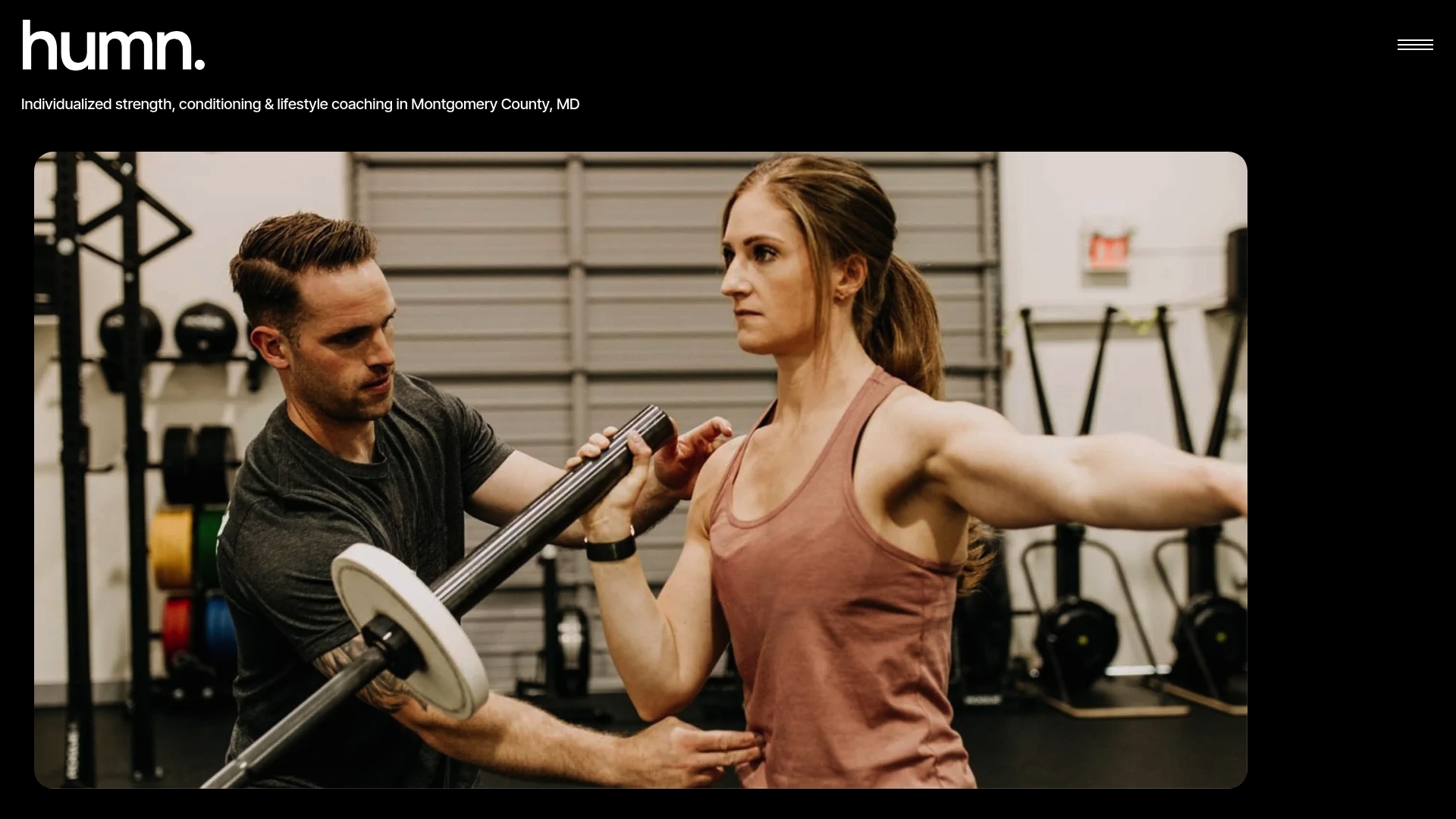
Given that most measurable progress shows up in the 3 to 6 month range, treat your first 90 days as the real test, not week one. Check current membership and small-group coaching options to see what a first consult looks like, and commit to at least a 90-day stretch before judging results. That’s the window the evidence says actually matters.
Sources
- Optimizing resistance training outcomes: comparing in-person supervision, online coaching, and self-guided approaches (J Strength Cond Res, 2025)
- How a personal trainer can enhance your workouts — Harvard Health
- Systematic review comparing supervised vs unsupervised exercise interventions (2024)
FAQ
Is a Personal Trainer Actually Worth It?
For most beginners and inconsistent exercisers, yes. The 2025 randomized trial found supervised training beat app-guided and self-guided approaches on both adherence and strength gains, and that margin is largest for people new to structured training.
What Is the 3-3-3 Rule for Training?
There’s no single agreed-upon definition of a “3-3-3 rule” in exercise science, and the term is used inconsistently across fitness content. Rather than repeat an unverified rule, the safer guidance is the one supported by research here: beginners generally benefit from 2 to 3 supervised sessions a week for the first 6 to 12 weeks.
Is $200 a Month for a Personal Trainer Good?
That typically covers one or two sessions a month at national average rates, which won’t deliver the frequency beginners need. Small-group formats, which often run $15 to $45 per session, stretch that same budget across multiple weekly sessions and closer to the research-supported frequency for real results.
Are 2 Personal Training Sessions a Week Enough?
Two sessions a week works well for people past the initial learning phase, using the rest of the week for independent or app-guided training. Beginners typically see faster, safer progress starting at 2 to 3 sessions weekly during their first 6 to 12 weeks before tapering down.
No Comments.