

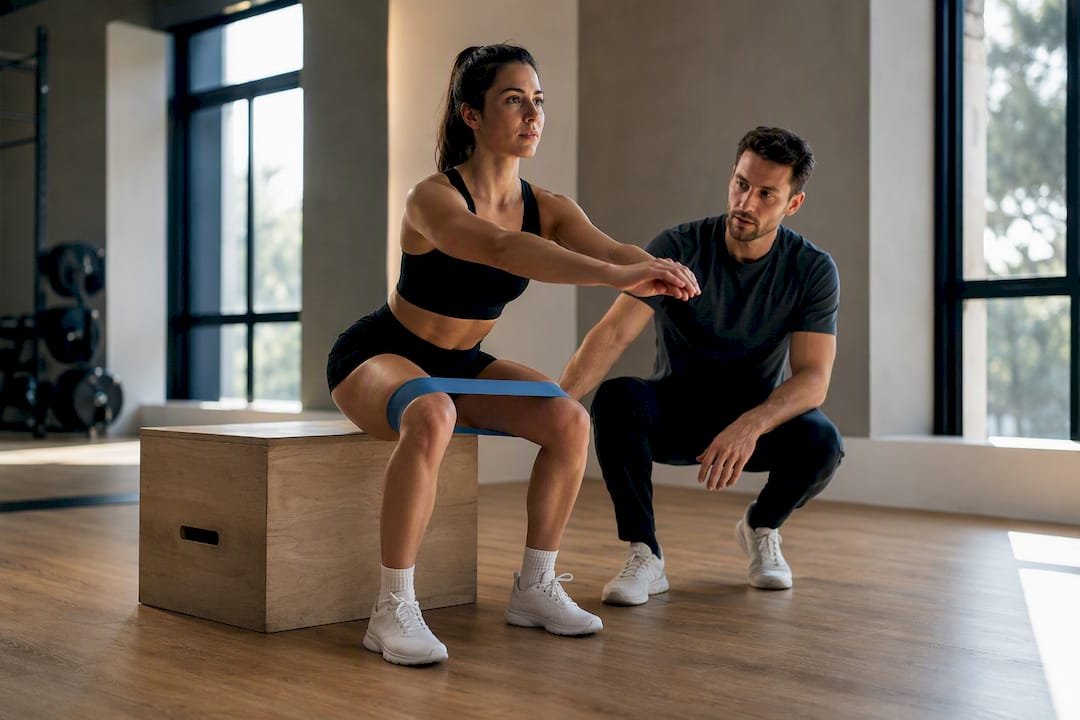
Joint pain doesn’t automatically mean you need to stop training. In most cases, the right move is to modify the load, not abandon the movement, while building strength in the muscles that support the joint. The rule to follow tonight: keep exercise discomfort in a tolerable range (roughly 0 to 3 out of 10) and make sure it settles back to your normal baseline within 24 hours. If pain is sharp, worsening, or actually limits how a joint moves, stop and get it looked at.
TL;DR:
- Maintaining joint health involves modifying loads through reduced volume, range of motion, and load intensity rather than complete rest.
- Strengthening surrounding muscles with controlled, progressive exercises supports joint stability and can alleviate pain over time.
- Joint-specific strategies, such as leg presses for knees or scapular work for shoulders, optimize rehab without exacerbating symptoms.
- Consistent monitoring and gradual progression over 4 to 6 weeks are essential before increasing intensity or impact activities.
- Seek professional evaluation if pain is sharp, worsening, or does not improve after several weeks of modified training.
Table of Contents
- Practical Modifications For Training With Joint Pain
- What To Do About Knee, Hip, Shoulder, And Ankle Pain
- How To Build A Progressive Training Program Around Joint Pain
- When Should You See A Physical Therapist Or Doctor?
- Why Most People Quit Training Too Soon
- How humn. Supports Training Around Joint Pain
- Sources
- FAQ
Practical Modifications For Training With Joint Pain
Full rest is rarely the answer. Targeted, modified loading tends to outperform complete inactivity for most common tendon and joint problems, according to Avera Health. The goal is to keep the stimulus going everywhere else while dialing back demand on the one structure that’s irritated.
Here’s the order of adjustments worth trying, from least disruptive to most:
- Cut volume before you cut the exercise. Drop sets from four to two, or reps from twelve to eight, before you eliminate a movement entirely.
- Shrink the range of motion. Box squats, partial-depth lunges, pin presses, and paused bench work let you keep training the pattern without loading the painful end range.
- Reduce absolute load and slow the tempo. Lighter weight with a controlled three-second lowering phase often feels completely different on an irritated joint than the same weight moved fast.
- Swap modalities when compression is the problem. Pool-based work, cycling, rowing machines, and other open-chain options take direct joint compression out of the equation.
- Try isometrics. Holding a position under tension, like a wall sit or a mid-range leg extension hold, can create quick pain relief for tendon-related pain and gives you something to build on before progressing to heavier resistance.
Track how each session feels the next morning. If your joint feels the same or better than it did the day before, that modification worked. If it’s angrier, that was too much, and you back off one notch.
Pro Tip: Keep a one-line log after each workout: exercise, load, and next-day pain score. Two weeks of that data tells you more about your joint than any single workout ever will.
What To Do About Knee, Hip, Shoulder, And Ankle Pain
Different joints respond to different priorities. What works for a cranky shoulder will do nothing for an irritated knee, so match the strategy to the joint.
Knee. Prioritize the quads and glutes, since they absorb load the knee joint would otherwise take directly. Start with isometric quad holds, then progress to leg press or box squats before attempting deep, painful flexion. Progressive strengthening of the muscles around the knee, moving from isometrics to heavier slow resistance, is a well-supported approach for many common knee pain presentations, per HSS.
Hip. Hip-hinge patterns (Romanian deadlifts, hip thrusts) and glute medius work carry the load that a painful hip joint can’t. Controlled step-backs and shallow lunges, kept well short of end-range depth, usually beat full lunges early on.
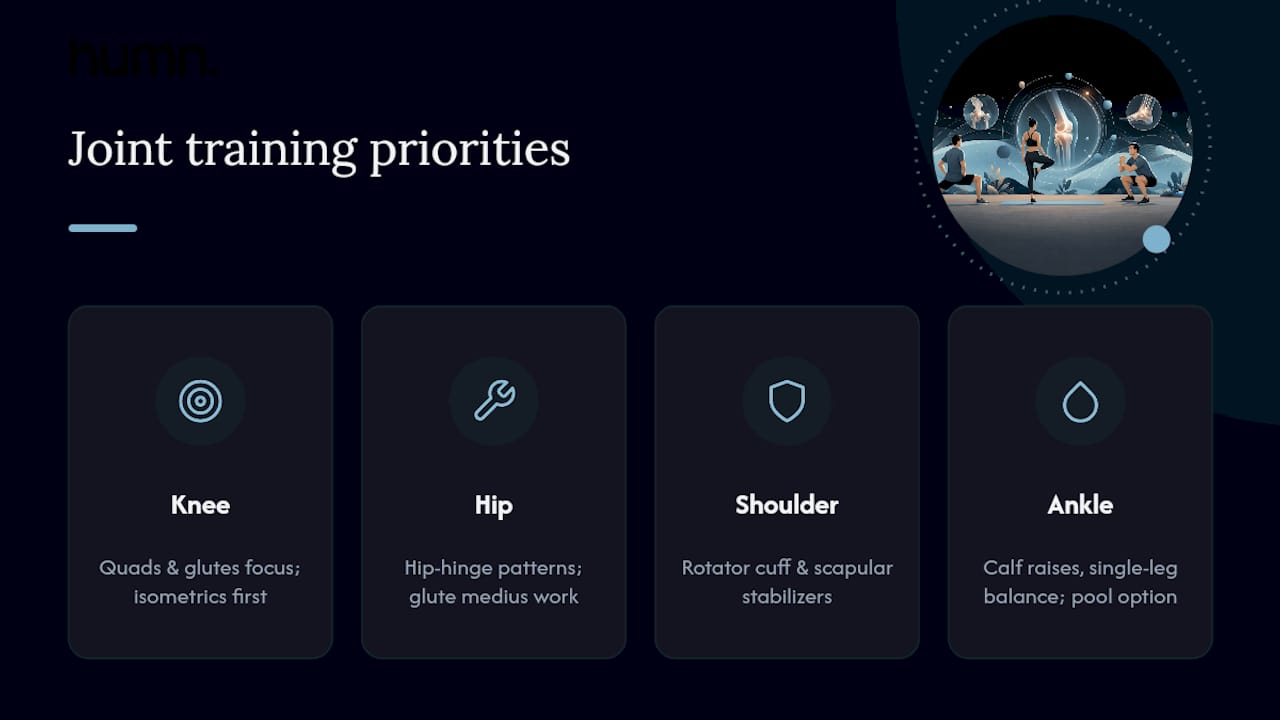
Shoulder. Rotator cuff and scapular stabilizer work matters more here than almost anywhere else. Neutral-grip presses, landmine presses, and face pulls train pressing and pulling strength without forcing the shoulder through a painful overhead arc.
Ankle. Calf raises, single-leg balance work, and pool-based training let you keep loading the lower leg while taking impact out of the equation.
A useful benchmark: Harvard Health’s joint-specific workout guidance recommends 2 to 3 adapted sessions per week for the shoulders, hips, knees, and ankles, with exercises scaled to current ability rather than a fixed standard.
Watch for red flags specific to each joint: a knee that gives way, a shoulder that catches on a specific arc, a hip that clicks with pain, or an ankle that swells after light activity. Any of those warrants a step back from self-management.
How To Build A Progressive Training Program Around Joint Pain
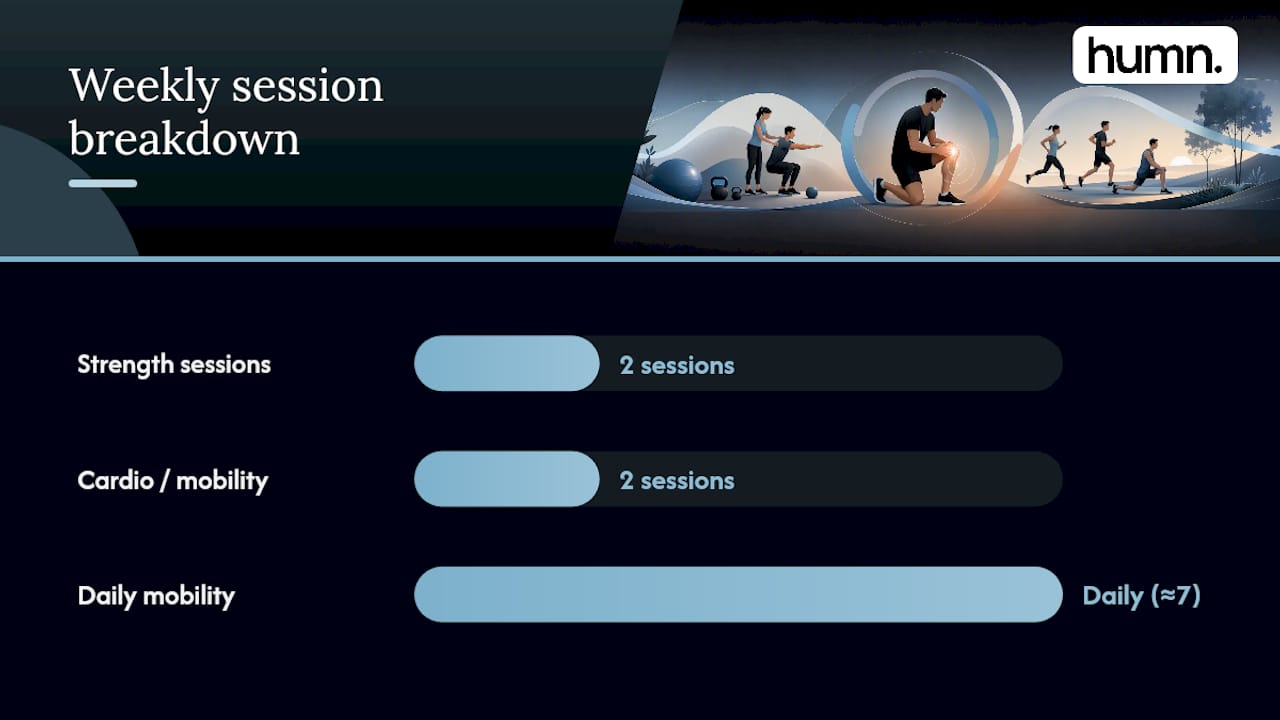
A workable weekly structure looks like this: two strength sessions targeting the muscles around the affected joint, two cardio or mobility sessions, and short daily mobility work. Experts recommend pairing at least 150 minutes of weekly moderate aerobic activity with two weekly strength sessions focused on the joint’s supporting muscles, a combination that improves both stability and shock absorption, according to Harvard Health.
Progression should follow rules, not enthusiasm.
- Cap weekly volume increases at 10 to 15%. Jumping from three sets to five in one week is how manageable pain becomes a setback.
- Use two gates before adding load: session pain must stay at or below 3/10, and next-day pain must return to baseline.
- Follow a loading sequence. Isometrics build early tolerance, heavy-slow resistance builds capacity, and compound functional movements (squats, step-ups, presses) come last, once the isolated work is pain-free.
- Reintroduce impact gradually. Walking before jogging, jogging before jumping. Each step should pass the 24-hour test before you add the next.
A structured post-injury conditioning program typically runs 4 to 6 weeks initially before shifting into an ongoing maintenance phase, and that timeline is a reasonable planning horizon for most joint issues managed through training alone.
Pro Tip: Test strength symmetry every two weeks with a simple single-leg or single-arm rep-max comparison. A gap of more than 10 to 15% between sides is a sign the injured side still needs more targeted work before you load it like the healthy one.
If you’re also managing general strength decline alongside joint pain, especially past 40, pairing this approach with a broader strength training routine built for that age group tends to accelerate progress. Readers dealing specifically with lower back involvement will find a more detailed breakdown in our guide to training around back pain.
When Should You See A Physical Therapist Or Doctor?
Some signals mean self-management has run its course.
- Sharp, localized pain that appeared suddenly, rather than the dull, diffuse ache that usually responds to load adjustment.
- Visible swelling, a joint that feels unstable or gives way, or a joint that locks during movement.
- Pain that wakes you up at night or progressive weakness that isn’t improving with rest.
- No meaningful improvement after 4 to 6 weeks of consistent, well-modified training.
Stanford Lifestyle Medicine’s screening framework draws this same line: sharp, localized pain often needs medical evaluation, while dull, muscular discomfort usually responds to exercise. A physical therapist assessment typically checks for joint effusion, neurological signs, and strength asymmetry between limbs. Tendinopathy cases often improve within 6 to 12 weeks of guided loading, while osteoarthritis calls for ongoing management rather than a fixed endpoint.
Why Most People Quit Training Too Soon
Most people treat joint pain as a stop sign when it’s usually a speed limit. The instinct to rest completely comes from a reasonable place, nobody wants to make an injury worse, but it often backfires because inactivity lets the surrounding muscles weaken further, which puts more raw load on the joint itself the next time you move.
We build programs around four pillars: strength work matched to what a joint can currently tolerate, structured downtime and recovery access, nutrition and sleep habits that influence tissue adaptation, and consistency that turns a modified program into a lasting one. Coaching relationships exist specifically to make pain-monitoring rules personal instead of generic.
— Josh
How humn. Supports Training Around Joint Pain
humn. is built for exactly the reader who wants guided modification instead of guesswork, structured coaching instead of a generic app plan. If you’ve read this far and you’re still unsure how to apply a 10% volume rule to your own knee or shoulder, that’s precisely the gap small group personal training and 1:1 coaching exists to close.
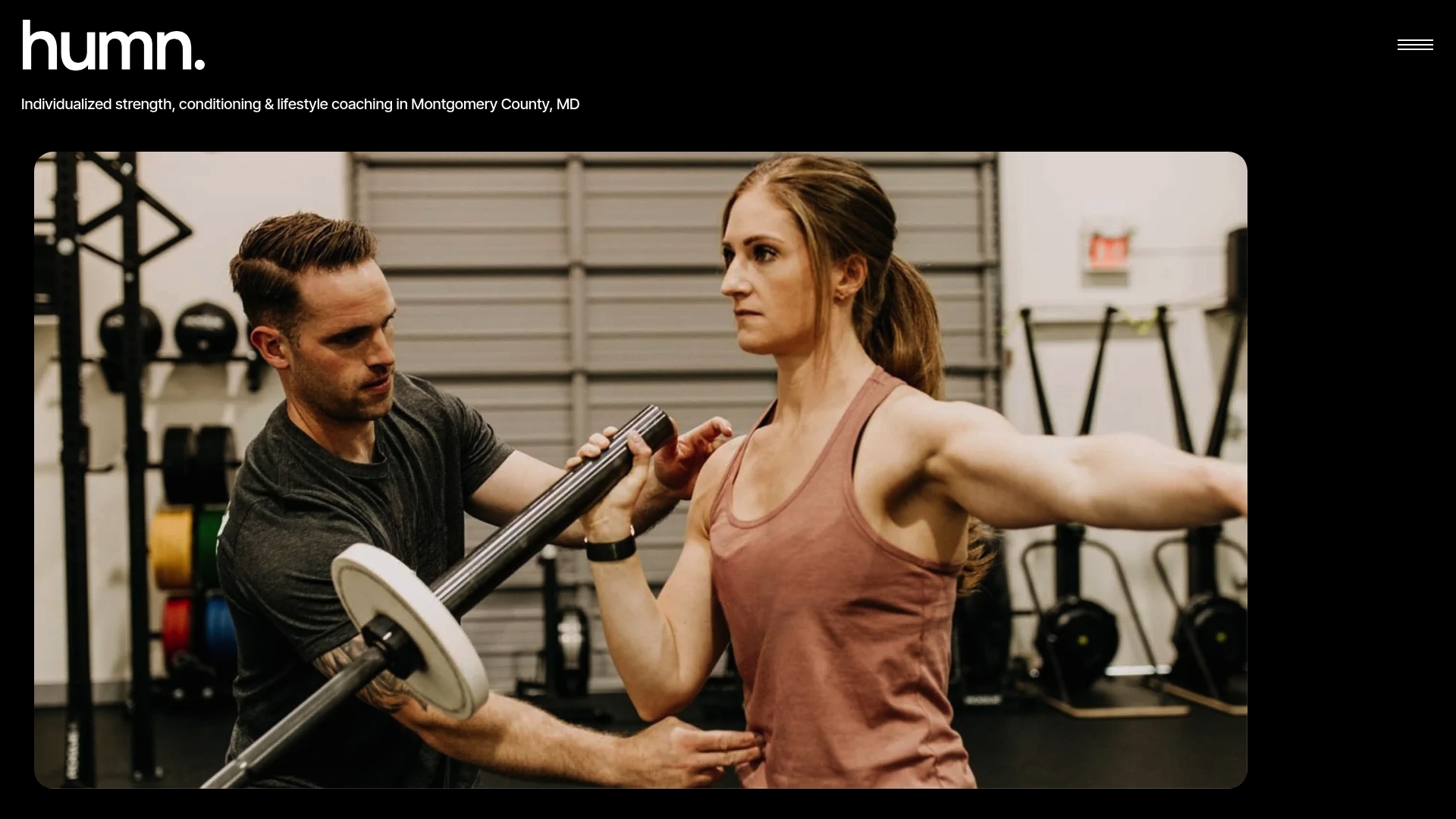
A first visit typically starts with an assessment of how your joint currently moves and what loads it tolerates, followed by a program built around that information rather than a generic template. From there, coaches adjust volume, range, and load session to session using the same pain-monitoring rules covered above, but personalized to your joint and your history. Recovery access, including sauna, compression, and red light therapy, supports the tissue adaptation side of the equation between sessions. For readers managing joint issues tied to broader muscle loss or metabolic changes, 1:1 nutrition coaching rounds out the picture. If you’re ready to stop guessing at your own load management, membership details and next steps are on the humn. membership page.
Sources
- Exercises to strengthen knees — HSS
- The Joint Pain Relief Workout — Harvard Health
- Good vs bad joint pain — Stanford Lifestyle Medicine
This article is general information, not a substitute for advice from a qualified doctor. Consult a qualified healthcare professional about your own circumstances before acting on anything here.
FAQ
Is It Safe To Strength Train With Knee Pain?
Yes, in most cases. Progressive strengthening that starts with isometrics and moves to heavier slow resistance is a well-supported approach for common knee pain presentations, as long as pain stays at or below 3/10 during exercise.
How Do I Know If Joint Pain Is From Arthritis Or Something Else?
Arthritis pain tends to be diffuse, stiff-feeling, and worse after inactivity, while sharp or localized pain often points to a specific structural issue that needs evaluation. The Arthritis Foundation notes that strength training remains one of the most effective tools for arthritis management regardless of the exact cause.
Should I Train With Shoulder Pain Or Rest Completely?
Modified training generally beats complete rest for shoulder pain, provided you avoid the specific painful arc and emphasize rotator cuff and scapular stabilizer work instead. Complete rest often leads to further weakness that makes the shoulder more vulnerable once you return to full activity.
How Long Does It Take For Joint Pain To Improve With Exercise?
Tendinopathy-type joint pain often improves within 6 to 12 weeks of consistent, well-modified loading, while arthritis requires ongoing management rather than a fixed timeline. If there’s no improvement after 4 to 6 weeks, a physical therapy assessment is the next reasonable step.
Does humn. Offer Programs Specifically For Joint Pain?
humn.'s small-group and 1:1 coaching builds individualized programs around a client’s current joint tolerance, paired with recovery services like sauna, compression, and red light therapy. Current membership details are available on the humn. membership page.
No Comments.