

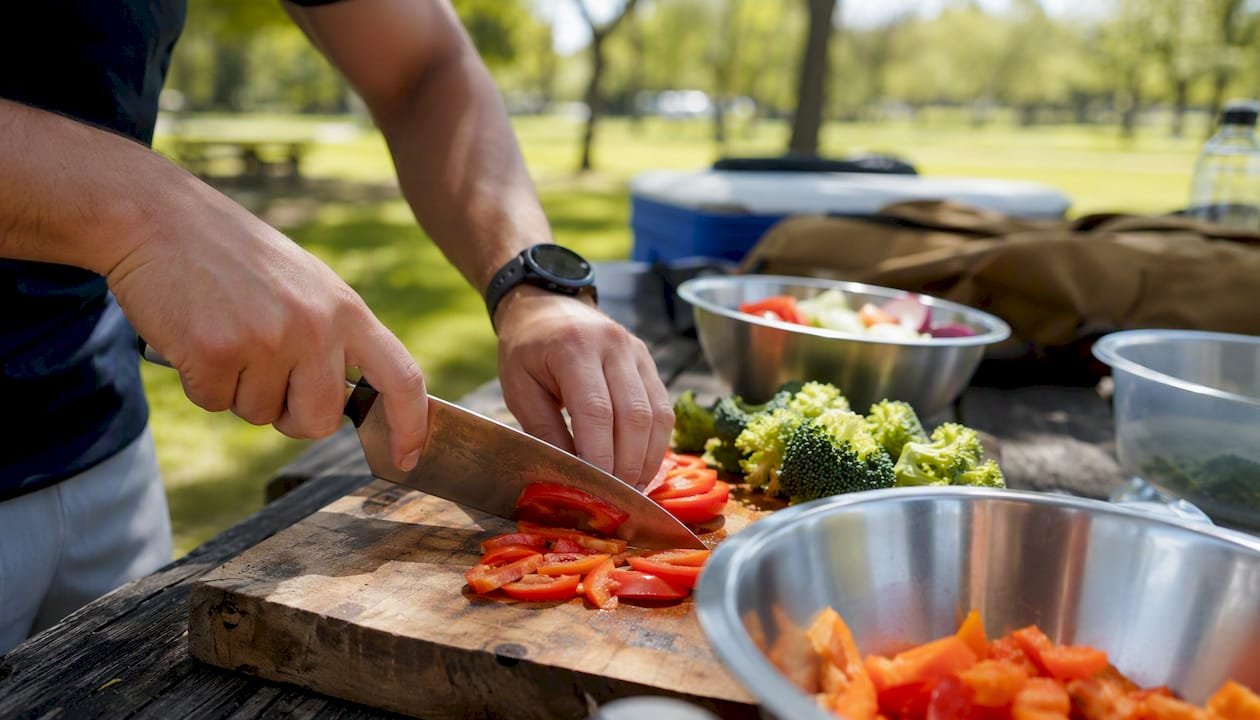
This week, pick four components, spend 60–90 minutes on Sunday, and you will have lunches and dinners covered through Thursday. That is the whole system. Everything else in this guide is detail, adaptation, and troubleshooting.
Your starter checklist for this week:
- Buy two proteins, two grains, two vegetables, and one sauce (see the grocery template in Section 5)
- Block 60–90 minutes on Sunday (or two 30-minute sessions on Sunday and Wednesday)
- Cook your longest-cooking item first: grains go on the stove, protein goes in the oven, vegetables roast while you prep snacks
- Portion into containers, label with the date, and put everything on one dedicated fridge shelf
- Set a 20-minute midweek reset on Wednesday to refresh produce and restock snacks
The one-hour prep workflow is genuinely achievable when you choose high-yield recipes and run tasks simultaneously. You are not cooking five separate meals. You are assembling four building blocks that combine into ten different ones.
Key Takeaways
Consistent meal prep for busy professionals comes down to one repeatable system: four components, one 60-minute session, and a midweek reset that keeps the fridge stocked without a perfect Sunday.
| Point | Details |
|---|---|
| Component system wins | Cook four building blocks (protein, grain, vegetable, sauce) and assemble meals fresh for maximum variety with minimum effort. |
| 60-minute sessions are realistic | A one-hour prep session with parallel cooking covers lunches and dinners through most of the week. |
| Sauce rotation beats cooking more | Rotating one sauce per week makes the same components feel different across five days without extra prep time. |
| Storage timelines matter | Cooked proteins keep 3–4 days refrigerated; grains keep 4–5 days. Label everything and use a dedicated prep shelf. |
| humn supports the whole system | humn’s habits-first coaching in Gaithersburg, MD integrates nutrition, training, and lifestyle habits into one sustainable program. |
Table of Contents
- Why does meal prep actually work for busy professionals?
- What shortcuts actually save time on a busy week?
- What pantry staples and groceries do you actually need?
- What should you actually cook? Meal ideas for every part of the day
- How long does prepped food actually keep? Storage and safety rules
- How do you run a 60-minute prep session without wasting time?
- Habits-first coaching: what actually makes prep stick long-term
- How do you build a balanced plate from prepped components?
- Meal prep tips for vegetarian, vegan, and gluten-free diets
- How do you keep meals from feeling boring by Thursday?
- How do you reduce food waste during meal prep?
- How do you fix the most common meal prep problems?
- Why flexible systems beat perfect plans every time
- humn. supports busy professionals beyond the kitchen
- Useful sources and further reading
Why does meal prep actually work for busy professionals?
The honest answer is that it removes decisions. Every time you stand in front of the fridge at 12:30 PM wondering what to eat, you spend mental energy you need for something else. CDC data on diet patterns show that busy schedules consistently push people toward convenience foods, and the cumulative effect on diet quality is real. Meal prep short-circuits that pattern before it starts.
Harvard’s Nutrition Source confirms what most coaches already know: meal prep saves time and money, improves diet quality, and reduces daily stress. The mechanism is simple. When the food is already made, you default to the healthy option instead of the fast one.
Realistic goals for a busy professional:
- 3–5 prepped lunches ready to grab from the fridge
- Breakfasts that take under two minutes (overnight oats, egg muffins, smoothie packs)
- 2–3 dinners that reheat in under five minutes
- Snacks portioned and visible so you reach for them instead of vending machines
Set the bar there, not at a Pinterest-perfect spread of twelve matching containers. Three lunches prepped is a win. Five is a great week.
What shortcuts actually save time on a busy week?
Store-bought components are not cheating. A rotisserie chicken from the grocery store gives you two to three days of protein in under 30 seconds of prep. Pre-washed salad greens, frozen vegetables, and jarred sauces used strategically cut your active prep time without sacrificing much nutrition. Research on frozen produce shows that fruits and vegetables frozen at peak ripeness retain nutrients equal to or better than fresh produce that has been sitting in transit for days.
Workflow shortcuts that compound:
- Start the oven first, always. Sheet-pan vegetables and proteins roast while you prep everything else.
- Cook grains in a rice cooker or Instant Pot with no monitoring required. Set it and move on.
- Chop all vegetables before cooking anything. One cutting board, one cleanup.
- Use a single large pot for soups, stews, and curries. One pot means one wash.
Packing and reheating hacks:
- Store dressings and sauces in separate small containers. Pouring dressing on a salad the night before turns it into a soggy mess by noon.
- Reheat roasted vegetables in a toaster oven or air fryer for two minutes instead of the microwave. The texture difference is significant.
- Add a splash of water or broth before microwaving grains. They dry out fast.
Pro Tip: Pack your lunch container the night before, not the morning of. Morning decisions cost you time and willpower. A container already in the fridge takes ten seconds to grab.
What pantry staples and groceries do you actually need?
A well-stocked pantry cuts your weekly shopping list to a handful of fresh items. Keep these on hand and you can build a week of meals from whatever proteins and produce are on sale.
Core pantry and fridge staples:
- Proteins: canned chickpeas, canned tuna, dried lentils, eggs
- Grains: brown rice, quinoa, rolled oats, whole-wheat pasta
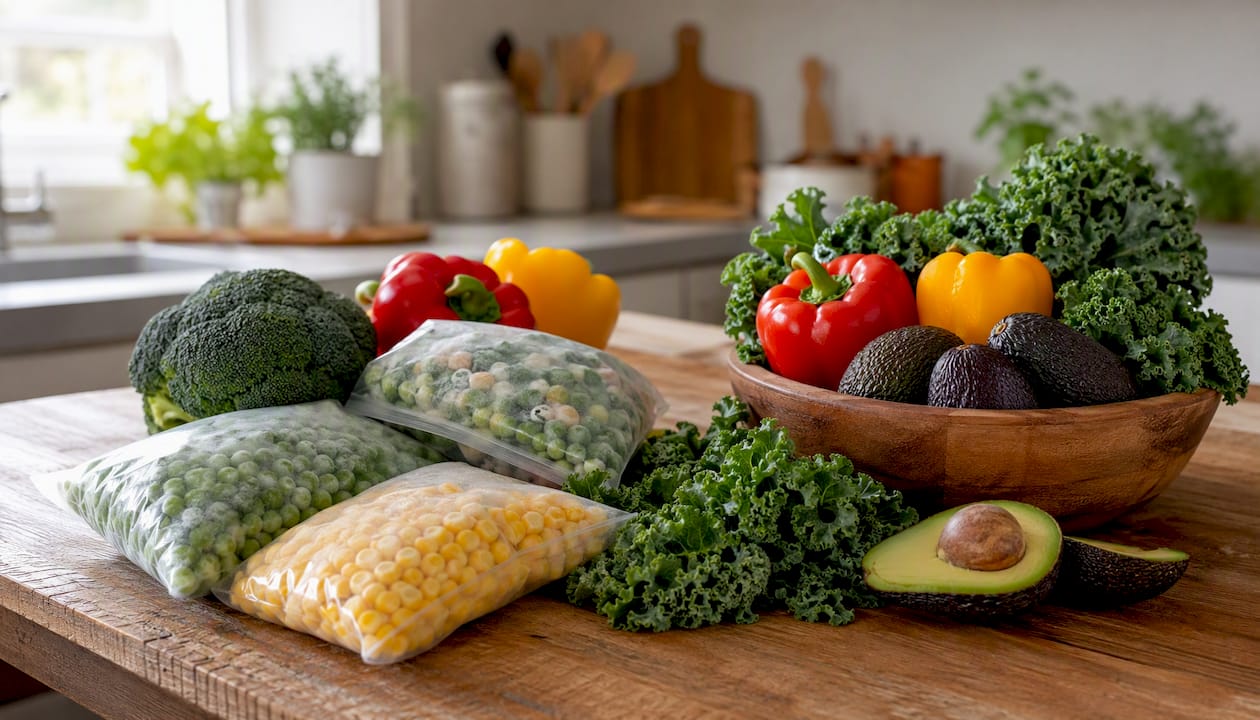
- Frozen: edamame, broccoli, mixed vegetables, frozen fruit for smoothies
- Sauces and flavor: olive oil, soy sauce, tahini, jarred salsa, hot sauce, curry paste
- Snacks: Greek yogurt, nut butter, mixed nuts, hummus
One-week grocery template (copy and use):
Produce: baby spinach, cherry tomatoes, bell peppers, broccoli, sweet potatoes, bananas, lemons
Proteins: chicken thighs or breasts, salmon fillets, eggs (1 dozen), black beans (canned)
Pantry: brown rice or quinoa, rolled oats, olive oil, one jarred sauce of your choice
Dairy/alternatives: Greek yogurt, shredded cheese or a dairy-free alternative, milk or oat milk
Snacks: mixed nuts, hummus, whole-grain crackers, fresh fruit
Batch cooking and portion-control guidance consistently recommends frozen produce as a budget-friendly, time-saving choice that does not compromise nutrition. Buy fresh for items you will eat raw (greens, tomatoes, cucumbers) and frozen for everything you will cook.
What should you actually cook? Meal ideas for every part of the day
The goal is components that recombine for variety, not identical lunches. Here is what works, with honest notes on prep time and storage.
Breakfast
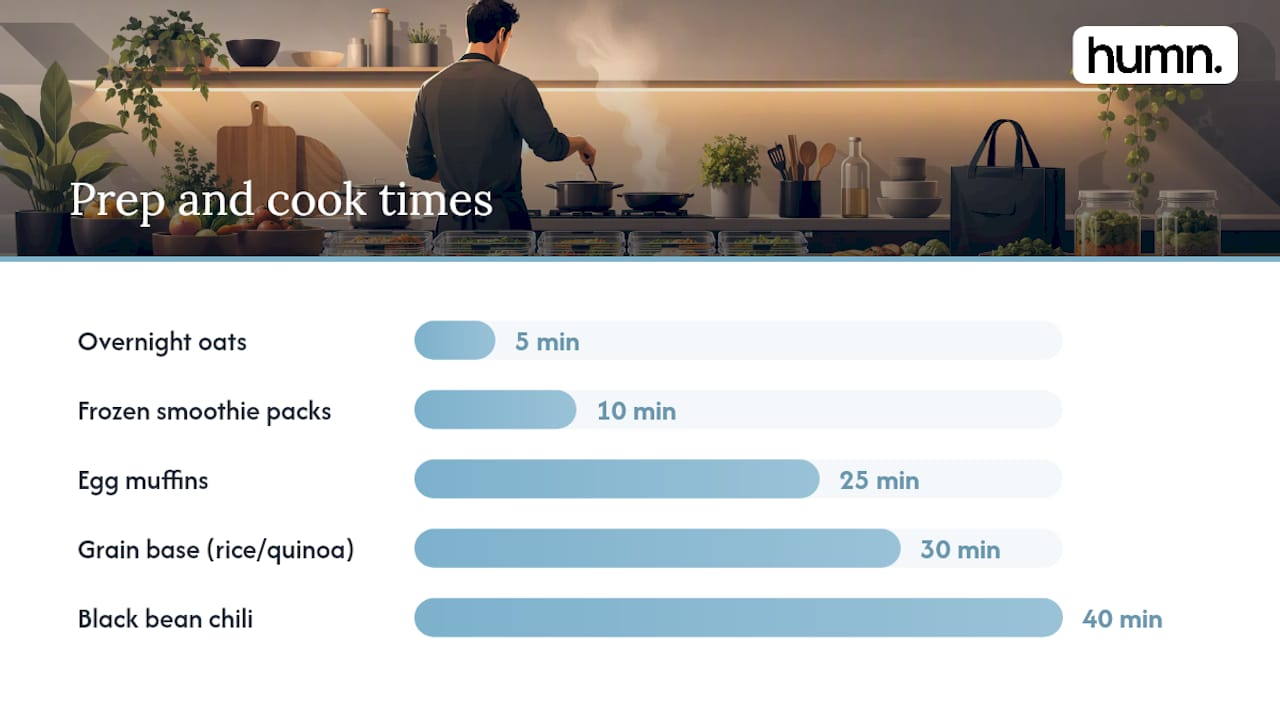
- Overnight oats: 5 minutes of prep the night before. Keeps 4 days in the fridge. Add toppings fresh each morning. Freezer-friendly: no.
- Egg muffins: 25 minutes total (10 prep, 15 bake). Keeps 4 days refrigerated, 2 months frozen. Reheat in microwave 60 seconds. Freezer-friendly: yes.
- Frozen smoothie packs: 10 minutes to portion a week of packs. Blend from frozen each morning in under 2 minutes. Freezer-friendly: yes.
Lunch components and sample bowls
Build from the component-based system and rotate the sauce to keep things from feeling repetitive:
- Grain base: Brown rice or quinoa (30 minutes, hands-off). Fridge life: 5 days.
- Roasted protein: Chicken thighs, salmon, or baked tofu (25–30 minutes). Fridge life: 4 days.
- Roasted vegetables: Sweet potato, broccoli, bell peppers (20–25 minutes). Fridge life: 4 days.
Sample bowl Monday: rice + chicken + broccoli + soy-ginger sauce. Sample bowl Wednesday: quinoa + salmon + sweet potato + tahini. Same components, different feel.
Research on protein and satiety shows that higher-protein lunches reduce subsequent energy intake, which matters when you need sustained focus through a long afternoon. Aim for a palm-sized portion of protein at every lunch.
Dinner batch ideas
- Black bean chili: 40 minutes active, scales to 6 servings. Freezes perfectly. Reheat on stovetop with a splash of water.
- Sheet-pan chicken and vegetables: 35 minutes total. Fridge life 4 days; freeze the chicken only.
- One-pot lentil curry: 35 minutes. Freezes well. Gets better on day two.
Snacks
- Greek yogurt portioned into jars with granola stored separately: 5 minutes for a week’s worth
- Hummus with cut vegetables in small containers: 10 minutes
- Mixed nuts pre-portioned into small bags or containers: 5 minutes
How long does prepped food actually keep? Storage and safety rules
Food safety is not optional, and the timelines below come from Harvard’s Nutrition Source guidelines.
| Food Item | Fridge (days) | Freezer |
|---|---|---|
| Cooked chicken or turkey | 3–4 | 2–6 months |
| Cooked fish | 3–4 | 2–3 months |
| Cooked grains (rice, quinoa) | 4–5 | 1–2 months |
| Cooked legumes (beans, lentils) | 3–5 | 1–2 months |
| Roasted vegetables | 3–5 | 8–12 months |
| Soups and stews | 3–4 | 2–3 months |
| Hard-boiled eggs | 1 week | Not recommended |
| Overnight oats | 4–5 | Not recommended |
| Egg muffins | 4 | 2 months |
Cooling and storing safely:
- Cool cooked food to room temperature within two hours before refrigerating. Do not put a hot pot directly into the fridge.
- Keep your fridge at or below 40°F. Above that, bacterial growth accelerates.
- Label every container with the date it was made, not the date it expires. You will thank yourself on Thursday.
- Use a dedicated “prep shelf” in the fridge so you can see at a glance what is ready and what needs to be used first.
Reheating rules:
- Reheat all cooked proteins and grains to an internal temperature of 165°F.
- Stovetop reheating preserves texture better than the microwave for most dishes. Use the microwave when speed matters; use the stovetop when texture does.
- Discard anything that smells off, looks discolored, or has been in the fridge beyond its timeline. No exceptions.
How do you run a 60-minute prep session without wasting time?
The key is parallel cooking. You are not doing one thing at a time.
Minute-by-minute 60-minute session:
- 0:00 Preheat oven to 400°F. Start rice cooker or pot of grains on the stove.
- 0:05 Chop all vegetables. Season protein.
- 0:15 Protein and vegetables go into the oven on sheet pans.
- 0:20 Portion overnight oats into jars. Mix sauces.
- 0:30 Check grains. Prepare smoothie packs and portion snacks.
- 0:40 Pull vegetables from oven if done. Flip protein if needed.
- 0:45 Portion everything into containers. Label with dates.
- 0:55 Clean up while the last items finish cooking.
- 1:00 Done. Fridge stocked for the week.
Alternative split schedule:
- Sunday (30 minutes): Cook proteins and grains only. Store in bulk containers.
- Wednesday (20–30 minutes): Roast fresh vegetables, refresh sauces, restock snacks and breakfasts.
This split works well for fitting prep into a sustainable weekly schedule without requiring a perfect Sunday block.
Execution checklist (save to your phone):
- Grocery shop Saturday or Sunday morning
- Preheat oven before anything else
- Start longest-cooking item first (grains, then protein)
- Chop all produce in one pass
- Portion and label before putting anything away
- Set Wednesday reminder for midweek reset
Habits-first coaching: what actually makes prep stick long-term
Josh coaches professionals at humn in Gaithersburg, MD, where the approach to nutrition is the same as the approach to training: behavior first, perfection never. The systems-based model at humn treats meal prep as a habit to be designed, not a task to be completed.
Three habit interventions that work in practice:
1. Calendar-block prep time like a meeting. A vague intention to “prep on Sunday” disappears under a full calendar. A blocked 60-minute slot with a reminder does not. Treat it as non-negotiable for four weeks, and it becomes automatic.
2. Start with one component, not five. If the full system feels like too much, commit only to prepping one item this week: a batch of grains, a dozen egg muffins, or a week of overnight oats. One component done consistently beats five components done once and abandoned.
3. Use an accountability structure. Telling someone your prep goal, even a coach or a colleague, measurably increases follow-through. At humn, 1-on-1 coaching for professionals includes exactly this kind of habit check-in alongside training.
Pro Tip: Keep a “lazy prep” backup in your freezer at all times: frozen edamame, a bag of frozen brown rice, and a can of chickpeas. On the weeks when Sunday prep does not happen, you still have a meal.
How do you build a balanced plate from prepped components?
Portioning does not require a food scale or calorie counting. The plate method is faster and accurate enough for most professionals. Fill half your container with non-starchy vegetables (broccoli, spinach, peppers, zucchini), one quarter with a protein source, and one quarter with a complex carbohydrate.
For active professionals, the humn nutrition and portion guide uses a palm-based system: one palm of protein, one cupped hand of carbohydrates, one fist of vegetables, and one thumb of fat per meal. It scales to your body size automatically without any math.
Protein is the most important variable to get right. A palm-sized portion of chicken, fish, tofu, or legumes at lunch supports afternoon focus and reduces the urge to snack heavily before dinner. Carbohydrates from whole grains and starchy vegetables provide sustained energy without the mid-afternoon crash that comes from refined carbs. Fat from olive oil, avocado, or nuts rounds out the meal and slows digestion.
For anyone fueling workouts alongside a busy schedule, the timing matters too. A carbohydrate-forward meal two to three hours before training and a protein-forward meal within two hours after supports both performance and recovery.
Meal prep tips for vegetarian, vegan, and gluten-free diets
The component system adapts to any dietary preference without rebuilding the whole approach.
Vegetarian and vegan: Replace animal proteins with legumes (black beans, lentils, chickpeas), tofu, tempeh, or edamame. These batch-cook well and freeze reliably. Lentil curry, black bean chili, and baked tofu are among the most practical options because they hold texture after reheating. Nutritional yeast adds a savory depth to grain bowls and sauces without dairy.
Gluten-free: Swap wheat-based grains for rice, quinoa, millet, or certified gluten-free oats. Check labels on sauces and condiments, where gluten hides most often (soy sauce, malt vinegar, some curry pastes). Tamari is a direct soy sauce substitute that is typically gluten-free.
Dairy-free: Greek yogurt swaps to coconut yogurt or a high-protein plant-based alternative. Cheese in egg muffins can be omitted or replaced with nutritional yeast. Most of the component system is naturally dairy-free.
High-protein plant-based: Combine legumes with grains to cover the full amino acid profile (rice and beans, quinoa and lentils). Edamame is one of the few plant proteins that is complete on its own and takes under five minutes to prepare from frozen.
The grocery template in Section 5 works for all of these with simple substitutions. The system does not change; only the ingredients do.
How do you keep meals from feeling boring by Thursday?
Monotony is the most common reason people abandon meal prep. The fix is not cooking more things. It is rotating one variable per week.
Sauce rotation delivers the most variety for the least work. The same chicken, rice, and broccoli combination tastes completely different with soy-ginger sauce on Monday, tahini on Wednesday, and salsa on Friday. Rotate one sauce per week and the components feel new without any extra cooking.
Format rotation is the second lever. The same components become a bowl, a wrap, a salad, or a grain plate depending on how you assemble them. Prep the components; decide the format at mealtime based on what sounds good.
One new component per week keeps the system from going stale over months. Swap brown rice for farro one week, try a new roasted vegetable the next. You are not rebuilding the system; you are refreshing one piece of it.
Spice and herb variety costs almost nothing. A batch of roasted sweet potato tastes different with smoked paprika versus cinnamon versus za’atar. Keep five to eight spice blends on hand and use a different one each week.
How do you reduce food waste during meal prep?
Waste usually comes from two places: over-prepping and poor visibility. Both are fixable.
Prep to a realistic number of meals. If you eat out twice a week, prep three lunches and two dinners, not five of each. Over-prepping leads to food that sits past its safe window and gets thrown out.
Use the “prep shelf” system. Designate one shelf in your fridge for prepped items only. When the shelf is full, you are set. When it is empty, it is time to prep again. This visual cue prevents both over-buying and forgotten containers at the back of the fridge.
Prioritize perishables first. Fresh greens and cut vegetables go into Monday and Tuesday meals. Hardier items (roasted sweet potato, cooked grains, frozen proteins) go later in the week. Plan the order before you prep.
Use vegetable scraps. Broccoli stems, carrot tops, and onion skins can go into a freezer bag and become stock. It takes no extra time and eliminates a category of waste entirely.
Buy frozen for anything you might not use fresh. A bag of frozen spinach does not go bad on Wednesday because you had a late meeting. Fresh spinach does.
How do you fix the most common meal prep problems?
Soggy salads and greens: Store greens dry and undressed. A paper towel in the container absorbs excess moisture. Dress at the last minute or keep dressing in a separate small container.
Flavor fading after reheating: Proteins and grains lose flavor intensity in the fridge. Fix it with a fresh squeeze of lemon, a drizzle of good olive oil, or a pinch of salt right before eating. These take five seconds and make a real difference.
Rubbery reheated chicken: Add a tablespoon of water or broth to the container before microwaving and cover loosely. The steam keeps the protein from drying out.
Mushy reheated rice: Spread it on a plate before microwaving instead of leaving it in a deep container. Thinner layers reheat more evenly.
Prep fatigue (not wanting to cook on Sunday): This is a system problem, not a motivation problem. If a 90-minute session feels like too much, switch to the split-session model. Two 30-minute sessions are easier to start and easier to finish. Stanford Lifestyle Medicine’s guidance on flexible, adaptable prep sessions directly addresses this: the session you actually do is better than the perfect one you skip.
Running out of ideas: Rotate one sauce, one grain, and one protein per week. Three variables with four options each gives you 64 possible combinations from the same basic system.
Why flexible systems beat perfect plans every time
The professionals who sustain healthy eating are almost never the ones who prep flawlessly every Sunday. They are the ones who have a fallback. A freezer stocked with one or two batch-cooked meals. A grocery list that takes three minutes to fill out because the pantry staples never change. A 20-minute Wednesday reset that keeps the week from falling apart.
The pressure to do a complete, perfect prep session is the thing that makes people quit. When Sunday is busy, the all-or-nothing mindset means nothing gets done. A flexible system means you prep what you can, use the freezer buffer for the rest, and start fresh next week without guilt.
Split sessions, rotating components, and keeping a “lazy prep” backup are not shortcuts. They are the actual design of a system that lasts. The goal is not a perfect week of meals. It is a system you are still using six months from now.
humn. supports busy professionals beyond the kitchen

Meal prep is one piece of a larger picture. At humn in Gaithersburg, MD, the coaching model addresses nutrition, training, recovery, and lifestyle habits together, because changing one without the others rarely sticks. The lifestyle coaching program at humn is built specifically for busy professionals who want a structured, behavior-based system rather than generic advice they already know but cannot seem to follow consistently.
Members work with dedicated coaches on habits-first programming that covers what to eat, how to train, how to recover, and how to build routines that hold up under a full calendar. If you are ready to stop piecing together advice from ten different sources and work with a coach who treats your schedule as a real constraint, explore 1-on-1 coaching for professionals at humn and take the first step toward a system that actually fits your life.
Useful sources and further reading
- Meal prep ideas for busy people — Stanford Lifestyle Medicine
- Meal Prep Guide • The Nutrition Source — Harvard T.H. Chan School of Public Health
- Meal Prep for Busy Professionals: A Week-by-Week System — Kykez
- Meal Prep Ideas for the Week: Easy 7-Day Healthy Plan — EatQuickHealthy
- Meal Prep Tips for Busy Professionals — Dr. Berry Pierre
- The Sunday Set-Up Week 10: 1-Hour Meal Prep — Fit Foodie Asia (Substack)
- Selected health statistics and data briefs — CDC
- Protein and satiety research (PubMed)
No Comments.