


A fitness lifestyle transformation is the permanent integration of sustainable health habits across exercise, nutrition, sleep, and mindset that fundamentally reshapes your daily life and long-term wellness. This is not a crash diet or a 30-day challenge. It is a systems-level shift in how you live, move, eat, and recover. The industry term for this approach is lifestyle-integrated fitness, and it goes well beyond what a standard gym membership offers. Participants in structured lifestyle fitness coaching lose an average of 10.6 pounds, with 88% improving their nutrition and 13% reducing their health risk category. Those numbers reflect what happens when behavior change, not willpower alone, drives the process.
What is a fitness lifestyle transformation, really?
A fitness lifestyle transformation is defined by one thing: permanence. Short-term programs produce short-term results. A true fitness lifestyle change rewires your daily defaults so that healthy behavior becomes automatic rather than effortful. The goal is not to finish a program. The goal is to no longer need one.
This kind of change touches every dimension of health. Physical fitness improves through consistent training. Mental resilience builds through repeated challenges and recovery. Emotional well-being strengthens when your body and habits align with your values. Effective transformations blend exercise with nutrition, stress management, and mindset to create genuine wellness, not just a lower number on the scale.

The difference between a fitness transformation and a standard workout plan is depth. A workout plan tells you what to do in the gym. A lifestyle transformation tells you how to live outside of it.
What are the core components of a fitness lifestyle?
A fitness lifestyle rests on four interconnected pillars: movement, nutrition, mindset, and daily habits. Remove any one of them and the structure weakens.
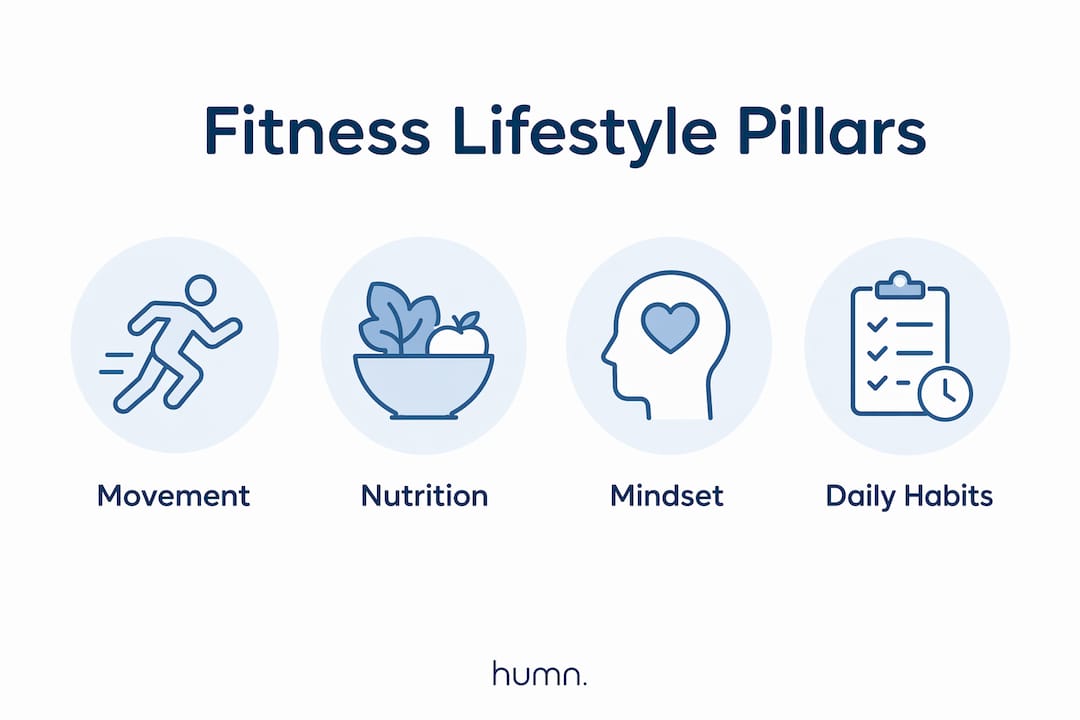
Movement includes more than gym sessions. Strength training builds metabolic resilience and protects joints. Cardio supports heart health and endurance. Lifestyle-integrated functional exercise embeds strength and balance into daily tasks, like carrying groceries with intent or taking stairs with purpose, making movement sustainable even on the busiest days.
Nutrition is not about restriction. It is about awareness. Mindful eating, macronutrient balance, and personalized meal planning replace reactive food choices with deliberate ones. You do not need a perfect diet. You need a consistent one.
Mindset is the least visible pillar and the most critical. Without the right mindset, even ideal nutrition and workouts will eventually fail. Psychological readiness, the ability to stay committed when motivation drops, separates people who sustain change from those who restart every January.
Habit formation is where science meets daily life. Research shows a minimum six-week period is the baseline for exercise to shift from a chore to an automatic behavior. That six-week mark is not the finish line. It is the point where the habit starts to carry itself.
- Sleep: 7–9 hours per night supports muscle repair, hormone regulation, and cognitive function
- Stress management: chronic stress elevates cortisol, which directly undermines fat loss and recovery
- Hydration: adequate water intake supports energy, digestion, and physical performance
- Social support: accountability from a coach or community significantly increases long-term adherence
Pro Tip: Schedule your workouts the same way you schedule meetings. Non-negotiable time blocks remove the daily decision of whether to train, which is where most people lose momentum.
How do fitness transformation programs typically work?
Structured programs give the transformation process a framework. Without structure, good intentions scatter. Fitness transformation programs use 30, 60, and 90-day time-bound milestones to track progress and maintain momentum. Each interval serves a different purpose.
- Days 1–30: Establish baseline habits. Learn movement patterns. Build consistency before intensity.
- Days 31–60: Increase training load progressively. Refine nutrition. Identify and address early obstacles.
- Days 61–90: Consolidate gains. Test resilience. Shift from program-dependent to lifestyle-dependent behavior.
Progress tracking is not optional. Tracking with a training notebook is one of the most effective tools for sustaining commitment and measuring biological adaptation over time. Photos, body measurements, and training logs each capture different dimensions of progress that the scale alone misses.
| Tracking Method | What It Measures |
|---|---|
| Training notebook | Strength gains, volume, and workout consistency |
| Progress photos | Visual body composition changes over weeks |
| Body measurements | Inches lost or gained in specific areas |
| Health risk assessments | Metabolic markers, blood pressure, and energy levels |
Programs that work also combine nutrition guidance, behavior modification, and lifestyle pillars rather than focusing on exercise alone. Stress management, hydration, and sleep protocols sit alongside workout calendars in the best programs. That breadth is what separates a fitness lifestyle program from a simple training plan.
Why do most fitness attempts fail?
Most fitness attempts fail because they treat motivation as a fuel source. Motivation is not reliable. It peaks at the start of a new program and fades within weeks. People who depend on it will restart the same program every few months and wonder why nothing sticks.
The deeper problem is a short-term mindset. Crash diets, extreme workout schedules, and 21-day challenges produce results that disappear the moment the program ends. Permanent lifestyle transformation requires a non-negotiable, daily health commitment that extends well beyond any challenge period. That commitment is built through systems, not motivation.
Discipline and progression over perfection fuel lasting lifestyle transformations. The person who trains consistently at 80% effort for two years will always outperform the person who trains at 100% for three weeks and burns out.
One-size-fits-all programs also fail because they ignore individual biology, schedule, and preference. People sustain activity longer when it involves movements they enjoy rather than exercises they dread. A person who loves hiking will not stick to a treadmill program. A person who enjoys group settings will struggle training alone.
- Lack of personalization leads to poor adherence
- Unrealistic timelines create disappointment and dropout
- No accountability removes the external structure that supports new habits
- Ignoring recovery leads to injury and burnout
- Focusing only on aesthetics ignores the deeper motivators that sustain change
Accountability and behavior tracking increase fitness habit automaticity. When you track behavior and have someone checking in on your progress, the habit loop strengthens faster and holds longer under stress.
How to start building fitness lifestyle changes daily
Starting a fitness lifestyle change does not require a perfect plan. It requires a specific one. Vague goals like “get healthier” produce vague results. SMART goals, which are specific, measurable, achievable, relevant, and time-bound, give your effort direction and a way to measure success.
Pro Tip: Write your fitness goal as a sentence with a number and a date. “I will complete three strength sessions per week for the next eight weeks” is a goal. “I want to get stronger” is a wish.
The LiFE program approach offers a practical model for embedding movement into daily life. Instead of adding exercise on top of an already full schedule, you integrate it into what you already do. Balance exercises while brushing your teeth. Calf raises while waiting for coffee. Strength-based movements during household tasks. These micro-habits compound over time.
- Set one non-negotiable workout time per day and protect it
- Use a training log or app to record every session, no matter how short
- Identify your top two stress triggers and build a recovery response for each
- Prioritize sleep as a training variable, not a luxury
- Find one physical activity you genuinely enjoy and build your program around it
The role of mindset in this process cannot be overstated. Setbacks are not failures. They are data. The person who treats a missed workout as information rather than evidence of weakness will always return to the gym faster than the person who treats it as proof they cannot change.
Key Takeaways
A fitness lifestyle transformation succeeds when sustainable habits replace short-term effort across movement, nutrition, mindset, and daily behavior.
| Point | Details |
|---|---|
| Permanence defines transformation | A true fitness lifestyle change makes healthy behavior automatic, not effortful. |
| Six weeks builds the habit baseline | Research shows exercise becomes automatic after a minimum of six weeks of consistent practice. |
| Programs use 30/60/90-day milestones | Structured intervals help track progress and shift behavior from program-dependent to lifestyle-dependent. |
| Mindset outlasts motivation | Discipline and consistency over perfection produce results that motivation-driven efforts cannot sustain. |
| Enjoyment drives long-term adherence | People sustain activity longer when they choose movements they genuinely enjoy. |
Why I think most people misunderstand what transformation actually means
People come to fitness with a finish-line mentality. They want to lose 20 pounds, run a 5K, or fit into a specific size. Those are fine goals. But the moment they reach them, or fail to, the behavior stops. That is not a transformation. That is a project.
What I have seen work, consistently, is when someone stops asking “how long will this take” and starts asking “how do I want to live.” That shift in framing changes everything. The workout is no longer punishment for what you ate. It is an expression of who you are becoming.
The hardest part of this work is not the training. It is sitting with the discomfort of not seeing immediate results and choosing to show up anyway. Consistency beats perfection every single time. The people I have watched build genuinely lasting fitness lifestyles are not the ones with the most discipline on day one. They are the ones who found a way to keep going on day 47 when nothing felt like it was working.
Balance matters too. A fitness lifestyle is not an obsession. It is a foundation. Sleep, stress, relationships, and recovery are not obstacles to your fitness goals. They are part of the program. The moment you start treating rest as weakness, you have already started moving backward.
— Josh
Personalized coaching that supports lasting fitness change
Adults who want more than a workout plan need a system that addresses the full picture: training, recovery, nutrition, and the habits that hold it all together.
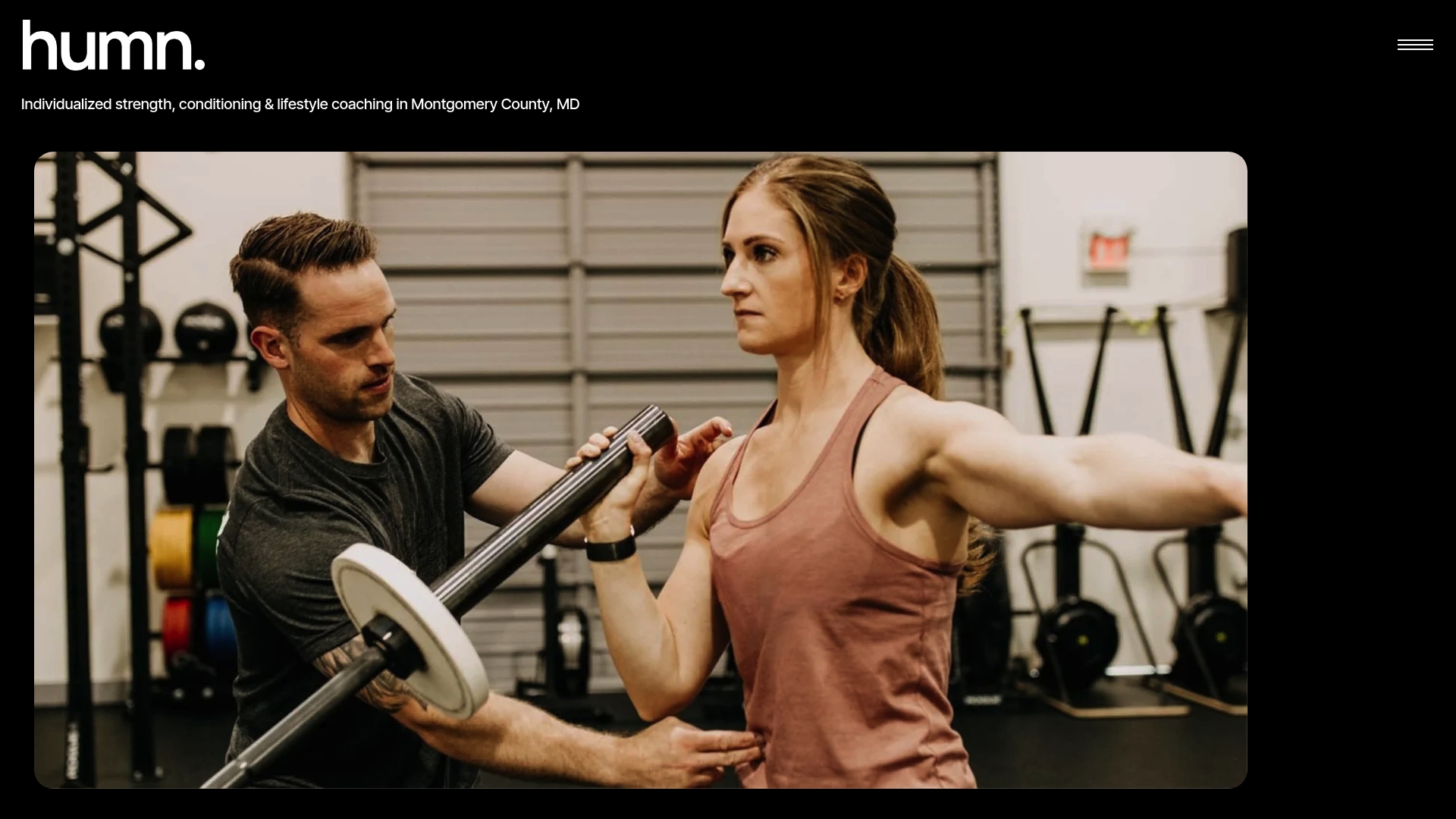
humn offers 1-on-1 fitness coaching built around the same principles covered in this article. Coaches work with you on behavior-based programming that goes beyond the gym floor to address sleep, stress, and long-term sustainability. The four-pillar framework at humn, Resist, Recover, Renew, and Rhythm, gives every client a structure that adapts to real life. If you are ready to build a fitness lifestyle that actually holds, explore what humn offers in Gaithersburg, MD.
FAQ
What is the difference between a fitness transformation and a lifestyle transformation?
A fitness transformation typically refers to physical changes like weight loss or muscle gain. A lifestyle transformation is broader, addressing habits, mindset, nutrition, sleep, and stress as a connected system.
How long does a fitness lifestyle transformation take?
Meaningful change begins within 30–90 days, but a true lifestyle transformation is ongoing. Research shows six weeks is the minimum for exercise to become an automatic habit.
What are the most important components of a fitness lifestyle?
The core components are consistent movement, mindful nutrition, a growth-oriented mindset, and daily habits that support sleep and stress recovery. Removing any one of these weakens the overall system.
Why do fitness transformations fail so often?
Most fail because they rely on motivation rather than systems, use one-size-fits-all plans, and lack accountability. People sustain activity longer when programs are personalized and include movements they enjoy.
Can I start a fitness lifestyle transformation without a coach?
Yes, but a coach accelerates the process significantly. Accountability and behavior tracking increase habit automaticity, and personalized programming reduces the trial-and-error that causes most people to quit early.
No Comments.