


What actually happens during your first personal training session
Your first personal training session is not a workout. It’s an assessment, a conversation, and a starting point. The whole thing typically runs 45–60 minutes, and you will not leave gasping for air. The goal is information gathering, not exhaustion.
Here’s what you can expect the session to cover:
- An intake conversation lasting several minutes about your goals, health history, and lifestyle
- Basic movement screening: squats, hinges, pushes, pulls, and core patterns
- A light introductory workout focused entirely on form, not intensity
- Coaching cues and real-time feedback on how you move
- A brief discussion of next steps, session frequency, and your training plan
That structure is intentional. Certified trainers working within frameworks like the NASM OPT™ model and ACE guidelines treat the first session as a foundation-building phase. Nothing about it is designed to test you. Everything about it is designed to understand you.
How to prepare for your first personal training session
Preparation makes a real difference, and most of it takes less than 10 minutes. Show up ready, and your trainer can spend the session actually coaching you instead of working around gaps in information.
What to wear and bring:
- Comfortable athletic clothing you can move freely in. Jeans, sandals, or anything restrictive will limit the movement assessment.
- Supportive shoes. Running shoes or cross-trainers work well.
- A water bottle.
- A written list of your specific goals and any injuries, surgeries, or chronic conditions. Don’t assume your trainer will ask the right questions. Bring the information proactively.
What to eat: A light snack 1–2 hours before the session gives you enough energy to move without feeling sick. Avoid a heavy meal right before. Showing up completely fasted isn’t ideal either.
Mental preparation: You’re not being evaluated for a job. Your trainer’s only goal is to understand where you’re starting so they can build something that actually works for your body. If you’re new to structured fitness, reading up on beginner strength training before your session can help you feel more grounded walking in.

Pro Tip: Write down three specific goals before your session. Not “get fit,” but something like “build enough leg strength to hike without knee pain by summer.” The more specific you are, the more precisely your trainer can design your program.
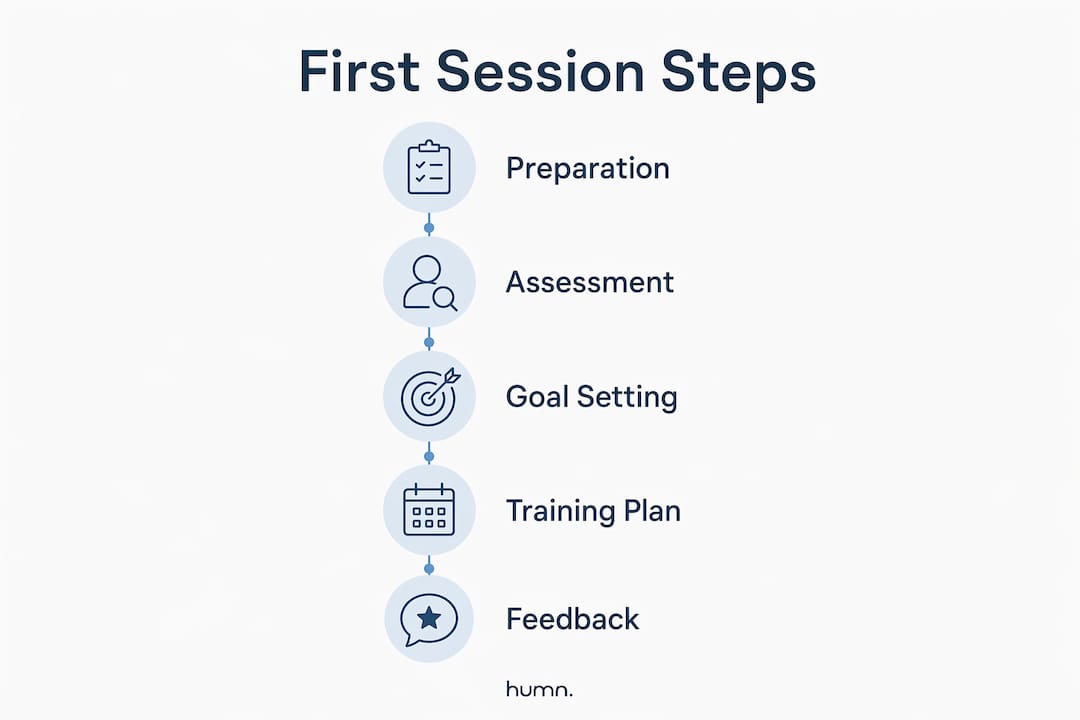
What happens step by step during the session
Understanding each phase removes the guesswork. Here’s how a well-run first session unfolds.
-
The intake conversation. Your trainer asks about your goals, fitness background, health history, stress levels, sleep, and how often you can realistically train. This diagnostic conversation helps them identify your internal motivations and personalize your program from day one. Be honest, especially about limitations. A trainer can only build a good plan if they know the real situation.
-
Movement screening. You’ll perform fundamental patterns: a squat, a hinge, a push, a pull, and some core work. Nothing heavy. Your trainer watches for mobility restrictions, stability issues, compensation patterns, and asymmetries between sides. Movement screens reveal imbalances that aren’t visible without seeing you move, which is exactly why disclosing your full injury history matters so much here.
-
Light introductory workout. After the screen, you’ll do actual exercise, but at low intensity. Think goblet squats, dumbbell rows, and basic core work. The trainer is watching how you respond, teaching you what correct movement feels like, and gauging your current fitness without pushing you past a safe threshold.
-
Coaching cues and real-time feedback. Expect your trainer to talk throughout the workout. “Chest up.” “Drive through your heels.” “Brace your core.” This is the whole point of working with someone instead of going solo. Those cues are building the movement patterns you’ll use for every session that follows. If you’re curious about how accessible fitness approaches like Pilates complement this kind of movement foundation, beginner-friendly programs can offer useful context.
-
Plan discussion and next steps. The session closes with a brief conversation about training frequency, what to do between sessions, and what the first few weeks will look like. Twice a week is common for beginners. If your trainer hasn’t explained the plan or scheduled the next session, ask. You’re paying for structure.
Common misconceptions about the first session
The biggest one: people think they need to perform. They push harder than they should, hide limitations, and try to impress their trainer in the first 45 minutes. Trainers prefer honesty about limitations over faked intensity every time. Accurate baselines lead to safer, smarter programming. Inflated effort on day one leads to a program built on bad data.

The first session is also not a judgment of your body or your fitness level. Professional trainers work with people at every starting point. They’re analyzing how you move, not how you look in gym clothes. If you feel self-conscious, that’s normal. It fades fast once the session gets going.
Soreness the next day is normal. Severe soreness that lasts more than three or four days is not. A well-calibrated first session produces mild delayed onset muscle soreness (DOMS), which peaks around 24–48 hours after the workout. A good trainer holds back on day one specifically to avoid crushing you before you’ve had a chance to build momentum.
One more myth worth naming: the idea that you need to be fit before hiring a trainer. That’s backwards. The whole point of working with a certified professional is to get you from where you are now to where you want to be, safely and efficiently.
What to expect after your first session
The day after, you’ll likely feel some muscle soreness in areas you don’t normally use. That’s expected. Rest, hydrate, and eat well. Your body is adapting.
Here’s what to focus on in the days that follow:
- Hydrate consistently. Aim for three to six cups of fluids daily, and more on days you train hard.
- Prioritize sleep. Seven to nine hours supports muscle repair and recovery, not just for your muscles but for your entire system.
- Do the work between sessions. Progress happens mostly outside your training appointments. Your trainer’s job is to instruct and empower you to act independently throughout the week.
- Show up to the next session. Consistency in the first 30 days builds the habit. The first session sets the foundation; the sessions after it build the structure.
- Communicate with your trainer. If something felt off, if a movement caused discomfort, or if the intensity felt too easy or too hard, say so. That feedback shapes your next session.
The first session serves as an instructional phase, not the source of all your progress. What you do independently between appointments determines how fast you improve.
Expert tips for getting the most from your first session
Certified trainers consistently point to a few behaviors that separate clients who build momentum quickly from those who stall out early.
Be specific about your goals. “Lose weight” gives your trainer almost nothing to work with. “Lose 15 pounds before my daughter’s wedding in october” gives them a timeline, a motivation, and a target. Specific, personal goals enable trainers to personalize programs and support long-term adherence in ways that vague goals simply can’t.
Pro Tip: Bring a written list of every injury, surgery, or chronic condition you’ve had, even ones that feel old or minor. A previous ligament tear or disc issue can require programming modifications your trainer needs to know about from the start.
Here’s a quick checklist of expert-backed habits to carry into your first session and beyond:
- Disclose everything: injuries, medications, stress levels, sleep quality
- Ask your trainer to explain the “why” behind any exercise you don’t understand
- Treat the first session as the beginning of a system, not a one-time event
- Set milestone wins for the first 30 days to build psychological momentum
- Understand that sustainable routine-building is the primary goal of early training, not immediate calorie burn
At humn, coaches take this systems-based approach seriously. The intake process, movement assessment, and programming are all designed to build a foundation that holds up over months, not just weeks. If you want to understand what that kind of coaching looks like in practice, 1-on-1 fitness coaching built around your specific life is where it starts.
Ready to take the first step with humn?
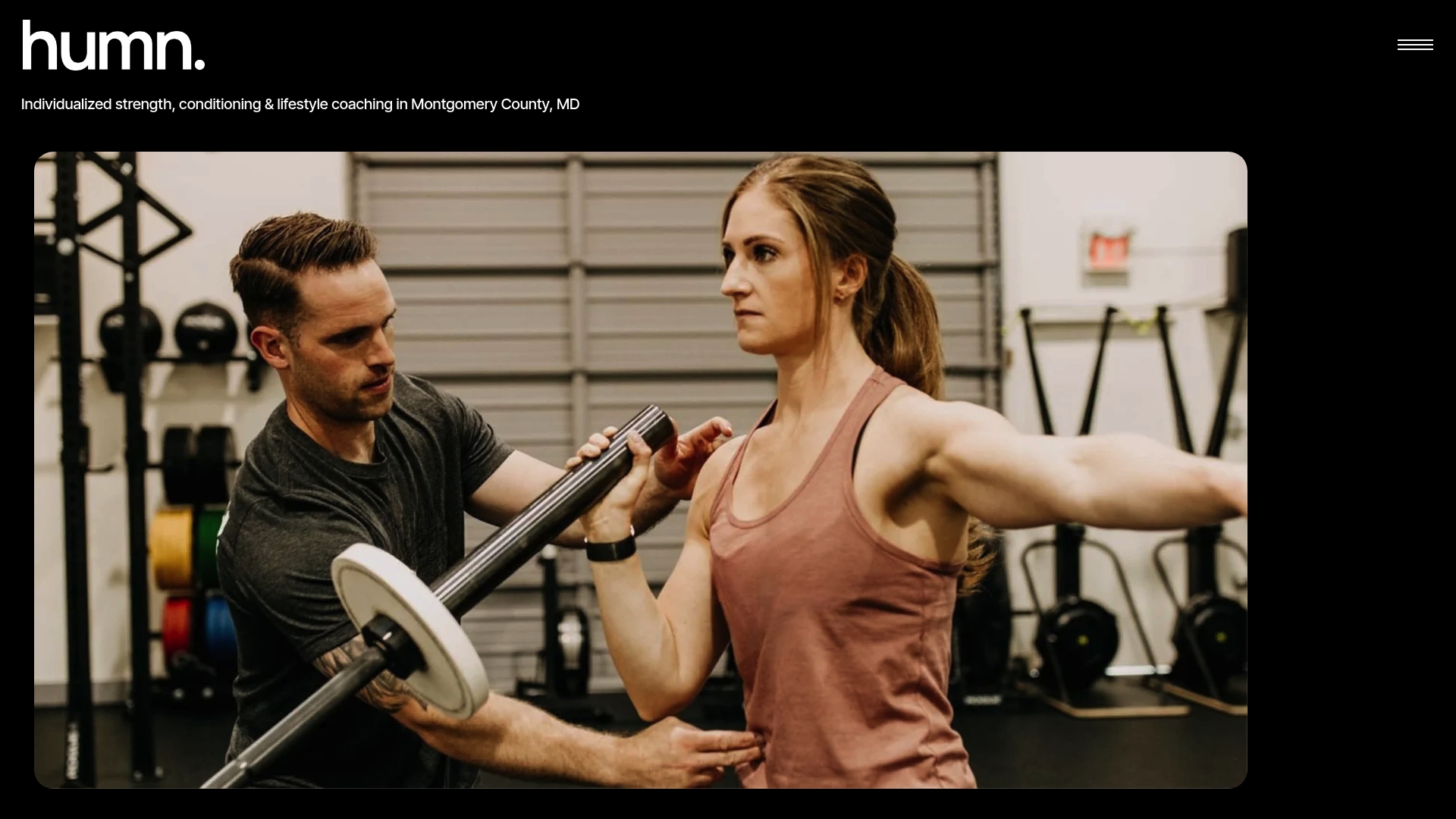
humn is a premium coaching facility in Gaithersburg, MD, built around one idea: fitness that fits your actual life. Whether you’re walking into your first session ever or returning after years away, humn’s coaches meet you exactly where you are. The four-pillar framework (Resist, Recover, Renew, and Rhythm) means your program addresses strength, recovery, sleep, and stress, not just what happens in the gym. Explore personal training at humn and see what a first session built around you actually looks like.
Key Takeaways
Your first personal training session is an assessment and foundation-building phase, not a test of fitness, and what you do between sessions determines how fast you progress.
| Point | Details |
|---|---|
| Session length and structure | A first session typically runs 45–60 minutes, covering a conversation, movement screen, light workout, and plan discussion. |
| Prepare with specifics | Bring a written list of goals and your full injury history; specific goals enable more precise programming from day one. |
| Honesty over performance | Trainers prefer accurate baselines over inflated effort; disclosing limitations leads to safer, smarter programming. |
| Soreness is normal, severity is not | Mild DOMS peaking 24–48 hours after the session is expected; severe soreness lasting beyond three to four days is a signal to flag. |
| Progress lives between sessions | The first appointment instructs and empowers you; consistent independent work between sessions drives actual results. |
No Comments.