

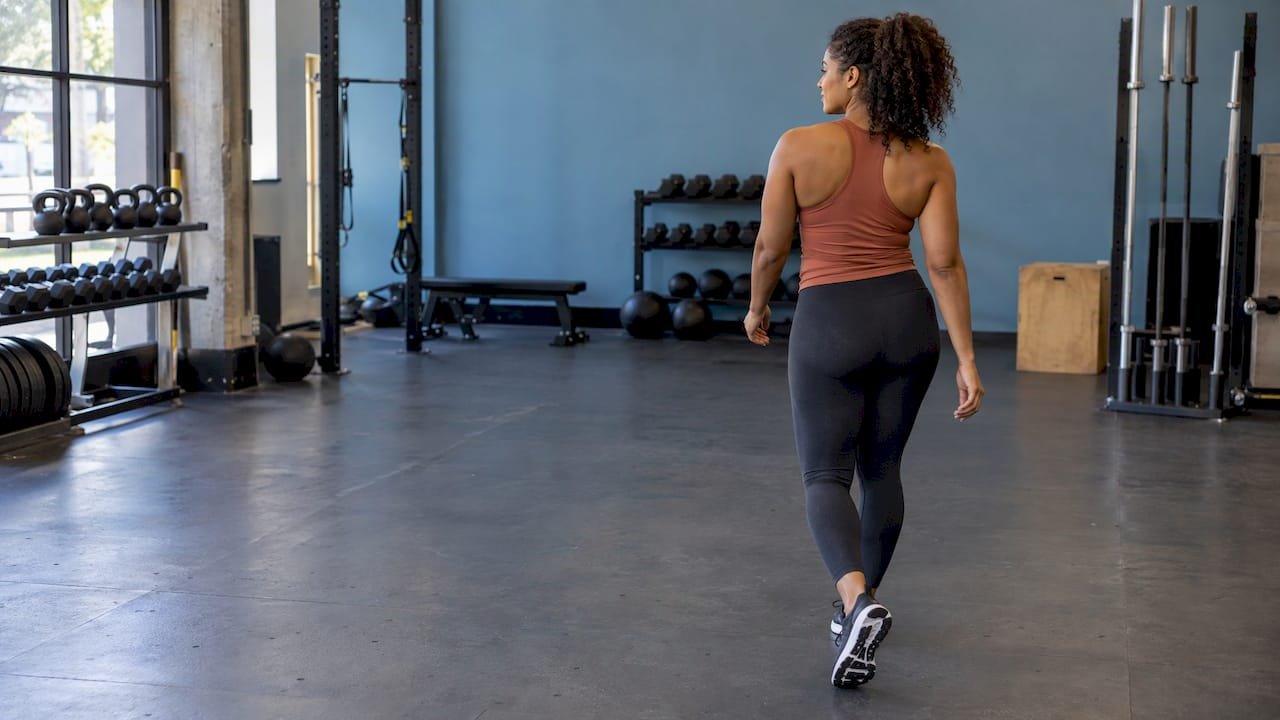
A good cool down routine takes 5 to 10 minutes and has three parts: easy movement to bring your heart rate down, a few stretches for the muscles you just worked, and slow breathing to settle your nervous system. Do it after any workout of moderate or higher intensity. Make it longer after harder sessions and shorter after easy ones. Below is the full plan, the reasoning behind each step, and what the research does and does not promise.
TL;DR
- Keep moving at an easy pace for 3 to 5 minutes first, then stretch, then breathe slowly. Total time is usually 5 to 10 minutes, and 3 minutes is the floor.
- The main job of a cooldown is a gradual drop in heart rate and blood pressure, which helps prevent dizziness and lightheadedness.
- After lifting, start with dynamic moves and save held stretches for the very end, holding each for 30 to 60 seconds without bouncing.
- Stretching is a comfort and mobility habit, not a proven cure for soreness. Treat it as part of recovery, not the whole of it.
- Chest pain, notable dizziness or serious shortness of breath means stop and get medical help.
Table of Contents
- Why a cooldown is worth the five minutes
- How long should a cooldown take?
- The cool down routine, step by step
- Stretching after lifting: a sample sequence
- Cardio cooldown vs. strength cooldown
- Common cooldown mistakes
- Our perspective
- When to stop and get medical help
- Make recovery part of your training
- FAQ
- Sources
Why a cooldown is worth the five minutes
The clearest reason to cool down is circulation. When you exercise hard, your heart rate and blood pressure climb. Cleveland Clinic’s Feakes says the most important reason to cool down is that those changes reverse gradually rather than abruptly, which can be jarring for your body. Mayo Clinic says a cooldown lets your heart rate and blood pressure slowly recover to pre-exercise levels.
Your calves play a role here. Mayo Clinic Press describes them as a pump that sends blood back toward the heart, and notes that if you stop suddenly after intense exercise, blood can pool in your legs, reducing flow to the heart and brain. That is a common cause of feeling faint right after a hard session. If you want to read more on how gradual recovery supports circulation, this explainer on improving heart rate variability is a good next stop.
There is also a mental side. Houston Methodist physical therapist Dr. Corbin Hedt describes a cooldown as a transition: your chance to taper from high effort back to rest, helping your nervous system shift out of fight-or-flight. For busy professionals who go from a workout straight into a meeting or a commute, that shift matters.
What a cooldown does not do
It helps to set honest expectations, because older advice oversold this step.
- It does not flush out lactic acid. Dr. Hedt calls that an old-school myth. The real value is circulation, flexibility and the nervous system shift.
- It is not a guaranteed fix for soreness. Mayo Clinic notes that cooling down doesn’t seem to reduce muscle stiffness and soreness, though more research is needed. A 2025 expert consensus statement also concluded that stretching is not recommended as a recovery routine specifically for soreness, while leaving room for personal preference because reviews show no harm.
- It will not prevent injuries on its own. Harvard Health says a cooldown won’t prevent workout injuries but helps prevent cramps and dizziness.
An academic review of active cool-downs found some possible advantages over simply stopping, including faster lactate removal from the blood and partial protection against immune depression. So the case for cooling down is real, modest, and strongest for how you feel in the minutes after you finish.
How long should a cooldown take?
Match the length to the intensity of the session. Mayo Clinic Press gives a practical scale, which we have put in a table:
| Workout intensity | Examples | Cooldown length |
|---|---|---|
| Low | Easy walk, gentle yoga | About 5 minutes |
| Moderate | Jogging, cycling, weight training | 8 to 10 minutes |
| High | Sprinting, heavy lifting, HIIT, competitive sports | 10 to 15 minutes |
The Mayo Clinic Press guidance pairs the longer end with gradual slowing and prolonged stretching. Other medical sources land in the same range. Houston Methodist suggests 5 to 10 minutes, and Harvard Health suggests five to 10 minutes. UW Medicine says 10 to 15 minutes, longer after something very taxing like marathon training.
If you are truly short on time, do not skip it entirely. Feakes says 3 minutes is the absolute minimum, because your heart rate and systolic blood pressure need time to come down before you stop completely.
One upper limit applies if you use an active cooldown: the academic review recommends keeping it under about 30 minutes at low to moderate intensity so it does not interfere with glycogen resynthesis. Most people never get near that.

The cool down routine, step by step
Cleveland Clinic’s Feakes breaks a cooldown into three stages: movement, stretching and mindfulness. This is the order we recommend, with sample timing for a 10-minute version.
Step 1: Easy movement (3 to 5 minutes)
Keep going, but slowly. UCSF Cardiac Rehabilitation suggests walking on a treadmill or pedaling a stationary bike at an easy pace for 5 to 10 minutes to lower blood pressure and heart rate and keep blood from pooling in your limbs. After a run, Mayo Clinic suggests walking briskly for 5 to 10 minutes; after a brisk walk, walk slowly for the same time.
After lifting, the same idea works with whatever is nearby: a slow lap of the floor, an easy bike or a gentle march in place. Harvard Health recommends walking around or marching in place until your heart rate and breathing are slowing down. A simple check: you should be able to speak in full sentences, and your breathing should feel quiet.
The academic review adds that an active cooldown works best when it is low to moderate in intensity and impact, and uses an activity you like.
Step 2: Dynamic moves, then stretches (3 to 5 minutes)
Dr. Hedt’s advice is to begin with active stretching and save static stretches for the very end. For strength sessions he suggests bodyweight squats, arm circles, cat cow and downward dog.

Then move into held stretches for the muscles you trained. UW Medicine recommends holding static stretches 30 to 60 seconds while muscles are warm, repeating three to five times, and not bouncing, since bouncing can raise muscle tension and cause harm. UCSF notes that mild discomfort is fine but sharp or intense pain is not. If you are short on time, Men’s Health coach Sam Pogue suggests holding each stretch about 15 seconds and breathing deeply at the end of the range.
Step 3: Slow breathing (1 to 2 minutes)
Finish with Feakes’s third stage, mindfulness, such as meditation or breathwork. Lie down or sit, breathe in through your nose for about four counts, and breathe out a little longer. This is where the nervous system shift happens. If you want a longer protocol, our guide to breathwork for stress walks through it, and our piece on mindfulness in your fitness routine shows how to make it a habit.
Stretching after lifting: a sample sequence
Search interest in stretching after lifting is high for a reason: tight, heavy muscles are the thing you notice most. Pogue describes the post-lifting goal as decompression: lifting shortens and tightens muscles, and decompression helps them return to resting length, promotes blood flow and encourages a parasympathetic response.
Here is a sequence that covers the major areas in about five minutes. Pick the stretches that match what you trained, and hold each according to the guidance above.
| Order | Move | Focus | Hold or reps |
|---|---|---|---|
| 1 | Bodyweight squats, slow | Hips, knees, ankles | 8 to 10 reps |
| 2 | Arm circles | Shoulders | 10 each direction |
| 3 | Cat cow | Spine | 8 to 10 slow reps |
| 4 | Downward dog | Calves, hamstrings, shoulders | 30 seconds |
| 5 | Kneeling hip flexor stretch | Front of hips | 30 seconds per side |
| 6 | Standing quad stretch | Front of thighs | 30 seconds per side |
| 7 | Seated forward fold | Hamstrings, low back | 30 to 60 seconds |
| 8 | Child’s pose with slow breathing | Back, shoulders | 1 minute |
The first four moves are dynamic, the last four are static, which follows the order Dr. Hedt recommends. The 30-second holds are a middle ground within the ranges cited above; extend them toward 60 seconds when you have the time.
If you lift often and feel stiff in the hips or shoulders, a short dedicated mobility session on a separate day does more than a longer cooldown. Our mobility drills for lifters take 10 to 15 minutes.
Cardio cooldown vs. strength cooldown
The goal shifts slightly with the type of session. Dr. Hedt explains that after cardio, the cooldown aims to gradually lower heart rate and support metabolic recovery. After strength training, it helps muscles, joints and connective tissue by keeping blood flowing to the muscles you worked as they return to rest.
In practice:
- After cardio: spend more of your time on the movement stage. Slow from a jog to a brisk walk to an easy walk. Stretch the calves, quads, hip flexors and hamstrings.
- After lifting: shorten the walking portion and spend more time on the dynamic and stretching stages for the muscles you trained. A heavy lower-body day deserves the longer end of the range.
- After a mixed or high-intensity session: do both, and plan for 10 to 15 minutes.
Common cooldown mistakes
- Stopping and sitting down right away. This is the situation where blood pooling and lightheadedness show up. Keep walking first.
- Stretching cold, fast or with bounce. Stretch after you have warmed up and let the heart rate settle, hold steady and skip the bouncing.
- Pushing into sharp pain. Mild tension is the target. Sharp pain means back off.
- Treating it as a soreness cure. Expect a calmer body and easier breathing, not guaranteed freedom from soreness.
- Skipping it when you are pressed for time. Three minutes of easy walking still beats walking straight to your car.
If you want to plan the hours after training as well, our 24-hour workout recovery plan picks up where the cooldown ends, and our ideas for active recovery on rest days cover the days between sessions.
Our perspective
At humn., we treat the cooldown as the first step of recovery, not an afterthought you squeeze in if the class ran long. Our approach is built around four pillars, Resist, Recover, Renew and Rhythm, and the cooldown is where Resist hands off to Recover.
What we see with busy professionals is that the session itself is rarely the problem. The problem is the jump from a hard effort straight back into email. We coach members to build a short, repeatable transition: easy movement, a few deliberate stretches, slow breathing. It is small, but it is a habit, and habits are what make training sustainable.
We also think the honest framing serves you best. A cooldown will not make soreness disappear, and we do not promise that. What it does is help you finish feeling steady, and it builds the routine of paying attention to your body that long-term progress depends on. That is why our coaches build recovery, sleep, stress and nutrition into your plan rather than leaving them to chance.
Josh
When to stop and get medical help
Most cooldown discomfort is mild tightness. A few signs are different, and they call for action rather than more stretching.
- Stop and call your doctor or 911 for notable dizziness or faintness, chest pain, or significant or persistent shortness of breath during or after exercise, per Harvard Health.
- Call your doctor for muscle pain that is intense or persistent and starts during or right after a workout, or that lasts more than one to two weeks. Soreness that begins 12 to 24 hours after exercise is normal, according to the same Harvard Health guidance.
- If you have a heart condition, OHSU’s cardiac precautions say to stop exercise for chest, jaw, arm or mid-back pain, extreme shortness of breath, dizziness, nausea or lightheadedness. Follow your care team’s plan for cooling down.
- If you have low blood pressure, Harvard Health advises slowing down gradually over at least five minutes, or longer if you notice symptoms, and not stopping abruptly while standing. If you have high blood pressure, see our guide to strength training with high blood pressure.
- In hot conditions, heat cramps can be an early warning of heat exhaustion. Cleveland Clinic says to seek medical care right away, move somewhere cooler and cool the body.
If you are returning after an injury, ask your clinician what is safe before adding stretches, and see our 4-week plan to restart fitness after injury.
Make recovery part of your training
A cooldown is the easiest recovery habit to start, and it works best inside a bigger system. At humn. in Gaithersburg, MD, members train in small groups or one-on-one with dedicated coaches, and recovery is built into the week. Our recovery space offers sauna, compression, red light therapy and acupuncture, and our coaches help with sleep, stress and nutrition habits so each session builds on the last. If you are wondering how a sauna fits after training, read our guide to post-workout sauna timing.
If you want a coach to build your training and recovery routine around your schedule, explore humn. membership. If nutrition is the missing piece, look at our 1:1 nutrition coaching.
FAQ
Is a cooldown really necessary after every workout?
It matters most after moderate or hard sessions. Dr. Hedt says a cooldown should follow any activity of moderate or greater intensity, and the harder the workout, the more the transition matters. After a light walk, the walk itself is its own cooldown.
Should I stretch before or after lifting?
Save held stretches for after, when muscles are warm. Before lifting, use dynamic movement to prepare. Men’s Health’s Pogue notes that stretching is most effective right after a workout because muscles and joints are warm. Keep the stretches gentle and avoid bouncing.
Does cooling down prevent muscle soreness?
The evidence says not reliably. Mayo Clinic notes that cooling down does not seem to reduce stiffness and soreness. Its clearer benefits are a gradual return of heart rate and blood pressure, fewer cramps and less dizziness.
What is the minimum cooldown I can get away with?
Three minutes of easy movement. Cleveland Clinic’s Feakes calls that the absolute minimum so your heart rate and blood pressure can come down before you stop. Add stretching and breathing when you have more time.
Can I use a sauna as my cooldown?
We suggest doing your easy movement and a few stretches first, then adding the sauna as part of recovery. Your heart rate should already be settling before you enter. Our post-workout sauna guide covers timing and frequency.
Sources
- Do We Need a Cool-Down After Exercise? A Narrative Review (PMC)
- Practical recommendations on stretching exercise: A Delphi consensus statement
- How to warm up and cool down for exercise (Mayo Clinic Press)
- Aerobic exercise: How to warm up and cool down (Mayo Clinic)
- If You’re Not Doing Cooldown Exercises After a Workout (Houston Methodist)
- Why You Shouldn’t Skip Cool-Down Exercises (Cleveland Clinic)
- Heat Exhaustion: Symptoms & Treatment (Cleveland Clinic)
- Avoid workout injuries (Harvard Health)
- Exercising with low blood pressure (Harvard Health)
- How to Cool Down After Exercise (UW Medicine Right as Rain)
- A Road Map to Effective Muscle Recovery (UCSF Cardiac Rehabilitation)
- Cardiac Precautions (OHSU)
- 5 Best Cooldown Exercises (Men’s Health)
- How to Improve Heart Rate Variability
No Comments.