


Most healthy adults should aim for 10 to 20 minutes per sauna session, with beginners starting at 5 minutes and experienced users capping heat exposure around 30 minutes total across multiple rounds. Finnish research from Jari Laukkanen’s cohort studies links frequent, shorter sessions to lower cardiovascular mortality, and a controlled trial found that a 15-minute postexercise sauna, done three times weekly, dropped systolic blood pressure by about 8 mmHg. Clinical guidance often recommends session times around 15 to 20 minutes for many people.
- Beginner: 5 minutes, one round, then reassess how you feel.
- Regular user: 10 to 20 minutes per session, 2 to 3 times a week.
- Advanced/experienced: up to 30 minutes of total heat exposure, typically split into 2 to 3 rounds with cooldowns between them.
Stop immediately if you feel dizzy, nauseated, or your heart is pounding. Anyone with heart disease, uncontrolled blood pressure, or who is pregnant should check with a doctor before starting.
Key Takeaways
Sauna duration should scale with experience level, with 15 to 20 minutes serving as the evidence-backed baseline for most healthy adults.
| Point | Details |
|---|---|
| Start conservative | Beginners should limit sessions to 5 minutes and add roughly 2 minutes weekly. |
| Match duration to sauna type | Dry saunas typically allow 10 to 15 minute rounds, while steam rooms cap near 10 to 15 minutes due to humidity. |
| Frequency drives benefit | 3 to 7 sessions weekly, each 15 to 20 minutes, aligns with observed cardiovascular gains. |
| Know your stop signs | Dizziness, chest pain, or confusion mean exit immediately and rehydrate. |
| Build sauna into a coached recovery plan | humn. integrates sauna access into its Recover pillar with individualized protocols tied to training load. |
Table of Contents
- How Long to Stay in a Sauna by Type and Experience Level
- Who Should Be Cautious or Skip the Sauna Entirely
- What Happens to Your Body at 5, 15, and 30 Minutes
- How Often Should You Use a Sauna to See Results
- Do’s, Don’ts, and How to Track Your Sauna Session
- How humn. Builds Sauna Into a Recovery Protocol
- Get a Sauna and Recovery Plan Built Around You
- Frequently Asked Questions
- Sources
How Long to Stay in a Sauna by Type and Experience Level
The right sauna duration depends on two things nobody talks about enough: what kind of heat you’re sitting in, and how many rounds you’re doing. A single 20-minute stretch in a 190°F dry sauna is a very different experience than 20 minutes in a 130°F infrared cabin.
Traditional dry sauna (150 to 195°F): beginners take one 5 to 10 minute round; regular users do 2 rounds of 10 to 15 minutes with a 5-minute cooldown between; experienced users run 3 rounds of 10 to 15 minutes, totaling up to 30 minutes of active heat time.
Infrared sauna (120 to 140°F): lower air temperature means longer tolerable sessions, often 20 to 30 minutes in one sitting since the heat penetrates tissue directly rather than superheating the air around you.
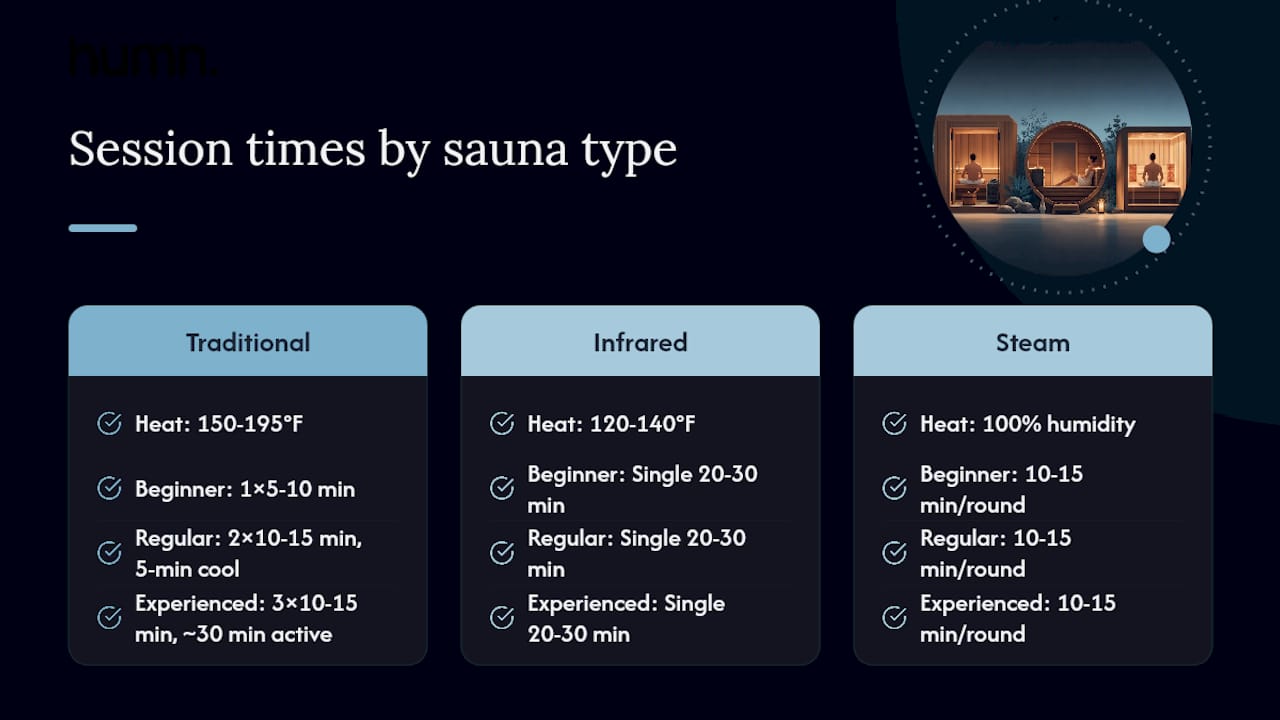
Steam room (100% humidity): the moisture makes heat feel far more intense, so even seasoned users typically cap sessions at 10 to 15 minutes per round.
Clinical trials frequently use sauna exposure sessions around 15 minutes, making this a common reference duration in guidance. The Finnish approach treats a full session as multiple rounds, not one long sit. Total active heat exposure across a session, including breaks for cooling and rehydrating, commonly lands around 45 to 60 minutes.
Who Should Be Cautious or Skip the Sauna Entirely
Sauna heat stresses your cardiovascular system on purpose. For most people that stress builds resilience. For some, it’s genuinely risky.
- Uncontrolled hypertension or a history of heart disease
- Pregnancy, without direct clearance from an OB-GYN
- Respiratory conditions that worsen in heat or humidity
- Recent illness with fever, or active infection
Certain medications change the equation too. Diuretics compound fluid loss, some antihypertensives blunt your body’s ability to regulate blood pressure under heat stress, and stimulants can push your heart rate into uncomfortable territory. If you take any of these regularly, ask your clinician before making sauna a habit rather than finding out the hard way.
Know the stop-now signs: dizziness, chest pain, severe nausea, confusion, or fainting. Get out, cool down, and drink water. If symptoms don’t resolve quickly, seek medical attention.

Older adults and children need shorter, cooler exposures. A conservative rule for kids and seniors is half the standard adult time, with closer supervision throughout.
Pro Tip: Sit on a lower bench if you start feeling lightheaded. Heat rises, so the top bench in a traditional sauna can run 20 to 30 degrees hotter than the bottom one.
What Happens to Your Body at 5, 15, and 30 Minutes
Your heart rate climbs within the first few minutes as blood vessels dilate to move heat toward your skin. Sweating kicks in to cool you down, and you start losing fluid fast.
At 5 minutes, your body is still acclimating. This is calibration territory, useful for beginners to gauge tolerance without real strain. At 15 minutes, you’re in the window most trials actually study, long enough for measurable cardiovascular adaptation without pushing into dangerous territory for most healthy adults. At 30 minutes of continuous exposure, core temperature can climb toward 39 to 40°C, and dehydration and orthostatic hypotension risks rise sharply for many people.
Sauna tolerance depends heavily on fitness level, hydration status, and underlying health. What’s a comfortable 20 minutes for a fit, well-hydrated regular user could be genuinely risky for someone dehydrated or with an undiagnosed heart condition.
Most research behind these numbers comes from short-term trials with specific protocols. Treat them as a evidence-informed starting point, not a personal prescription.
How Often Should You Use a Sauna to See Results
Frequency matters as much as duration. Finnish observational data ties regular use to major cardiovascular benefit, and the pattern that works is short, repeated exposure rather than occasional marathon sessions.
- Weeks 1 to 2: 2 to 3 sessions weekly at 5 to 10 minutes each, just building tolerance.
- Weeks 3 to 4: increase by 1 to 2 minutes per session, aiming for 15 minutes by the end of the month.
- Ongoing maintenance: 3 to 4 sessions weekly at 15 to 20 minutes.
- Cardiovascular focus: 4 to 7 sessions weekly, tracking recovery and symptoms as you go.
- Beginners: 2 to 3 short sessions a week
- Regular maintenance: 3 to 4 sessions of 15 to 20 minutes
- Cardiovascular/recovery focus: build toward 45 to 60 minutes of total weekly heat exposure
The GQ health desk’s practical breakdown recommends adding roughly 2 minutes per session across the first month, which mirrors what most physiologists suggest for building heat tolerance without overreaching.
Do’s, Don’ts, and How to Track Your Sauna Session
Hydrate before and after, not just during. A glass of water beforehand and steady rehydration afterward matters more than sipping mid-session.
- Skip alcohol before or after; it amplifies dehydration and blood pressure swings.
- Cool down fully between rounds, don’t just wipe off sweat and jump back in.
- Bring a watch or phone timer; guessing at elapsed time is unreliable once you’re relaxed and warm.
- If lightheaded, sit low or lie down immediately.
Watch your urine color as a rough hydration gauge, and pay attention to how you feel the next morning, not just right after. If you’re pairing sauna with training, the 15-minute postexercise protocol shows real cardiovascular payoff, but only when your body is already reasonably recovered from the workout itself.
Pro Tip: Pack a small kit: water bottle, towel, timer, and a change of clothes. Half of “forgetting” to hydrate properly is just not having water within arm’s reach.
How humn. Builds Sauna Into a Recovery Protocol
At humn., sauna access sits inside the Recover pillar of our four-part framework: Resist, Recover, Renew, and Rhythm. A typical client protocol looks like this:
- Post-workout: 10 to 15 minutes of sauna heat while the body is already warm
- Cooldown: 5 minutes of rest and rehydration before leaving the facility
- Follow-up: a scheduled recovery session (compression, red light, or additional sauna access) within the week
Busy professionals often use the shorter end of that range for stress relief between meetings, while clients training for cardiovascular goals build toward more frequent, longer exposure under coach guidance. The protocol adjusts to the person, not the other way around.
A Coach’s View on Getting Sauna Timing Right
A realistic client routine looks like this: 12 minutes post-lift, a 5-minute cooldown with water, then a short walk before heading home. The number that matters isn’t a fixed target. It’s whether the client feels clear-headed and recovered afterward, not depleted. Coaches adjust session length week to week based on sleep, stress, and how the client’s body is responding, not a rigid formula.
Get a Sauna and Recovery Plan Built Around You
Figuring out your ideal sauna duration through trial and error takes months. humn. skips that guesswork by pairing sauna access with a coach who tracks your recovery data and adjusts your protocol in real time, something a standalone gym or spa membership simply can’t offer.

Our Gaithersburg facility integrates sauna, compression, and red light therapy directly into your training plan under the Recover pillar, so your heat exposure is calibrated to your actual workload instead of a generic chart. If you’re combining sauna with structured training, our coaches also draw on outside expertise like therapeutic exercise principles to keep your recovery and performance goals aligned. Schedule a consultation to see how 1-on-1 coaching can build sauna access into a plan that actually fits your week.
Frequently Asked Questions
How long should a beginner stay in a sauna?
Start at 5 minutes for your first few sessions. Once that feels comfortable, add a couple of minutes each week until you reach the standard 15 to 20 minute range.
What is the maximum time you should spend in a sauna?
Most experts treat 30 minutes as a practical ceiling for a single continuous session, even for experienced users, due to rising dehydration and heat-stress risk beyond that point.
Is it better to do one long sauna session or multiple short rounds?
Multiple short rounds with cooldowns, the traditional Finnish approach, tend to be safer and just as effective as one long sitting, since they let your body regulate temperature between exposures.
How long should you sauna after a workout?
A 15-minute session after training is the protocol used in controlled research showing blood pressure and fitness improvements, provided you’re already hydrated and reasonably recovered from the workout itself.
How often should you use a sauna each week?
Three to four sessions weekly supports general maintenance, while those chasing cardiovascular benefits often build toward 4 to 7 sessions, matching patterns seen in Finnish observational data.
This article is general information, not a substitute for advice from a qualified doctor. Consult a qualified healthcare professional about your own circumstances before acting on anything here.
Sources
Recommended
- Sustainable Fitness Schedules: Real Examples for Every Level – humn.
- Benefits of 1-on-1 Fitness Coaching for Professionals – humn.
- HUMN – Personal Training in Individualized strength, conditioning & lifestyle coaching in Montgomery County, MD
- How to Incorporate Mindfulness into Your Fitness Routine – humn.
No Comments.