

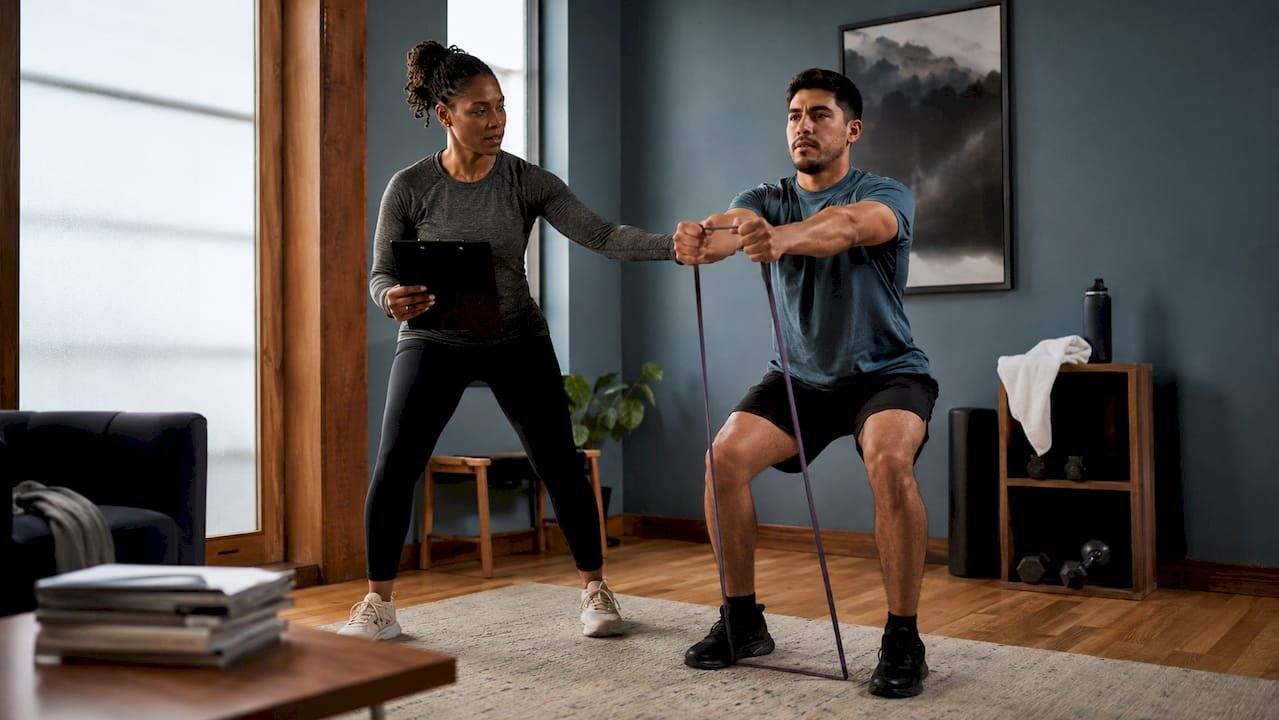
Personal training is a professional fitness coaching service where a certified trainer designs and delivers individualized exercise programs based on your specific goals, fitness level, and health history. Unlike a generic gym membership or a one-size-fits-all class, personal training puts a qualified coach in your corner, someone who watches your form, adjusts your program, and holds you accountable every step of the way. Understanding what is personal training explained in full means going beyond the workout itself. It covers technique, habit building, mental support, and long-term sustainability. humn, a premium coaching facility in Gaithersburg, MD, is built on exactly this kind of whole-person approach.
What is personal training, and how is it defined?
Personal training is defined as a structured, one-on-one or small-group coaching relationship where a certified fitness professional guides a client through exercise programming tailored to their individual needs. The industry term is “personal training,” and it sits under the broader umbrella of fitness coaching, which can also include lifestyle, nutrition, and behavioral support.
The core of personal training is personalization. A trainer does not hand you a generic plan. They assess where you are, where you want to go, and what stands between those two points. That gap becomes the program. Nearly all qualified trainers begin with a thorough assessment covering fitness baseline, injury history, and client goals. This removes guesswork before a single rep is performed.

Personal training also functions as personal accompaniment. Trainers provide mental support and lifestyle habit development alongside physical coaching. That distinction matters because most people do not fail at fitness due to lack of information. They fail due to lack of structure, support, and follow-through.
What are the main benefits of personal training?
The benefits of hiring a personal trainer extend well beyond getting a workout plan. The most significant gains come from three areas: consistency, safety, and results that actually last.
Consistency is the largest driver of fitness outcomes. Sustainable progress through consistency outperforms temporary high-intensity efforts every time. A trainer creates a schedule you show up to, which removes the daily decision of whether to work out. That psychological commitment is powerful.
Injury prevention is the second major benefit. Proper biomechanical instruction during personal training reduces the risk of chronic injuries like back pain and joint damage. Teaching neutral spine alignment, knee tracking, and hip hinging from the start protects you for years, not just the current training block.
Tailored programming is the third pillar. Effective trainers apply what experts call “program architecture,” which is the scientific, individualized selection of exercises, volume, and progression matched to your anatomy and lifestyle. A 55-year-old recovering from a knee replacement needs a completely different program than a 28-year-old training for their first 5K.
Here is a quick breakdown of common personal training benefits:
- Fat loss and body composition: Trainers design calorie-appropriate, progressive programs that produce measurable change.
- Strength gain: Structured progressive overload builds muscle safely over time.
- Improved confidence: Learning how to move well in a gym reduces intimidation and builds self-efficacy.
- Better posture and mobility: Targeted corrective work addresses imbalances most people carry from desk jobs or past injuries.
- Long-term adherence: Scheduled appointments and progress tracking create psychological commitment that increases workout adherence significantly.
| Session frequency | Typical outcome |
|---|---|
| 1 session per week | Maintenance and movement education |
| 2–3 sessions per week | Consistent strength and body composition progress |
| 4+ sessions per week | Advanced performance or accelerated fat loss goals |
Pro Tip: If you are new to training, start with two sessions per week and add a third once the habit is locked in. Frequency beats intensity at the beginning.
How does personal training actually work in practice?
Personal training follows a clear process. Understanding that process helps you get more out of every session.
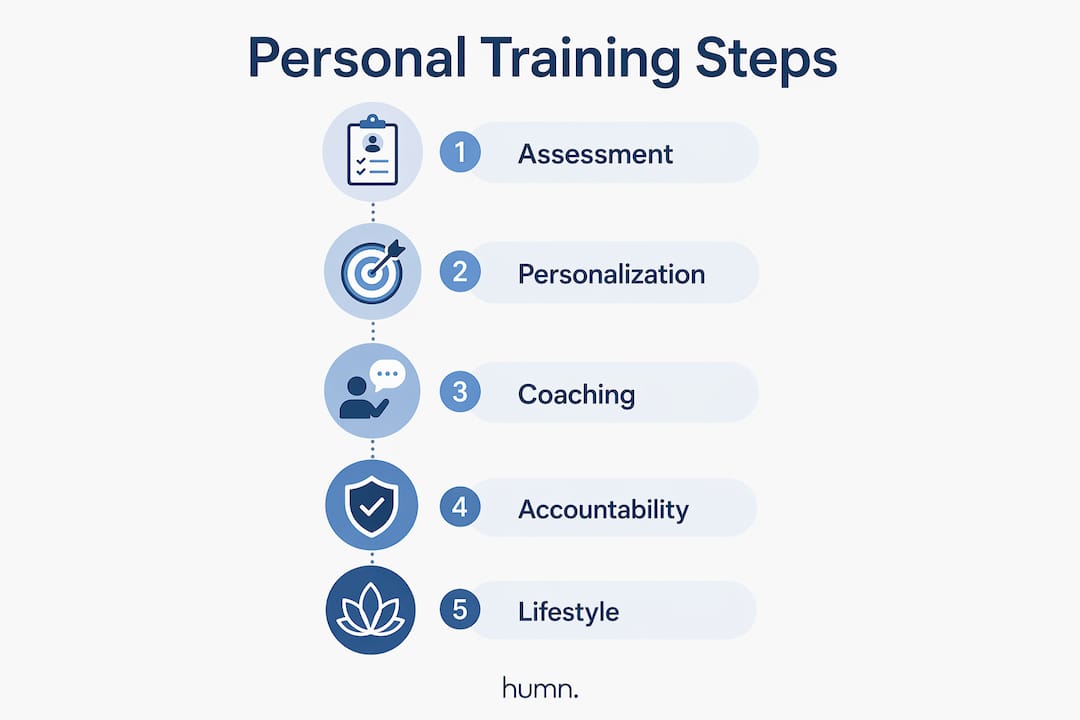
- Initial assessment. Your trainer evaluates your movement quality, cardiovascular fitness, strength baseline, and injury history. This session sets the foundation for everything that follows.
- Goal setting. You and your trainer align on specific, measurable targets. “Get stronger” becomes “deadlift bodyweight within 12 weeks.” Specificity drives programming decisions.
- Program design. The trainer builds a plan that matches your goals, schedule, and recovery capacity. Sessions typically run 45–60 minutes, two to three times weekly for most clients seeking consistent progress.
- Coaching during sessions. A trainer acts as a real-time biofeedback mechanism, correcting posture and cueing movement to build safe, sustainable motor patterns. This is where most of the learning happens.
- Progress tracking. Your trainer logs weights, reps, and performance metrics. That data tells both of you whether the program is working or needs adjustment.
- Program adaptation. Good programs adapt to fluctuations in your energy, recovery, and life circumstances. A stressful week at work changes what your body can handle. A smart trainer accounts for that.
The education piece is often underrated. You learn why you are doing each exercise, how to breathe through a lift, and how to read your own body. That knowledge compounds over time. Clients who understand evidence-based training methods make better decisions on their own, which is the whole point.
Pro Tip: Write down two or three things you want to work on before each session. Trainers appreciate specific feedback, and it makes your sessions more productive.
Who benefits most from personal training?
Personal training is not reserved for athletes or people who are already fit. That is one of the most persistent myths in the fitness world, and it keeps a lot of people from getting help they genuinely need.
Personal training delivers the highest value for four groups in particular:
- Beginners who need a safe movement foundation before adding load or intensity.
- Plateaued exercisers who have been training for a while but stopped seeing results.
- Older adults who need age-appropriate programming that protects joints and builds functional strength.
- People recovering from injury who need guided return-to-exercise protocols.
The table below addresses the most common misconceptions about who personal training is for.
| Common misconception | Reality |
|---|---|
| PT is only for athletes | Beginners benefit the most from professional guidance |
| You need to be fit first | Trainers meet you exactly where you are |
| It is just about exercise | Trainers also address habits, stress, sleep, and nutrition |
| Results stop when sessions end | Clients gain long-term independence through movement literacy |
| PT is a luxury, not a necessity | For injury prevention and adherence, it is often the most cost-effective path |
The mental and behavioral support a trainer provides is just as real as the physical coaching. Trainers translate complex fitness concepts into achievable actions and help clients push through self-doubt. For people who have tried and quit multiple times, that support is often the missing piece. Learning to balance fitness with the rest of life is a skill, and a good trainer teaches it.
What should you expect from personal training sessions?
Setting realistic expectations before your first session makes the experience far more productive. Here is what the process actually looks like.
Before your first session, wear comfortable workout clothes and bring water. Eat a light meal one to two hours beforehand. Be ready to talk about your health history, past injuries, and what you have tried before. Honest communication here shapes everything that follows.
During sessions, your trainer will coach you through exercises, count reps, correct your form, and push you when you have more in the tank. They will also pull back when your body signals it needs recovery. That real-time calibration is something no app or video can replicate.
Between sessions, your trainer may assign homework: mobility work, a short cardio session, or a habit to track. These touchpoints keep progress moving between appointments. Successful training is a compounding process, and consistent small efforts vastly outperform sporadic intense ones.
Personal training also integrates naturally with nutrition and lifestyle guidance. Most trainers are not registered dietitians, but they can point you toward better food habits, sleep practices, and stress management strategies. At humn, this integration is built into the coaching model through the Resist, Recover, Renew, and Rhythm framework. Clients who want to understand how to combine cardio and strength training get that guidance as part of the program, not as an add-on.
Pro Tip: Tell your trainer when something feels off, whether that is pain, fatigue, or low motivation. The more honest you are, the better they can adapt your program.
Key Takeaways
Personal training works because it combines individualized programming, real-time coaching, and behavioral accountability into a system that produces consistent, sustainable results.
| Point | Details |
|---|---|
| Personalization is the foundation | Every program starts with an assessment of your goals, fitness level, and injury history. |
| Consistency beats intensity | Showing up regularly to coached sessions drives better outcomes than sporadic hard efforts. |
| Injury prevention is built in | Proper technique instruction from day one protects joints and prevents chronic damage. |
| PT is for everyone | Beginners, older adults, and injury recoverers benefit most, not just advanced athletes. |
| Education creates independence | Clients develop movement literacy that supports self-led fitness long after sessions end. |
Why I think most people misunderstand what a trainer actually does
The most common thing I hear from people who have never worked with a trainer is some version of “I just need someone to tell me what to do.” That framing undersells the relationship by about 80%.
A great trainer is not a drill sergeant reading off a list of exercises. The real work happens in the space between sets: the conversation about why you skipped your last two sessions, the adjustment made because your shoulder is flaring up, the reframe that turns “I failed” into “I learned.” That is where lasting change gets built.
What I have seen consistently is that people who struggle with fitness are not lazy or undisciplined. They are operating without a system. A trainer provides the system. They also provide the mirror, not just for your squat form, but for the patterns and habits that keep you stuck. The physical results are real, but the behavioral shift is what makes them permanent.
The other thing most articles miss is that good personal training builds toward its own obsolescence. The goal is not to keep you dependent on a trainer forever. It is to give you the knowledge, confidence, and habits to own your fitness independently. That is a very different value proposition than just “someone to work out with.”
— Josh
Personal coaching at humn, built around you
humn offers 1-on-1 fitness coaching and small-group personal training in Gaithersburg, MD, designed for people who want real results without burning out. Every client starts with a full assessment, and every program is built around their specific goals, schedule, and recovery needs.
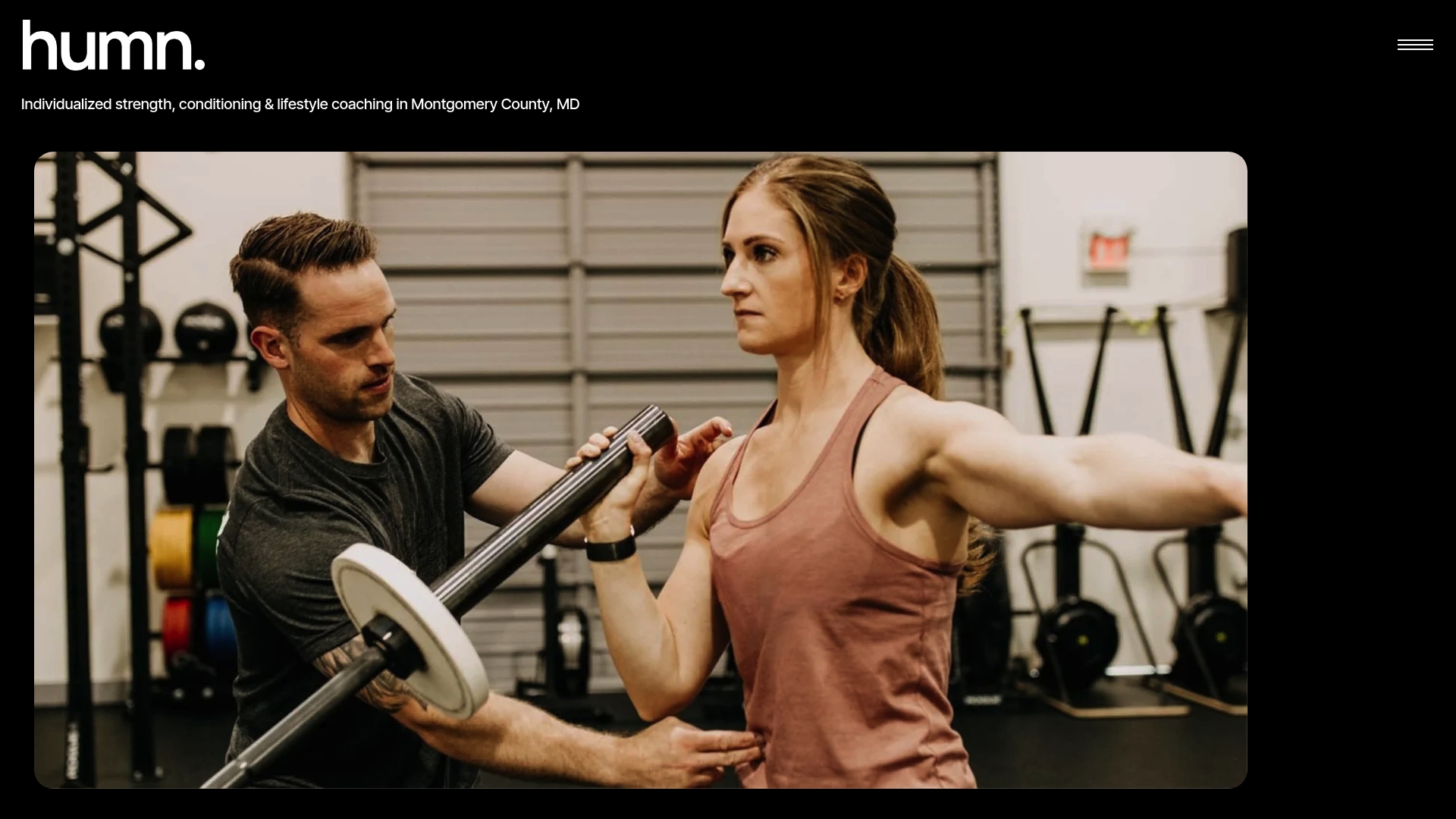
The coaching model at humn goes beyond the workout. It integrates strength, recovery, and lifestyle support through the Resist, Recover, Renew, and Rhythm framework. If you are ready to train with a system that actually fits your life, explore humn membership and find the right starting point for you.
FAQ
What is the definition of personal training?
Personal training is a professional fitness coaching service where a certified trainer designs individualized exercise programs and provides real-time guidance to help clients reach their health and fitness goals safely and consistently.
How often should I train with a personal trainer?
Most clients train two to three times per week in sessions lasting 45–60 minutes. That frequency produces consistent progress for the majority of fitness goals.
Is personal training only for people who are already fit?
Personal training benefits beginners most of all. Trainers meet clients at their current fitness level and build a safe foundation before adding intensity or complexity.
What does a personal trainer actually do during a session?
A trainer coaches your movement, corrects your form in real time, tracks your performance, and adjusts the session based on how your body responds that day. They also educate you on why each exercise matters.
How long does it take to see results from personal training?
Results depend on your starting point, goals, and consistency, but most clients notice measurable improvements in strength, energy, and movement quality within four to six weeks of regular sessions.
No Comments.