

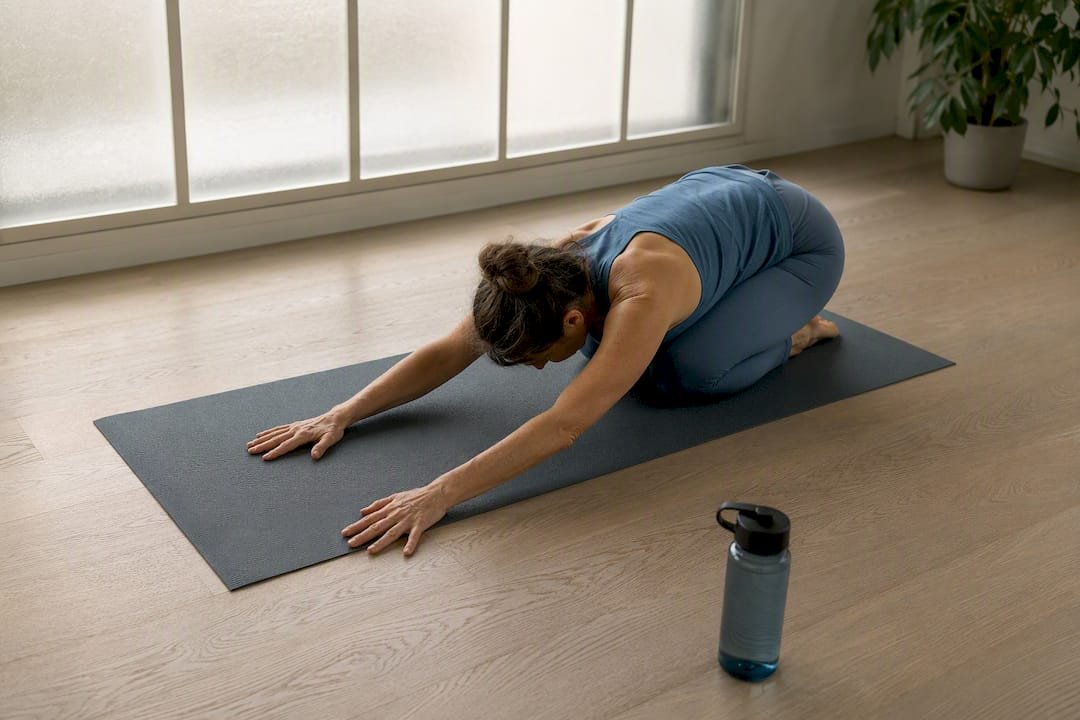
Active recovery means moving your body at low intensity, usually 20 to 30 minutes of walking, gentle yoga, or easy cycling, to boost blood flow without adding training stress. Keep effort around 30 to 60% of your max heart rate, or simply stay conversational: if you can talk in full sentences, you’re in the right zone. NASM backs this range, and it’s the same principle humn builds into client programming in Gaithersburg.
Quick options that fit almost any schedule:
- A brisk 20 minute walk outside or on a treadmill
- 15 minutes of restorative yoga focused on hips and shoulders
- Easy cycling at a cadence you could sustain for an hour
- Ten minutes of foam rolling followed by light mobility drills
Key Takeaways
Active recovery works because low-intensity movement at 30 to 60% max heart rate for 20 to 30 minutes clears metabolites and preserves mobility better than full rest for most people.
| Point | Details |
|---|---|
| Keep effort conversational | Stay at 30 to 60% max heart rate or use the talk-test to check your pace. |
| Vary your activities | Rotate walking, yoga, swimming, cycling, and foam rolling to avoid boredom and cover different muscle groups. |
| Watch for red flags | Sharp pain, swelling, fever, or dizziness mean you need passive rest, not movement. |
| Support movement with habits | Protein spacing, hydration, and sleep timing determine whether recovery days actually help. |
| Build it into coached programming | humn integrates active recovery into its Resist, Recover, Renew, and Rhythm framework alongside guided strength coaching. |
Table of Contents
- Why Active Recovery Ideas Beat Sitting on the Couch
- 7 Active Recovery Workouts Worth Adding to Your Routine
- How to Dial In Intensity and Session Length
- Two Ready-Made Recovery Day Routines
- When to Skip Active Recovery Entirely
- How humn Builds Active Recovery Into Real Programming
- Sources
Why Active Recovery Ideas Beat Sitting on the Couch
Muscles repair faster when blood keeps moving through them. Light movement helps clear metabolic byproducts that build up during hard training, and that process is a big part of why soreness fades faster with gentle activity than with total stillness.
WHOOP’s research on recovery workouts found that active recovery improves circulation, may reduce delayed onset muscle soreness (DOMS), and helps preserve mobility and performance better than passive rest for most recreational exercisers. That’s not a small distinction if you train four or five days a week. A full rest day can leave joints stiff and motivation flat; a walk or a slow flow session keeps both moving in the right direction.
Active recovery is doing something specific to your training history, not just “not training.” Beginners often see the biggest soreness relief from light movement, since their bodies aren’t yet efficient at clearing waste products from harder efforts.
There’s a psychological piece too. Skipping every rest day activity and just doing nothing can make it harder to get back into a routine. Light movement keeps the habit alive:
- Preserves your workout rhythm without adding fatigue
- Lowers perceived effort compared to a full session, so it doesn’t feel like “another workout”
- Gives you a low-stakes way to check in on how your body is actually feeling
Active recovery wins over full rest specifically when soreness is mild to moderate, sleep has been decent, and you’re not nursing an injury. When any of those isn’t true, passive rest is the smarter call, and we’ll get into exactly when below.
7 Active Recovery Workouts Worth Adding to Your Routine
Variety matters more than most people think. Doing the same slow walk every single recovery day works, but it also gets boring fast, and boredom is what kills consistency. Here are seven active recovery workouts that cover different movement patterns, equipment needs, and time budgets.
1. Walking
A sustained duration at a pace where you’re breathing a little heavier than normal but could still hold a conversation. Flat terrain works fine, but rolling hills or a incline treadmill setting recruit more of the posterior chain and add a mild mobility benefit for ankles and hips.

2. Gentle yoga or a restorative flow
Fifteen to twenty minutes targeting whatever’s tightest, usually hips, hamstrings, and thoracic spine after heavy training. Hold stretches for 30 to 60 seconds and pair them with slow nasal breathing. Cleveland Clinic lists yoga among the go-to methods for active recovery precisely because it combines mobility work with a nervous-system reset.
3. Swimming or pool mobility
Water takes weight off joints while still requiring muscular effort, which makes it one of the better options if you’re carrying nagging soreness in the knees or lower back. Even a slow swim, or just walking laps in shallow water, delivers real circulation benefits without pounding.
4. Easy cycling
Steady-state pedaling at a cadence you could hold for an hour, no intervals, no hills that spike your heart rate. A moderate duration on a stationary bike or an easy outdoor ride fits the bill.
5. Mobility drills and dynamic stretching
Mobility drills cycling through hips, thoracic spine, and shoulders address the joints that get stiffest from sitting and lifting.
6. Foam rolling
Roll slowly over tight areas and pause on tender spots for 20 to 30 seconds of static pressure rather than rapid back-and-forth motion. A review of self-myofascial release research found it can reduce perceived soreness and support short-term recovery.
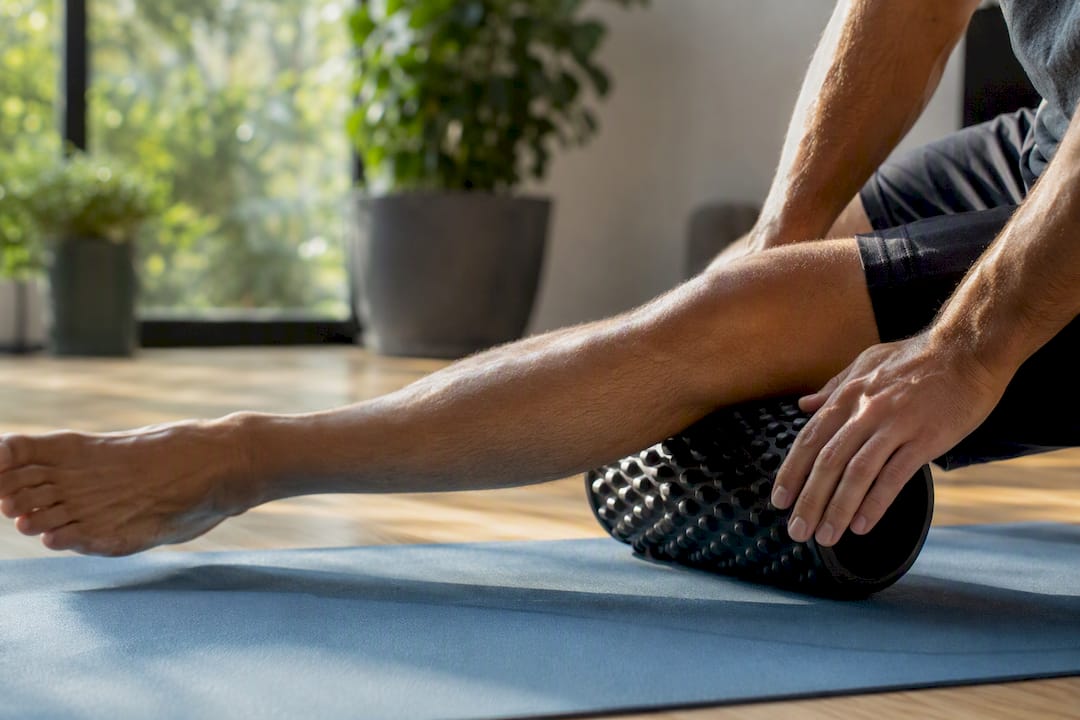
Pro Tip: Foam roll before your mobility drills, not after. Loosening tissue first makes the stretches that follow noticeably more effective.
7. Light activation circuits
Bodyweight squats, glute bridges, and band walks at a controlled tempo, low load, no burnout. Two or three sets of 10 to 12 reps with a slow, deliberate pace keeps blood flowing to working muscles without asking them to do real work.
Struggling with lingering soreness after a hard week? A partner guide on relieving sore muscles covers topical options that pair well with any of the seven ideas above.
How to Dial In Intensity and Session Length
The goal is enough movement to help, not enough to add fatigue on top of fatigue. That’s the whole game.
- Target heart rate: Roughly 30 to 60% of your max, per NASM’s guidance. Estimate max heart rate as 220 minus your age, then work from there, or skip the math and use the talk-test.
- Talk-test: If you can speak in full sentences without gasping, you’re in range. If you need to pause for breath, back off.
- Session length: 20 to 30 minutes for a dedicated recovery day. After a hard workout, a 6 to 10 minute active cool-down accomplishes a similar purpose on a smaller scale.
- Perceived effort: On a 1 to 10 scale, stay around 3 to 4. Anything higher starts to function like training, not recovery.
Scaling matters, too. Beginners often do fine with the lighter end of that range, closer to 20 minutes, since their bodies are still adapting to any consistent movement. Intermediate exercisers can comfortably handle the full 30 minutes most weeks. Highly trained athletes sometimes need less frequent active recovery and more genuine rest, since their training volume already runs high.
Stop and scale back if you notice sharp fatigue that doesn’t ease once you’re moving, soreness that feels worse than yesterday instead of better, or the beginnings of an illness. Recovery day workout sessions should leave you feeling looser than when you started, not more drained.
Two Ready-Made Recovery Day Routines
Skip the planning and use one of these templates. Both fall inside the 20 to 30 minute range and follow the same warm-up, work, cool-down structure.
1. The cardio template. Several minutes of easy walking or cycling to raise your heart rate gradually. A moderate period at steady, conversational effort, either continuing the same activity or swapping to swimming. Ending with a cool-down of slower movement and a few deep breaths to bring your heart rate back down.
2. The mobility template. Five minutes of light joint mobilizations, ankle circles, hip openers, and shoulder rolls. Fifteen to twenty minutes flowing through hip, ankle, and shoulder focused stretches, holding each for 30 to 60 seconds. Five minutes of foam rolling paired with slow breathwork to finish.
No pool or bike? Swap swimming for a slow shallow-water walk at any local pool, or substitute cycling with a brisk walk on an incline. Both templates work entirely equipment-free if you use bodyweight mobility drills instead of gym machines. For readers building a full week around this kind of balance, sustainable fitness scheduling examples show how recovery days fit alongside harder training sessions.
When to Skip Active Recovery Entirely
Active recovery isn’t the right call every time you’re sore or tired. Certain signals mean your body needs full rest, not more movement, however gentle.
- Sharp, stabbing, or worsening pain, as opposed to the dull ache of normal soreness
- Noticeable swelling, joint instability, or a bruise that’s spreading
- Fever, chills, or feeling generally unwell
- Dizziness, lightheadedness, or a racing or irregular heartbeat
Normal DOMS peaks around 24 to 48 hours after a hard session and improves gradually with light movement. Pain that gets worse instead of better, or that’s isolated to one joint rather than spread across a muscle group, points toward something that needs rest and possibly medical attention. UCLA Health’s guidance recommends passive recovery, real rest, when you’re injured, sick, or severely fatigued, rather than pushing through with activity.
Sleep and nutrition do a lot of the recovery work that movement can’t. Nutrition guidance suggests spreading protein intake across the day, targeting around 1.6 grams per kilogram of body weight for adults who train regularly, to support the muscle repair that happens mostly while you’re resting.
How humn Builds Active Recovery Into Real Programming
humn structures everything around four pillars: Resist, Recover, Renew, and Rhythm. Active recovery lives inside Recover, but it doesn’t stand alone. Coaches connect it to Rhythm, the daily habits like sleep timing, hydration, and protein spacing that determine whether a light movement day actually helps or just fills time.
A recovery day only works if the rest of your day supports it. A 20 minute walk does less if you’re sleeping five hours and skipping protein at breakfast. The habit cues matter as much as the movement itself.
Members get access to modalities like red light therapy, sauna, and compression alongside coached sessions, positioned as complementary support rather than a substitute for the fundamentals. A short breathwork practice worked into your routine can help shift your body toward a calmer state after a training block, particularly when paired with the kind of guided programming humn’s coaches build around each client’s broader recovery framework.
Making active recovery a habit that actually sticks
Block your recovery day the same way you’d block a workout. Put it on the calendar, not as a maybe. The moment it becomes optional, it’s the first thing to get skipped when the week gets busy.
Pick something you’d choose to do even if nobody told you it was “recovery.” Enjoyment isn’t a nice extra here. Research on rest-day habits points out that disliking the activity can raise stress hormones enough to cancel out the physical benefit you’re trying to get. If a slow bike ride sounds miserable but a pool session sounds fine, take the pool session.
If you want help building this into a real weekly rhythm instead of guessing week to week, that’s exactly the kind of thing a coach at humn works through with clients directly.
— Josh
Get a Recovery Plan Built Around Your Actual Week
Most people treat recovery as an afterthought, something they’ll get to once training feels sorted. humn flips that: recovery is programmed with the same intention as your strength sessions, not left to whatever’s left over at the end of a busy day. That’s the real difference between a generic rest-day checklist and a plan built specifically around your training load, your sleep, and your schedule.
humn’s Recovery services combine sauna, compression, red light therapy, and acupuncture with coaching that ties directly into your strength programming, so active recovery days aren’t guesswork bolted onto a separate plan. If you’re in Gaithersburg and want a coach to map out what your recovery days should actually look like alongside your training, book a consult and see how the four pillars fit your current routine.
Sources
- Active Recovery: Benefits & Best Practices | NASM
- 7 Active Recovery Workouts and Benefits for Rest Days | WHOOP
- Active recovery — Cleveland Clinic
- How often should you take a rest day? | UCLA Health
No Comments.