


Evidence-based fitness coaching is the practice of designing and delivering fitness programs grounded in the best available scientific research, combined with professional judgment and tailored to each person’s unique needs. Unlike trend-driven approaches that rely on social media popularity or anecdotal success stories, this method draws from validated exercise science, behavioral psychology, and real-world coaching experience. The result is programming that is both effective and sustainable. Understanding what is evidence-based fitness coaching matters because it separates coaches who guess from coaches who know.
What are the main components of evidence-based fitness coaching?
Evidence-based coaching rests on three pillars working together: scientific research, coach expertise, and client context. Practitioners describe this as a “three-legged stool” where removing any one leg causes the whole structure to collapse. A program built purely on research papers ignores the human in front of you. A program built purely on gut instinct ignores decades of controlled study.
Scientific research forms the foundation. Meta-analyses confirm that regular aerobic activity, progressive resistance training, and adequate recovery are central to long-term health and performance. These are not opinions. They are findings replicated across thousands of participants in controlled settings.

Coach expertise is what translates research into real programs. A coach reads a study showing that progressive overload drives hypertrophy, then decides how to apply that principle to a 52-year-old with a history of shoulder impingement. That judgment call is not in any textbook. It comes from experience, pattern recognition, and continuing education.
Client context is what makes the program stick. A person’s schedule, stress levels, sleep quality, food preferences, and personal goals all shape what will actually work for them. Ignoring these factors produces technically correct programs that clients abandon within three weeks.
- Scientific consensus on exercise principles (progressive overload, periodization, recovery)
- Coach’s clinical judgment and pattern recognition from real-world practice
- Client’s lifestyle, preferences, injury history, and personal goals
- Ongoing feedback loops that adjust the program as results emerge
Pro Tip: Ask any coach you are considering: “How do you adjust a program when a client stops making progress?” A strong answer will reference both data and the individual client’s situation, not a one-size-fits-all protocol.
How does evidence-based coaching differ from traditional fitness methods?
The most common misconception is that evidence-based coaching is rigid or purely academic. The opposite is true. Best evidence-based practice treats scientific consensus as a flexible map, not a rigid prescription. A map tells you where the roads are. It does not tell you which route to take given your specific starting point and destination.
Traditional or trend-driven fitness methods often rely on what worked for one person, what looks impressive on video, or what a celebrity endorses. These approaches carry real risks. Without movement assessment, load progression can accelerate injury rather than strength. Without behavioral support, even the best program fails when life gets complicated.
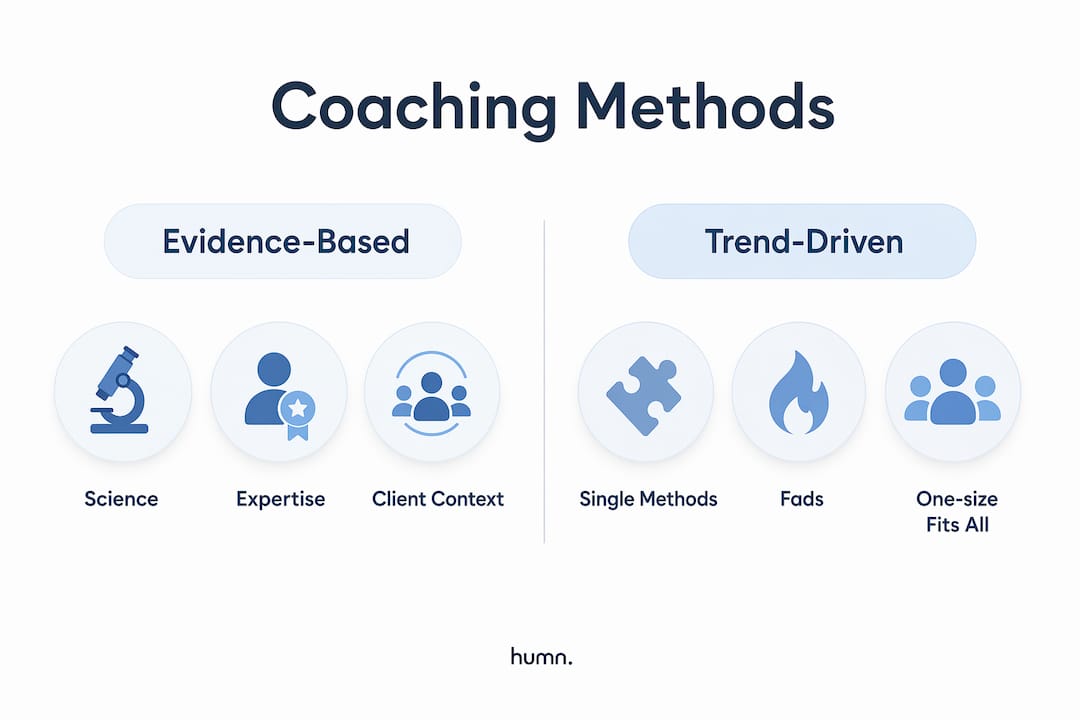
Evidence-based coaching also differs in how it handles nutrition. Evidence-based nutrition advice draws from controlled dietary research rather than elimination fads or supplement marketing. A coach using this approach will discuss protein targets supported by meta-analyses, not a proprietary shake protocol.
| Feature | Evidence-based coaching | Trend-driven methods |
|---|---|---|
| Program foundation | Peer-reviewed research and assessment | Social media popularity or anecdote |
| Personalization | Built around individual assessment | One-size-fits-all templates |
| Nutrition guidance | Grounded in dietary science | Often fad-based or product-driven |
| Progress tracking | Systematic, data-informed adjustments | Subjective or inconsistent |
| Safety | Movement screening before load increases | Load-first, assessment-optional |
Pro Tip: Before signing with any coach, ask to see a sample assessment protocol. If the answer is “we just get started,” that is a red flag. Assessment comes before prescription.
What are the real-world benefits of evidence-based coaching?
The benefits of evidence-based coaching show up in measurable outcomes, not just theory. A meta-analysis of 15,278 participants across 11 randomized controlled trials found that coaching interventions produce a moderate overall effect size (Hedges’ g ≈ 0.58) on professional performance and goal attainment. That effect size is meaningful. It represents real, consistent improvement across a large and diverse population.
A systematic review of 25 field studies from 2020 to 2025 found that evidence-based coaching improves resilience, self-awareness, and well-being. These are not soft outcomes. Resilience predicts whether someone continues training through setbacks. Self-awareness predicts whether someone can identify when a program is not working and communicate that to their coach.
Safety is another concrete benefit. Assessing mobility and stability before prescribing heavy loads reduces injury risk and speeds strength gains. This is not caution for caution’s sake. It is the fastest path to results because an injured client cannot train.
- Stronger strength and conditioning gains driven by progressive overload principles
- Lower injury rates through movement screening and fatigue management
- Better long-term adherence through behavior-change support and habit formation
- Improved psychological outcomes including resilience and self-awareness
- Nutrition and recovery integrated as core program components, not afterthoughts
The behavioral dimension is where many programs fail. Knowledge alone rarely changes habits effectively. Coaches who use self-monitoring tools, implementation intentions, and habit-stacking strategies produce clients who maintain their results long after the formal coaching relationship ends.
How to choose a fitness coach who uses evidence-based methods
Choosing the right coach is one of the most consequential fitness decisions you will make. The following criteria separate evidence-based practitioners from those who simply use the term as marketing.
- Ask about their assessment process. A credible coach conducts a movement screen, health history review, and goal-setting conversation before writing a single workout. If they skip this step, they are guessing.
- Look for credentials backed by continuing education. Certifications from organizations like the National Strength and Conditioning Association (NSCA) or the American College of Sports Medicine (ACSM) require ongoing education. Ask when they last completed a course or read a research review.
- Ask how they handle plateaus. The answer reveals whether they use systematic program adjustments or simply add more volume and hope.
- Check for behavior-change support. A coach who only writes workouts is a program designer, not a coach. Look for someone who addresses sleep, stress, and nutrition as part of the overall plan.
- Evaluate their openness to new research. A good coach says “the evidence on that has shifted” rather than defending a method they learned ten years ago.
Transformational coaching built on trust and a co-created vision produces sustained development and adaptability. That quality of relationship does not happen by accident. It requires a coach who listens as carefully as they prescribe.
What are the key evidence-based training methods and program design principles?
Evidence-based training methods are not exotic. They are well-established principles applied with precision and adjusted based on individual response.
Progressive overload is the most fundamental. Strength and conditioning gains require gradually increasing the demand placed on the body over time. This can mean adding weight, increasing volume, reducing rest periods, or improving movement quality. The key is that progression is planned, not random.
Periodization organizes training into phases with distinct goals, such as building a base, peaking for performance, and recovering. Planned deload weeks are critical in evidence-based periodization. They allow fatigue to dissipate and reveal fitness gains that would otherwise remain hidden under accumulated tiredness. Many clients resist deloads because lighter weeks feel like wasted time. They are not. They are when adaptation actually consolidates.
Movement quality assessment precedes load increases. Load progression combined with movement assessments prevents injury and accelerates strength gains. A coach who adds weight to a broken squat pattern is building a faster path to a knee injury, not a stronger athlete.
Self-monitoring and goal-setting close the feedback loop. Clients who track their workouts, sleep, and nutrition data give their coach the information needed to make smart adjustments. This is not about obsession. It is about having enough signal to distinguish a bad week from a bad program.
Pro Tip: If your coach has not adjusted your program in six weeks, ask why. Evidence-based programming responds to your data. Static programs are a sign that no one is watching the results.
Key Takeaways
Evidence-based fitness coaching works because it combines scientific research, coach expertise, and individual client context into a single, adaptive system.
| Point | Details |
|---|---|
| Three-pillar foundation | Science, coach judgment, and client context must all be present for a program to succeed. |
| Assessment before prescription | Movement screening and health history review must precede any program design. |
| Behavior change is non-negotiable | Self-monitoring and habit-building strategies determine long-term adherence, not just workout quality. |
| Deloads drive adaptation | Planned recovery weeks are when fitness gains consolidate, not when progress stalls. |
| Coach selection matters | Look for credentials, continuing education, and a clear assessment protocol before committing. |
Why I think most people misunderstand evidence-based coaching
The phrase “evidence-based” has become a marketing badge. I have seen coaches slap it on programs that are nothing more than generic templates with a few citations attached. That is not what this approach means, and it does real harm to people who trust the label.
What I have observed working with clients over time is that the science is actually the easy part. The hard part is sitting with someone, understanding what their life actually looks like at 6:30 PM on a Tuesday, and building a program that survives contact with that reality. A meta-analysis cannot do that. Only a skilled, attentive coach can.
The clients who get the best results are not the ones who follow the most technically perfect program. They are the ones whose coach noticed when something was off, asked the right questions, and made a small adjustment that kept them moving forward. That combination of science and human attentiveness is what genuine evidence-based practice looks like.
The field is also evolving. Recovery science, sleep research, and behavioral psychology are reshaping what good coaching includes. Coaches who stop learning stop being evidence-based, regardless of what their website says. The standard is not a credential you earn once. It is a commitment you renew continuously.
— Josh
humn brings evidence-based coaching to Montgomery County, MD
humn is a coaching facility in Gaithersburg, MD, built on exactly the principles described in this article. Every member works with a dedicated coach who integrates strength training, recovery, and lifestyle support through a four-pillar framework: Resist, Recover, Renew, and Rhythm. Programs address sleep, stress, nutrition, and long-term sustainability, not just workouts.
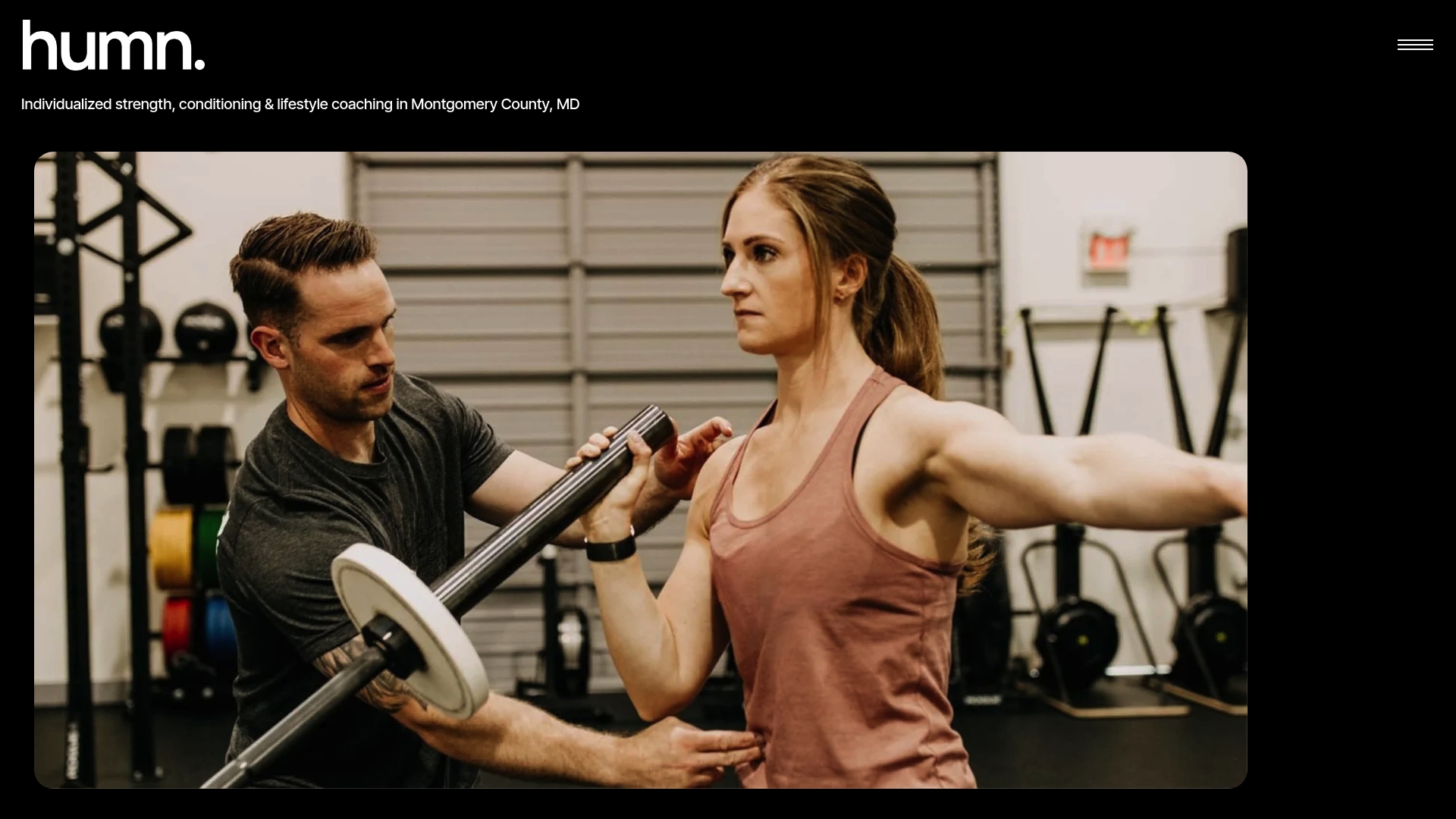
humn offers 1-on-1 personal training, small-group coaching, and dedicated recovery services under one roof. If you are ready to work with coaches who treat science and individual context as equally non-negotiable, explore membership options at humn and take the first step toward a program built around you.
FAQ
What is evidence-based fitness coaching?
Evidence-based fitness coaching is the practice of designing fitness programs using the best available scientific research, combined with professional coach judgment and each client’s individual needs. It is not a rigid system. It is a flexible, research-informed approach that adapts to real people.
How does evidence-based coaching improve results?
A meta-analysis of over 15,000 participants found coaching interventions produce a moderate, consistent effect on goal attainment and performance. The combination of structured programming and behavioral support drives results that generic plans cannot match.
What makes a good fitness coach?
A good fitness coach conducts a thorough assessment before prescribing any program, uses behavior-change strategies alongside workout design, and updates their approach based on current research. Credentials from bodies like the NSCA or ACSM, combined with ongoing education, are reliable indicators of quality.
Are deload weeks really necessary?
Yes. Planned deload weeks allow accumulated fatigue to clear, which reveals the fitness gains built during harder training blocks. Skipping them consistently leads to stalled progress and increased injury risk.
How is evidence-based nutrition advice different from popular diet advice?
Evidence-based nutrition advice draws from controlled dietary research, focusing on principles like adequate protein intake and overall dietary pattern rather than elimination fads or supplement protocols. It is personalized to the individual’s goals, preferences, and health history.
No Comments.