


One-on-one fitness coaching is defined as a dedicated training relationship between a single client and a certified coach, built around that client’s specific goals, limitations, and schedule. The benefits of 1-on-1 fitness coaching go far beyond having someone count your reps. About 50% of new gym members quit within six months, which means the standard gym model fails half its clients before they see real results. Personalized coaching, as recognized by the IDEA Health & Fitness Association and the National Academy of Sports Medicine (NASM), closes that gap by replacing generic programming with a plan built entirely around you.
1. How personalized programming accelerates your results
Tailored workout plans are the single biggest advantage of individual fitness coaching over a standard gym membership. A coach designs your program around your current fitness level, movement history, and specific goals, whether that is building strength, losing body fat, or improving athletic performance.

Generic programs plateau because they cannot adapt to you. Progressive 6–12 week programming blocks prevent stagnation by continuously adjusting workload and intensity based on your actual measurements and performance data. That means your program evolves as you do, rather than staying static until you give up.
Injury prevention is built directly into personalized programming. A coach selects loads, rep ranges, and recovery windows that match your capacity, not a population average. This protects your joints and connective tissue while still driving adaptation.
- Customized load progression prevents the overtraining that causes most amateur injuries
- Periodized recovery is scheduled into the plan, not left to chance
- Movement screening at the start identifies weak links before they become problems
- Goal-specific phases shift between strength, hypertrophy, and conditioning as needed
Pro Tip: Ask your coach to explain the rationale behind each training block. Understanding why you are doing something increases buy-in and long-term adherence.
2. Accountability and motivation that actually stick
The “accountability gap” is the core reason gym memberships fail. Clients pay for gym access but consistently fail to use it, not because they are lazy, but because no external structure compels them to show up. Scheduled coaching sessions change that equation entirely.
Appointment-based training creates a social contract. You are far less likely to skip a session when a coach is waiting for you and your absence has a direct cost. This is not a character flaw issue. Missing workouts is often a missing accountability structure, and coaching provides exactly that structure.
Real-time feedback during sessions also builds confidence faster than solo training. A coach notices when you are grinding through a set with poor form and corrects it immediately, which prevents discouragement and reinforces correct movement patterns.
“Social support and structured programming are among the strongest predictors of long-term exercise success. Gyms provide access; coaching provides both.”
Key accountability advantages of one-on-one coaching include:
- Scheduled sessions that function like professional appointments you keep
- Progress tracking that makes improvement visible and motivating
- Immediate feedback that prevents the frustration of stalled results
- Relationship continuity with a coach who knows your history and patterns
3. Safety, technique, and expert supervision
Proper technique is not optional. It is the foundation that determines whether training builds you up or breaks you down. A coach watches every rep and corrects errors before they become ingrained habits.
The first 90 days of training carry the highest risk of injury and dropout. This is when movement patterns are being established and when poor form does the most long-term damage. Coaching during this window is the highest-return investment you can make in your fitness.
Supervised training produces greater strength and body composition gains than solo training with the same program. Real-time feedback is the mechanism. A coach sees what you cannot feel, particularly under fatigue, and adjusts cues, load, or rest periods accordingly.
Medical complexity is also far more common than most people assume. Half of personal training clients have specific medical needs such as arthritis, diabetes, or post-surgical rehabilitation. A qualified coach adapts programming to those conditions and collaborates with healthcare providers when needed.
- Real-time form correction stops poor habits from becoming structural problems
- Load management accounts for fatigue, stress, and recovery status each session
- Medical adaptations make training safe for clients with chronic conditions
- Collaboration with physical therapists or physicians when rehabilitation is involved
Pro Tip: If you have a pre-existing condition, ask your coach directly whether they have experience with that condition before your first session. A good coach will tell you honestly if a referral is more appropriate.
4. Flexibility and support beyond the workout itself
One-on-one coaching fits your life rather than forcing your life to fit a class schedule. This is one of the most underrated personalized fitness coaching benefits for busy professionals.
A coach can schedule sessions around your work calendar, travel schedule, and energy patterns. Early morning, midday, or evening slots are all possible. Some coaches offer in-person, online, or hybrid formats, which means your program does not collapse when you travel for work.
The support structure extends well beyond the gym floor. Here is what a quality coaching relationship typically covers:
- Nutrition guidance aligned with your training goals and lifestyle, not a generic meal plan
- Sleep and recovery coaching to address the lifestyle factors that determine how well you adapt to training
- Stress management strategies that account for how work demands affect your physical capacity
- Progress reviews on a regular cadence to adjust goals and celebrate milestones
- Education on movement and physiology so you understand your own body better over time
humn builds this broader support structure into its coaching model through its four-pillar framework: Resist, Recover, Renew, and Rhythm. Each pillar addresses a different dimension of performance, from strength training to sleep and stress. That means clients work on recovery and lifestyle habits alongside their physical training, which produces more durable results.
5. Who benefits most from 1-on-1 coaching
One-on-one coaching is not the right fit for every situation. Understanding where it delivers the most value helps you make a better decision about your fitness investment.
| Situation | Best fit |
|---|---|
| Complete beginner with no training history | 1-on-1 coaching strongly recommended |
| Returning after injury or surgery | 1-on-1 coaching with medical collaboration |
| Struggling with consistency for 6+ months | 1-on-1 coaching to close accountability gap |
| Experienced athlete targeting performance gains | 1-on-1 coaching for periodized programming |
| Fit individual maintaining general health | Small-group training or self-directed gym use |
| Budget-constrained with strong self-discipline | Online coaching as a lower-cost alternative |
Expert coaching requires knowing a client’s movement under fatigue over multiple weeks, something large gym environments with high staff turnover cannot deliver. If your situation involves any complexity, whether medical, motivational, or performance-related, individualized coaching is the more efficient path.
Online coaching works well for self-directed clients but often lacks the real-time accountability and form correction that beginners and returning clients need most. The format matters less than the fit between your needs and what the coaching relationship actually provides.
Key Takeaways
One-on-one fitness coaching delivers faster, safer, and more sustainable results than self-directed gym training because it combines personalized programming, real-time supervision, and structured accountability in a single relationship.
| Point | Details |
|---|---|
| Personalized programming prevents plateaus | 6–12 week progressive blocks adapt to your actual performance data, not population averages. |
| Accountability closes the adherence gap | Scheduled sessions function like professional appointments, driving consistency where gym access alone fails. |
| Expert supervision reduces injury risk | The first 90 days carry the highest injury risk; coaching during this window delivers the highest return. |
| Half of clients have medical needs | Qualified coaches adapt programs for arthritis, diabetes, and rehabilitation, collaborating with healthcare providers. |
| Coaching extends beyond workouts | Quality programs address sleep, nutrition, stress, and recovery alongside physical training. |
Why I think the “just go to the gym” advice is costing professionals years of progress
I have worked with enough professionals to see the same pattern repeat. They join a gym with real motivation, follow a generic program for six weeks, hit a wall, and quietly stop going. They blame themselves. They call it laziness. They are wrong.
The gym model sells access. Coaching sells outcomes. Those are fundamentally different products, and conflating them is the source of most fitness frustration I see. The research backs this up: external accountability drives adherence, not willpower. Willpower is a finite resource. A scheduled appointment with a coach who knows your name and your goals is not.
What I find most underappreciated is the compounding effect of correct movement patterns learned early. A client who spends their first 90 days with a coach builds a foundation that makes every subsequent year of training more productive and less risky. A client who spends those same 90 days guessing their way through YouTube programs often builds compensations that take years to undo.
The human element also matters more than the fitness industry admits. A coach who has watched you train for six months knows things about your body that no algorithm or app can replicate. They know when you are fatigued before you do. They know which cues work for you and which ones do not. That depth of knowledge is what separates a coaching relationship from a subscription.
My advice: if you are a professional with limited time and real performance goals, treat coaching as infrastructure, not a luxury. The return on that investment compounds in ways that a gym membership simply cannot match.
— Josh
humn’s approach to individualized coaching in Gaithersburg
humn is built for professionals who want results that last, not just a place to work out. Every client at humn works with a dedicated coach on a program designed around their specific goals, movement history, and lifestyle demands.
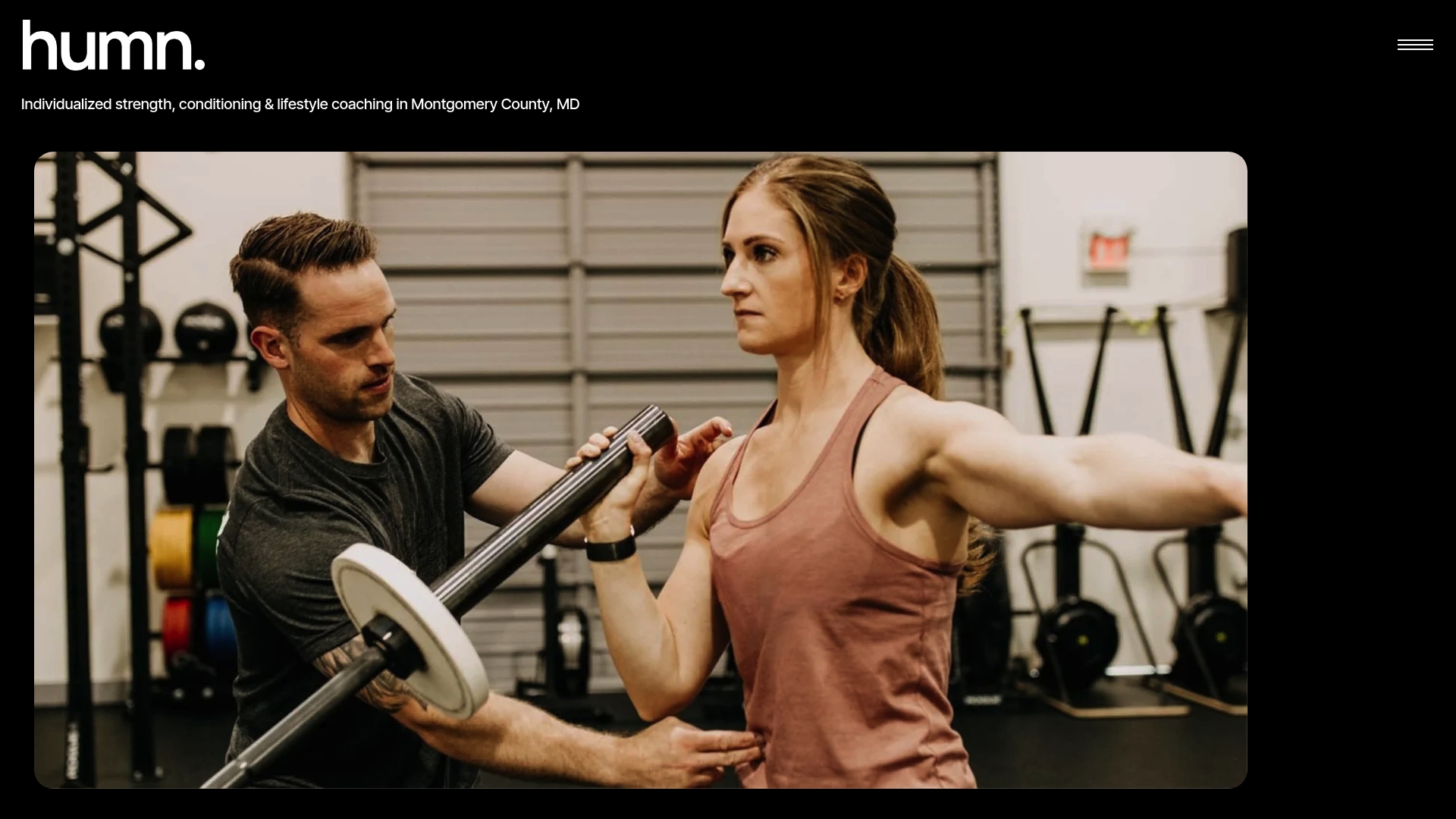
The coaching model at humn goes beyond strength training. It integrates recovery, sleep, stress, and nutrition into a single, coherent program through the Resist, Recover, Renew, and Rhythm framework. Whether you are starting from scratch, returning after an injury, or pushing toward a performance goal, humn’s personalized coaching programs are built to meet you where you are. Flexible membership options include 1-on-1 coaching, small-group personal training, and recovery access, all in a boutique setting in Montgomery County, MD.
FAQ
What are the main benefits of 1-on-1 fitness coaching?
The main benefits include personalized programming, real-time form correction, structured accountability, and support for medical or rehabilitation needs. These factors combine to produce faster and safer results than self-directed gym training.
How is 1-on-1 coaching different from a gym membership?
A gym membership provides access to equipment. One-on-one coaching provides a program, supervision, accountability, and ongoing adaptation based on your progress. About 50% of gym members quit within six months, while coached clients show significantly higher adherence.
Is personal training worth it for beginners?
Personal training is most valuable for beginners because the first 90 days carry the highest risk of injury and dropout. A coach establishes correct movement patterns during this critical window, which protects you and accelerates long-term progress.
Can 1-on-1 coaching help if I have a medical condition?
Half of personal training clients have specific medical needs such as arthritis, diabetes, or post-surgical rehabilitation. A qualified coach adapts your program to those conditions and collaborates with your healthcare provider when appropriate.
How often should I train with a 1-on-1 coach?
Most professionals see strong results with two to three coached sessions per week, supplemented by independent activity. Your coach will recommend a frequency based on your goals, recovery capacity, and schedule.
No Comments.