


What are the best affordable CrossFit-style alternatives?
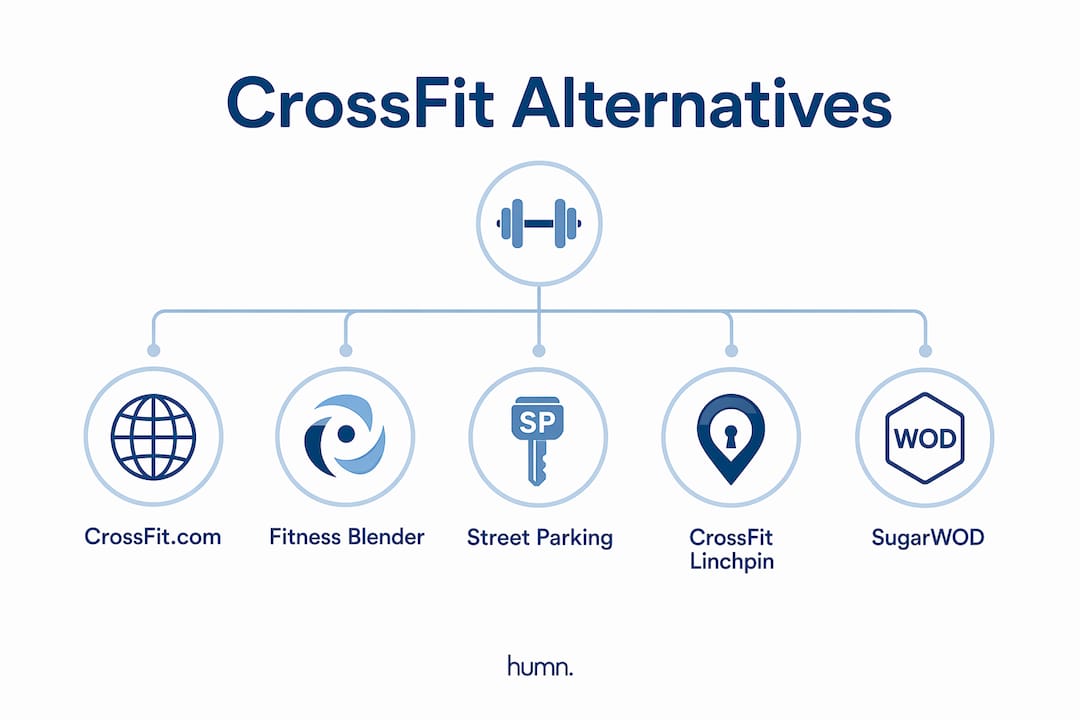
The strongest crossfiteverlasting.com alternatives right now are CrossFit.com (free), Fitness Blender (free), Street Parking (budget-friendly app), CrossFit Linchpin, Fitbod, Peloton Digital, SugarWOD, Let’s WOD, HYROX, and DEKA. Each one covers a different need: some replace the community, some replace the programming, and some replace the competitive edge you get from a coached gym environment.
A few things worth knowing upfront: free does not mean low quality. CrossFit.com posts a daily WOD at no cost, and Fitness Blender has built one of the largest free workout libraries on YouTube. On the other end, Peloton Digital and CrossFit Linchpin charge a monthly fee but deliver structured, coach-designed programming that rivals what you’d pay three to five times more for at a traditional affiliate. Subscription digital platforms deliver expert coaching virtually at a fraction of affiliate gym costs.
Here is a side-by-side look at all ten options across the dimensions that matter most:
| Program | Cost | Best For | Program Type | Training Style | Accessibility |
|---|---|---|---|---|---|
| Fitbod | Paid subscription | Personalized strength building | App | Strength, adaptive | All levels |
| Street Parking | Low monthly fee | Beginners on a budget | App | WODs, functional fitness | Beginner-friendly |
| CrossFit Linchpin | Low monthly fee | Advanced structured training | Digital program | CrossFit-style WODs | Intermediate-advanced |
| CrossFit.com | Free | Free open-access WODs | Website | Varied CrossFit | All levels, scaling options |
| Fitness Blender | Free | Varied styles and durations | YouTube | HIIT, strength, cardio | All levels |
| Peloton Digital | Monthly subscription | Interactive digital community | App/streaming | Cycling, HIIT, strength | All levels |
| HYROX | Event registration fee | Competition-oriented fitness | Race event | Running + functional | All levels |
| DEKA | Event/gym fee | Scaled functional competition | Gym-based event | Functional fitness zones | All levels |
| SugarWOD | Free/paid tiers | Community and WOD tracking | App | CrossFit-style WODs | Affiliate-focused |
| Let’s WOD | Free/paid tiers | Flexible offline WODs | App | Functional fitness | All levels |
Key takeaways on affordability and variety:
-
CrossFit.com and Fitness Blender cost nothing and still deliver daily programming.
-
Street Parking and CrossFit Linchpin offer structured WOD programming at a low monthly rate, well below typical affiliate dues.
-
SugarWOD supports over 500,000 athletes and is used by more than 2,900 affiliate boxes for community tracking.
-
HYROX and DEKA suit athletes who want a competitive outlet without committing to a full affiliate membership.
-
Fitbod and Peloton Digital are the strongest picks for athletes who want guided, adaptive programming with a digital-first experience.
Detailed profiles of the top CrossFit-style programs and apps
The ten alternatives below cover a wide range of goals, price points, and training philosophies. No two are built the same way, so the right pick depends on what you actually miss about CrossFit-style training.
Fitbod: AI-driven strength programming
Fitbod uses an adaptive algorithm to build personalized strength workouts based on your training history, available equipment, and recovery status. It does not follow a fixed WOD format, which sets it apart from most CrossFit alternatives. If your main goal is building strength rather than chasing a competitive WOD score, Fitbod fills that gap well. The app suits home gym athletes and commercial gym members equally, since it adjusts to whatever equipment you have on hand.

Street Parking: the beginner’s on-ramp
Street Parking was built specifically for people who want CrossFit-style intensity without the intimidation of a competitive affiliate environment. Workouts are scalable, the interface is clean, and the programming is designed to work with minimal equipment. Garage gym athletes and parents training at home consistently recommend it as the most accessible entry point into structured WOD training. It ranks among the best CrossFit apps for beginners according to independent gym reviewers.
CrossFit Linchpin: professional programming at a lower price
CrossFit Linchpin was developed by Pat Sherwood, a former CrossFit seminar staff member and longtime Games commentator and analyst. The programming is entirely virtual and follows a structured weekly format that mirrors what you’d get at a well-run affiliate. For intermediate and advanced athletes who want coach-designed programming without paying affiliate dues, Linchpin is the clearest like-for-like replacement.
CrossFit.com: the free baseline
CrossFit.com posts a daily WOD at no charge, complete with scaling options for different fitness levels. The community refers to this as “main site programming,” and it has been running continuously for years. There is no app subscription required. If your goal is simply to follow a structured daily workout without spending money, this is the starting point most experienced CrossFitters already know.
Fitness Blender: free video workouts with real variety
Fitness Blender operates primarily through YouTube and its own website, offering hundreds of free workout videos spanning HIIT, strength, cardio, and mobility. The production quality is straightforward, the trainers are credentialed, and the workout durations range from ten minutes to over an hour. For athletes who want variety without a fixed WOD format, Fitness Blender covers more ground than almost any paid alternative.
Peloton Digital: structured classes with community features
Peloton Digital gives subscribers access to live and on-demand classes across cycling, running, strength, and HIIT without requiring a Peloton bike or treadmill. The instructor quality is consistently high, and the live class format creates a sense of community that most app-based WOD programs cannot replicate. It costs more than Street Parking or Linchpin, but the production value and class variety justify the price for athletes who train better with an instructor on screen.
HYROX: standardized competition for functional athletes
HYROX was founded in 2017 and combines eight functional strength stations with running segments in a standardized race format. Every athlete completes the same course, which makes results directly comparable across events worldwide. Unlike CrossFit competitions, HYROX does not require Olympic lifting proficiency, so the barrier to entry is lower. Athletes who want a competitive goal to train toward without mastering the snatch or muscle-up find HYROX a natural fit.
DEKA: zone-based functional fitness
DEKA structures its workouts around ten functional movement zones, each targeting a different physical demand. Sessions typically open with a 500-meter run, then cycle through the zones in sequence. The format is accessible to all fitness levels and scales well for beginners and seasoned athletes alike. Gyms that run DEKA programming often attract CrossFit enthusiasts who want structured intensity without the technical complexity of Olympic lifts.
SugarWOD: community and tracking in one app
SugarWOD is the community layer that many CrossFit athletes miss when they leave an affiliate. The app tracks WOD results, personal records, and progress over time, and it connects athletes through a global leaderboard and social features including comments and fist bumps. Coaches can publish programming directly to the app and monitor athlete participation. CompTrain, the program designed by Ben Bergeron of CrossFit New England, is exclusively available on SugarWOD.
Let’s WOD: offline-ready functional workouts
Let’s WOD offers a library of over 300 exercises with a randomized WOD generator that works without an internet connection. That offline capability matters for athletes who train in areas with poor connectivity or prefer to leave their phone in airplane mode during sessions. The app supports AMRAP, EMOM, and Tabata formats, covering the full range of CrossFit-style workout structures.
Standout features by category:
- Best free programming: CrossFit.com, Fitness Blender
- Best for community: SugarWOD (over 500,000 athletes and more than 2,900 affiliate boxes)
- Best for competition: HYROX, DEKA
- Best for personalized strength: Fitbod
- Best for beginners: Street Parking
- Best for offline use: Let’s WOD
- Best for advanced structured programming: CrossFit Linchpin
How to choose the right CrossFit-style alternative and save money
The single most useful question to ask before choosing a program is: what did you actually value about CrossFit? The answer splits most athletes into three groups: those who miss the community, those who miss the programming structure, and those who miss the competitive outlet.
If you miss the community, SugarWOD is the most direct replacement. It replicates the social accountability of an affiliate box without requiring a gym membership. Pairing it with CrossFit.com’s free daily WODs gives you both the programming and the community layer at close to zero cost.
If you miss structured programming, CrossFit Linchpin or Street Parking will serve you better than trying to piece together workouts from YouTube. Both programs are designed by coaches with real CrossFit credentials, and both cost a fraction of a monthly affiliate membership.
If you miss competing, HYROX and DEKA offer race events you can train toward year-round. The registration fee covers a single event, so you are not locked into a recurring cost.
Practical ways to spend less without sacrificing quality
- Start with CrossFit.com or Fitness Blender before paying for anything. Both are free and give you a clear baseline for what you need from a paid program.
- Use free trial periods. Most paid apps, including Fitbod and Peloton Digital, offer trial windows. Test the programming before committing to a subscription.
- Check whether your current gym already runs DEKA or HYROX training. Many specialty gyms offer these formats without requiring a separate membership.
- Avoid paying for multiple subscriptions simultaneously. One solid program beats three mediocre ones you rotate between.
What to watch for in program quality
Trainer credentials matter more than production value. CrossFit Linchpin’s credibility comes from Pat Sherwood’s background as a CrossFit seminar staff member, not from a polished app interface. When evaluating any program, look for named coaches with verifiable CrossFit or strength and conditioning credentials. Programs that list no coach names or qualifications are worth approaching with caution.
Equipment requirements are a hidden cost many athletes overlook. Some programs assume access to a barbell, bumper plates, and a pull-up rig. If you train at home with limited gear, Street Parking and Let’s WOD both scale to minimal equipment setups. Fitbod adjusts automatically based on what you tell it you have available.
Pro Tip: Before signing up for any paid program, spend two weeks following CrossFit.com’s free daily WODs. If you find yourself wanting more structure, coaching context, or community, that tells you exactly which paid tier to invest in.
Hidden costs to watch for
- Affiliate gym drop-in fees if you want to use their equipment while following an app program
- Event registration costs for HYROX and DEKA races, which are separate from any training subscription
- Equipment purchases required to follow a program as written
- Annual billing locked in at signup, which removes flexibility if the program does not fit your schedule
Why do so many athletes look for CrossFit alternatives?
CrossFit delivers real results. The combination of high-intensity functional movements, community accountability, and constantly varied programming has produced measurable fitness gains for millions of athletes. The problems are cost, injury risk, and technical complexity, and all three push athletes toward alternatives.
A standard CrossFit affiliate membership in the United States runs significantly higher than most gym memberships. For athletes on a tighter budget, that monthly cost is the first thing to cut. The alternatives covered here range from completely free to a modest monthly subscription, making quality programming accessible at almost any budget level.
The injury concern centers on Olympic lifting. Movements like the snatch and clean and jerk require years of technical practice to perform safely under fatigue, which is exactly the condition CrossFit WODs create. CrossFit’s emphasis on Olympic lifts carries a higher injury risk for older athletes and beginners, which is a primary reason HYROX and DEKA have grown quickly. Both formats use functional movements that are easier to learn and safer to perform at high intensity.
Factors driving demand for CrossFit alternatives:
- Affiliate membership costs that exceed most household fitness budgets
- Olympic lifting complexity creating injury risk for beginners and older athletes
- Desire for standardized, measurable competition formats like HYROX and DEKA
- Growth of app-based programming that delivers coaching without a physical gym
- Community tools like SugarWOD that replicate affiliate social dynamics digitally
- Market saturation pushing coaches to develop more affordable, lower-risk programs
What trends are shaping functional fitness alternatives?
HYROX and DEKA represent the clearest structural shift in competitive functional fitness. Both formats standardize the workout so every athlete competes on identical terms, which CrossFit’s constantly varied programming does not do. That standardization makes progress measurable and goal-setting straightforward: you train for a specific race, complete it, and compare your time against a global field. HYROX combines strength and endurance in a format genuinely accessible to athletes who have never competed before.
On the app side, the shift is toward community and personalization running in parallel. SugarWOD has built a platform where over 500,000 athletes track workouts and connect with coaches, replicating the social accountability of a physical box without requiring one. Athletes who leave coached CrossFit often struggle without live movement feedback, and apps that combine video technique libraries with community scoreboards help close that gap.
AI-driven customization is changing what “personalized programming” means. Platforms like Pact use AI to let athletes build workouts from a large exercise library across formats including AMRAP, EMOM, HYROX-style, and strength, adapting to what the athlete actually needs rather than delivering a fixed plan. Fitbod applies a similar logic specifically to strength training, adjusting each session based on previous performance and recovery. This shift away from one-size-fits-all programming aligns with what most athletes actually want: a plan that fits their schedule, equipment, and goals.
Emerging trends worth tracking:
- HYROX and DEKA race participation growing as standardized alternatives to CrossFit competition
- SugarWOD and Let’s WOD expanding community features to serve athletes training outside affiliates
- AI-powered workout generators enabling truly personalized programming at low or no cost
- Functional fitness apps increasingly combining strength, cardio, and recovery tracking in a single platform
- Expert consensus shifting toward safer, lower-risk training formats for beginner and aging athlete populations
humn offers a different kind of fitness alternative
If the apps and events above cover the programming side, humn addresses something none of them do: the whole person. humn is a premium fitness and lifestyle coaching facility in Gaithersburg, MD, built around four pillars: Resist, Recover, Renew, and Rhythm. That framework goes well beyond a daily WOD. Coaches work with members on sleep, stress, nutrition, and long-term behavior change alongside the actual training.
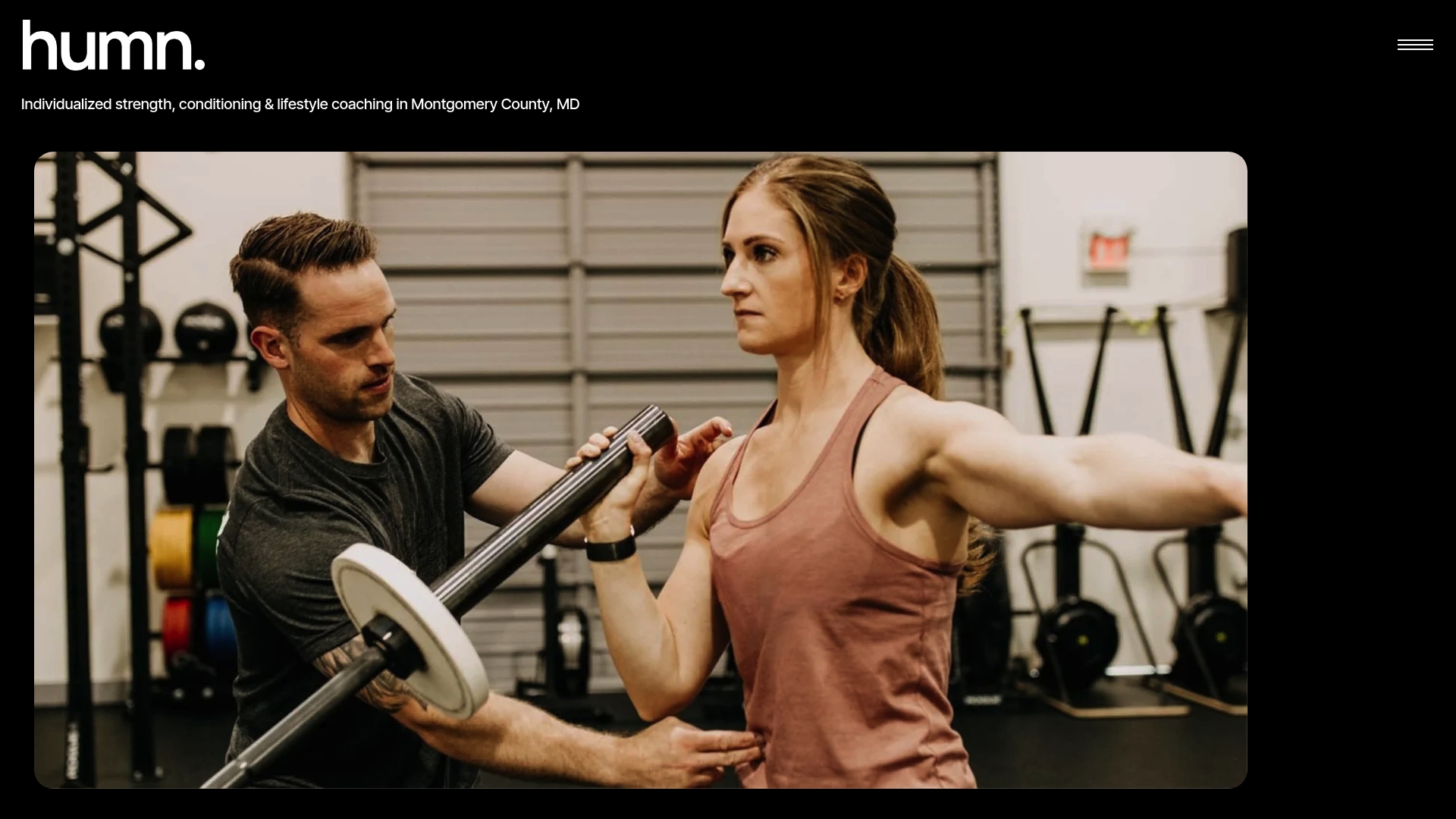
For athletes who have cycled through CrossFit affiliates, apps, and events and still feel like something is missing, the gap is usually coaching depth, not programming variety. humn’s small-group and 1-on-1 coaching model gives you a dedicated coach who tracks your progress across every dimension of performance, not just your WOD times. The boutique setting in Montgomery County, MD means you get individualized attention that a 40-person class or a subscription app simply cannot replicate.
If you want a long-term partner in building strength and resilience rather than another program to follow, humn’s membership options are worth a conversation.
Key Takeaways
The strongest CrossFit-style alternatives combine free or low-cost programming with community tools and scalable training formats that match your actual goals and budget.
| Point | Details |
|---|---|
| Free options are genuinely strong | CrossFit.com and Fitness Blender deliver daily programming and workout variety at zero cost. |
| Community apps fill the affiliate gap | SugarWOD supports over 500,000 athletes and is used by more than 2,900 affiliate boxes for community tracking, providing leaderboards and coach connectivity. |
| Competition without complexity | HYROX (founded 2017) and DEKA offer standardized functional fitness races with lower technical barriers than CrossFit. |
| Personalized programming is accessible | Fitbod and Let’s WOD (300+ exercises) adapt to your equipment and fitness level without a gym membership. |
| humn goes beyond programming | For athletes who want coaching across strength, recovery, and lifestyle, humn’s four-pillar model in Gaithersburg, MD offers depth no app can match. |
No Comments.